Day 763: The Vet’s Daughter

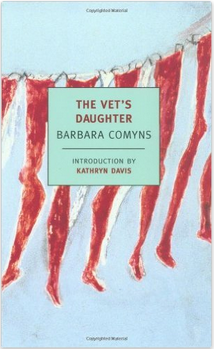
Cover for The Vet's DaughterIt was several days before the doctor came. It was my father who sent for him. Even he noticed something was wrong with Mother. When he saw her all doubled up over the dining room sideboard, he suddenly bellowed, “For Christ’s sake, woman, send for the doctor, and if he can’t put you right, keep out of my sight!”

Best Book of the Week!
Alice and her mother live in terror of her father, the vet, in this novel written in 1959. He ignores Alice and treats his wife with brutality and contempt. Alice is in her teens, living in a dreary house in a London suburb with only one friend, a deaf girl, when her mother becomes ill. The one bright light for Alice is it brings vulgar but kindly Mrs. Churchill to help.

Mrs. Churchill continues to come after Alice’s mother dies, but within weeks Alice’s father has brought his lover home to live there, so Mrs. Churchill leaves. Rosa Fisher moves into Alice’s mother’s room and stays until she tries to pimp Alice out to an acquaintance.

Alice occasionally seems to have what first appears to be some kind of fits. But they are actually the slow development of an uncanny ability.

As with Sisters by a River, the simple, innocent manner in which this novel is narrated gives it a distinctive tone. Alice is a naive and unsophisticated girl whose isolation from society means she doesn’t always understand very common things. The plot is impossible to predict, as it takes us to some unusual places. The Vet’s Daughter is another strange and vivid novel from Barbara Comyns.

Related Posts

Sisters by a River

The Lace Reader

The Death of Bees


Day 762: The Call of the Wild

Cover for The Call of the WildThe Call of the Wild is no boys’ tale. It’s rough, embodying as it does Jack London’s ideas about the survival of the fittest. It is also London’s classic tale about the relationship between dog and man.

Buck is a large, pampered dog, the pet of a rich judge in California. But the Alaska gold rush is on, and all large dogs on the west coast are at risk. A gardener’s assistant with debts kidnaps Buck and sells him.

Buck is beaten with a club and then taken up to Alaska to work as a sled dog. But Buck never becomes submissive. Through intelligence, cunning, and brute strength he survives in brutal conditions. Eventually, he begins to feel the urge of his wild heritage.

Although London has the dog have fairly ridiculous “racial memories” of tree-living humans, they are probably about on par with what was believed at the time about evolution. London’s short novel is typical of the school of naturalism, which endeavoured to show the worst of reality. This is not really my favorite of my Classics Club list books so far.

Related Posts

Robinson Crusoe

The Devil’s Backbone

Kim

Day 755: The Woman Who Had Imagination

Cover for The Woman Who Had ImaginationFor some reason, I have always associated HE Bates with such comic writers as PG Wodehouse and EF Benson. This notion was without having read him, mind. But the stories in The Woman Who Had Imagination are not at all what I expected.

Most of the stories in this collection are set in rural localities and are about ordinary country people. Many of them are closer to character sketches than plotted stories. “The Lily,” for example, describes Great-Uncle Silas, a lively, vulgar old man who likes his jokes and his “mouthful of wine.” A later story describes the circumstances of his death.

Many of the stories depict characters caught in their environments, such as “The Story Without an End,” which describes the life of a boy working in a restaurant who is terrified of his boss, or the title story about a bored young man on a church choir expedition who meets a young woman unhappy in her marriage.

link to NetgalleyAlthough the descriptions of rural settings are beautifully written, many of the stories in this collection depict the lives of people who are depressed by the limitations of their lives. However, that is not always the case. In “Sally Go Round the Moon,” a man helps his niece by marriage escape the life she hates in London and then decides to leave himself.

To give you a flavor of the lushness of these stories, here is part of the description of great-uncle Silas’ house from “The Lily”:

On summer days after rain the air was sweetly saturated with the fragrance of the pines, which mingled subtly with the exquisite honeysuckle scent, the strange vanilla heaviness from the creamy elderflowers in the garden hedge and the perfume of old pink and white crimped-double roses of forgotten names. It was very quiet there except for the soft, water-whispering sound of leaves and boughs, and the squabbling and singing of birds in the house-thatch and the trees.

Related Posts

Collected Stories of Carson McCullers

Anderby Wold

Wise Blood

Day 751: The Martian Chronicles

Cover for The Martian ChroniclesThe Martian Chronicles is an odd collection of stories about the colonization of Mars by Earth. The stories begin with an almost comic book feel, which continues with many of them, even though the message is ultimately serious, about the destructiveness of American culture. (Only Americans come to Mars.)

As with many futuristic stories, Bradbury doesn’t get it quite right, rendering them dated in these times. The stories take place beginning in 1999 and continuing for about 30 years, yet many features of the tales reflect the 50’s, when the stories were written. Of course, even the notion that Mars would be habitable for humans without space suits is a funny one for us today. Most shockingly, there is a story about all the black people leaving Southern towns for Mars, supposedly set in 2009, that is queasily stereotypical, both of the Southern whites and the African-Americans, even for the 50’s. And having shown the African-American people a modicum of sympathy in that story, Bradbury never mentions them again.

The stories begin with a series of expeditions to Mars, where the exploratory forces are killed by Martians, not because the Martians fear invasion but just sort of accidentally. The first human to Mars is murdered by a Martian in jealousy over his wife, whom the human hasn’t actually met. In fact, the Martians don’t even realize they’re being invaded. They are telepathic, but their telepathy doesn’t seem to extend to figuring out what’s going on and what a danger these people are. By the fourth story, most of the Martians have been wiped out by disease brought by the Americans. When they appear, though, the Martians seem to be residents of superior civilization to ours.

Overall, my impression of the stories is ambiguous. In many ways they seem childish, although all together they convey a powerful message. In one story that seems to be a frank indictment of McCarthyism, a wealthy man whose library on Earth was burned by government forces who have proscribed all works that aren’t realistic comes to Mars to build his own House of Usher. When government officials come to destroy it for the same reason they destroyed his library on Earth, he gets his revenge and honors Poe at the same time. It struck me that in the frontier environment Bradbury depicts, the government forces wouldn’t be that strong or present (or they would control everything, and there would be no frontier environment).

The stories are beautifully written, especially the descriptions of Martian cities and landscapes. I just think that Bradbury has more to offer us in other works, as classic as this one is. Try Fahrenheit 451 or Dandelion Wine instead.

Related Posts

Stranger in a Strange Land

Oryx and Crake

Aurorarama

Day 749: Charlotte’s Web

Cover for Charlotte's WebBelieve it or not, I’ve never read Charlotte’s Web before. I bought it for my niece’s birthday and read it quickly before I wrapped it. It’s a charming story with the bit of pathos that all children’s books should have.

Fern is devastated to learn that the runt from the latest litter of pigs is to be killed, so she begs her father to keep him. He allows her to hand-raise the piglet, and she names him Wilbur.

When Wilbur is a month old, he goes to live in a nearby farmer’s barn. After spending most of his time during the previous month playing with Fern, he is lonely, although Fern visits him often. No one in the barn seems interested in being his friend, though. After he asks each animal to be his friend, someone he has not even noticed says she will. She is Charlotte, a spider whose web is right in the doorway above his sty.

This is a delightful tale full of the smells and sights of rural life. Although the story starts with Fern, it is soon about how Charlotte and the barnyard animals try to figure a way to save Wilbur from being Christmas dinner. Although it doesn’t shy away from the basic truths of farm life, it is calm and gentle in tone and has lessons about friendship. It’s a wonderful book for reading to smaller children or one that slightly older children can read themselves. I think many modern children may envy the freedom eight-year-old Fern and her older brother Avery find in their rural life.

Related Posts

The Secret Garden

Anne of Green Gables

Doll Bones


Day 743: Happy Returns

Cover for Happy ReturnsHappy Returns is one of Angela Thirkell’s books set in Barsetshire, the setting also of Anthony Trollope’s novels. Thirkell’s novels were written in the 1930’s-50’s and feature, in large part, pleasant and well-meaning characters, gentle romances, and problems bravely dealt with, particularly during and after the war.

Happy Returns is set in 1951 and 1952, just before and after Winston Churchill’s ascension to the office of Prime Minister. Much of the conversation at the beginning of the novel is about the government, called Them, the depredations its taxes have made to the neighborhood, and the characters’ hope that there will be an election that will bring Churchill into office.

The situation of Lady Lufton is one of the focuses of this novel. Her husband is recently dead at an early age, and she is struggling with grief and apathy. The family fortunes have suffered so from death taxes that she is forced to lease half her house to a tenant, Mr. MacFadyen of Amalgamated Vedge. She is concerned because her son, the young Lord Lufton, can’t afford to rent a better place when he goes up to London for Parliament and has to stay with a miserly relative, who does not feed him well in exchange for his ration card. Frankly, the gentle Lord Lufton fears he is too poor to marry.

Charles Belton is another important character. He has been engaged for a year to Clarissa Graham, but they show no sign of marrying. Clarissa has been behaving petulantly, so that Charles has begun to doubt that she wants to marry him. It takes his friend Eric Swan to notice that Clarissa is actually madly in love with Charles and fears he doesn’t love her back.

Swan, a schoolteacher, doesn’t seem very ambitious, but he is actually considering trying for a place at Oxford. But then he meets Grace Grantly and falls in love with her. At this time, fellows at Oxford couldn’t be married, so he decides to put his plans on hold and see what develops.

The whole neighborhood notices that Francis Brandon hasn’t been treating his nice wife Peggy very well lately. She, along with several other women in the novel, is very pregnant and despite her husband’s behavior keeps her good humor.

As an example of the flavor of this book, Lady Lufton and Lord Lufton are having a conversation when Mr. MacFadyen comes in. Mr. MacFadyen observes sympathetically that some of Lady Lufton’s comments are of the type to make a young man impatient, but Lord Lufton always replies gently and patiently.

Most of the characters in Happy Returns are nice people, except maybe the Bishop, who never actually appears. Throughout the entire novel, Mrs. Joram is planning a party but is waiting for the Bishop and his wife to depart for Madeira so she won’t have to invite them. The Bishop is apparently so disliked by many people that when he finally leaves for Madeira and his ship is overtaken by a storm, almost every character wishes for a shipwreck.

I enjoyed this novel with its depiction of the hardships of post-World War II Britain. My only problem with it was the plethora of characters, for I could not keep track of who they all were and what their relationships were. Probably someone following the series from the beginning would not have this problem. I have read several of the books, but that was a long time ago.

There are also quite a few cultural and literary references I didn’t get—and probably many jokes. For the tone of the novel, although it has touching moments, is one of humor, with many funny asides addressed directly to the reader about what will or will not be further explained. I think a fair comparison for someone who is not familiar with Thirkell’s work would be the novels of Nancy Mitford, although they are more obviously unrealistic and caricatured.

Related Posts

The Warden

The Pursuit of Love

Love in a Cold Climate

Day 739: Sisters by a River

Cover for Sisters by a RiverBest Book of the Week!
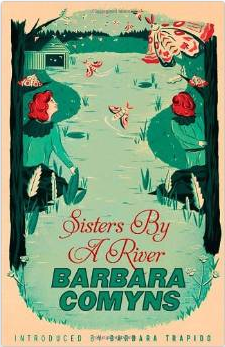
In trying to characterize the tone and atmosphere of the autobiographical Sisters by a River, I have to say that it reminds me a bit of Shirley Jackson’s We Have Always Lived in the Castle, minus the murder. As reported in the introduction by Barbara Trapido, this novel did not fit the 40’s vogue for fond and touching memories of childhood, so it was not published for six years after Comyns began looking for a publisher. Comyns wrote it as a private recollection.

It is difficult to explain just how gripping this novel is. It is an unordered collection of fictionalized memories written by Barbara about the life of her family. Barbara and her sisters suffer a combination of abuse and neglect. Her father, known as Daddy, met her mother, called Mammy, when Mammy was a young child and arranged with her mother to marry her. She began having children when she was eighteen and only stopped after her sixth childbirth made her deaf. She also seems to be insane, periodically rampaging around or talking to invented lovers. Aside from cooking delicious meals, she completely neglects her children.

Granny is a dark and unpleasant presence. She does not allow anyone to clean her room, which is filthy, the floor caked with spilled substances. There she spends most of her time brewing up potions. When Daddy leaves the house, he has to lock up the billiard room to keep her out of the booze.

Daddy is prone to attacks of rage and cruelty. He throws Beatrix downstairs when she is a baby because she is crying. He blackens Mammy’s eye right before they are to host a big party. Yes, both of them are conscious of their social position. Mammy tells her semi-illiterate, poorly dressed, neglected daughters how cultured they are while Daddy takes pride in his hundreds of pairs of polished boots and shoes and takes three hours to prepare for a monthly meeting in town. Meanwhile, the girls’ teeth go bad and one governess after another is fired for some silly infringement or because her feet smell.

The oldest sister Mary has learned bullying from her father. She won’t allow the younger girls to read any of the books she likes, and she chooses what color clothes they may wear. Barbara must always wear brown, which she hates.

I could go on and on about this violent and eccentric family. But what really stands out about the book is its style. All of these events, and many that are worse, are related in a completely matter-of-fact way, no pathos or complaining. The writing style is that of a very young person, including many spelling errors, and this air of innocence and matter-of-face quality give the novel its charm. It’s hard to figure out how old the narrator is. The novel moves back and forth in time, and it seems that at her oldest, she is about sixteen. But there are references to her husband, so it’s hard to tell. My guess is the book was written at different ages.

If you care to try this novel, prepare yourself for something truly unconventional. It sounds dreadfully harrowing, I know, but it actually is not.

Related Posts

The Pursuit of Love

Brother of the More Famous Jack

The Death of Bees

Day 733: Little Women

Cover for Little WomenOver the past months I have occasionally reread a childhood favorite to see what I think about it now. The Secret Garden and Anne of Green Gables, for example, came through with honors. Not only were both beautifully written, but I found them as entertaining as an adult as I did as a child.

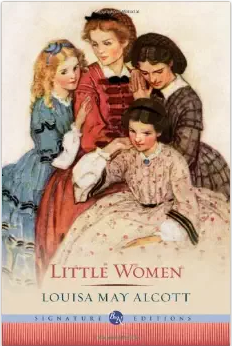
Little Women doesn’t fare quite as well. I found some of the same parts of it affecting as I did when I was young. Who wouldn’t sympathize with these girls, bravely coping without the things their friends have, doing without their father for over a year, getting along as cheerfully as they can? However, as a child reading the book, I didn’t notice that almost every chapter ends with a moral lesson.

The novel covers about 12 years in the lives of the March family, beginning during the American Civil War. For the first half of the novel, Mr. March is away as a chaplain for the Union army. The main character is Jo March, at the start of the novel a tomboyish, gawky 15-year-old who loves writing and putting on plays, reading, and writing stories.

Her older sister Meg is more ladylike and laments having to wear old things to parties. Beth is the third sister, who is too shy to go to school. Amy is the youngest and a little spoiled. Although there are certainly events in their lives, the story is about how Marmee, their mother, raises them all to be good, productive women.

One of the closest relationships in the novel is the friendship between the family and their neighbor Laurie, a rich young man being raised by his grandfather. This and other relationships are warm ones, and the Marches all seem like real people, as do their friends.

If Alcott could have let up a bit on the moralizing, I would have enjoyed the novel more. The other two novels I mentioned earlier also have moral messages, but they leave the reader to figure them out themselves. Still, I’m sure any young girl reading this novel would be as drawn by it as I was years ago.

My comments have made me wonder what I would think of Eight Cousins, which was actually my favorite book by Alcott when I was a child. I’m a little afraid to find out.

Related Posts

Anne of Green Gables

The Loon Feather

Neverhome


Day 725: The Warden

Cover for The WardenThe Warden was the first of Anthony Trollope’s Barchester novels, inspired by a setting and a series of Church of England preferment scandals. A chronicler of 19th century life, Trollope was interested in the intersections between practical and emotional considerations. He was a prolific writer known for complex, realistic novels.

The main character of The Warden is Mr. Harding, a kindly, well-meaning canon who is warden of a charitable hospital, sort of a retirement home for poor old men. For his care of the twelve old men’s spiritual well-being, he receives a salary of £800 a year. It is a position that involves little work and also includes a comfortable house, where he lives with his younger daughter Eleanor.

John Bold has been a friend of this house since a young boy, and Eleanor’s friends are expecting to hear of their engagement. John is a wealthy young man who doesn’t have to work for a living, so he has turned his attentions to reform. After a preferment scandal in another town, he decides to look into the will of the man who endowed the hospital. He finds that the pay of the warden has increased 25 times since the endowment 400 years ago, while the residents’ stipends have not increased, although of course the cost of their food and lodging and medical care has increased and is taken care of by the trust. In fact, the only increase the residents have had has come out of Mr. Harding’s own pocket.

Despite his sister’s advice, instead of taking this issue up with the church or the trust, John Bold brings a lawsuit on behalf of the hospital residents and takes the issue to The Jupiter, a powerful newspaper. His lawyer gets most of the elderly residents to sign a petition, rashly promising them £100 a year each. (Note how well the math works here. Even if they took all of Mr. Hardings’ salary, they wouldn’t have enough money to pay each of the residents £100 a year.)

It is Mr. Hardings’ reaction that forms the core of the novel, for he is not interested, like the lawyers and his son-in-law the archbishop, in whether the case will be won or lost but in whether the plaintiff’s point is morally correct. Although he has never given his position any thought, in fact is simply an employee of the trust, he is concerned that the intent of the original will might have been that the recipients of the charity should receive a larger share of it.

Except for his mild-mannered friend, the bishop, he cannot find anyone who will even enter into a discussion with him on this topic. And the bishop is completely dominated by his son, the archbishop Dr. Grantly. Dr. Grantly pushes aside Mr. Hardings’ concerns, which he considers weak, disregarding his wife’s ascerbic comments on how poorly he is handling her father. Soon, a newspaper article has appeared that makes poor Mr. Harding look greedy and grasping.

Not only is Trollope interested in exploring the differences between the reactions of Mr. Hardy, high-minded and feeling, and the lawyers and Dr. Grantly, all business and practicality, but he is also interested in the ramifications of reform. Although he shows there is corruption, this corruption is more of the institutional kind that has evolved over time. No one is purposefully trying to cheat anyone. On the other hand, he wants to point out that the alternatives to these entrenched systems might actually be worse.

We can predict that Mr. Harding ends up financially worse off than he started but that the hospital inhabitants do, too. Trollope’s first Barsetshire novel is quiet and slyly ironic. Trollope is not as often read these days, but he is certainly worth reading.

Related Posts

The Other Family

Miss Marjoribanks

Lila

Day 723: Greenbanks

Cover for GreenbanksBest Book of the Week!
This novel begins with a large family Christmas dinner at Greenbanks, the home of Robert and Louise Ashton. It is around 1910. Louise is in her late middle age, a quiet, kind woman who delights in her housekeeping skills and her garden. Her husband, a serial philanderer, has proved a source of pain and humiliation, but she has tried to live it down.

Although the Ashtons are grandparents, three of their grown children live at home. Jim works at the family business, allowing his father to devote little time to it. Charles also purportedly works there, but he prefers to spend time fiddling with inventions, tinkling the piano, and entertaining his adoring mother. Laura is just about to engage herself to Cecil Bradfield. Rachel, the five-year-old daughter of Letty and Ambrose, is Louise’s favorite grandchild.

Robert soon dies in embarrassing circumstances. But even though the novel follows the fortunes of the family over roughly 15 years, it concentrates on the relationship between Louise and Rachel. Rachel, with a self-absorbed mother and an officious father, loves spending as much time as possible at Greenbanks with her grandmother.

The novel has overtones that are feminist for the time, as Rachel finds she has a gift for scholarship. Her father’s rigid and old-fashioned ideas about the place of an education in the lives of young women cost her a scholarship at Oxford, but she manages to continue her education despite him.

Inside cover
The cover at the top is really plain, but for some reason Amazon shows this picture, which is actually the inside of the cover!

One source of disagreement in the family is Louise’s choice of companion. Louise always felt sorry for Kate Barlow when she was a child and tried to include her in family activities. When Kate was a young woman, it was rumored she became pregnant by a married man and had his child, then was thrown off by her parents. Louise meets her in town one day and begins a correspondence with the reluctant woman. After Charles leaves for South Africa and her other two children marry, she invites Kate to become her companion. But Kate never really accepts Louise’s kindness.

The story of the Ashtons is told in spare, matter-of-fact prose that makes no attempt to influence the reader. Many of the characters are flawed and some are unlikable, but there are no heroes and villains here, just a set of ordinary middle-class people. It’s difficult, then, to explain why I so much enjoyed reading this novel. Whipple is a master of style and shows us her characters in the fullness of their lives.

Related Posts

Someone at a Distance

A View of the Harbour

Mrs. Palfrey at the Claremont