Review 2528: The Home

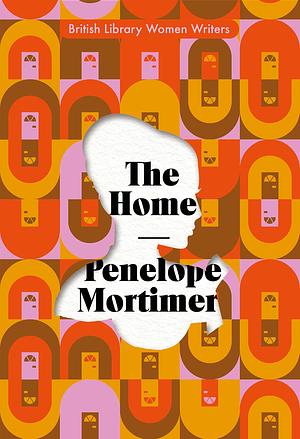
Eleanor is moving. She’s doing this because after 26 years of marriage, her husband is leaving her. Their marriage had been an open one, which translated to her husband Graham being serially unfaithful while she had two affairs that ended in friendship because she loved Graham. The last few years have not been happy, but still it’s hard for her to accept that he has left her—without really talking about it—for a woman who is younger than her oldest daughter.

Now she is trying to make a home for children who, all but one, are adults living on their own. Nevertheless, they return in ones and groups to stay with her.

Eleanor struggles in this novel with the idea of what home is, with loneliness, with her desire to mother children who don’t really need it anymore, with desire and love for Graham, and with the need for someone to take care of her. The novel looks unflinchingly at the situation that many middle-aged women found themselves in beginning in the 1970’s, when divorce rates began to rise. For example, Graham (who in my opinion is an unrelenting jerk) supposes Eleanor can get a job when she has been trained for nothing and has no work experience for the last 26 years except being a wife and mother.

This is sometimes a rough read but always an insightful one. Mortimer has an unfailingly observant eye.

Related Posts

The Pumpkin Eater

A Separation

The Women’s Room

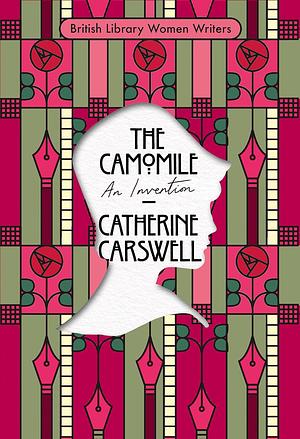
Review 2525: The Camomile

As Simon Thomas points out in the Afterword, The Camomile is a novel that “sets out to be distinct from the ‘marriage plot’.” This although its heroine, who says she strains for Reality, thinks sometimes that marriage is a way to achieve it.

That heroine is Ellen Carstairs, who has just returned to Glasgow after four years in Germany studying music. She knows herself not to be a prodigy, but she begins giving music lessons to contribute to the household, that of her religious Aunt Henry and her brother Ronald, an architecture student.

Apparently, Ellen’s mother wasted a lot of money publishing her writings, to the point where it seems to be considered a mental disease, so Aunt Henry dreads the possibility that Ellen may be writing. Yet, that’s exactly what she begins doing. She gets herself a room where she can practice the piano undisturbed, but she also spends a lot of time at a library, where she meets an impoverished scholar she calls Don John, who helps her with her writing.

The novel, which is related in letters to her friend Ruby and in diary entries, deals with fairly innocuous social engagements, but Ellen spends a lot of time pondering ideas and trying to understand people’s relationships with each other. First, there is the marriage of Laura, one of Ellen’s friends, who doesn’t seem to love her fiancé at all, while being determined that people think she does. Ellen herself doesn’t mind not being married but on the other hand seems to accept that it is a goal of a kind, a way to achieve Reality.

Ellen pretty much dissects every idea she comes across, and after a while, I felt it was too much, especially after she herself (spoiler!) becomes engaged. However, over all I found the novel engaging with Ellen a lively heroine.

Related Posts

The Fountain Overflows

The Pumpkin Eater

O, The Brave Music

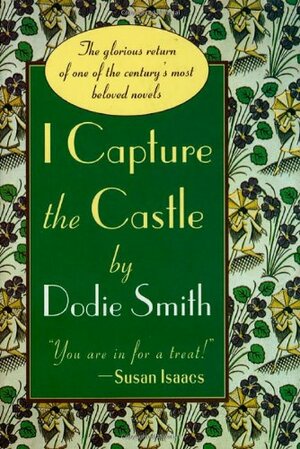
Review 2524: I Capture the Castle

It was with delight that I noticed I Capture the Castle would help me with my Century of Books project, because I liked it so much when I read it years ago. It had an ending that was completely different from what I remembered, though, my memory having possibly been polluted by seeing a couple of TV versions of it.

Cassandra lives with her family in a house attached to a ruined castle. The house, which was purchased during the heights of her father’s success as a writer, is now woefully decrepit. Her father has not produced anything since his initial success, and the money ran out long ago. Now their clothes are shabby, and they can barely afford to eat. Rent hasn’t been paid for months, and they’ve sold all the good furniture.

There is exciting news, though. Their landlord having died, new occupants of the estate, which includes their home, have arrived. They are American brothers, Simon and Neil Cotton.

The brothers arrive when Cassandra is taking a bath in the kitchen. She keeps quiet and they go away, but they return so she has to announce herself. They take her for a child. Her sister Rose, who is beautiful, decides that she will marry Simon, the heir, no matter what, even though she hates his beard.

Cassandra likes both men at first but then overhears them talking about Rose, who has been behaving affectedly. With a little advice, Rose begins to act naturally, though, and soon she has accomplished her goal. She is engaged to Simon, although Neil seems to hate her. The only trouble is, Cassandra is in love with Simon.

This sounds like a straight love story, but it isn’t. There are lots of terrifically eccentric characters and subplots to go with them. There is the issue of whether their father will write again. And will Topaz, their stepmother, who sees herself as an artist’s muse, leave him for someone who is working? What can Cassandra do about Stephen Colley, a devastatingly handsome young man who lives with and basically supports the family and copies out poems to give to her?

This novel is charming. Its narrator mixes wit with naiveté and wisdom, and the novel is written in a sprightly, entertaining manner. It’s a lovely light read.

Related Posts

It Ends with Revelations

A Pink Front Door

The Weather at Tregulla

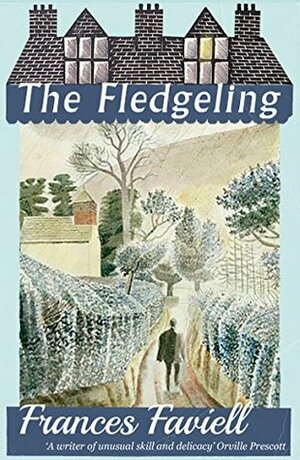
Review 2518: Dean Street December! The Fledgling

Here’s another book for Dean Street December!

I have read two memoirs by Frances Faviell, but The Fledgling is the third of her three novels and the first of her novels I’ve read. For me, It wasn’t as successful as her memoirs.

One reason is the main character. He is not very appealing. I’ll explain why later.

Neil Collins is serving his compulsory military service in 1950s England. This service was apparently controversial because the country was not at war.

Neil is a fragile, small young man who gets so nervous when ordered around or bullied—which he frequently is—that he gets stupid and can’t remember how to do things. He has already gone AWOL twice and has promised his grandmother he won’t do it again.

Everyone in his unit picks on him. He thinks he has one friend, Mike, but when Mike bullies him to desert, planning to follow him and use Neil’s contacts to get to Ireland, he realizes Mike has just been using him. So Mike bullies him more until he goes. Sexual abuse is implied.

Neil shows up in his grandmother’s rooms hoping to get his twin Nonnie’s husband, Charlie, to take him to Southampton before the arrival of Mike, who was supposed to leave the next day. However, his grandmother wants to turn him in, like she did last time, and Charlie doesn’t want to help him. To make matters worse, the walls of the rooms are very thin and people keep dropping by and trying to come in. Meanwhile, unbeknownst to the family, Mike is across the street all day watching the house.

I found Neil unlikable not so much because of what he is doing but how he acts. He is like the most timid heroine in a Gothic novel. He gasps loudly when he’s hiding, he keeps raising his voice despite many warnings about the nosy neighbors. He actually falls through the door when he is eavesdropping on his grandmother and her social worker. Basically, he’s an idiot with no control over himself. He acts more like a five-year-old than a twenty-year-old.

Of course, the book is about how he gets some stuffing to brace him up, but some of the book’s values are very dated. For example, Nonnie is supposed to tolerate Charlie’s infidelity because he’s jealous of her connection with her twin. And Neil has to get in a physical fight to gain some confidence. I also didn’t really find any of the characters to be that likable.

Related Posts

A Chelsea Concerto

The Dancing Bear

The World My Wilderness

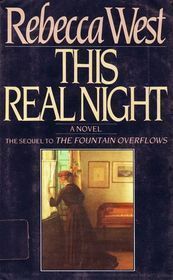
Review 2516: The Fountain Overflows

Rebecca West based The Fountain Overflows on her chaotic family life when she was a girl. I understand it is the first of an unfinished trilogy. If so, I’m interested in reading all of it.

Rose Aubrey is a daughter of an unusual couple. Her father Piers is a writer and editor whom many consider a genius, but he is a gambler who continually impoverishes his family. He has a pattern of collecting followers or benefactors who at first seem to worship him, but eventually they break with him, usually after lending him money. However, his family adores him. Her mother is a gifted pianist, formerly a famous concert performer, who is teaching Rose and her sister Mary with the expectation that they will become concert pianists, too. Their oldest sister, Cordelia, has no talent for music but doesn’t know it. She takes up the violin. Their younger brother Richard Quin is adored by all, a toddler at the beginning of the novel.

The novel covers about ten years of the family’s life. There is plenty of incident, from Mrs. Aubrey’s struggles to keep the family financially afloat to the girls’ struggles at school because they’re considered peculiar but also because they hate wasting time at school when they could be playing piano. Cordelia finds a mentor in one of her schoolteachers who encourages her in the idea that she is talented, which Mrs. Aubrey and the other girls deplore. Rose and Mary meet poltergeist activity at a friend’s house, and the family gets involved in a murder case. Also of importance is the girls’ cousin Rosamund.

It’s difficult to summarize this novel, but this family is so interesting, brilliant, chaotic, well-intended, and right behaving. I found the novel delightful.

Related Posts

Little Women

Apricot Sky

The Pursuit of Love

Review 2515: Dean Street December! The Late Mrs. Prioleau

Here’s another one for Dean Street December!

Because of the war, Susan Prioleau never meets her mother-in-law before she dies. Mrs. Prioleau seems to have kept an unhappy home, with children who left it as soon as they could, excepting Austin, her oldest son. She adored him but convinced him he is an invalid with a bad heart, which his doctor says is not true. He is immensely fat and makes his heart an excuse for doing nothing.

Susan hears stories about Mrs. Prioleau that don’t agree. She was adored by her servants of long ago, but she has written people cruel, vindictive letters. Both her daughters say she never gave them any attention, although the oldest, Nonnie, remembers a time when things were different. Her daughter Melissa disliked her, and she was estranged from her sister, Catherine, for years.

As Susan gets to know the family and helps Austin clear the house (although he won’t let her remove much), she begins to learn more about her mother-in-law’s life. Eventually, she learns about events that turned her from a selfish but warm-hearted girl to a spiteful old woman.

It’s a pity Monica Tindall only wrote one novel, because this is a good one. Although some of its secrets are easy to guess, the journey was absorbing.

Related Posts

Expiation

Which Way?

The Awakening

Review 2514: Germinal

My copy of Germinal seems to be a special edition, released in 1942 by Nonesuch Press, and perhaps part of a book club, because inside its cover is a little insert that says it is part of a series called the Ten Great French Romances. Now, I’m not so sure of the other books, although some of them don’t strike me as Romances (not even using the original definition), but poor Zola would be rolling over in his grave. Why? Because he was basically the founder of a new kind of literary movement for his time that rejected Romanticism. It was called Naturalism and is supposed to be based in science and logic and takes an impersonal stance, observing but not commenting. It also takes determinism as one of its tenets—that is, a character’s fate is determined at the get-go.

One little personal comment before my review—I received this novel as a Christmas present from my brother after unthinkingly commenting that I had never read any Zola. After I started reading it, I realized there was a reason for that.

The novel begins and ends with Étienne Lantier. He is an engine-man who has lost his job after a dispute with the foreman, and he has been traveling north looking for work. He is starving and doesn’t expect to find any.

It’s 1866, and the revolution 70 years before has helped the middle class but not the poor. Étienne travels from place to place but finds nothing.

He meets an old man nicknamed Bonnemort whose family, the Maheus, has worked for the Montsou Mining Company for generations. He ends up hanging around one of the Montsou pits, the Voreau, and so is on hand when Maheu, Bonnemort’s son, learns that his best putter has died. (I never figured out what a putter is, but now I see it’s someone who brings empty containers up to the surface and brings filled ones down to the bottom.) Étienne has just walked off, but Maheu sends his daughter Catherine after him to fetch him back and gives him a job. (Yes, women worked in the mines, too.)

Étienne is a little better educated than the miners and has been writing to a representative of Workers International. Soon, he is talking about half-understood principles of socialism and unionism to the mine workers. The Maheus, whom he takes a bed with, are barely able to feed themselves on the wages of Maheu, Catherine, Bonnemore, and Zacharie, and in fact Zacharie is being prevented from marrying because his family needs his wages. Then the unexpected demand for repayment of a debt begins a period of starvation.

Although the novel is about an actual 1866 mining strike, a strong subplot is about Étienne’s relationship with Catherine. He at first takes her for a boy, she is so young, but because a man named Chaval is pursuing her, Étienne assumes she is loose, as most of the mining women are, so they start off badly. (Modern audiences may be upset, as I was, when they find that Catherine doesn’t enter puberty until long after she is involved in a sexual relationship with Chaval.)

After a period of hardship for all the miners, the company decides on a new policy of timbering that will essentially cut the miners’ wages. Étienne becomes their leader when the miners begin negotiations to avoid a strike.

This novel is unremittingly grim. Zola digs you right in to every detail of the miners’ lives and then includes a couple of passages that contrast this with what the middle class mine managers and owners are doing. For example, the village has just emerged from a period of starvation when Zola describes a several-course dinner party at the home of Hennebeau, the mine manager. Later, when the miners are destroying the mines, Hennebeau is too wrapped up in the discovery that his wife is unfaithful to pay much attention.

Although this novel is considered a very important work in French literature, naturalism is not for me. It is too brutal.

Related Posts

Manga Classics Les Misérables

Little

The Black Count: Glory, Revolution, Betrayal, and the Real Count of Monte Cristo

Review 2509: The Château

I found The Château when I was looking for a book to fill the 1961 hole in my Century of Books project. Although the blurb calls Maxwell “one of our greatest practitioners of the art of fiction,” I hadn’t heard of him before.

Harold and Barbara Rhodes, a young American couple, have taken one of the first opportunities of Europe reopening for tourists after World War II to visit France in 1948. Although they have some other adventures first, the bulk of the novel concerns the two weeks they have booked at a château, where they will be having meals with and visiting with the family. They made this decision to try to improve their French.

Although they meet mostly with kindness, they find post-war France difficult to travel in. The destinations they have in mind take several trains and sometimes other modes of transportation to get to, and they have brought too much luggage. Sometimes they are recommended not to go to a destination they planned. They end up going to the château early.

At first, nothing seems to be going well. No one meets them at the station, and although their room, when they finally see it, looks nice, it is cold and the fireplace is blocked. They were promised a bathroom and they get one but with only cold water from the sink and none at all from the tub, and the toilet is on another floor. The bicycles they were promised don’t appear. Moreover, their host, Mme. Viénot, seems cold and distant and their French isn’t up to the conversation. It is clear that the family is of the upper echelons of society, but now they are broke.

The Rhodes take a break of three days in Paris, and after that, they find things improving. They meet guests and younger family members whom they like very much, their French has improved, and Mme. Viénot seems happy to see them.

This novel takes a gentle, sometimes amusing look at the differences between the French characters and the Americans—Harold especially beaming good will but sometimes putting his foot in it—basically culture clash and a clash of social classes. It also describes the post-war conditions in France. I enjoyed reading the novel very much. Its descriptions of landscapes are lovely. It is both appreciative and ironic.

Related Posts

The Postcard

Wonder Cruise

The Flight Portfolio

Review 2501: Novellas in November! Young Man with a Horn

I read Young Man with a Horn to fill a hole in my Century of Books project but, as has happened several times already, by the time I got to it, I had already read a book for that year. (I made a list of my to-read pile years to avoid this, but now I’ve lost the list!) However, at 171 pages, it qualifies for Novellas in November.

Young Man with a Horn is Baker’s debut novel and is still her best known. She seems to like to tackle complicated subjects and what were at the time fringe characters. (For example, she subtly indicates in Cassandra at the Wedding that Cassandra is gay.)

We know from the beginning that this novel is not going to have a happy ending. The anonymous narrator makes that clear in the Prologue. And about that narrator—the novel is related in a loose, conversational style, like someone might use to tell the story to a friend.

In the 1920s, Rick Martin is a 14-year-old orphan at the beginning of the novel. School isn’t working for him and he spends most of his time in the library until he finds a piano in an unlocked church and teaches himself to play, which doesn’t take long.

He decides he wants a trumpet, though, because it’s easier to carry around. His young aunt and uncle are very poor, so to buy one he needs a job. He gets one setting pins at a bowling alley. There he meets Smoke Jordan, an older Black boy who is a drummer. Eventually, they start hanging out to talk about music (after Rick gets over some racist notions). They like sitting behind a club where Smoke’s neighbor, Jeff Williams, has a band which is getting to be well known, a bunch of gifted Black men. Eventually, they are invited inside, and when Rick gets his trumpet, he convinces the trumpet player to give him lessons. It’s jazz Rick is interested in rather than the dance music the band plays in public. It becomes almost the only thing he is interested in.

The book traces his career as he becomes one of the best jazz trumpet players in the country. Baker draws a convincing portrait of an obsessed personality. It’s fairly fast-moving, and the only part I didn’t really appreciate was the blaming of his wife for the failure of their marriage.

Related Posts

Cassandra at the Wedding

Trust

Lucky Us

Review 2498: Novellas in November! Envy

It wasn’t until I was getting ready to post this review that I realized that at 152 pages it qualifies for Novellas in November!

I read Envy right after Dostoevsky’s The Gambler, and perhaps that was too much for me. The two short Russian novels have a lot in common even though they were written more than 60 years apart. They both feature young male narrators in a frenzy and easily offended. They both have long philosophical speeches that doesn’t seem to mean much. Olesha leans more into Absurdism, but Dostoevsky can be pretty absurdist himself.

Andrei Petrovich Babichev is a model Soviet citizen, a trust director in charge of food. He has literally picked our narrator, Nikolai Kavalerov, up from the gutter and given him a bed on his sofa. Andrei Petrovich is fat and self-satisfied, true, but Nikolai hates everything about him.

Then he meets Andrei’s brother, Ivan, a sort of buffoon who makes up ridiculous stories and also hates Andrei.

Andrei’s claim to fame is a huge communal dining hall he’s building, where food is supposed to be good and cheap. He has also produced a good, inexpensive sausage that he’s proud of. Olesha is clearly making fun of these accomplishments, and I don’t know how he got away with it in 1927 Soviet Union.

There is lots of talk about the New Man that Communism is going to produce but no sign of one. (Coincidentally, I am reading The Possessed by Dostoevsky right now, and there’s lots of talk about the New Man in it, too; only apparently he’s supposed to be produced by Nihilism.)

Thanks to the publisher for sending me this book in exchange for a free and fair review.

Related Posts

Life and Fate

The Gambler

Memories: From Moscow to the Black Sea