Review 2509: The Château

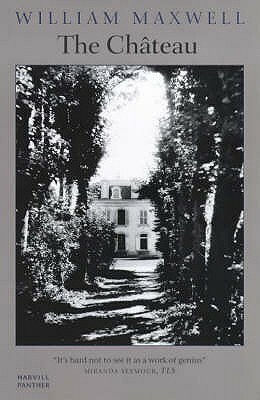
I found The Château when I was looking for a book to fill the 1961 hole in my Century of Books project. Although the blurb calls Maxwell “one of our greatest practitioners of the art of fiction,” I hadn’t heard of him before.

Harold and Barbara Rhodes, a young American couple, have taken one of the first opportunities of Europe reopening for tourists after World War II to visit France in 1948. Although they have some other adventures first, the bulk of the novel concerns the two weeks they have booked at a château, where they will be having meals with and visiting with the family. They made this decision to try to improve their French.

Although they meet mostly with kindness, they find post-war France difficult to travel in. The destinations they have in mind take several trains and sometimes other modes of transportation to get to, and they have brought too much luggage. Sometimes they are recommended not to go to a destination they planned. They end up going to the château early.

At first, nothing seems to be going well. No one meets them at the station, and although their room, when they finally see it, looks nice, it is cold and the fireplace is blocked. They were promised a bathroom and they get one but with only cold water from the sink and none at all from the tub, and the toilet is on another floor. The bicycles they were promised don’t appear. Moreover, their host, Mme. Viénot, seems cold and distant and their French isn’t up to the conversation. It is clear that the family is of the upper echelons of society, but now they are broke.

The Rhodes take a break of three days in Paris, and after that, they find things improving. They meet guests and younger family members whom they like very much, their French has improved, and Mme. Viénot seems happy to see them.

This novel takes a gentle, sometimes amusing look at the differences between the French characters and the Americans—Harold especially beaming good will but sometimes putting his foot in it—basically culture clash and a clash of social classes. It also describes the post-war conditions in France. I enjoyed reading the novel very much. Its descriptions of landscapes are lovely. It is both appreciative and ironic.

Related Posts

The Postcard

Wonder Cruise

The Flight Portfolio

Review 2501: Novellas in November! Young Man with a Horn

I read Young Man with a Horn to fill a hole in my Century of Books project but, as has happened several times already, by the time I got to it, I had already read a book for that year. (I made a list of my to-read pile years to avoid this, but now I’ve lost the list!) However, at 171 pages, it qualifies for Novellas in November.

Young Man with a Horn is Baker’s debut novel and is still her best known. She seems to like to tackle complicated subjects and what were at the time fringe characters. (For example, she subtly indicates in Cassandra at the Wedding that Cassandra is gay.)

We know from the beginning that this novel is not going to have a happy ending. The anonymous narrator makes that clear in the Prologue. And about that narrator—the novel is related in a loose, conversational style, like someone might use to tell the story to a friend.

In the 1920s, Rick Martin is a 14-year-old orphan at the beginning of the novel. School isn’t working for him and he spends most of his time in the library until he finds a piano in an unlocked church and teaches himself to play, which doesn’t take long.

He decides he wants a trumpet, though, because it’s easier to carry around. His young aunt and uncle are very poor, so to buy one he needs a job. He gets one setting pins at a bowling alley. There he meets Smoke Jordan, an older Black boy who is a drummer. Eventually, they start hanging out to talk about music (after Rick gets over some racist notions). They like sitting behind a club where Smoke’s neighbor, Jeff Williams, has a band which is getting to be well known, a bunch of gifted Black men. Eventually, they are invited inside, and when Rick gets his trumpet, he convinces the trumpet player to give him lessons. It’s jazz Rick is interested in rather than the dance music the band plays in public. It becomes almost the only thing he is interested in.

The book traces his career as he becomes one of the best jazz trumpet players in the country. Baker draws a convincing portrait of an obsessed personality. It’s fairly fast-moving, and the only part I didn’t really appreciate was the blaming of his wife for the failure of their marriage.

Related Posts

Cassandra at the Wedding

Trust

Lucky Us

Review 2498: Novellas in November! Envy

It wasn’t until I was getting ready to post this review that I realized that at 152 pages it qualifies for Novellas in November!

I read Envy right after Dostoevsky’s The Gambler, and perhaps that was too much for me. The two short Russian novels have a lot in common even though they were written more than 60 years apart. They both feature young male narrators in a frenzy and easily offended. They both have long philosophical speeches that doesn’t seem to mean much. Olesha leans more into Absurdism, but Dostoevsky can be pretty absurdist himself.

Andrei Petrovich Babichev is a model Soviet citizen, a trust director in charge of food. He has literally picked our narrator, Nikolai Kavalerov, up from the gutter and given him a bed on his sofa. Andrei Petrovich is fat and self-satisfied, true, but Nikolai hates everything about him.

Then he meets Andrei’s brother, Ivan, a sort of buffoon who makes up ridiculous stories and also hates Andrei.

Andrei’s claim to fame is a huge communal dining hall he’s building, where food is supposed to be good and cheap. He has also produced a good, inexpensive sausage that he’s proud of. Olesha is clearly making fun of these accomplishments, and I don’t know how he got away with it in 1927 Soviet Union.

There is lots of talk about the New Man that Communism is going to produce but no sign of one. (Coincidentally, I am reading The Possessed by Dostoevsky right now, and there’s lots of talk about the New Man in it, too; only apparently he’s supposed to be produced by Nihilism.)

Thanks to the publisher for sending me this book in exchange for a free and fair review.

Related Posts

Life and Fate

The Gambler

Memories: From Moscow to the Black Sea

Review 2497: Novellas in November! School for Love

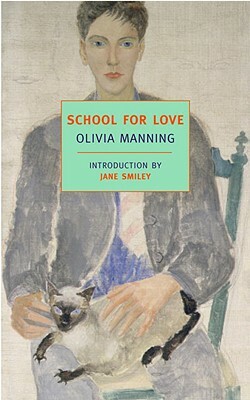
This year, I thought I’d try to pop some novellas into my October reading so that I could participate in Novellas in November, hosted by Bookish Beck and Cathy of 746 Books. I actually read School for Love for my Century of Books project, but was delighted to see that at 191 pages, it qualified for this one, too.

Felix Latimer arrives during a snowstorm in Jerusalem from Baghdad. He is newly orphaned, his father having been killed during the war (WW II) and his mother having recently died from typhoid. So, he is being taken in by a family connection, a woman named Miss Bohun who runs a boarding house, until he can get on a boat to England. The war is winding down, but at this point places are reserved for soldiers and government personnel.

Felix is in his mid-teens, but for a long time I took him for much younger. He has been taught by his mother to look for the good side of people, and he is disposed to be grateful to Miss Bohun, but readers see her another way right from the beginning. Although she runs a fringe religious organization and talks about good works, early on she sits down with Felix to figure his share of expenses and while adding up her household expenses, includes some things twice, then remarks that they should divide the costs in half even though she has another boarder (although admittedly, he is very poor and we don’t know how much he pays). Even so, his half of £36 mysteriously ends up at £21, leaving him pocket money of only a few pounds a month. (Later, she tries to raise the rent to take the full amount.) She also feeds the boarders poor and scant food.

At first, Miss Bohun confides in him and he is confusedly willing to take her part in her concerns. Although we learn that she has stolen Frau Leszno’s house and furnishings from her by putting the house into her own name to “protect” it, and actually uses Frau Leszno as a servant, Felix is ready to take Miss Bohun’s part because Frau Leszno seems so unpleasant. He likes Mr. Jewel, the other tenant who lives in the attic, but he still takes Miss Bohun’s part when she tells him he has to leave the next day, even though he has nowhere to go. (He ends up in the hospital.)

Miss Bohun is scheming, we find, to oust Mr. Jewel and move up into his attic herself so that she can rent her room to Mrs. Ellis, a young widow. Once Mrs. Ellis appears, Felix is smitten, and he begins to see the other side of Miss Bohun after taking in Mrs. Ellis’s sarcastic remarks. We eventually learn that Miss Bohun has promised Mrs. Ellis the whole house in the fall, a promise she has no intention of keeping. In fact, we realize all along that she has been trying to replace her tenants with more wealthy or prestigious ones, with the idea of getting more rent.

Although there is some action, most of the novel is concerned with the interactions among these characters and a few more. Felix begins to wake up to some realities.

The portrayal of Miss Bohun is a masterly one as we note her constant hypocrisies. As for love, although Felix begins with a crush on young Mrs. Ellis, it’s only really between Felix and a little cat, Faro.

Related Posts

The Great Fortune

The Spoilt City

Friends and Heroes

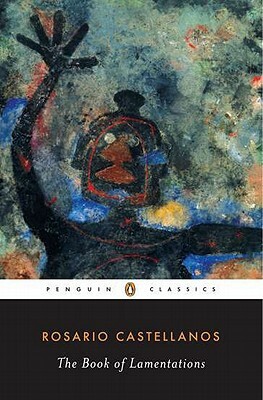
Review 2491: The Book of Lamentations

When I put this novel on my Classics Club list, I was looking for a few classics written originally in a foreign language. So, I chose this novel without knowing much about it.

It is set in Chiapas, a remote state in the far south of Mexico. At first, you might think it is set in the 19th century, but it is actually set in the 1930s, at a time when Mexico began to exact reforms that would return portions of the wealthy ranches to the native population.

One of the first images that indicates the treatment of the native population is that of travelers sitting in chairs that are strapped to Indians, who carry the people through the mountains. (I’m using the term “Indian” because the book does.) The Introduction says that Castellanos experienced this as a child.

I was confused at first, because the novel starts out with one group of people only to switch to another and another before bringing their stories together.

Although other characters are introduced first, the action starts with Marcela, a young native girl, traveling into the city of Cuidad Real to sell pots. She is told by a Ladina woman to bring the pots to her house. What she doesn’t know is that Doña Mercedes is a procuratress, and Mercela ends up being raped by Don Leonardo Cifuentes, who likes them young.

Returning home, she is rebuffed by her parents until she is taken under the wing of Catalina Díaz Puilgir, an ilol (sort of a sorceress) and her husband Pedro González Winiktón. She is made to marry Catalina’s brother Lorenzo, a man of limited intellect, and eventually has a child. And that’s all we see of her until much later.

Suddenly we switch to Cuidad Real and the lives of the Ladino characters. Leonardo Cifuentes, a wealthy rancher, is married to Isabel and probably murdered her first husband. Her daughter, Idolina, has taken to her bed since her father’s death. Leonardo has been courting a newcomer to town, Julia Acevedo, the supposed wife of Fernando Ulloa, the engineer who has been sent by the government to survey the ranches in preparation for the land reforms.

So far, Julia has avoided Cifuentes’s advances and made friends with his daughter. Her attempts, however, to be accepted by the rest of the Ladinas in the upper classes are unsuccessful. Instead of staying properly at home, she walks around town with her red hair flowing, earning her the nickname “La Alazana.”

The real issue in the novel is the land reform, which the ranchers oppose. However, an excuse for violent action comes when Catalina finds a cave with ancient stone figures in it. She gains a large following among the Indians by falling into trances in the cave and making utterances. The ranchers use the excuse of the large gatherings to claim that the Indians are planning a revolt. And violence eventually follows.

The novel is acerbically written, with no totally likable characters but with sympathy for the Mayan outcasts, who don’t really understand what is going on most of the time. They don’t understand the language or the mode of thought of the Ladinos, and when questioned later by authorities, since they don’t understand the questions, they just answer yes or no at random.

This novel was difficult to read. It wasn’t just the subject matter but more how the novel would jump to a new set of characters and tell a lot about them only to have them vanish for many pages. I may have also had problems because I was on vacation and then sick while trying to read it. But I was determined to finish it, and did. Although the novel is sympathetic to the native peoples of the area, to the modern eye it is also patronizing.

Related Posts

Mexican Gothic

The Bridge of the Gods

Black Narcissus

Review 2489: #1970Club! Fifth Business

I have long meant to read something by Robertson Davies, so when I saw that Fifth Business qualified for the 1970 Club, I got hold of a copy. This novel is Davies’ fourth book and the first in his Deptford Trilogy.

In the 1910s, Dunstable (later called Dunstan or Dunny) Ramsey is ten years old when a snowball thrown by Percy Boyd Staunton locks his fate with that of Staunton and two other people. Dunny knows that Staunton, who is rich and a bit of a bully, is planning to hit him with the snowball, so he gets behind Reverend Amasa Dempster and his young, pregnant wife for protection. Staunton throws the snowball anyway and hits Mrs. Dempster in the head. She has a kind of hysterical fit, goes into premature labor, and gives birth to Paul, who has to be tended carefully to keep him from dying. This work is done by Dunny’s mother. Mrs. Dempster is not quite all there after this experience. Dunny’s guilt at having tried to use the Dempsters as a shield leads him to a lifelong connection with Mrs. Dempster and a more sporadic one with Paul.

Dunstan begins with this story in telling his headmaster about his life, because he feels diminished by the speech about him made at his retirement party. He claims to be fifth business, a theater and opera term used of a character who does not seem important but is required for the plot to work.

I found this novel fascinating, because it goes on, telling the events in Dunstan’s life in an interesting and entertaining way, but you wonder where it’s going. Then, in a breathtaking last few pages, Davies ties together all the major events and principal characters. Warning to everyone: the book reflects misogynistic tendencies, not a surprise for the earlier time setting of the book, beginning before World War I and continuing after World War II (or for 1970, for that matter). But what a book!

Related Posts

The Northern Lights

The Bird Artist

Road Ends

Review 2479: Classics Club Spin Result! Merkland

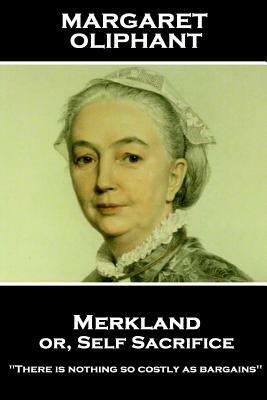
I have read and enjoyed all of Margaret Oliphant’s Carlingford series as well as her first novel and one other. Merkland (which has different subtitles depending on where I look at it: in my eBook it says “A Story of Scottish Life” and in my hardcopy it says “or, Self-Sacrifice”) is her second novel and shows her inexperience. I read it for my Classics Club Spin.

Although the main character of the novel is Anne Ross, it has two plots concerning the fates of two disgraced young men. At the opening of the novel, Anne learns from her unsympathetic stepmother not only that her older brother Norman Rutherford, long believed dead, may be alive, but that he is believed to be the murderer of Arthur Aytoun, who was found shot to death 18 years before. Anne is horrified when she learns that her great friend, Mrs. Catherine Douglas, has invited this man’s daughter, Alice, to stay with her, for she thinks Alice must hate her family.

Mrs. Catherine, for her part, is facing a dilemma. She has unexpectedly inherited some money and, being already wealthy herself, had intended to give it to hard-working but poor young James Aytoun, Alice’s brother. However, two old friends have come to her to ask for help for Archie Sutherland, the young local laird, who has fallen in with bad companions and is badly in debt. She decides in Archie’s favor, but before she can send him the money, he loses his entire estate gambling.

Mrs. Catherine sets about rescuing Archie by bringing him home to recover and arranging honest employment where he might eventually earn enough to buy back his heritage.

For her part, Anne discovers a letter that indicates Norman may be innocent of the crime even though the circumstantial evidence against him is strong. She makes it her goal to try to clear her brother’s name, especially important because Alice Aytoun has fallen in love with Anne’s young stepbrother, Lewis.

So far, so good. Two interesting plots plus other subplots such as the identity of a mysterious child and the fate of Rutherford’s estate in the hands of his dissolute English ex-companions. However, this novel is much longer than it needs to be, containing passage after passage of moralizing and sermonizing. Modern audiences may also be dismayed at its strong message against women’s rights. Further, the novel takes several chapters beyond the crisis to wrap up its loose ends, and by the end I was just skimming the paragraphs trying to finish.

A final note about the edition I read. I dislike reading eBooks, so even though I have Oliphant’s complete works on my iPad, I looked for a paperback version. Drat these print-on-demand books! I ended up with the edition shown above, published by Horse’s Mouth, that had all the evils except that it was corrected for misreadings by machine reading, which I have encountered before. No page numbers, no copyright or any other kind of information except a short biography and a list of other works, no formatting (the text starts at the bottom of page 2). Worst of all, it is only in about 6 pt. type at the largest, when anyone who knows anything about it knows that about the smallest you can go and still be readable is 9 pt.

Related Posts

Passages in the Life of Margaret Maitland of Sunnyside

Hester

A House in Bloomsbury

Review 2478: Village Story

Like Buckmaster’s Family Ties, Village Story presents us with lots of characters and we begin slowly to sort them out and differentiate them. Buckmaster, who frequently speaks directly to the reader, states that Mrs. Ethelburger is her heroine, but Mr. Noyce gets more attention.

The novel begins with the Darlingtons because they have the nicest garden in the village, but it’s only their daughter Linda who has a minor role in the story. Linda, we’re told, having been pronounced “gifted” in school, has been spoiled. Hoping to keep her out of trouble, Mrs. Darlington takes her up to the big house in the village, the Noyce’s house, and gets her a job as a housemaid. There, she proceeds to make trouble by telling everyone that Mr. Noyce has been making love to her in the drying cupboard. This is a lie. In fact, Mr. Noyce is hardly even polite to her. But from a 21st century viewpoint, this minor plot is troubling on lots of levels, not least of which is the author’s attitude toward girls’ education. We must try to view it in the context of its time, where these views were not unusual.

Next, we briefly meet Mr. Noyce, who led a cosmopolitan life before settling down in the village on the family estate after his father died. Mrs. Noyce is an artist, one whom Mr. Noyce believes could become great, so he encourages her to keep painting. Even though that’s what she wants to do, her relationship with Mr. Noyce is on edge, and she seems to be rude to everyone. Of course, the village thinks she shirks her household duties.

Mrs. Ethelburger isn’t much interested in household duties, either, and since she has several small children, her house shows it. We’re told she and Mr. Ethelburger love each other, but he isn’t much of a character in the novel, and she is just breaking off an affair with Mr. Browning, a young businessman who lives with his mother. Mrs. Ethelburger used to visit old Mr. Noyce, so one day she wanders onto the property—now much more private—and strikes up a friendship with Mr. Noyce.

Also in the village are the Sparks, the rector and his wife, an elderly couple. He tends to be studious while she has decided to become a Communist without really understanding anything about Communism.

The novel only has the suggestion of a plot, mostly about the party the Noyces decide to have and the fate of the Noyce’s marriage. But somehow Buckmaster ties it all in with the fate of the village itself. I was interested in the story but sometimes couldn’t remember who all the characters (many more than I described) were and wondered where it was going.

Related Posts

Family Ties

A House in the Country

Near Neighbors

Review 2472: 2024 Dostoevsky Read-A-Thon: The Gambler

The Gambler is known as Dostoevsky’s most autobiographical novel, written in 26 days to foil the claims of an unscrupulous publisher. For Dostoevsky himself was a gambling addict and made a fool of himself over a girl called Polina when he was much older than his fictional alter ego. I read The Gambler for the 2024 Dostoevsky Readathon hosted by Russophile Reads. You can read his much more thorough evaluation of The Gambler here.

Alexey is a tutor for a Russian family returning at the opening of the story from two weeks’ leave to a German spa and gambling town. He works for the General tutoring his young niece and nephew and he is madly in love with Polina, the General’s older niece.

The General is broke, although he is madly pretending not to be. In fact, during his leave, Alexey has been pawning things for Polina. The General is in love with a Frenchwoman named Blanche, who is clearly after the money he expects to get when his aunt dies. Also hanging around are a Frenchman named des Grieux, whom the General has been borrowing money from and who has his eyes on Polina, and a rich Englishman whom Alexey likes named Mr. Astley.

As usual with Dostoevsky’s main characters, Alexey is in a sort of frenzy, this one of love for Polina. In attempts to gain some kind of equality with the other characters, he instead repeatedly shows his immaturity.

I have read most of Dostoevsky’s novels but I didn’t realize he could be funny until this one. The General hears that his aunt is ill and may be dying, so he keeps sending telegrams asking if she is dead in his desperation to seal the deal with Blanche. Suddenly, his aunt, called Grandmother in the novel because she is Polina’s grandmother, appears in town. And does she appear. She takes over the novel until she departs, making Alexey her escort to the casino, where she at first wins a lot of money.

Then loses it, but has the sense to go home. In the meantime, she disinherits the General. She is the most truly Russian character in the novel, with the other Russians trying to pretend they are cosmopolitan.

Eventually, we learn from Alexey’s experience what it’s like to be a gambling addict. For Alexey goes to the casino to try to win enough money to help Polina.

This is a short, sometimes funny, sometimes sad but always lively story about Alexey’s inability to understand what is going on, and about greed in its various forms. Note that the story contains lots of stereotypes in depicting people from countries other than Russia.

Related Posts

The Brothers Karamazov

The Idiot

The Kreutzer Sonata Variations

Review 2464: Cassandra at the Wedding

At the beginning of this novel, we meet Cassandra Edwards preparing to attend her twin sister’s wedding. Although her narrative is clever, entertaining, and disarmingly truthful, it is clear something is wrong.

Slowly we learn it is Cassandra’s intention to talk Judith out of the wedding, which she views as a horrible mistake. The Edwards have lived on their ranch as a self-contained until, intellectual, cultured, staying away from the affairs of others. When the girls began studying at Berkeley, Cassandra at any rate spent a lot of time with others, trying new things out. Despite having always tried to maintain their individuality, they finally decided, at lease according to Cassandra, that they only needed each other would move to Paris. But first, Judith decided she would try one year by herself studying music in New York. And now she has returned with a fiancé.

When Cassandra arrives at the ranch and we see the two women together, it seems clear that Cassandra is the less mature and more egotistical. She doesn’t seem to be able to see the situation from any point of view but her own. She is like a whirlwind of talk and distress, trying to push Judith toward her own goal. Cassandra does something drastic at the end of this section, but I don’t want to give it away.

In the second section, Judith narrates. We learn that although she loves Cassandra , contrary to what Cassandra believes, Judith wants to bet away from her. Judith is the calmer, more mature twin, and she finds Cassandra exciting but exhausting. I seems clear that Cassandra has attributed some of her own attitudes and ideas to both of them.

Cassandra may sound like an irritating character, but somehow she is appealing. We enjoy being with her as she navigates the rough seas of more maturity. I very much enjoyed this book, which has likable characters and looks honestly at the difficulties involved in finding an identity, especially if you’re a twin, and becoming one’s own whole person.

Related Posts

Beneath the Visiting Moon

Rhododendron Pie

Rebecca