Review 2478: Village Story

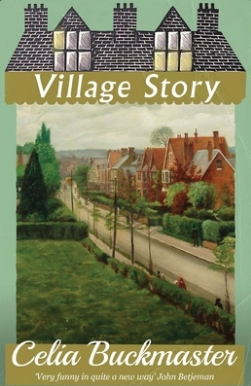
Like Buckmaster’s Family Ties, Village Story presents us with lots of characters and we begin slowly to sort them out and differentiate them. Buckmaster, who frequently speaks directly to the reader, states that Mrs. Ethelburger is her heroine, but Mr. Noyce gets more attention.

The novel begins with the Darlingtons because they have the nicest garden in the village, but it’s only their daughter Linda who has a minor role in the story. Linda, we’re told, having been pronounced “gifted” in school, has been spoiled. Hoping to keep her out of trouble, Mrs. Darlington takes her up to the big house in the village, the Noyce’s house, and gets her a job as a housemaid. There, she proceeds to make trouble by telling everyone that Mr. Noyce has been making love to her in the drying cupboard. This is a lie. In fact, Mr. Noyce is hardly even polite to her. But from a 21st century viewpoint, this minor plot is troubling on lots of levels, not least of which is the author’s attitude toward girls’ education. We must try to view it in the context of its time, where these views were not unusual.

Next, we briefly meet Mr. Noyce, who led a cosmopolitan life before settling down in the village on the family estate after his father died. Mrs. Noyce is an artist, one whom Mr. Noyce believes could become great, so he encourages her to keep painting. Even though that’s what she wants to do, her relationship with Mr. Noyce is on edge, and she seems to be rude to everyone. Of course, the village thinks she shirks her household duties.

Mrs. Ethelburger isn’t much interested in household duties, either, and since she has several small children, her house shows it. We’re told she and Mr. Ethelburger love each other, but he isn’t much of a character in the novel, and she is just breaking off an affair with Mr. Browning, a young businessman who lives with his mother. Mrs. Ethelburger used to visit old Mr. Noyce, so one day she wanders onto the property—now much more private—and strikes up a friendship with Mr. Noyce.

Also in the village are the Sparks, the rector and his wife, an elderly couple. He tends to be studious while she has decided to become a Communist without really understanding anything about Communism.

The novel only has the suggestion of a plot, mostly about the party the Noyces decide to have and the fate of the Noyce’s marriage. But somehow Buckmaster ties it all in with the fate of the village itself. I was interested in the story but sometimes couldn’t remember who all the characters (many more than I described) were and wondered where it was going.

Related Posts

Family Ties

A House in the Country

Near Neighbors

Review 2472: 2024 Dostoevsky Read-A-Thon: The Gambler

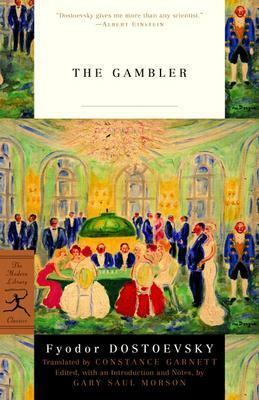
The Gambler is known as Dostoevsky’s most autobiographical novel, written in 26 days to foil the claims of an unscrupulous publisher. For Dostoevsky himself was a gambling addict and made a fool of himself over a girl called Polina when he was much older than his fictional alter ego. I read The Gambler for the 2024 Dostoevsky Readathon hosted by Russophile Reads. You can read his much more thorough evaluation of The Gambler here.

Alexey is a tutor for a Russian family returning at the opening of the story from two weeks’ leave to a German spa and gambling town. He works for the General tutoring his young niece and nephew and he is madly in love with Polina, the General’s older niece.

The General is broke, although he is madly pretending not to be. In fact, during his leave, Alexey has been pawning things for Polina. The General is in love with a Frenchwoman named Blanche, who is clearly after the money he expects to get when his aunt dies. Also hanging around are a Frenchman named des Grieux, whom the General has been borrowing money from and who has his eyes on Polina, and a rich Englishman whom Alexey likes named Mr. Astley.

As usual with Dostoevsky’s main characters, Alexey is in a sort of frenzy, this one of love for Polina. In attempts to gain some kind of equality with the other characters, he instead repeatedly shows his immaturity.

I have read most of Dostoevsky’s novels but I didn’t realize he could be funny until this one. The General hears that his aunt is ill and may be dying, so he keeps sending telegrams asking if she is dead in his desperation to seal the deal with Blanche. Suddenly, his aunt, called Grandmother in the novel because she is Polina’s grandmother, appears in town. And does she appear. She takes over the novel until she departs, making Alexey her escort to the casino, where she at first wins a lot of money.

Then loses it, but has the sense to go home. In the meantime, she disinherits the General. She is the most truly Russian character in the novel, with the other Russians trying to pretend they are cosmopolitan.

Eventually, we learn from Alexey’s experience what it’s like to be a gambling addict. For Alexey goes to the casino to try to win enough money to help Polina.

This is a short, sometimes funny, sometimes sad but always lively story about Alexey’s inability to understand what is going on, and about greed in its various forms. Note that the story contains lots of stereotypes in depicting people from countries other than Russia.

Related Posts

The Brothers Karamazov

The Idiot

The Kreutzer Sonata Variations

Review 2464: Cassandra at the Wedding

At the beginning of this novel, we meet Cassandra Edwards preparing to attend her twin sister’s wedding. Although her narrative is clever, entertaining, and disarmingly truthful, it is clear something is wrong.

Slowly we learn it is Cassandra’s intention to talk Judith out of the wedding, which she views as a horrible mistake. The Edwards have lived on their ranch as a self-contained until, intellectual, cultured, staying away from the affairs of others. When the girls began studying at Berkeley, Cassandra at any rate spent a lot of time with others, trying new things out. Despite having always tried to maintain their individuality, they finally decided, at lease according to Cassandra, that they only needed each other would move to Paris. But first, Judith decided she would try one year by herself studying music in New York. And now she has returned with a fiancé.

When Cassandra arrives at the ranch and we see the two women together, it seems clear that Cassandra is the less mature and more egotistical. She doesn’t seem to be able to see the situation from any point of view but her own. She is like a whirlwind of talk and distress, trying to push Judith toward her own goal. Cassandra does something drastic at the end of this section, but I don’t want to give it away.

In the second section, Judith narrates. We learn that although she loves Cassandra , contrary to what Cassandra believes, Judith wants to bet away from her. Judith is the calmer, more mature twin, and she finds Cassandra exciting but exhausting. I seems clear that Cassandra has attributed some of her own attitudes and ideas to both of them.

Cassandra may sound like an irritating character, but somehow she is appealing. We enjoy being with her as she navigates the rough seas of more maturity. I very much enjoyed this book, which has likable characters and looks honestly at the difficulties involved in finding an identity, especially if you’re a twin, and becoming one’s own whole person.

Related Posts

Beneath the Visiting Moon

Rhododendron Pie

Rebecca

Review 2463: The House Opposite

I didn’t like the main character of The House Opposite at first. Elizabeth is having an affair with her boss, a married man with two children, and she sees his wife and children only as people who get in the way of her happiness. She’s dating a young serviceman, Bob, simply to hide her affair. She apparently referred to the boy across the street as a “pansy” in his hearing, and the remark has made him doubt his sexuality.

Nevertheless, she’s friendly to her coworkers and as she begins to help with the war—working as a warden and helping in the hospital—she begins to grow on me. As warden, she is partnered with Owen, that same boy she insulted, and it is the developing friendship between the two that is a focus of the novel—that and her own self-evolution.

One of the interests of this novel is the detailed descriptions of what it was like to live through the Blitz in London. Although other novels recount an incident or two, most of the characters in this novel have chosen to stay in London and sustain many attacks, most of them even staying in their homes and feeling a little superior to those who seek shelter.

Although Elizabeth takes a long time to recognize that her lover is a stinker, she otherwise shows herself to be quite likable. There are a lot of themes, involving Owen growing up, Elizabeth humanizing her lover’s wife and children, Owen’s father’s involvement in the black market, and so on.

Related Posts

The Midnight News

Company in the Evening

Spam Tomorrow

Review 2459: The Book of Dede Korkut

Whenever I make up a new Classics Club list, I try to include some very early works. This one was probably written in the 12th or 13th century, but it draws from much earlier stories of the Oghuz Turks. The stories are said to be told and assembled by Dede Korkut, a shaman and bard.

The book comprises twelve stories and an additional work called “The Wisdom of Dede Korkut.” It seems that all of these early heroic stories, no matter what country they come from, are very similar, mostly concerned with fighting. Although the stories vary between more formal language, slang, and poetic language, they have formulaic sections. For example, several stories begin with a formula like this, only varying the names:

Beyindir Khan son of Kam Ghan had risen from his place. He had pitched his white pavilion on the black earth. His many-coloured parasol had reared toward the sky. In a thousand places his silken carpets had been spread.

All of the stories are addressed to the Khan, and most end with a sort of religious blessing directed at him. The characters often declaim, and when they do, there is a formula I found quite charming. It says something like “Thereupon Kanli Koja declaimed; let us see, my Khan, what he declaimed.”

Most of the stories, as I said, are about fighting. Sometimes a warrior is captured, and then years later a brother or son goes out to get him back. It seems that the captive is always sent out to fight the warrior, and once they figure out who they are, they unite and kill the captors. In one story, a hero informs his mother that he’ll only take a bride who will jump on her horse before him, ride before him to his enemies, and then chop off their heads before he gets there. When he finds a girl who does just that, he gets mad at her. But they make up.

All these heroes seem to have very short tempers and kill almost everyone they meet. One guy spends about six pages boasting of his exploits but inserts into the boasting several times how much he hates warriors who boast. I suspect there’s a sense of humor involved in that.

If you’re interested in reading a couple hundred testosterone-filled pages, this is the book for you.

Related Posts

Folk Tales of the Native American

The Books of Jacob

The Bastard of Istanbul

Review 2458: Miss Granby’s Secret or the Bastard of Pinsk

I was thrilled to learn that Dean Street Press was continuing its Furrowed Middlebrow imprint. This novel is an entertaining entry in that line.

In 1912, Pamela receives a bequest from her great-aunt Addie Granby of a house and a box of keepsakes and papers. Aunt Addie had been a well-known romance writer, but her modern great niece doubts that her spinster aunt ever understood the facts of life. Pamela finds hints that Addie had a romance when she was 16 with someone named Stanislaw. She also wrote her first novel.

The entirety of the novel, entitled The Bastard of Pinsk, is included within this novel. It begins with a conscientious list of terms that some polite young man has given her definitions for. As an example, “bastard” is given as “a very noble Hero of Royal Blood.”

The novel within the novel is made funny by the naïveté of its author, who writes in a Romantic, florid style and flings about words she doesn’t know the meaning or connotations of. Her Romantic upbringing and reading in the Gothic tradition are manifest in the ridiculous plot. If I have any criticism, it’s that it’s a bit too long. However, it picks up as it goes along.

Twenty years later Pamela learns that her friend Adey has been nursing an old man—her Aunt Addie’s Stanislaw! Now, she thinks, is her opportunity to find out about Aunt Addie’s past.

I received this book from the publisher in exchange for a free and fair review.

Related Posts

Beneath the Visiting Moon

Anne of Green Gables

My Brilliant Career

Review 2457: Westwood

Margaret Steggles is a girl who yearns for beauty in her life. She is a schoolteacher moving to London for a new job, and she has been taught by her mother not to expect marriage. She tends to drift into reveries when contemplating beautiful scenery, literature, or music.

A small accident brings her into the chaotic household of Hebe and Alex Nislund. She finds Hebe beautiful but rude and is disappointed by Alex, who is a famous painter, because he seems so ordinary. Their housekeeper, Grantey, learning where Margaret lives, walks her home, because Grantey is returning to her primary place of employment, where she is an old retainer of Hebe’s parents, the celebrated playwright Gerard Challis and his wife Seraphina. Grantey invites her to stop by to visit at their home, Westwood, which is just up the hill from Margaret’s Highgate neighborhood.

A famous playwright is heady stuff for Margaret, who loves Challis’s plays. Although she doesn’t drop in on Grantey, she meets Zita, a German refugee and servant from Westwood, in the hardware story trying to find someone to mend a fuse before a party begins. The store can’t help, but Margaret can. She meets Gerard Challis and is struck by hero worship.

But Gerard is a pompous, humorless, unaffectionate, and selfish man who delights in carrying on chaste affairs with beautiful young women until they become demanding, at which point he dumps them without ceremony. He has coincidentally set his eye on Hilda, who just happens to be Margaret’s best friend. Hilda has plenty of admirers, though, and isn’t impressed, even though he is clearly wealthy and has told her he is single and his name is Marcus. This rejection of course makes him more eager.

Margaret is accepted into the Challis household as a friend and visitor, especially after the Nislund house is bombed and they all move in, too. Margaret enjoys being there even though they mostly treat her as a convenient person for helping take care of Alex and Hebe’s three small children. Margaret’s friendship with Zita can also be difficult because Zita is volatile, but they go to beautiful concerts together.

Margaret has also started helping John, a coworker of her father. He has been struggling to care for his mentally challenged daughter while his housekeeper is ill.

This novel made me laugh out loud sometimes, especially at the descriptions of the plots of Challis’s plays. The introduction tells us that Challis is based on a real person. I’d like to know who! (It turns out to be some guy named Charles Morgan.) In other respects, I really enjoyed this novel about Margaret’s development in self-respect and her shedding of her romantic myopia. This is a good one!

Related Posts

A Pink Front Door

Nightingale Wood

The Swiss Summer

Review 2454: The Shutter of Snow

The Shutter of Snow is a remarkable work. It is Emily Holmes Coleman’s only novel, written after she was interred in a mental hospital for postpartum psychosis. As you can imagine, therapy in the 1920s was not sophisticated.

Sometimes Marthe Gail believes she is God, sometimes Jesus Christ. She thinks her husband and the doctors are keeping her baby away from her, or maybe she didn’t have a baby. Or maybe he is dead.

She is injected in her spine, wrapped in sheets and submerged in water for hours. Imprisoned under a canvas sheet with only a hole for her face.

She makes improvements and is moved to a freer ward, gets in a fight with a patient or hangs like a monkey from pipes or dances naked through the ward and is moved back. She begs to see her husband but then is angry with him when he comes.

Her story is told from her own point of view, which is sometimes angry, sometimes hallucinogenic, sometimes filled with humor. The writing style does not break out speech from thought, so it is occasionally briefly confusing, but propels the reader along with it.

Related Posts

Down Below

Turtles All the Way Down

Zelda

Review 2448: Ferdydurke

I thought that Ferdydurke would be something different that I could read for the 1937 Club, but I couldn’t bring myself to finish it. When I returned to it, I still couldn’t make any headway. I didn’t finish it but read about 70 pages.

The unnamed narrator is turned from a middle-aged writer into a juvenile boy by an old schoolmaster and forced to go back to school. The sense of humor is juvenile, jokey, and forced, and I didn’t think it was funny. I quit reading during the mock introduction to a story (the first of two, apparently) that Gombrowitz chose to interrupt the flow of the novel. Not that the flow was very interesting.

Gombrowitz uses a Polish word, “pupa,” which means the butt or core of the body, to signify the concept of infantilization. He uses the word so often that I never wanted to hear it again.

This novel is supposed to be a masterful satire, but I couldn’t stand it.

Related Posts

The Finkler Question

Quichotte

The Broom of the System

Review 2445: Illyrian Spring

This is a lovely book. In some ways, it compares to Elizabeth Von Armin’s The Enchanted April, but I think it is deeper and more thoughtful.

Grace Kilmichael has left her family. Although she is a famous painter, her husband Walter treats her art like a little hobby. He has always teased her about being stupid, but lately there seems to be an edge. He constantly makes admiring remarks about a female coworker and spends a lot of time with her.

Grace’s children are grown and don’t seem to need her, and she has lately had a poor relationship with her daughter Linnet, who no longer confides in her and acts impatient with her.

Accepting a contract for some drawings on her travels, she leaves without telling anyone where she’s going. She simply writes Walter a letter offering him the opportunity to leave her for Rose.

Lady Kilmichael has avoided meeting any of her friends in Europe, because she wants no one to know where she is. However, she runs into her friend Lady Roseneath in Venice. Lady Roseneath is traveling with her nephew, and when he appears, Grace realizes that she met him the day before on Torcello, where they had a conversation about architecture and he helped her correct a drawing of mathematical design that she plans to send to her archeologist son.

His name is Nicholas Humphries and he’s a little older than her sons. On an expedition the next day, he confides that he wants to be an artist but because he made the decision late and he wanted to be an architect as a child, his father is determined he will study architecture. The situation is made worse because his sister decided to be an artist before him, although she has little talent, and his father won’t stand for two artists in the family. When Grace sees his work, she realizes he needs to develop but has talent. So, eventually she agrees to help him learn.

She has told Lady Roseneath she is going to Greece because she doesn’t want her family to find her, but actually she goes to Spalato (Split) on the coast of Croatia, and the boy comes with her. Grace feels that he is giving her insights into her relationship with Linnet, and Nicholas, who was sulky when she met him, begins to be more happy.

As well as containing gorgeous descriptions of the towns and countryside of 1935 Croatia, the novel thoughtfully explores the relationship between the two protagonists. It describes Grace’s own personal growth and her insights into her relationships with her family members. It’s a lovely novel about personal development.

Related Posts

Young Anne

Three Weeks

Dangerous Ages