Review 1816: Sight

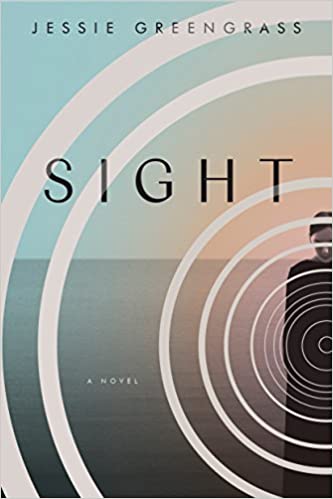
Hmmm. I find it hard to evaluate Sight because even though it explores very personal thoughts and feelings, it appealed mostly to my intellectual side not my emotion. And I have the greatest response to the latter. Some readers on Goodreads compared Greengrass to Rachel Cusk, and I can understand the comparison.

Sight is concerned with seeing below the surface, both in the obsessions of the main character and in the stories she tells about Roentgen, Freud, and John Hunter, an early anatomist. The unnamed character is at first painfully and neurotically conflicted about having a child, feeling the desire for the child while at the same time fearing the responsibilities of parenthood, but even more so fearing that she will not connect with her child. All the while, she lets us know that in another time she has already had this child and is expecting another one.

We learn that the narrator’s mother, the daughter of a psychiatrist who is an unrelenting self-analyst, had her dreams interrogated so thoroughly as a child that she stopped having them. Thus, her mother attempts to live only on the surface. Greengrass explores how we can know another person, or even ourselves, through the focus of motherhood, daughterhood, and through ruminations about scientific discoveries.

She writes in a lovely, meticulous prose, although she often prefers long, complicated sentences. Like her microscopic observations, though, her style seems distanced from the reader. I read this novel for my James Tait Black prize project.

Outline

4321

Umbrella

Review 1813: Literary Wives! I’m Fine and Neither Are You

Today is another review for the Literary Wives blogging club, in which we discuss the depiction of wives in fiction. If you have read the book, please participate by leaving comments on any of our blogs.

Be sure to read the reviews and comments of the other wives!

Literary Wives Needs Your Help!

Recently, we’ve had some members resign, and we will miss them. Now we feel we are getting a little small for a club unless we can recruit a few new members. If you are interested in becoming one, please let one of us know.

What Does Membership Involve?

Although we started out as all wives, that’s not a requirement. Now we would just like people who are interested in reading and discussing how literature depicts wives and marriage. You will need to have your own blog on which to post your reviews so that we can link to it. We read four books a year and try to post our reviews on the same day. These days are the first Monday in March, June, September, and December.

When Would I Begin Working with the Club?

Our next book review isn’t until June, so it’s up to you to decide how much time you need to finish the book. However, right now, we are just beginning to select books for the next couple of years. Members are more engaged at this time in looking at lists of books, reading about them, and voting for their choices. We only do this every other year, but we will begin this process as soon as we get new members.

My Review

What seems at first to be a funny chick lit novel becomes a little more serious with a plot twist. Lately Penelope Ruiz-Kar feels like she’s barely keeping her head above water. She’s the main supporter of her family while her husband Sanjay sells an occasional article. But her job as a fundraiser for a university is stressful and requires a lot of overtime. (Although, just a little comment. The character mentions 50 hours a week, which for people in high tech is not a lot of overtime. Things are changing, though, which is good.) Sanjay doesn’t pick up much of the slack at home, and her youngest child, Miles, wakes her up every night, having wet his bed. She just feels exhausted.

She envies her best friend Jenny Sweet, who seems to lead a perfect life. Although Jenny’s husband Matt travels a lot for work, he seems to adore her, and they are financially better off than the Kars. But Penelope’s illusions are shattered when Jenny dies of an accidental overdose of opiates. Penelope wonders how she could not have noticed that Jenny was in trouble.

When Matt tells Penny that his marriage was in terrible shape despite appearances, she begins to think she needs to work on hers. After a discussion with Sanjay, they decide to give each other a list of things they would like the other to change. I wonder how they thought that would turn out?

This novel is entertaining and well written, but despite a few glitches at first, it went for too easy resolutions. Everyone should have such a near-perfect husband. The end result felt like chick lit after all.

What does this book say about wives or the experience of being a wife?

Literary Wives logo

Pagán picks a common problem—the difficulties of a working mother. And these difficulties seem realistically portrayed, especially for a woman whose husband’s role as a house husband has largely lapsed without his taking on other duties. This is a fairly good marriage despite the couple’s difficulties, because Sanjay reacts reasonably to Penny’s suggestions (there are many husbands who wouldn’t), and even though they’re in a slump, he’s affectionate to her. It is actually Penny’s personal problem that interferes most with her job and at home, and that’s her pretending everything is okay and not asking for what she needs.

The miracle, and the thing that seems a little unrealistic to me, is that when she begins asking, she begins getting what she needs.

Related Posts

Wife 22

Dept. of Speculation

On Beauty

Review 1800: The Midnight Library

I am usually fairly good at spotting books I’m just not going to like without reading them, but I try to keep an open mind. Sometimes I am surprised if I do read one, as I was when I read Eleanor Oliphant Is Completely Fine. Sometimes I am not.

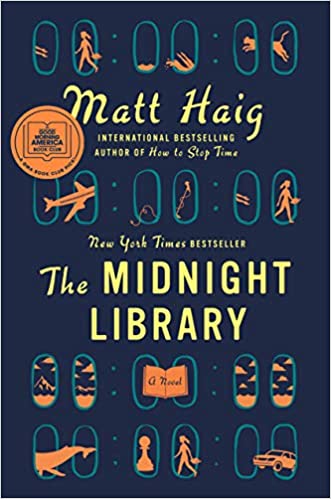
Nora Seed’s life started out with a lot of promise, but for one reason or other she quit doing all the things she’s good at. Haig begins with a countdown of days and hours before she decides to commit suicide. Having taken an overdose, she ends up in a library of all the lives she could have had, free to try some of them out.

I kept my patience and read through the first alternative life, about a quarter of the book. Then I quit.

Why didn’t I like it? Let me count the ways:

  1. The horrible sprightly tone with which it discusses a character who is so miserable she is suicidal
  2. The choppy rhythm of its writing. Almost every sentence begins subject verb subject verb, more like a children’s book than an adults’.
  3. The lack of character depth, or really any personality at all
  4. The lack of any kind of depth or subtlety
  5. The confused and poorly thought out working of the library
  6. Pretty much everything else about the book

Eleanor Oliphant Is Completely Fine

A Man Called Ove

The Virgin Suicides

Review 1791: The Lighthouse

Hapless Futh is recently separated from his wife and is taking a vacation that he is ill prepared for—a walking trip in Germany when he hasn’t been hiking in decades. This holiday, like many things in his life, he has chosen because it reminds him of one of the few happy times with his father. Personally, he seldom picks up on nuances and misses many things.

After a series of odd encounters on the North Sea ferry and in the Netherlands, Futh arrives at the starting point of his walking tour—Hellhaus. There, a misunderstanding at his hotel results in his being ejected before breakfast. He has arranged his tour in a circle with his luggage being transported day by day to the next hotel, so he must return to Hellhaus.

As he proceeds on his tour, contemplating his mother, who left him and his father when Futh was a young boy, and the history of his marriage, we check in periodically with Ester, the landlady of the hotel in Hellhaus. Even though her husband is jealous, she occasionally sleeps with the guests. Years ago, she left her fiancé for his brother Bernard, but now she feels unappreciated.

These are sad, gray lives. Even so, this novel is oddly compelling, and my feeling of dread built with every step back toward Hellhaus. It is also elegantly spare in style.

I read this novel for my Booker project.

Swimming Home

Hot Milk

Umbrella

Review 1777: In the Eye of the Sun

Best of Ten!

Recently, I remembered liking Ahdaf Soueif’s The Map of Love, so I decided to see if she had written anything else. What I turned up was In the Eye of the Sun, which her Wikipedia page confusingly calls her debut novel, even though she wrote one earlier.

In the Eye of the Sun is the story of the maturing of a young Egyptian woman, told over a period of 13 years. The daughter of two university professors, Asya wants to get a Ph.D. in English literature and teach at Cairo University. The novel looks back to 1979 when she is studying for her General Certificate of Secondary Education before beginning at the university and follows her until shortly after she finishes her Ph.D.

Although the novel deals with many subjects—cultural collision, Near Eastern politics, family, sexuality among them—it primarily concerns Asya’s relationship with Saif, who eventually becomes her husband. Asya meets Saif early in her university career and falls madly in love with him. The two want to marry, but her parents insist that they wait until she graduates. They don’t even allow them to become engaged for a couple of years.

At first, their relationship is intense, even though it does not involve intercourse because Saif wants to wait. However, Asya feels him pulling away from her as soon as they are engaged. She has caught him in a few pointless lies, but she doesn’t challenge him with them. However, he stops wanting to discuss anything of substance. Asya does not attempt any kind of discussion of these issues, though, before they are married. Nor does she discuss them with anyone else.

At their marriage, things become even more complicated, because Asya finds sex so painful that after a few attempts Saif stops trying. They never fully consummate their marriage. Even when Asya begs him to try, Saif seems more content to treat her as a sort of doll, picking out clothes and buying jewelry for her. Their marriage becomes even more difficult when he takes a job in Syria while she goes to attend a university in Northern England. There, she finds the surroundings cold and uncongenial and her studies in linguistics difficult.

This novel is quite long, but it is involving and extremely honest. Although a primarily sympathetic character, Asya can be quite annoying in her personal contradictions, for she doggedly continues intellectual disagreements while seldom broaching personal issues. She is brilliant while being occasionally terribly neurotic. I strongly felt that this was an autobiographical novel. If so, Soueif’s honesty is extraordinary.

The Map of Love

The Wife

Under the Lemon Trees

Review 1776: Strangers

Anita Brookner is a writer I’ve sometimes considered reading but never have until now. I read Strangers for my James Tait Black project.

Paul Sturgis is a 72-year-old bachelor who leads a routine life. He has always wanted a family, but after his last girlfriend, Sarah, left him, he resigned himself to bachelorhood. Since his retirement, he has felt lonely and purposeless. He routinely visits an elderly cousin, but he always feels that he bores her. She asks him no questions and constantly talks about her social engagements.

He takes a trip to Venice and meets Vicky Gardner, a woman some years younger than he. In London they meet again and develop a sort of acquaintance that is characterized again by her talking about herself and asking favors but not asking about him. She is a free spirit of no fixed abode who asks him to take charge of some luggage.

He also meets his old girlfriend Sarah again. She is now a widow, and although she is 10 years younger than he, she has changed from an active, decisive woman to an old lady who is always thinking of her health. She also never asks him any questions.

Most of this novel is concerned with Paul’s ruminations about his situation and the past and his yearning for real company and a different kind of life. Although it is well written, it seemed slow moving and repetitive. The cover reviews refer to its wry humor, but I guess I missed it, because it just seems sad. Paul is eventually galvanized into action, but it takes a long time, and I’m not convinced that the new life he chooses will be much different from the old one.

Sweetland

The New Sweet Style

Outline

Review 1775: My Lover’s Lover

At the beginning of My Lover’s Lover, I thought O’Farrell was writing an updated version of Rebecca, and indeed she references the movie early in the book. However, if she had that in mind at all, she moves away from it.

Lily meets Marcus at a party and feels an attraction to him. When he mentions that he needs a flat mate, she asks if she can take the room. However, when she goes to see it, she is surprised to find it still full of another woman’s possessions. She takes the room in the renovated Victorian warehouse with Marcus and his friend Aidan, but she becomes obsessed with Marcus’s old lover, Sinead. Although he refuses to talk about Sinead, Lily understands him to have told her Sinead is dead. Once Lily and Marcus become lovers, Sinead begins haunting her, appearing in the flat.

But Sinead isn’t dead. Once Lily finds that out, she goes to see her to ask her what happened. Then the story is told of the beginning and the end of their relationship.

This is another beautifully written, insightful tale by O’Farrell. Sadly, I think I have now read all her books. I’m going to have to wait for the next one to come out.

After You’d Gone

The Distance Between Us

This Must Be the Place

Review 1771: Umbrella

Some of the reviews of Umbrella refer to modernism, as in “a magnificent celebration of modernist prose.” This kind of encomium shivers me timbers. And then I think, isn’t modernism over? Aren’t we into postmodernism now? Apparently not.

Umbrella has a plot, but don’t expect the book to leap into action, because it’s more concerned with its devices. Self uses few paragraphs, and the ones he inserts aren’t necessarily making the expected division, some of them positioned in the middle of a sentence. Self uses three points of view, but they shift without warning, sometimes in the middle of a word. Stream of consciousness is used abundantly and confusingly, and Self loves his allusions, most of which I did not get. What Self isn’t very concerned with is being easy on his readers.

The novel is inspired by Oliver Sach’s Awakenings. In 1971, psychiatrist Zack Busner realizes he has a group of patients who are post-encephalitic, and they are stuck repeating activities that are meaningful to them but at such fast or slow speeds that they are difficult to detect. He gets permission to administer L-DOPA to them, and they unfreeze, or wake up. Among them is Audrey Death, the oldest patient in the mental hospital.

Aside from following Dr. Busner as a young psychiatrist, we also follow him as an old man. We see from Audrey’s point of view as a girl and a young woman and from her young brother Stanley’s during World War I.

Sometimes the narrative gets carried away into ridiculous flights that last for pages, such as the one involving Stanley falling into a subterranean existence. I didn’t know what to make of it. Although critics have foamed at the mouth in admiration of this novel’s style, I’d call it self-indulgent. I had to make two attempts before I finally managed to read this novel.

This is one of the books I read for my Booker prize project.

Ducks, Newburyport

There but for the

As I Lay Dying

Review 1763: Jack

Jack tells more fully the story of Jack Boughton, whose tale was first alluded to in Robinson’s Gilead and whose fate was more fully explored in Home, which takes place chronologically after Jack. Jack is the hapless ne’er-do-well prodigal son in Home, but Jack explores his relationship with Della Miles, a romance with a young black woman that is forbidden in 1950’s Missouri.

Jack is living in St. Louis at the beginning of the novel, just barely hanging on to the fringes of society. He is drunk part of the time and owes money that he can’t repay. He is fresh out of jail and living in a cheerless rooming house.

He has already met Della at the beginning of the novel and has fallen instantly in love with her, but he is minutely aware of himself and his unsuitability. She is a young woman, educated, a schoolteacher, and she is black. It’s against the law for him to consort with her, and just being seen with him will ruin her reputation. For his part, he’s an older man, an ex-con, a bum.

Della gets accidentally locked in a cemetery one night where he sometimes sleeps. So, the first part of the novel is a long conversation at night.

Robinson is finely tuned to the condition of the human heart, as becomes obvious as we watch Jack, overly sensitive to every nuance of a situation. True to his upbringing by a devout Presbyterian minister, Jack frequently engages in theological discussions odd for an atheist. We watch Jack try to defeat his feelings for the sake of his beloved and fear that any small disappointment will send him on a downward spiral, for he is so fragile.

Robinson is a wonderful writer with a deep understanding of human nature. Although these Gilead books can be difficult, they are rewarding.

Gilead

Home

Lila

Review 1759: White Tears

You may think you know what’s going on in White Tears, but you don’t. Kunzru provides a few clues to that effect, but it’s easy to glide right over them.

Seth is a nerdy outcast in college when he meets Carter Wallace, a good-looking, popular rich kid. The two bond over sound and music. Seth has been immersing himself in techno when Carter introduces him to the gritty sounds of old-time Black country soul on vinyl and even older 45s.

After college, the two form a recording company, with Carter as the face and Seth doing the creative work and sound engineering. They are beginning to become famous for an old-fashioned sound, produced entirely by analog instruments. But Seth notices Carter losing focus and becoming more engaged with collecting.

One day, Seth is indulging his hobby of walking around New York recording noises when he catches someone singing part of a blues song, “Believe I buy me a graveyard of my own.” He plays it for Carter, who becomes obsessed with it. Carter uses the fragments from Seth’s recording to make what sounds like an old-time record, complete with cracking noises. Then he mocks up a picture of a 45, invents a singer, Charlie Shaw, and advertises the fake record on a collectors’ website.

What starts out as a seemingly harmless prank has serious consequences. Soon, apparently meeting a collector who wants to buy the fake record, Carter is severely beaten and left in a coma. Seth finds out his company and their apartment are both owned by the family corporation, and he is immediately dispossessed, the family claiming he is just a hanger-on. But Seth and Carter’s sister Leonie want to know what happened to Carter.

This novel is dark and unexpected. At first, I wasn’t so interested in the story about Carter and his fanboy Seth, neither of whom are that likable, but eventually I got sucked in. Again, it’s a novel I wouldn’t have chosen for myself, but I read it for my James Tait Black project.

Utopia Avenue

Telegraph Avenue

Mortal Love