Review 1888: The Fishermen

The family life of ten-year-old Ben begins to disintegrate when his father, a bank employee, is transferred to a town in a dangerous area of Western Nigeria. Ben and his three older brothers begin fishing in a forbidden river. About the time they get into trouble for that, Abulu, a madman who makes prophecies known to become true, makes one about Ikenna, Ben’s oldest brother. It is that Ikenna will be killed by a fisherman.

Ikenna becomes convinced that his brother Boja is going to kill him, even though the two have always been close. His attitude toward his family changes. He becomes angry, disrespectful toward his parents, and solitary. He locks himself into the room that he shares with Boja, only letting him in when he is out of it. Eventually, there is a shocking crisis.

I know a lot of people have liked this book, which I read for my Booker Prize project, but it didn’t do much for me. Most interesting about it was the background of Nigerian home life and customs, but these are not ours, and what, for example, might be called strictness in Nigeria is for us child abuse. Let me just say that for a novel about four brothers not set in wartime, this novel is extremely violent, graphic, and even at times amoral.

Then there is Obioma’s writing, which I found immature. A lot has been made of his unusual metaphors, but many of them don’t work very well or are just plain awkward. Occasionally, he uses the wrong word, like “haul” instead of “throw,” unless perhaps that is some kind of idiom I’m unaware of. He also loves to use polysyllabic words instead of simple ones, giving an overblown effect to his writing.

I didn’t notice some of these faults in his subsequent novel, but instead in that one I noticed lots of misogyny. I’m not proving to be an Obioma fan.

Related Posts

An Orchestra of Minorities

Americanah

Stay With Me

Review 1885: Travelers

When I first began reading Travelers, I thought I would be disappointed in it, because the bio said Habila had won several awards for his writing, but I found a misplaced modifier in the first few pages. Can’t help it—I’m a grammar nerd. However, I soon found the novel compelling.

It is structured as six novellas, which are linked by the presence or acquaintance with the unnamed narrator. He is a Nigerian student who is supposed to be finishing his dissertation in Washington when his American artist wife receives a fellowship in Berlin. Their marriage has been suffering since she had a miscarriage, and they see the move as an opportunity for a new start, but while his wife works hard, the narrator seems to be aimless, wandering around Berlin and ignoring his work. He becomes interested in a group of activists living in a squat and taking part in demonstrations. Several of them are refugees from Africa, including Mark, a transgender artist.

In this first novella, we meet Manu, who we learn about in the second novella. As Manu’s family crossed the Mediterranean in a derelict boat, the boat sank and he lost track of his wife and baby son. Every Sunday, he and his daughter search the area around Checkpoint Charlie for his wife and son.

In the third story, Portia, a Zambian studying in England, has traveled to Basel to meet Katharina, who used to be married to her brother David. She has gone there to understand her brother better, a man who always seemed to want to leave home, but also, at her mother’s behest, to find out why Katharina killed him.

In the fourth story, after meeting Portia and traveling with her to Basel, the narrator listens to the tale of a Somalian whom he meets on a train. This man and his son have suffered unimaginable hardships trying to find a place for themselves and their family. However, in a moment of confusion, the narrator loses his identity papers and finds himself incarcerated in a refugee camp.

This novel examines the state of many east and west African countries and the plight of African refugees in Europe. Habila is a master at quickly involving readers in the lives of its many often incidentally encountered characters. I read Travelers for my James Tait Black project.

Related Posts

All That Man Is

Nocturnes

In a Strange Room

Review 1878: Edinburgh

Fee is a 12-year-old mixed race boy (Korean-American) who feels out of place in his home in small-town Maine. Not only does he not look like his peers, but he likes boys. He is deeply in love with Peter, his best friend.

When Fee joins an elite boys’ choir, he thinks he recognizes in the choir director, Big Eric, a person like himself. But he soon realizes that Big Eric is a predator, who systematically abuses the soloists and keeps them from telling by threatening to cut them from the choir.

Fee conflates his homosexuality with Big Eric’s abuse and is so ashamed that he tells no one even when Peter is given a solo part. Eventually, Big Eric approaches the wrong boy, and the truth comes out. But this also has disastrous consequences for his victims, two of whom commit suicide.

Moving forward in life, Fee continues to be haunted by these events during his teen years and early adulthood. He is finally managing a happier adulthood as a swimming teacher in his home town with a loving partner when he meets a young student who reminds him of Peter and is involved in the early events in a way neither of them understand.

I had mixed feelings about this novel, which I won from Adam of Roof Beam Reader. It is beautifully written and incorporates lore from the Korean side of his character’s background. But it also feels removed from its characters, which is probably necessary as it feels at least somewhat autobiographical. There are some times when the lyrical language doesn’t seem to mean anything and is written more for its sound and images. But mostly, I am disappointed in the ending of the book.

Read no further if you want to avoid spoilers. I don’t usually include them, but I felt I had to in order to express my opinion of the book. It seemed to me that his succumbing to the boy, even though it was mutual and the boy was much older than he had been, is still a predatory act because of the teacher-student relationship. Also, I could not believe that he could teach a student without knowing his last name. There are rosters, reports to be filled out. That was just unbelievable.

Related Posts

Shuggie Bain

A Little Life

A Place Called Winter

Review 1872: The Bass Rock

Told in three compelling narratives that take place over centuries, The Bass Rock is a novel about the history of violence toward women. The novel is located on the banks of the Firth of Forth, an area of Scotland dominated by the Bass Rock.

Early in the 18th century, the local priest comes upon some young men raping a very young girl, Sarah. The priest rescues her, but the young men claim she must be a witch because she enchanted them and forced them to do it. Soon, the men have burned down the priest’s house, and the entire household must flee toward the beach.

Post-World War II, Ruth and her husband Peter have recently moved into the big house in North Berwick. Ruth doesn’t quite understand the reason for the move, since Peter works in London. He says it is for the benefit of his sons by his previous marriage, Christopher and Michael, but they are being sent off to school. Soon, newly wed Ruth finds herself left very much on her own with only the housekeeper Betty for company. She begins to discover some secrets in the family.

After Ruth’s death as an old lady, Michael’s daughter Viv is hired by the family to sort through the things left in the house so it can be sold. She has recently had some mental issues and feels like she is the family failure. Almost despite herself, she befriends Maggie, a homeless occasional sex worker who has an interesting take on things. Maggie tells her there is a ghost in the house.

This is a powerful novel. Although its theme is grim, its main characters are relatable and sometimes likable. I loved All the Birds, Singing, and this is another winner from Wyld.

Related Posts

All the Birds, Singing

The House Between Tides

The Vanishing Act of Esme Lennox

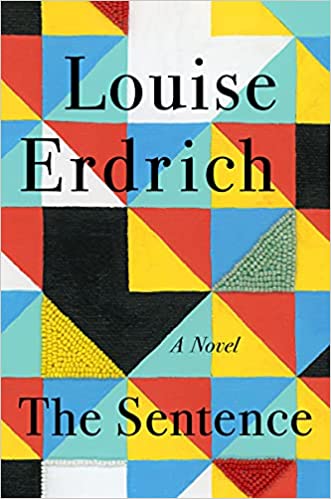
Review 1867: Literary Wives! The Sentence

Today is another review for the Literary Wives blogging club, in which we discuss the depiction of wives in fiction. If you have read the book, please participate by leaving comments on any of our blogs.

We would also like to welcome a new member, Rebecca of Bookish Beck! We are so glad to have her with us!

Be sure to read the reviews and comments of the other wives!

My Review

Tookie spent the first decade or so of her adulthood getting wasted and falling into trouble with the law. When she was arrested by Pollux of the tribal police, though, she wasn’t even sure she had broken the law, or at least she didn’t see it that way. She had borrowed her previous employer’s van to bring the body of her friend’s boyfriend back to her from the woman her boyfriend left her for. But Tookie didn’t know the woman had taped packets of crack into the body’s armpits.

Both other women having lied about Tookie’s involvement in the crime, she had the bad luck to pull a judge who sentenced her to 60 years. What saved her in prison was reading.

Tookie’s lawyer never stopped working for her, so after ten years she was released for time served. She got a job at a bookstore in Minneapolis and married Pollux, no longer a cop.

Flora dies. Tookie describes her as the bookstore’s most irritating customer. The bookstore (which I believe is Birchbark Books, owned by Erdrich) specializes in books written by and about indigenous people. Flora was a wannabe, who claimed indigenous heritage based on a photo of an ancestor who looked possibly indigenous.

After her death, Tookie takes home a handwritten manuscript that Flora was holding when she died. It is difficult to read, but when Tookie makes out a particular sentence, she is horrified. She knows that reading this sentence was what killed Flora. She tries to burn the journal and finally buries it in the backyard.

Flora begins haunting Tookie at the bookstore. At first, no one else notices her, so Tookie is afraid she’s going mad. But then others hear her, and Tookie becomes afraid to work in the bookstore alone. The city becomes more chaotic with the arrival of Covid and later the events surrounding the murder of George Floyd.

This book explores what the living owe the dead, as well as what we owe ourselves. It is a book for book lovers and even ends with lists of favorite books, so of course it appealed to me.

Erdrich’s books can be difficult to read, but even though this one contains some tough scenes, she seems to be softening. Despite some hard subject matter, the novel is almost cozy, with a warm feeling of community centered around the bookstore, a loving marriage, an evolving family life for Tookie, and quirky, likable characters. Its overall feeling is of transcendence. It’s a lovely book.

What does this book say about wives or about the experience of being a wife?

I had to reread this novel for the book club even though I had just read it a few months ago, because I hadn’t read it with our subject matter in mind. On second read, I liked this book even better than I did the first time.

We should all be so lucky as to have a marriage like that of Tookie and Pollux. Although they have a few small spats, for most of the novel, the two have a warm and accepting relationship. There is a little bit of a breakdown because Tookie feels she can’t tell Pollux about being haunted by Flora, but even that turns out to be a misunderstanding.

The biggest impact to their relationship comes with the murder of George Floyd and the resulting chaos around police violence. These events make Tookie face her feelings about Pollux having been a cop, especially because when she reached out to grasp his hands after her adventure with the corpse, he cuffed her. I believe this situation is made worse because of Pollux’s own ambivalence about the events surrounding the Floyd killing and his own former career. Tookie shows her feelings subtly, for example, by not wearing the jingle dress herself but giving it to Hetta to wear, but the couple know each other so well that he understands.

Basically, their relationship is so good that they weather their problems. Troubles come from not speaking about things, but eventually everything is discussed.

Related Posts

The Night Watchman

LaRose

The Bookshop

Review 1833: Unsettled Ground

Twins Jeannie and Julius Seeder live precarious but contented lives with their mother Dot in the cottage where they were born. At 51, neither has much education. Jeannie was kept out of school so frequently with rheumatic fever that she never learned to properly read and write. Julius only attended school until 15. Jeannie and her mother keep a market garden while Julius earns what he can through various odd jobs. Their mother has taught them to be independent and not borrow money.

When Dot dies unexpectedly, however, the twins are thrown by one thing after another. They had always understood that their cottage was theirs for life, rent-free, because their landlord, Mr. Rawlings, was partially at fault for their father’s horrendous death. However, almost immediately after Dot’s death, Mrs. Rawlings arrives to tell them they owe £2000 for back rent. The man they sell vegetables to informs Jeannie that Dot owed him money, and the husband of her mother’s best friend says she owed him £800. But they can find no money in the house. Then, right before the wake, a thuggish young man tells them they are being evicted in a week. They have no money for a funeral.

Although Jeannie finds a job doing a woman’s garden, she is paid by check and has no idea how to cash it. The electricity has been disconnected. But Jeannie and Julius are too proud to ask for help or let anyone know what’s going on.

This story about people living on the margins of society had me utterly rapt. I could not do anything but wonder how it would all end. Fuller has done it again with another powerful, absorbing novel.

Related Posts

Our Endless Numbered Days

Swimming Lessons

Bitter Orange

Review 1830: Breathing Lessons

Anne Tyler is concerned with the lives of ordinary people—in this case a middle-aged couple, Maggie and Ira Moran. The novel explores a common confusion of middle age—how we got where we ended up in life.

After attending an unusual funeral, in which Maggie’s best friend Serena attempted to recreate her wedding day—Maggie talks Ira into detouring to visit their ex-daughter-in-law, Fiona, and their granddaughter, Leroy. The situation with these two is unfortunate, for the Morans have not seen their seven-year-old granddaughter since her third birthday. However, Maggie is convinced that son Jesse and Fiona still love each other, and all they need is a little nudge to get back together.

It is immediately apparent that Maggie is a somewhat scattered thinker, while Ira is more practical. It takes a while to learn, though, something that Ira understands—Maggie is so prone to look at the positives that she doesn’t see things as they are but as she wants them to be. Unfortunately, this includes getting carried away to the point of lying about things.

This wasn’t my favorite Anne Tyler book, but it depicts some characters who seem very true to life (but are also similar to the couple in The Amateur Marriage). Maggie is, I think, supposed to be lovable, but I sympathized with Ira and thought his patience was phenomenal. Jesse is a fairly typical boy-man, another one of Tyler’s types, lacking in responsibility but whose irresponsibility may have been encouraged by Ira’s lack of faith in him. Maggie fails to see that Fiona not only left Jesse, she left the whole family because of its dynamics.

Related Posts

The Amateur Marriage

Redhead by the Side of the Road

A Spool of Blue Thread

Review 1827: The House Between Tides

A house on an island separated from the main island by a causeway only open at low tide is the focus of this novel set in the Outer Hebrides. It’s a dual timeframe novel, which format I have to admit I am tiring of.

In 1910, Beatrice Blake arrives with her new husband, the famous artist Theo Blake, to his home on the island for the summer. In 2010, Hetty Devereaux has inherited the house and is considering turning it into a hotel.

Neither woman has made a good choice of partner. Theo thought Beatrice would drive away his thoughts of his first love Mailí but realizes very soon that she cannot compete and begins to neglect her. Hetty’s fiancé Simon has forced his way into her plans and has hired people to do surveys and look into such issues as financing before Hetty has even seen the property.

Both of these stories deal with how the property should be handled and how much claim the crofters have to the island, but in 2010, bones have been discovered under the foundation of the house. The 1910 story eventually reveals whose bones they are.

I found this novel interesting, and the descriptions of the island are lovely. However, even though I saw complaints about Hetty’s lack of backbone, I was more interested in the modern story than the older one. Possibly it’s because it was obvious to me why Theo is so interested in his factor’s son, Cameron, and also because I wasn’t interested in Beatrice’s romance. The final twist was obvious to me, although I didn’t figure out who the bones belonged to.

This novel is atmospheric but a little hackneyed, I think.

Related Posts

The Forgotten Garden

The Sea House

When They Lay Bare

Review 1822: Shuggie Bain

Shuggie Bain lives the first five or six years of his life in his grandparents’ flat in Glasgow with parents and older sister Catherine and brother Leek. The family is poor but respectable. His father Shug is a taxi driver, and his mother and grandmother keep a neat house. Shuggie’s mother Agnes is beautiful and always immaculately made up.

Shug is a horrible womanizer, though, and from jealousy Agnes hounds him by making calls to his dispatcher. Then Shug decides they should move to get a fresh start. What he describes as an outdoor paradise turns out to be a tiny shack next to a mine in a neighborhood built for miners’ families. But the mine is all but closed. It isn’t until the family unloads their possessions that they realize Shug’s aren’t among them. He has taken Agnes and her children out into the country to dump them.

Agnes descends into alcoholism, and as his older siblings grow old enough to leave, Shuggie is left trying to hide money for food, trying to keep Agnes’s drinking buddies out of the house, trying to get her to eat. All the while, he has a growing realization that he’s not like other boys. He likes pretty things and colors and is attracted to boys.

This novel is a moving and empathetic portrait of working-class Glasgow in the 1980’s, when there is not much hope for many people. It’s also a convincing depiction of the effects of alcoholism. It is absolutely gripping and heartbreaking. It was the winner of the 2020 Booker Prize, and it deserves it.

A Little Life

A Heartbreaking Work of Staggering Genius

Crow Lake

Review 1819: Dirty Birds

Just before I read Dirty Birds, I attempted to read Quichotte by Salman Rushdie, and I was surprised by the parallels. Both protagonists are on a quest to make a woman love them. Although Rushdie’s protagonist is old and Murray’s is young, both are naïve and deluded. Road trips are part of each novel, and so is satire—Rushdie’s for the cult of personality and big pharma, among other things, Murray’s for the Montreal art scene and the young man as artist. I found Murray’s book more successful and a lot funnier.

Milton Ontario is a hapless young man who is not only utterly average but characterized by the extent of his naiveté and inexperience. He gets an idea in his head that he wants to be a poet, even though he writes atrocious poetry (at first dedicated to the love of his life, Ashley, and later to the love of his life, Robin), so he sets out from his small town for Montreal and a tiny room he has rented sight unseen in a dilapidated, filthy house full of students and would-be artists. There he attempts to enter the art scene and falls in love with Robin, the maker of a seven-minute documentary entitled Dirty Birds, who is almost unaware of his existence.

Milton stumbles through a series of horrendous jobs horrendously performed and meets a cast of rowdy, raucous characters. He inadvertently starts a riot and gets to meet his hero, Leonard Cohen, only to find he is a mob boss (where I think the novel starts to go a bit astray). In among all this silly action is a series of footnotes enlightening us about the history of Canadian mistreatment of indigenous peoples, Newfies, and French-Canadians, among others.

Although I think it gets a little carried away with itself (and I didn’t like the part about the late, great Cohen), for the most part, this novel is a hoot.

Quichotte

Cluny Brown

The First Bad Man