Review 1673: Writers & Lovers

Ever since reading Euphoria, I’ve been wondering what else Lily King can do. Let’s just say that Writers & Lovers did not disappoint.

Casey Peabody is having a rough time. At 31 she is still waiting tables and trying to work on her novel. Her mother died recently, and she is grief-stricken. She just wasted a spot in a writing workshop on an affair instead of writing, and now she hasn’t heard from the man she spent so much time with. She lives in what used to be a gardening shed, and her landlord frequently belittles her. Finally, she has a crushing student loan debt, and she is working double shifts just to be able to afford to live in Cambridge, Massachusetts.

As if all this isn’t stressful enough, she finds herself dating two very different men. She is supposed to go on a first date with Silas when he abruptly leaves town with no explanation. Then she meets Oscar, a middle-aged, established writer with two delightful young boys. Soon, she is going on outings with the three of them. But then Silas shows back up.

This is an intimate and engaging story of a few months in a complicated woman’s life. This description almost makes it sound like a romance novel, but it is much more than that. I found it absolutely compelling.

Related Posts

Euphoria

Monogamy

Four Letters of Love

Review 1672: Literary Wives! Monogamy

Today is another review for the Literary Wives blogging club, in which we discuss the depiction of wives in fiction. If you have read the book, please participate by leaving comments on any of our blogs.

Be sure to read the reviews and comments of the other wives!

Eva of Paperback Princess
Lynn of Smoke and Mirrors
Naomi of Consumed By Ink

* * *

Annie, a small, reserved photographer, and Graham, a large, extroverted bookstore owner, have been married for about 30 years. Their story goes forward linearly with many visits to the past as Miller minutely examines their relationship. The crux of the story, though, is that Graham has been having an affair that he has just managed to break off. Then that night he dies in his sleep. Months later, Annie is just beginning to make some sort of recovery from her grief when she learns of the affair and has to reassess what she thought she knew about their marriage.

It’s hard to explain or evaluate this novel. Miller is generous to her characters, but she is also very observant. She examines and excavates their relationship in a detached way, even though the novel is from Annie’s viewpoint, that can seem cold. That is, there are no value judgments but also no feeling of affection, either, which may make readers feel detached. On the other hand, she really understands the intricacies and complications of marriage.

What does this book say about wives or about the experience of being a wife?

Literary Wives logo

Although Annie and Graham are happily married, we learn that Annie resisted him at first because she was afraid he would overwhelm her. For his part, his bonhomie and charm hide his insecurities, and his lust for life is characterized by a certain insatiability. He needs.

In this novel, although we see almost her every thought, I thought Annie was somewhat of an enigma. I find myself puzzled by her even while understanding why she is angry with Graham. I almost think that the novel provides us too many details of their lives to answer this question. Of all the books we have read for this club so far this one seems to be the most nuanced. Still, I find myself without very much to say about it.

After thinking about it for awhile, though, it seems to me that the couple is a mismatch even though they were happily married for years. It seems that Annie doesn’t realize that Graham reinvented himself from an introverted geek to the loud, exuberant charismatic person he became. Perhaps because this isn’t his true self, Graham seems to seek reaffirmation of his attractiveness through affairs. Annie is probably too self-possessed to be the person who could calm Graham’s insecurities. Perhaps he would have been happier with someone who was more dependent.

The title also makes me wonder if we’re supposed to re-evaluate the whole concept of monogamy, but nothing in the book forwards this thought.

Related Posts

Alternate Side

Happenstance

A Separation

Review 1654: The Panopticon

Best of Ten!
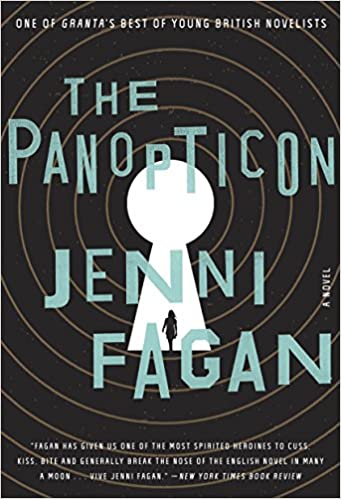
Anais Hendricks, 15, arrives at the Panopticon, an old prison designed so that someone can see the inmates at all times, which is now being used as a home for juveniles. The police believe she beat an officer and put her in a coma, but she was so high that she can’t remember what she was doing.

Anais has been in the system since birth, and the system has failed her on every front. Although at first she seems to be hard and criminal, she is a feisty girl, and most of her offenses have been a defense of someone else or an act of protest against an injustice. Her trouble with the law began when Theresa, her adoptive mother, was murdered. Anais now believes she is part of an experiment that wants her to fail.

At the Panopticon, Anais makes some friends and gets a better social worker in Angus, but she still ends up in trouble. Soon, the police tell her that one more offense will result in her being transferred to detention.

In Anais, Fagan has created an unforgettable character. The novel is full of bad language, but it is fluent and lively, and makes a riveting story. I read this book for my James Tait Black project.

Related Posts

The Death of Bees

Mountains of the Moon

The Girls

Review 1649: The Hoarder (aka Mr. Flood’s Last Resort)

Best of Ten!
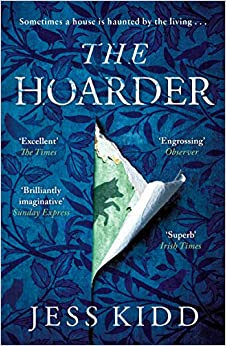
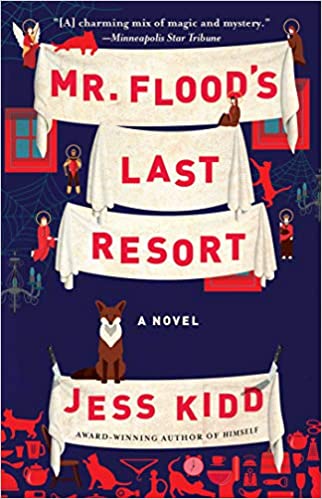
Let me just start out by saying I hate the trend of changing the name of a book from the British edition to the U. S. edition. In this case, I got caught out buying both versions of this novel just because I didn’t realize they were the same. I loved this novel, but I don’t need two copies of it. If they are going to do this, the least they could do is warn us in really big letters on the cover.

____________________________

As with Things in Jars, it took a bit of time before I plunged myself into the eccentric world of The Hoarder. But when I did, I was all in.

Maud Drennan is a care worker whose job it is to feed the difficult Cathal Flood and attempt to make some headway in cleaning his house, for the old man is a hoarder. There are odd rumors surrounding Flood, not only about his recent behavior—he is supposed to have tried to brain carer Sam Hebden with a hurley—but also about his past—his wife died after falling down the stairs.

Maud herself is a little eccentric. She is followed around by the ghosts of saints, particularly St. Dymphna and St. Valentine, and her best friend is Renata, an agoraphobic transgender woman with an elaborate wardrobe. It is Renata who suggests that perhaps it was Cathal Flood who pushed his wife down the stairs.

Certainly, something is going on, because Maud is approached by Gabriel Flood, Cathal’s son, who is looking for something in the house. Then, Renata and Maud discover that Gabriel had a sister, Maggie, who disappeared as a teenager. Maud’s sister, we learn, also disappeared, so Maud becomes immersed in an investigation and attempts to search the blocked-off portions of Cathal Flood’s house.

This novel is a bit gothic, a bit funny, a bit haunting, and Kidd’s writing is brilliant. Love this one. Need more.

Related Posts

Things in Jars

The Vet’s Daughter

The Rathbones

Review 1636: Everything Under

Best of Ten!
Everything Under is a powerful rendering of the Oedipus myth, but don’t let that put you off if you’re not interested in stories based on myths. I found this novel to be truly affecting, and I’m guessing it will be on my best of the year list.

Water is an important motif in this novel, which is set mostly by rivers and canals, and the shifting narration reflects the fluidity of this story about human depths and gender identity.

Gretel has found the mother who deserted her years ago when she was 16. Periodically during her adult life, she has searched for Sarah, but recently she received messages from her asking for help. Finally found, Sarah is fairly deep into dementia. But she has lucid moments, and Gretel has questions, especially about what happened to Marcus, whom she last saw when they moved away from the canal.

During her search for Sarah, Gretel finds a couple with Marcus’s last name, Roger and Laura. When she visits them, she learns that the couple have been searching for their daughter, Margot, for years. She left home at 16 after their neighbor Fiona, who claims to be a psychic, told her something. Fiona, a transgender woman who now lives in Roger and Laura’s shed, refuses to tell what she told Margot.

Several times the novel checks in with Margot as she comes to live nearby a canal. There she takes on the identity of Marcus and is befriended by a blind man living on a canal boat. Marcus also hears rumors of a creature living in the canal who is eating animals and even people. Abut the community of people wo live along Britain’s canal system, this novel is atmospheric and interesting. I read it for my Man Booker Prize project.,

Related Posts

Orfeo

The Death of Bees

Elmet

Review 1633: The Distance Between Us

Jake, a Hong Kong Brit who has never been to Europe, is out with friends on Chinese New Year when they are caught in a crush. His girlfriend Melanie’s best friend is killed, and Melanie is gravely injured. Doctors say she will not live, so when she asks him to marry him, he reluctantly agrees even though he has only known her for four months. Of course, she does not die. The next thing he knows, he is in England staying at her parents’ house, and her mother is planning a formal ceremony for them. Having always wanted to find out about his Scottish father, he leaves for Scotland.

Stella’s too close relationship with her sister Nina is one she has to escape from sometimes. The roots of this lie in a horrible incident years ago. On one of her escapes, she takes a job at a hotel in Scotland.

This novel travels back and forth to relate incidents in both Jake and Stella’s lives and in the lives of their parents and grandparents. O’Farrell has a way with making you care about her characters as well as a gift for lyrical prose. This is another great book for her, and thus for her readers.

Related Posts

After You’d Gone

This Must Be the Place

Instructions for a Heatwave

Review 1632: Memories of the Future

When reading Hustvedt, I am always aware of an intelligence far greater than mine as well as a quality of being frighteningly well read. I especially noticed these attributes in Memories of the Future, an apparently autobiographical novel.

In the novel, the narrator, S. H., has found her old diaries from when she was a young adult and moved to New York City to spend a year writing a novel. She breaks up the story to reflect on her thoughts and actions of the time, provide a few updates on her present life working on this novel and visiting her elderly mother, present portions of the novel she was writing back then, and even take on a sort of third persona, the Introspective Detective.

S. H., who acquires the nickname Minnesota, is thrilled to move into her tiny, dark studio apartment, because she is starting a new life. Next door, her neighbor, Lucy Brite, has intriguing dialogues with herself that S. H. begins eavesdropping on, trying to figure out what she’s talking about, as it seems to involve violence.

Minnesota is given her nickname by her new friend, Whitney, who attends the same types of poetry readings and lectures, and soon Minnesota is part of a lively group of young people. She is already running out of money, however, and has some dark times ahead of her.

Hustvedt muses on some interesting topics, such as the nature of memory and the effects of aging, but most of her anger centers around women’s learning of acceptance. In an incident that turns out badly, she asks her younger self why she was more concerned with politeness and going along than with her instinct to resist what was happening. As in the wonderful The Blazing World, she tells the real story of a woman whose work is claimed by a man, Baroness Elsa Von Freytag-Loringhoven, an artist and poet whose sculpture was claimed and attributed to Marcel Duchamp after her death.

I found this novel more difficult and not as engaging as the other two I have read, but still, she is always inspiring and fascinating. I just wish I understood more of her allusions and philosophical meanderings.

Related Posts

The Blazing World

The Enchantment of Lily Dahl

The Wife

Review 1629: The Guest List

A wild Irish island seems the perfect place for the wedding of Jules and Will. The only building on it is an old mansion that has been fabulously restored and is just big enough for the wedding party and the hosts, Aoife and Freddie. The high-society guests will be boated in the day of the wedding.

The bride and groom seem to be a golden couple. They are both physically attractive, and Jules runs a fashion magazine while Will is a rising star in television. However, someone in the wedding party is a sociopath who has ruined many lives, and future victims are on the guest list.

The novel begins in a tumultuous storm during the wedding reception when a waitress thinks she sees a body outside. From there it flashes back to the points of view of several characters beginning the day before the wedding. And the plot thickens.

I recently read Foley’s The Hunting Party and thought it was excellent. So, I was happy to read The Guest List. At first, though, it seemed awfully familiar—a remote island instead of a remote forest, the same kind of upper crusty characters. However, I was soon sucked in, because Foley is great with a suspenseful plot.

I did have one caveat. If there are several narrators in a book, they should not only have different concerns, which these characters do, but they should sound like different people. I don’t think Foley is quite so successful at that.

Related Posts

The Hunting Party

Strangers at the Gate

In a Dark, Dark Wood

Review 1626: The Overstory

Best of Ten!
When I read Richard Powers’ Orfeo a while back, I remember thinking he was quite a bit more intelligent than I am, perhaps a little intimidatingly so, yet I enjoyed his book. Reading The Overstory hasn’t changed my impression of that, except that it blew me away.

The novel is about trees. When am I ever going to write that sentence again? The metaphor for its structure that I’ve seen used is that it’s like the rings around a tree as you go inward, but that’s not the metaphor Powers actually uses. He starts in a section called “Roots” and works his way up the tree.

That doesn’t sound very interesting, but it is. He starts with a group of characters who have all formed an interest in trees. Nick Hoel’s ancestor planted some chestnuts on their farm in Iowa, and his father began a giant project of photographing the last one standing every month for years so that you could see its growth if you used the photos like a flip book. Nick, an artist, has re-created these photos as drawings. Mimi Ma’s father Winston brought with him from China an ancient scroll about trees and took his family out to enjoy the national parks. Adam Appich is a budding natural scientist until judges in a science fair think he cheated and he ends up in psychology. Still, his father planted a different tree for each of his children. Douglas Pavlicek is saved by a tree when his plane crashes in Vietnam, and so on. These lives are described as fables on the cover of the book, but the characters felt authentic, which they seldom do in fables.

In the next section, “Trunk,” Powers begins to intertwine the lives of these characters with each other and with the issue of what is happening to the trees in our world and what the consequences will be. Along the way, Powers tells us all kinds of interesting and astonishing things about trees.

The novel takes place between about the 50’s and 60’s to the present, but the meat of it is in the 70’s or 80’s when there was a lot of activism around the protection of our forests. Some characters’ stories begin earlier with their parents or ancestors.

But the novel is really about the trees, and as Powers’ sections go up the tree, the view becomes a little more abstract, while not losing sight of the human characters. I had a few issues with it. The role of Neelay Mehta, a boy of Indian descent who becomes a master computer programmer, doesn’t really fit well into the story. I understand his role but find it unconvincing. Finally, the last section is so abstract, it’s a bit above my head, although I enjoy Powers’ tendency to present readers with lots of ideas.

Overall, though, I was just entranced by this novel, so much so that I fear for our species. If anything is going to make you pay attention to climate change, it’s this book. Now that I live in a state where clear cutting is going on all around me, not just in the national and state forests but by the purchasers of practically every plot of land, who think nothing of devastating their lots for the money, I have been more struck by what we are doing to our forests. This is an incredible novel. I read it for my Booker Prize project, and it won the Pulitzer.

Related Posts

Orfeo

The Sunken Cathedral

Oryx and Crake

Review 1624: The First Bad Man

The First Bad Man reminds me of Eleanor Oliphant is Completely Fine except on steroids, because while Eleanor is one eccentric character, all of the characters in The First Bad Man are eccentric. I read this novel for my James Tait Black project.

Cheryl Glickman is a bit out of touch with normal human behavior. She is a manager at Open Palm, a martial arts/exercise company, but she has been directed to work from home and is only allowed to come to work one day a week. She has long been in love with Phillip Bettelheim, a much older man who is on the company’s board, and she consults a chromotherapist to treat her Globus hystericus simply because Phillip recommended him and so she can report back to him about it.

When she gets up enough nerve to show some interest in him (she tells him “When in doubt, give a shout”), he responds by asking her whether she thinks it is okay for an older man to be interested in a much younger woman. Of course, Cheryl takes this question as an interest in herself, when he is really in love with a 16-year-old schoolgirl. He continues to update her on the progress of the relationship, using explicit language.

As if this weren’t enough, the owners of the business, who routinely help themselves to supplies and the employees’ food when they come in, force her to let their daughter Clee stay with her until she gets a job. Clee is surly and unresponsive and then physically abusive when Cheryl tries to set her eccentric limits.

Cheryl herself is positive and upbeat most of the time, although she has arranged her house so that it doesn’t get dirty during occasional depressions simply by having almost no possessions. But Cheryl finds a way to respond to Clee that is unusual but ends up lightening the atmosphere.

Cheryl has some surprises for herself in this bizarre but touching novel. I liked it very much.

Related Posts

Eleanor Oliphant Is Completely Fine

Where’d You Go, Bernadette?

This Is Your Life, Harriet Chance!