Review 1518: Chances Are

When Lincoln decides to sell the cottage on Martha’s Vineyard that has long been in his mother’s family, he thinks it’s a good opportunity to reunite with his friends from college, Mickey and Teddy. Although it’s more than 40 years since they spent Memorial Day weekend at this cottage, they’ve kept in touch all these years. Back in the day, they were the three students at an elite college who did not share their classmates’ blue-blooded, wealthy backgrounds.

Being on the island brings back memories of Jacey, the girl all three of them loved. She also shared that last Memorial Day weekend with them. Then she left and apparently disappeared from the face of the earth.

Lincoln, a successful real estate dealer who’s had some difficulties since 2008, begins looking into Jacey’s disappearance. Teddy, an editor who sometimes suffers from mental illness, is troubled by his memories of that weekend.

This novel explores friendship, difficult relationships, and even muses on fate. It is well written, as Russo’s novels always are, and engaging. I haven’t had as much enjoyment from Russo’s latest efforts as I did for his earlier ones, but this one comes close to being as good as, say, Empire Falls or Nobody’s Fool.

Related Posts

Empire Falls

Everybody’s Fool

Bridge of Sighs

Review 1513: Literary Wives! The Dutch House

Best of Ten!
Today is another review for the Literary Wives blogging club, in which we discuss the depiction of wives in fiction. If you have read the book, please participate by leaving comments on any of our blogs.We would like to welcome a new member, Cynthia of I Love Days, who joins us for the first time today!

Be sure to read the reviews and comments of the other wives!

Cynthia of I Love Days
Eva of Paperback Princess
Lynn of Smoke and Mirrors
Naomi of Consumed By Ink

* * *

I seldom have been disappointed by Ann Patchett even when I’m not sure the book sounds interesting. The phrase “dark fairy tale” was used on the blurb of The Dutch House, which inclined me not to read the book, as that is not my thing, but I’m glad I did.

Danny and Maeve Conroy live in the Dutch House with their father. The house has this name not because of its style but because a Dutch family lived there. It is an astounding house, glass throughout the first floor and enormous, with a third-floor ballroom.

Danny and Maeve’s mother left when Danny was four. He doesn’t remember her, but Maeve, who is seven years older, wishes she could see her mother again. Living with an aloof father, Cyril, they become dependent upon each other. Still, they are happy in the Dutch House.

At first, they don’t pay much attention to Cyril’s friend, Andrea. She is around for a while then disappears for months, then reappears. They don’t like her, but their father doesn’t seem to like her that much, either. However, they realize later as adults, Andrea wanted the Dutch House, and Andrea gets what she wants. Eventually, their father marries her, and she moves in with her small daughters, Norma and Bright.

When Danny is still in high school, Cyril unexpectedly dies, and the events following his death provide the meat of this novel. Told by jumping backward and forward in time, the story is about how Cyril’s miscalculation in buying the Dutch House for a wife who is appalled by it echoes across three generations of the family. It’s a warm novel about cruelty and kindness, rage and forgiveness. It’s really good.

What does this novel say about wives or about the experience of being a wife?

I liked this book much more for our purposes in this club than some of the others, because it provides a nuanced and insightful look at marriage, although not necessarily at the individuals who are part of the marriage. Warning that this section contains spoilers, although I have tried to be suggestive with them rather than stating exactly what they are.

Although the primary focus of this novel is on the relationship between Danny and Maeve and how it is affected by the losses of first their mother and then their inheritance, there are three marriages that are secondary but still important to the book. The first is the marriage between Danny and Maeve’s parents, Cyril and Elna, which we don’t understand until the end of the book.

Cyril marries Elna immediately after removing her from a convent and never really understands what she is like. Elna, who is dedicated to serving the poor, thinks she is married to a poor man, while Cyril has been amassing money through building purchases and development. Cyril surprises Elna twice with disastrous results that reveal how little he understands her, once when he buys her the Dutch House, which she finds overwhelming, and once when he decides to get her portrait painted, an activity she will not suffer. Elna leaves the marriage when she finds no role for herself in her own house because of loving servants who won’t allow her to do anything. The purpose of her life is service, so she cannot bear this purposelessness. I don’t think she intends to desert them, but when Maeve develops diabetes from stress after she goes to India, Cyril tells Elna never to return and divorces her.

Cyril is never communicative, but he seemingly shuts down after she leaves, to the point where both his children believe that he doesn’t like children. I think this shows that he loves Elna but is incapable of understanding her. Elna realizes she has made a mistake by going to India but is too embarrassed to return home. I think Cyril believes that the way to cherish her is to shower her with things, when really she needs a voice, a role, and a feeling of being needed.

The next marriage is that of Cyril and Andrea. This marriage is almost always filtered through the perceptions of Danny and Maeve, who dislike Andrea. To their minds, Andrea marries Cyril to get the house, and while that is certainly true, we learn at the end of the book that there was more to it. Why Cyril marries Andrea is more difficult to comprehend, especially when we realize that Cyril believes Andrea married him for the house, too. He doesn’t understand her any better than he understood Elna. That becomes clear when he fails to protect his children’s interests because “Andrea is a good mother.” We can guess that Andrea’s looks, youth, and interest in the house are the attractions, and her sheer force of will results in a marriage that has disastrous results for her stepchildren. It’s hard to force myself to see this marriage from Andrea’s side because of her behavior, though, to her stepchildren. I suspect that, like Celeste does with Maeve, Andrea has blamed all her problems with Cyril on his children.

The final marriage is that of Danny and Celeste. A revealing scene takes place after they have been married for years, when Danny says he sees her clearly for just a second and then stops seeing her. Danny marries her because she’s the least trouble of any women he’s dated, and he continues the family tradition of paying little attention to her. Celeste, for her part, wants to marry a doctor and assumes he will become one because he is in medical school, even though he has no intention of doing so (but doesn’t tell her that, because he’s as communicative with her as Cyril was with everyone). She also is very jealous of Maeve and blames her for everything she doesn’t like about their marriage. Although her objections often seem demanding and irrational, it is clear that Danny is much closer to Maeve than to Celeste, which would be frustrating to any wife.

Again, it’s hard for me to see the situation clearly from her point of view, because although Danny marries her, perhaps like Cyril marries Andrea, out of some weird sort of inertia, the kind that continues along a path even though the path is clearly the wrong one, she is also super self-adapting until they are actually married. And that’s the quality he marries her for, so the change in adaptability seems like a deception. Although he claims to spend a lot of time defending Maeve to Celeste and vice versa, he doesn’t seem to see Celeste’s positive characteristics except in a few situations.

So, what does this novel say about wives? A wife, like anyone else, needs to be seen and understood and needs a purpose that is fulfilling to her. Also, it is clear that for two of the wives, it was easier for them to blame their marital problems on other people than to look more closely at the person they married. So, in this novel, neither the husbands nor the wives truly see each other.

Related Posts

Commonwealth

State of Wonder

The Glass Room

Review 1511: Nocturnes

Nocturnes is a collection of five loosely linked short stories all on the themes of music and night. A few of them are linked a little more closely by repeating characters. All but one feature struggling musicians.

In “Crooner,” the unnamed narrator is an Eastern European guitarist eking out a living in Venice when he meets Tony Gardner, a once-famous singer his mother listened to. When Tony invites him to help serenade his wife, Lindy, he learns that Tony is so eager to make a comeback that he is willing to give up something he loves.

In “Come Rain or Come Shine,” Ray, a middle-aged English language instructor, is invited to stay with his old school friends, Charlie and Emily. Once there, though, he finds he’s been invited to be a negative contrast to Charlie, showing how much more successful Charlie is. He finds common ground with Emily only in their shared taste in music.

In “Malvern Hills,” a would-be singer-songwriter is staying with his sister and helping out at her café when he meets two professional musicians, Tibs and Sonja, on holiday. He unwittingly gets involved in the breakup of their marriage.

The narrator of “Nocturne” is a gifted saxophone player whose ex-wife and manager convince him that he would be successful if he wasn’t so ugly. Reluctantly, he agrees to have plastic surgery. In a hotel recovering from his procedure, he meets Lindy Gardner, also recovering from plastic surgery.

In “Cellists,” it is perhaps the same narrator from the first story who tells the tale of Tibor, a gifted young cellist he and his friends met seven years earlier. Tibor’s personality changes once he is taken under the wing of Eloise McCormack, who claims to be a virtuoso cellist.

This is a book that explores the place of music in each character’s life, and in some cases, the character’s commitments to music or to fame. Although there is a lot going on in these ultimately sad tales, they felt unsatisfying to me in some way. I felt that some of the situations were ridiculously unlikely, as well. This is a book I read for my James Tait Black project.

Related Posts

Obscure Destinies

In a Strange Room

Anything Is Possible

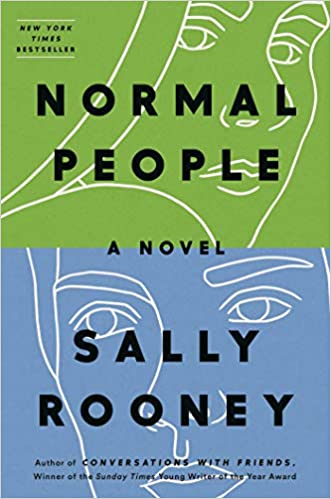
Review 1509: Normal People

In school, Marianne and Connell ignore each other. They come from different social backgrounds. Marianne is from a wealthy family, while Connell’s mother is the cleaner for Marianne’s family. Although Connell is popular, Marianne is bullied and ignored.

Away from school, the two become lovers. However, a misunderstanding about their relationship causes Connell to hurt her and they break up.

At college in Dublin, they meet again. This time, Marianne is popular with a set of bright students and Connell feels like an outsider.

Normal People is the minutely observed story of a friendship and an on-again, off-again love affair. It has been widely lauded, but it was hard for me to be interested in this story of two very immature people. The relationship is a long series of misunderstandings that separate the two but do nothing to teach them to communicate more honestly.

It’s not that I disliked this novel. It’s just that I found myself getting impatient while wondering where it was going. When it finally got there, the conclusion was underwhelming.

Related Posts

The Interestings

This Side of Paradise

The Girls

Review 1506: The Broom of the System

We first meet Lenore Beadsman in 1981 as a 15-year-old on a visit to her sister at Mount Holyoke. There, three guys from Amherst invade the girls’ dorm room and more or less sexually assault them, except Lenore, who leaves. The point of this part?

We meet her again working as a receptionist in Cleveland and having an affair with her boss, Rick Vigorous. Her great-grandmother has disappeared from a nursing home along with a substantial number of patients and some staff. The manager of the home, which is owned by Lenore’s wealthy father, has been asked to keep the incident quiet, but he asks Lenore to contact her father. She is unable to reach him, however.

I tried hard to read this novel, which I know is considered brilliant and was recommended by my brother, but I just couldn’t get on the same wavelength with it. Though I know it was considered innovative in its time (1987), it seemed dated to me, both in its bizarre zany humor, which reminded me of A Confederacy of Dunces, Tim Robbins, or Richard Brautigan, and in its treatment of women. I read about a quarter of it but saw myself completely lose interest when the cockatiel started spouting break-up lines. The novel just seemed too ridiculous, and I also felt it wasn’t going anywhere. The hyper-intellectual dialogue seemed completely unlikely. It also seemed pretentious.

Related Posts

The Sellout

You & Me

The Finkler Question

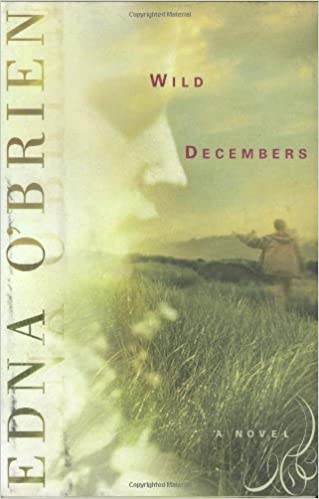
Review 1502: Wild Decembers

Best of Ten!
Although the Bugler and Brennan families have been feuding for generations, when Mick Bugler inherits land in the mountains of Western Ireland near the Brennans, he and Joseph Brennan are disposed to be friends. They are, that is, until Bugler goes behind Joseph’s back to lease the field Joseph has leased for the past 15 years. Joseph must take a huge loss on dairy cows that he can’t feed, but that doesn’t seem to faze the wealthy Bugler.

As the situation deteriorates, Bugler keeps getting the best of Joseph, however inadvertently. Joseph’s attitude is egged on by the villagers, who don’t like Bugler. It doesn’t help that Joseph’s sister, Breege, has fallen in love with Bugler, unaware that he’s engaged to a woman back in Australia.

This beautiful, moody novel winds its way to an inevitable sad end. O’Brien’s writing is gorgeous and evocative. This is quite a book.

Related Posts

Solace

When They Lay Bare

The Spinning Heart

Review 1497: Elmet

Best of Ten!
My very brief research on Elmet tells me that it was a Welsh kingdom in what is currently West Yorkshire, but the Wikipedia article says that Bede refers to it as “the forest of Elmet.” This reference is certainly apt for the novel Elmet.

Daniel, his father Daddy, and his sister Cathy live in the deep forest in a house their father built. Daddy has claimed the land, which the children’s mother owned when she died.

Before they lived there, the children stayed with their grandmother while Daddy was gone for long periods. But Cathy was being harassed by local boys until she finally beat them up. When Daddy took Daniel and Cathy to report the repeated bullying to the head teacher, he could see that she already believed that the attack was unprovoked, believed the middle-class boys’ lies over the poor children’s truth, that is. So, Daddy took them away to the forest and told them he wouldn’t leave them again.

At first, their life seems idyllic as they live mostly off the land, but we know from the beginning that Daniel is running away from some horrible event. So, a feeling of dread builds.

Daddy is an uneducated giant who makes a living fighting illicit bare-knuckles boxing matches. In his past, he also did violent work off the edges of legality, but lately he has used his great strength to help out poor people against injustices by landlords and former employers. Because of his past, however, he can’t seek out legal means to sort out his problems, and the worst one appears with Mr. Price, a man known to have cheated locals out of their land and a poor landlord. He claims that the kids’ mother sold him her land before she left the area.

This novel is stunning in its beauty, full of dread, dark, and wonderful. Set in the present, it depicts life so violent and exploitative for the locals in poverty that you would think it was feudal times. It’s not often I read a book this good. I read this book for my Man Booker Prize project.

Related Posts

History of Wolves

All the Birds, Singing

Milkman

Review 1490: A Patchwork Planet

Anne Tyler’s books have been around for years, and some of them have been very popular, but for some reason, I never read any until just a couple of years ago. Now, I have read a few and wonder what I was waiting for. Her Baltimore settings and her quirky characters make for an enjoyable time reading.

In A Patchwork Planet, Barnaby Gaitlin is on his way by train from Baltimore to Philadelphia to see his daughter when he becomes fascinated by an incident. A man goes up and down the platform looking for someone who is going to Philadelphia, but he does not ask scruffy-looking Barnaby. He finally finds a middle-aged woman who agrees to take a package containing her passport to the man’s daughter in the Philadelphia station.

This event awakens in Barnaby both curiosity and a sort of protectiveness toward the woman. He watches her during the trip to see if she opens up the package to make sure it is a passport and not something more sinister or dangerous. She does not. He follows her to see her hand it over.

Barnaby is on the surface a tough, lower-class guy, but we find as we get to know him that he is still rebelling, at 30, against his wealthy, status-conscious parents. He is not ambitious, but he is kind-hearted and loves his job for Rent-a-Back, where he does chores and runs errands for mostly elderly clients. But he is a disappointment to his parents, especially to his mother, who can’t forgive him for incidents in his juvenile delinquent past. This past involved breaking into houses and stealing, but while his friends took liquor and money, Barnaby looked at family albums and stole curios. Unfortunately, he was the only one caught.

Barnaby takes another train trip with the woman, Sophia, and engages her in conversation, during which his friendliness wins her over. She contacts Rent-a-Back to have him help out her aunt. Soon, they begin dating.

Under Sophia’s influence, Barnaby begins to make strides toward growing up: to be more reliable at work, to make sure his daughter gets attention, to pay back his parents. But a crisis comes when Sophia’s aunt accuses him of stealing her nest egg.

A Patchwork Planet isn’t one of Tyler’s better known books, but I really enjoyed it, principally because of Barnaby’s engaging personality. This book is lots of fun.

Related Posts

A Spool of Blue Thread

Vinegar Girl

Major Pettigrew’s Last Stand

Review 1488: Akin

Noah Selvaggio is an octogenarian widower about to set forth on a trip to his birthplace of Nice when he is contacted by a social worker. His eleven-year-old great nephew Michael, whom he has never met, is in need of a temporary place to stay. Michael’s father, Noah’s nephew, has been dead for a while; his mother is in jail; and his grandmother, who was his guardian, has just died. Michaels’s other grandmother, Noah’s sister, has been dead for some years. Rosa, the social worker, asks that he take Michael while she tries to contact an aunt.

Noah tries to make his trip a reason not to take Michael, but Rosa is able to get Michael a passport and permission from Amber, his mother, to take him. So, Noah reluctantly agrees to take charge of Michael.

Once in Nice, Noah begins to try to track down the origins of some photos he thinks may have belonged to his mother, Margot. During World War II, his father went to the States, leaving Margot and Noah in Nice under Nazi occupation. Later, she sent Noah ahead, following in a year or two. The explanation has always been that she stayed to take care of her father, a famous photographer. But Noah thinks there is some mystery.

Although the pair have lots of arguments, Michael gets interested in helping Noah seek the truth about his mother.

I found this book a quick, interesting read, and a bit more touching than some of Donoghue’s other books. I was interested in the search for the truth and in the characters of the protagonists.

Related Posts

Lilac Girls

The Alice Network

The Nightingale

Review 1486: The Luminous Sea

On a bay in Newfoundland, Vivienne is collecting samples of sea life to study a phenomenon of luminescent tides, when she finds a creature. Although this creature is only suggestively described, we’re led to conclude that it’s a mermaid or a fish that led to the myth of mermaids.

Vivienne takes her find back to her boss, Colleen, who is thrilled. Colleen begins testing the creature to try to prove it is something heretofore undiscovered and notifies her own boss, Isaiah.

To Vivenne, the tests are too invasive, and the fish begins to lose its scales and seems to fail. When Isaiah brutally assaults her and Colleen angrily dismisses her complaint about it, Vivienne decides something must be done.

The Luminous Sea is narrated with luminous prose, leaving us with a book that is as beautiful as its cover (which, I admit, made me buy the book). This story about the balance between scientific discovery and humanity and about academic greed for recognition is really good.

Related Posts

The Mermaid and Mrs. Hancock

The People in the Trees

The Mermaid’s Child