Review 2211: Horse

This novel tells the story of a famous racehorse and the people connected to him evoked through some objects—his own skeleton and three portraits of him. Although the main characters in the novel are fictional, many of the historical characters are not. The horse, Darnley, who is renamed Lexington, is still considered one of the best racehorses of all time, and many of his offspring have been champions.

In 2019 Theo is a Nigerian graduate student of art history at Georgetown. He plucks a painting out of the trash of his neighbor. It is of a horse, and he recognizes that it is well painted, so he decides to write an article about having it cleaned and valued.

Jess is the head of a lab at the Smithsonian that cleans and articulates animal skeletons for display and study. She has recently located the skeleton of the famous race horse Lexington for a scholar studying equine bone structure when Theo brings in his cleaned painting. Jess recognizes it immediately as one of Lexington painted by Thomas J. Scott, a 19th century horse painter.

In 1850, 13-year-old Jarrett is a slave working with horses for Dr. Warfield in Lexington, Kentucky. Jarrett’s father, Harry Lewis, is a well-known horse trainer who has bought his own freedom and is saving to buy Jarrett’s. Jarrett is with Alice Carneal when she gives birth to Darnley, the horse that will be renamed Lexington. After a promise from Warfield to give Darnley to Harry instead of his yearly wage, Jarrett develops a close relationship with the horse.

Thomas J. Scott is a young artist who specializes in painting horses and is hired by Warfield to paint some of his horses. While he is there, he paints a copy of his picture of Darnley and gives it to Jarrett. Later, he returns to paint an older Lexington.

These are the characters whose points of view are used to tell the story of Lexington. Brooks’s story is based on what is known of the real horse and characters with some inventions. It’s an interesting story with vivid descriptions of the races, of 19th century New Orleans, and of the racing industry of the time. It also has strong themes of the effects of slavery, racism, and cruelty to animals.

Related Posts

Horse Heaven

The Sport of Kings

People of the Book

Review 2207: Birnam Wood

Well, this is quite a novel. Unfortunately, I don’t know how to explain what it is like without giving too much away. But I’ll try. Let me say that I don’t know whether I liked it, but it certainly is effective.

First of all, you’re not going to find a character in this novel to outright like. Catton has fully realized her characters as flawed people, and she keeps turning back to them and showing another side. There is definitely a villain, though.

Mira is the founder of Birnam Wood, a gardening collective that plants vegetables in unused spaces. Mira is not picky about whether they do this with permission from owners or even steal water or tools to do their work. However, most of the members believe their activities are legal.

Shelley is Mira’s roommate and best friend but also the person in Birnam Wood who does most of the management and publicity work. She is tired of not being listened to or having her contributions unacknowledged.

Mira reads that a landslide near Korowai National Park has cut off one of the accesses to the park, leaving only one road to a nearby town. A prominent businessman, Owen Darvish, who has property in the area that he had been planning to subdivide, took the property off the market because after the landslide it will not sell. Mira decides that this large, unoccupied property in a remote area would be perfect for a major planting operation, so she drives there to check it out.

On the property, though, she is apprehended by Robert Lemoine, an American billionaire who has been in the news because of a deal with Darvish. Eventually, he explains that he is buying the property from Darvish and is interested in donating a large sum of money to Birnam Wood to help ramp up their organization.

Tony, a radical Birnam Wood member who has been away teaching in Mexico, comes back to a meeting. When Mira presents Robert Lemoine’s proposition, he is very much against it but is outvoted. He walks out but decides to go to the area, thinking an article on what Lemoine is doing there would help his attempts to become a journalist.

Lemoine has a secret agenda that none of these characters know about. The novel moves from seeming to be a combination of a study of characters and somewhat of a sendup to a plot full of suspense.

Related Posts

The Rehearsal

The Luminaries

The Bone People

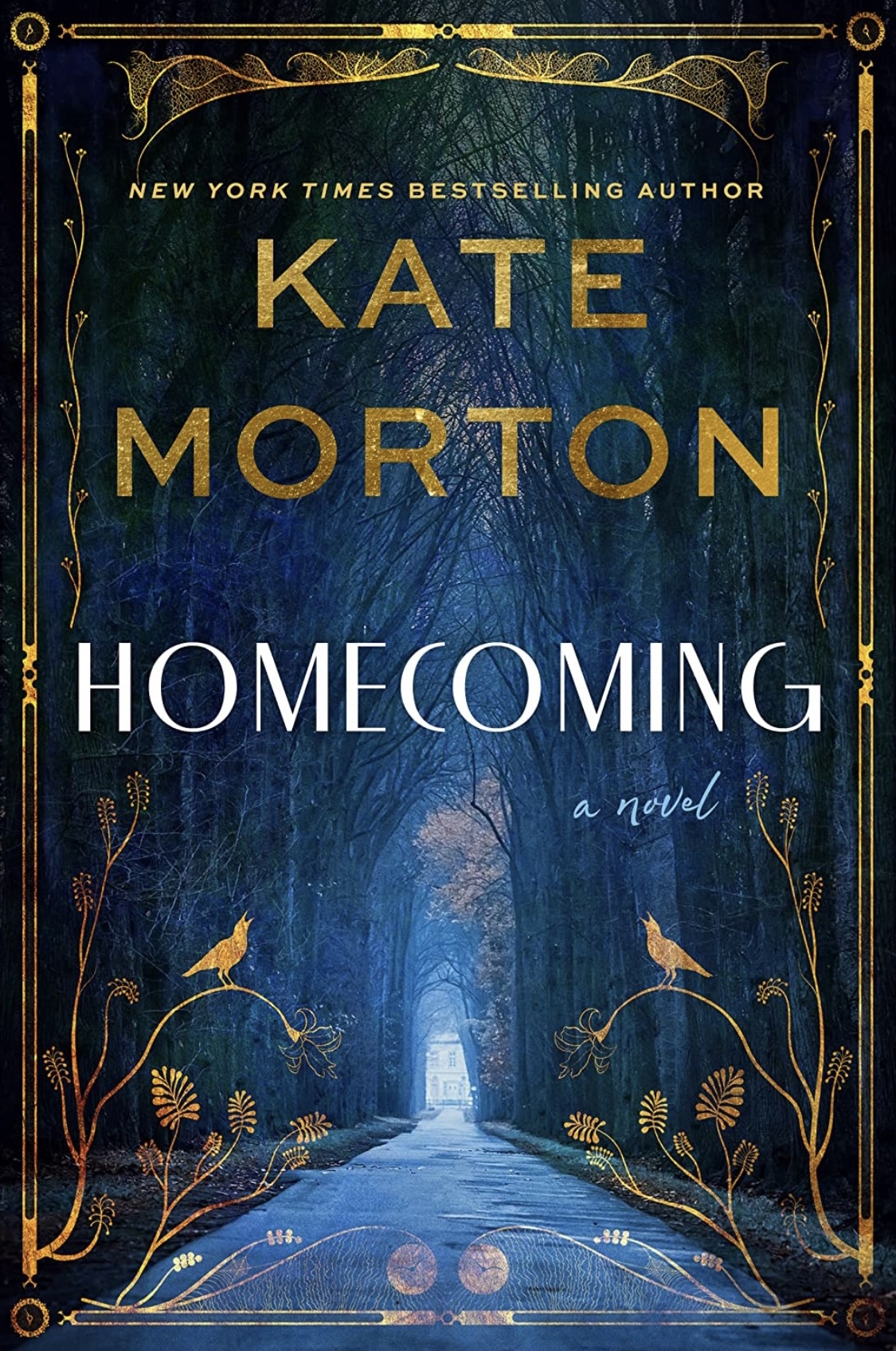
Review 2201: Homecoming

To a certain extent, you know what you’re getting with a Kate Morton novel—a split time-frame story with family secrets revealed. The storytelling is always very well done, and more often than not, the story is engrossing. Homecoming is no different.

On Christmas Eve, 1959, Percy Summers is riding past Halcyon, the estate in the Adelaide Hills recently purchased by Thomas Turner, when he trespasses to water his horse in the river. By the river, he finds Isabel Turner and her children apparently asleep near the remains of a picnic. Only they’re not asleep. In his shock, Percy fails to notice a basket hanging from a tree—where Isabel put her baby. Later, everyone realizes the baby is missing.

In 2018 London, Jess is summoned home to Sydney because her grandmother, Nora Turner-Bridges, is seriously ill, having fallen while trying to go up to her attic. Jess, a currently unemployed journalist, has not been home in 20 years, but it was her grandmother who raised her.

Nora has told Jess stories about her brother Thomas, but it is not until she begins looking through Nora’s things for a letter Nora’s caregiver said upset her that she learns Thomas had a house in the Adelaide Hills where his family was killed when he was abroad. Jess can’t believe Nora never told her about this. In fact, she finds a book about the crime in Nora’s bedroom.

While Jess investigates the old crime, we learn about it from flashes back and from the book she found, which is contained in its entirety. For me, this was an unfortunate choice that made the slow unwrapping of the plot more artificial, particularly because it is far too short to really be a book. However, I got used to it.

There were several big mysteries wrapped within this crime, but the two big ones are, what happened to the baby? and did Isabel poison her family? I was fairly sure I knew the answers to both early on, but I didn’t guess the details or complications. In all, I felt that this novel, while not my absolute favorite of Morton’s books, was right up there.

Related Posts

The Forgotten Garden

The Secret Keeper

The Lake House

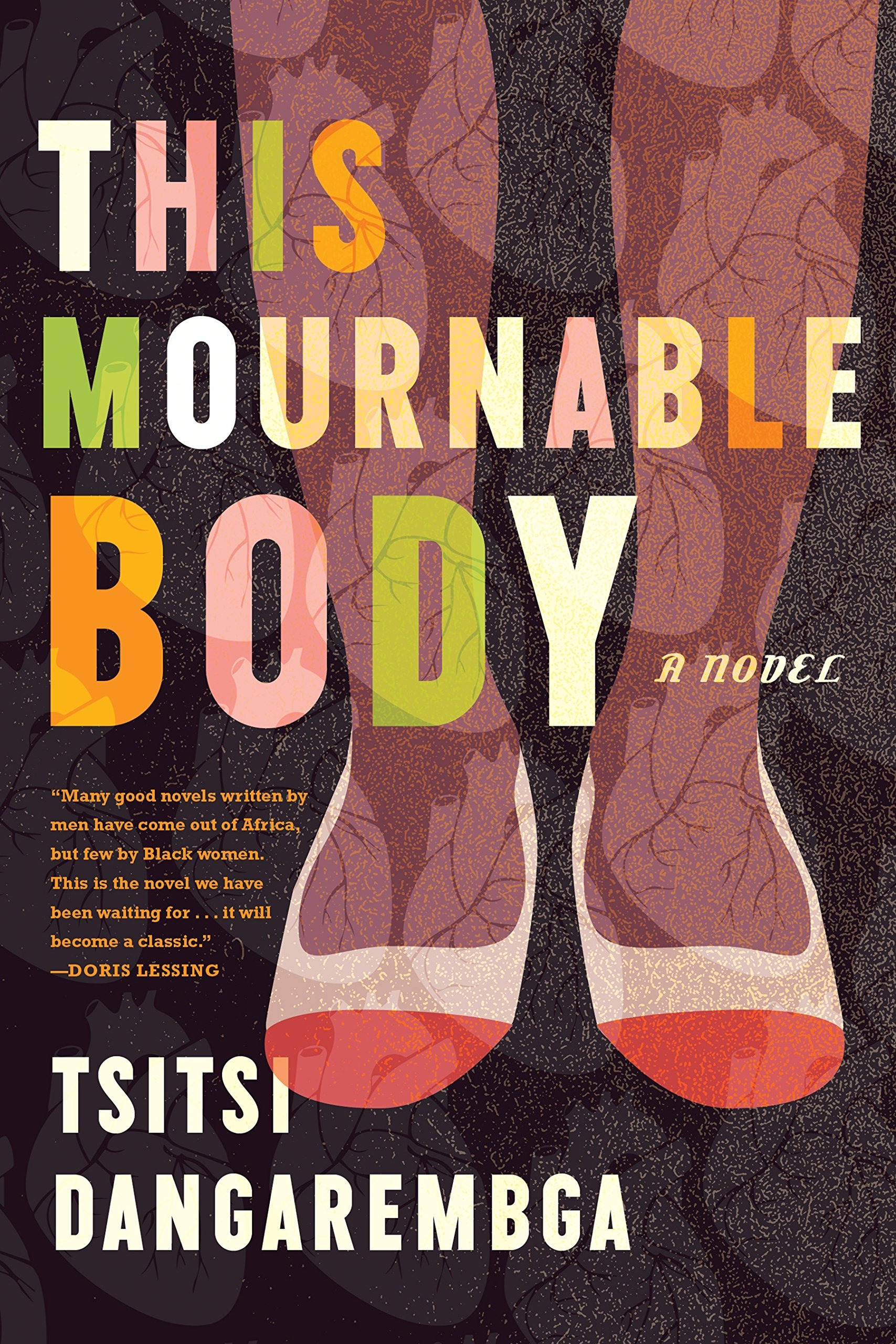
Review 2199: This Mournable Body

I have already complained about the tendency of Walter Scott Prize judges to pick novels for their shortlist that are in the middle of a series. Now I find the Booker Prize judges selecting the third book in a series. I understand that reading the first two books would have helped me understand this one, but I am not sure my spirit could stand up to two more.

Set in 1990s Zimbabwe during the Mugabe dictatorship, This Mournable Body follows the struggles of Tambudzai, an embittered and sometimes unstable woman. At the beginning of the novel, she is unemployed and living in a youth hostel that she’s too old for, having quit her job as a copywriter for an advertizing agency because credit for her work was going to white employees. Right away, after a disturbing incident where she is turned away from an interview for lodging by a servant, we see an unpleasant side of her when she joins a mob attacking one of her hostel mates because of her short skirt.

Tambodzai makes two moves hoping to improve her lot. She takes a room in the crumbling compound of a rich widow, and she takes a job as a teacher in a girls’ school. Because of her education, she feels she deserves a better position in life, and that’s all she thinks about. She is embarrassed and depressed by her surroundings and sees her teaching job as a comedown. Finally, she has a breakdown in class.

Permeating this novel are references to the recent war, with war veterans complaining that the country, which is poor and struggling, and of course led by a corrupt government, is not what they fought for. But to me many things just seemed vicious. Women are assaulted by strangers, mobs, their husbands and basically told to get over it. The success of one businesswoman who opens a popular store is rewarded by a mob trying to threaten her. Later, when our heroine gets a new opportunity and is enjoying her work in ecotourism, the farm where they lodge tourists is taken over by war veterans with government approval, presumably because it is owned by a white family but perhaps not.

Tambudzai herself is not a nice person for most of the novel, until she experiences some self-revelation. More, though, is that there is a lot of this book I didn’t understand, about people’s attitudes and about the oblique references to the government. The ending provides a small lift; otherwise, I found the novel depressing and hard to stick with.

Related Posts

In the Shadow of 10,000 Hills

When Rain Clouds Gather

Travelers

Review 2196: Lucy by the Sea

Lucy by the Sea is the latest in Elizabeth Strout’s Lucy Barton novels. As usual, it references all the others, including her books that are not about Lucy. It is also a Covid chronicle.

The beginning recaps a bit of her previous novel, Oh, William! Lucy is still grieving the death of her second husband, David, when her first husband, William, calls to tell her the virus is coming and he’s taking her away from New York City. Lucy is oddly oblivious to what’s happening and only packs for a few days. William has to take her laptop himself.

Lucy finds them in a house in Maine all by itself at the end of a point above the sea. Bob Burgess (of The Burgess Boys) has arranged this home for them. William has also talked their daughters, Chrissy and Becka, into leaving Brooklyn for Connecticut.

From this distance, William and Lucy experience all of the dislocating effects of the pandemic—the worry about others, the isolation, the shock of hearing about friends’ deaths, the yearning for contact. Lucy is as always naïve but wise, full of anxiety and affection. She finds she cannot write.

I always love the Lucy books, which have a deepness to them that lies beneath an almost childlike storytelling style, but this one seems even more lovely.

Related Posts

My Name Is Lucy Barton

The Burgess Boys

Oh William!

Review 2189: Faith Fox

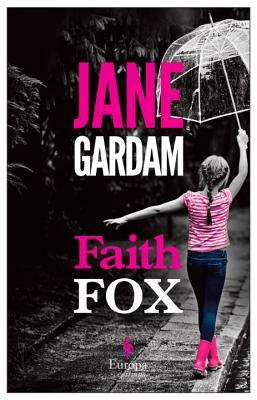
The cover of my Europa edition of Faith Fox is a little misleading, because although the plot of the novel revolves around a child, the child is a baby, not the young girl shown on the cover. You have to wonder sometimes if the artist ever reads the book or even knows what it is about.

When Holly Fox dies in childbirth, her mother Thomasina can’t bear to see the baby, Faith. The baby’s father, Andrew Braithwaite, seems oddly uninterested in her and anyway works brutal hours in the hospital. So, he decides to take her to his brother Jack, an Anglican priest who runs any experimental farm up in Yorkshire.

Jack is a sort of living saint, whose work barely supports a small community made up of ex-cons and Tibetans. The down side of this is his lack of sense. He trusts everyone, has no concept of a feasible project, and tends to forget the practical aspects of life. His little community lives in extreme discomfort and doesn’t accomplish much. He forgets Faith almost as soon as she arrives and his wife Jocasta has her reasons for avoiding Faith—she has been in love with Andrew since they met, but he could not afford to marry. So, he dropped her and her son off at Jack’s and later got engaged to Holly.

In fact, the only people yearning to see and care for Holly are Andrew’s parents, Toots and Dolly. But they are elderly and Andrew avoids bringing her to visit. Philip, Jocasta’s ten-year-old son, also cares about Faith and worries about her at school, but her care is basically left up to the Tibetans.

In the meantime, Thomasina scandalizes her friends by missing her daughter’s funeral to go to Egypt with Giles, an elderly colonel she just met. And Andrew and Jocasta have revived their affair after he brought Faith up to Yorkshire.

Gardam certainly has a gift for depicting dotty upper-class characters, selfish people, and hopeless charitable projects in the novel, as well as some peculiar lower-class characters. She also clearly understands the workings of grief, both bereavement and the lovesick kind. I’ve discovered Gardam late, but I’m really enjoying her.

Related Posts

Old Filth

The Man in the Wooden Hat

Last Friends

Review 2184: Literary Wives! The Harpy

Today is another review for the Literary Wives blogging club, in which we discuss the depiction of wives in fiction. If you have read the book, please participate by leaving comments on any of our blogs.

Be sure to read the reviews and comments of the other wives!

My Review

Lucy writes copy from home and is raising her two small sons, having given up greater career ambitions upon motherhood. Although bored, she is reasonably content until she finds out her husband, Jake, has been having an affair with an older coworker.

Lucy, whom we eventually learn grew up with a physically abusive father and a psychologically abusive mother, has always been fascinated by harpies. She is immediately filled with rage, yet she is also embarrassed by the concern of her friends once she realizes they all know, and in some ways she seems to find fault with herself. She thinks she is a poor housekeeper and a poor mother, although it seems clear that Jake doesn’t do much work around the house and that she is a loving mother.

The couple make a deal that she can hurt Jake three times in return for him hurting her. But the hurting seems to have two effects—it seems to bring out more savagery in Lucy and it seems to make Jake behave as if everything is all right.

I didn’t exactly enjoy this novel, although it provides insight into modern suburban life as well as abusive relationships. Frankly, it made me feel a little squeamish at times.

What does this book say about wives or about the experience of being a wife?

Literary Wives logo

Although this novel makes observations about marriage in crisis and dissolution, it also makes precise observations about the tedium, aggravations, and isolation of modern marriage and motherhood. Jake seems to think that after Lucy has had her three cracks at him, everything should go back to normal. For her part, Lucy realizes that when she forgave her father years ago for abusing her mother, her feelings became diluted. So, this novel is about Lucy recognizing and affirming her rage. Although that doesn’t seem to be a good thing for their marriage, no one seems to figure this out.

Related Posts

The Vegetarian

The Leviathan

His Only Wife

Review 2172: The Seven Moons of Maali Almeida

Just by coincidence, The Seven Moons of Maali Almeida is the second book set in Sri Lanka that I’ve read in a few months. It is part of my Booker Prize shortlist project.

It’s December 1987 and Maali Almeida is dead. He finds himself watching his body being thrown into a lake, but he can’t remember who killed him or why. A photographer, a gambler, an irresponsible and unfaithful gay lover, Maali had a purpose—to reveal the photos he’s taken of the carnage and double-dealing involved in the civil war in the hopes of stopping it.

Faced with a grotesque and bewildering afterlife, Maali is determined to get his two friends, Jaki, who is in love with him, and DD, her cousin with whom Maali was in love, to find his hidden photographs and make sure they are seen. To do this, he has to figure out the inconsistent rules of the In Between, avoid being consumed by the demon Mahakali, and learn how to be heard by humans.

As with Lincoln in the Bardo, I was not enamored of Karunatilaka’s conception of the afterlife nor was I very interested in the philosophical ramifications of Maali’s conversations with other dead people, demons, and animals. However, I was very interested in his depictions of Sri Lanka’s war and got dragged into the action almost despite myself. His humor is not mine, however.

Related Posts

Lincoln in the Bardo

A Passage North

The Cat’s Table

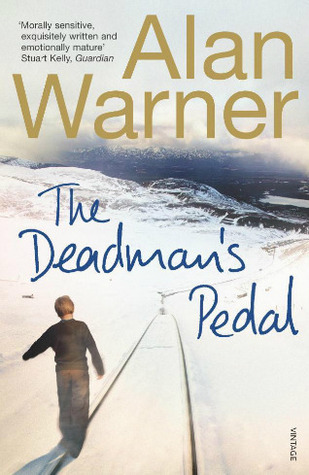
Review 2168: The Deadman’s Pedal

I had a few thoughts when I began reading this novel that weren’t necessarily connected with how well I liked it. One was how much male writers and critics love coming of age stories, at least if they’re about boys. If they’re about boys, they’re literary fiction (hence the James Tait Black prize win). If they’re about girls, they’re women’s fiction. Take Philip Roth, for example. He’s written the same novel over and over, and back at the turn of the century, he was the only writer who appeared twice in Time magazine’s list of the 100 Best Books of the 20th century. This coming of age novel was one I read for my James Tait Black prize project.

My second observation was more personal. In the beginning of the novel there is some joking around between 15-year-old Simon Crimmons and his friends. Now, I know that at this age a lot of things are said between boys to impress each other, but I found the way they talked about girls disturbing. I actually asked my husband if when he was this age, boys talked this way, and he said no. But he would have been about ten years older than these boys at the time these scenes are set in 1973. Everything they said was so objectifying, it’s no wonder young girls have image problems.

Anyway, Simon is nearly 16 at the beginning of the novel and wants to quit school and get a job. His father owns a fleet of trucks, but Simon can’t work for him until he is 18, so he ends up accidentally applying for a railroad job. His parents are very much against his quitting school, but he is headstrong. Another title for this book might be “Adolescents Making Poor Decisions.”

Simon seems to be a grounded individual who knows who he is, but even as he is getting sexually involved with his girlfriend, Nikki, he meets Alexander and Varie Bultitude and is fascinated by them. They are the teenage children of the area aristocrats, and they seem much more fluid in nature, trying on the hippie look of the times. Simon and Alexander have books and music in common, but we get the sense that to Alexander, Simon is just a way to spend time while he’s home from school. Simon and Varie, on the other hand, have little in common. She’s interested in horses, geology, and the occult. But she is beautiful and he’s fascinated by her.

Much of the novel is about class. Simon complains once that he is too middle class for his fellow railroad workers and too working class for the Bultitudes. Varie is surprised to find he lives in the largest house in his village, and she mistakes his mother for the gardener. His parents have worked their way up from the working class and are dismayed to see him going back down.

Warner seems to have captured the banter of the railway men and the dynamics of small-town Scotland, remote Scotland, too, where they are nearly at the end of the railway line.

I became more interested in this novel when it moved away from Simon’s school friends, especially the frightful Galbraith, to the working world of the railroad. However, I wasn’t much interested in the adolescent obsession with sex.

Related Posts

The Rehearsal

Young Mungo

The Bass Rock

Review 2158: Half-Blown Rose

Vincent (a woman named after Vincent Van Gogh) is living in Paris, separated from Cillian, her husband, after his latest book revealed that when he left Ireland at 15, he left behind a pregnant girlfriend. Vincent and Cillian have been married for more than 20 years, but he had never told her about this.

While Vincent is teaching writing and creativity classes in Paris and considering having an affair with Loup, who is half her age, Cillian calls constantly trying to reconcile.

I don’t usually do this, but very soon after starting this novel I tried to figure out how old Cross-Smith is. This was because at about page 2, Vincent wonders if Loup is still looking at her and thinks, if he isn’t I’ll die. I thought, is this woman 12 years old? The character is 44, by the way.

Nevertheless, I continued reading, because the situation started to come out and it seemed intriguing, even though I was dreading the hot affair that I could see coming.

Then, at about page 75 begins a series of emails between Vincent and her husband’s illegitimate son and his mother. They are unbelievably juvenile, including lots of exclamation points.

Vincent is hanging around with artists and academics, and their conversation is absolutely unconvincing. And don’t get me started on the playlists (really?) and the number of references to Vincent’s menstrual blood. This was a DNF for me.

Related Posts

The Other Daughter

The Light of Paris

Alien Hearts