Review 2121: Young Mungo

Twice recently I’ve had the same unusual experience with my reading. I was looking forward to reading a second novel by an author who wrote a book that I loved, only to find the second novel seemed to be very much the same as the first, as if the writer was stuck somehow. This happened with Young Mungo.

Mungo is a caring 14-year-old Glaswegian gay boy with an alcoholic mother, a sister planning her escape, and a violent brother. Sound familiar, those of you who have read Shuggie Bain? The novel begins with Mungo being packed off on a camping trip with two men his mother barely knows from her AA meetings. He is poorly clad and equipped, the men are drunk, and a feeling of dread is the immediate effect. In between chapters that continue this story, the novel returns to scenes from Mungo’s past.

Set in the 1990’s, the novel is similar to Shuggie Bain except that Mungo is older and the novel is even more grim and violent at times. Still, it is compelling and becomes less like the other novel as it goes along. I ended up liking it but not so sure I want to visit that world a third time.

Related Posts

Shuggie Bain

A Little Life

Edinburgh

Review 2114: Lost Hearts in Italy

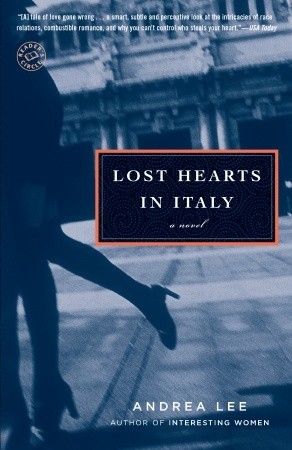
I absolutely loved Andrea Lee’s Red Island House—in fact, it was on my Best of the Year list this last year—but I think I would have liked Lost Hearts in Italy better if I hadn’t read the other book first. I make this comment because Lee seems to be rehashing the same story except the Red Island House also dealt with other themes.

In Red Island House, a young, beautiful American mixed race academic is married to an older, uneducated, self-made wealthy Italian businessman, a marriage that seemed to me inexplicable. In Lost Hearts in Italy, a young, beautiful American mixed race journalist meets an older, uneducated, self-made Italian billionaire when she is on her way to join her young, beautiful nice husband who loves her in their new home in Rome. Mira doesn’t even seem attracted to Zenin (she calls him by his last name as the heroine of Red Island House calls her husband), but eventually she begins having an affair with him, one that (this is no spoiler—it’s clear from the beginning) spoils her marriage with Nick. The novel moves backward and forward in time between 1986 and 2005, examining the lasting repercussions of Mira’s actions.

The only difference I can see between Zenin and Senna of Red Island House is that Zenin is tall and Senna is short. Lee is obviously obsessed by this relationship. Although she is an excellent writer, I think Red Island House, with its themes of identity, colonialism and the responsibility of the rich to the poor, has more to offer than just a dissection of this relationship. In Lost Hearts in Italy, Mira is like a moth drawn to a flame except she knows she is doing something against her own nature. My question was, then why did she do it? Zenin is not an attractive character at all. It’s inexplicable.

Related Posts

Red Island House

Ties

Siracusa

Review 2107: Spring

Spring is the third in Ali Smith’s seasonal quartet. Like with most of Smith’s books, there is a point where I say, “What the f— is she on about?” and a point where I say, “Oh.”

Richard Lease is an older man, a filmmaker who has done good work. He is grieving after his old friend Paddy’s death. Paddy had been his screenwriter, a woman who supported and inspired him and a good friend. He is further upset because the screenwriter assigned for his next film is trying to turn a delicate work about two famous writers who never actually met each other into a story about a hot affair.

Supposed to be at a meeting about this film in London, Richard takes a train in the opposite direction and gets off in Scotland, thinking about throwing himself under the train.

About halfway through the novel, it suddenly focuses to a seemingly unrelated story. Brittany is a security guard in a detention facility for illegal immigrants. She, like many of the other guards, has started to become callous and treat the detainees as if they were criminals.

She has heard a rumor about a little girl who walked into a facility and spoke to the director. The next day the toilets were spotlessly cleaned. Then one day on her way to work, she meets the child she thinks is that girl. The child Florence wants to know how to get to the place in Scotland shown on an old postcard she has. Suddenly, Brittany finds herself going along.

The novel is obviously about how we treat immigrants, but it makes comments about other things, like social media, on the way. There were times when its digressions got on my nerves and particularly one that I skipped once I had its measure. But somehow even when I’m frustrated by her, Smith always manages to pull me into her story and impress me with her intelligence.

Related Posts

Autumn

Winter

There but for the

Review 2106: The Mere Wife

Maria Dahvan Headley called The Mere Wife her novel about monsters in suburbia. It certainly is, but it’s also loosely based on the Old English epic poem Beowulf, only about women, not men.

Dana Mills is a U. S. Marine fighting in a desert country when she is captured and appears to be publicly executed on television. She awakens in the middle of the desert six months pregnant with no memory of what happened. Since she can’t tell the conditions under which she was impregnated, the Marines put her in prison stateside. She escapes and returns to her home town, which her family has lived in for generations, only to find it demolished with a suburb built on top of it.

Dana finds her way to caves in the mountain surrounded by the suburb. Inside the mountain is a train station from when the town was thriving. Living in the cave, she has her baby, but she is traumatized by PTSD and thinks he is a monster.

Seven years go by, during which Dana has been training her son, Gren, to survive, which she believes includes staying away from other people. But Gren sneaks out and makes friends with a boy in the nearest house, Dylan, who has been both spoiled and restricted and neglected. When Dana finds out about this friendship, she has only dread. Despite her efforts to keep him away, Gren sneaks out and attends a New Years party. Willa, Dana’s mother, has been aware that something has been in her house, a wild animal, she thinks. When Dana comes to fry to fetch Gren home, a series of overreactions on her part and that of Dylan’s parents result in catastrophe. Soon the police are hunting down Dana and her son. Enter a macho policeman named Ben Wolff.

This is really a rough read. Stylistically, it’s beautiful and poetic, but it is also harsh and cynical. The question Headley forces on you is, Who is the monster? Well, there are lots of them.

The novel features a chorus of women and a strong distaste for men as well as for hypocrisy.

Related Posts

Beowulf

Everything Under

Melmoth

Review 2087: Burnt Sugar

When Antara was three, her mother Tara took her and left her home out of boredom to join an ashram, becoming the guru’s lover. In the ashram, Antara hardly ever saw her mother, and when she did, Tara alternated between effusive love and abuse.

Now Antara notices her mother is losing her memory. Although she tries to help her with diet and memory exercises, she still bears her a lot of resentment for events in the past. But this novel reveals its secrets slowly, and its secrets include betrayal. This novel, which I read for my Booker project, is mostly a character study about a woman who felt unloved as a child and is still suffering.

Antara is an artist, good enough to have her own show in a gallery, so I found it disturbing how slighting her family was about her art. When her mother burns some of her drawings, no one is upset, and later someone refers to her art as a hobby.

Antara is not a reliable narrator, nor is she a likeable person, but I found this novel fascinating.

Related Posts

The Blazing World

Suzanne

Black & White

Review 2077: Literary Wives! State of the Union

Today is another review for the Literary Wives blogging club, in which we discuss the depiction of wives in fiction. If you have read the book, please participate by leaving comments on any of our blogs.

Be sure to read the reviews and comments of the other wives!

My Review

Literary Wives logo

State of the Union takes place in ten scenes, as Tom and Louise meet in a pub before their marriage-counseling sessions. The novel is almost completely dialogue as the couple bicker and each picks apart what the other says. Although Louise has had an affair, she says it’s because Tom stopped having sex with her. Tom says he stopped having sex with her because she was clearly uninterested.

I haven’t read a Nick Hornby novel in a while, although the ones I read I found touching and engaging, particularly High Fidelity and About a Boy. State of the Union just seems too facile to me, though, about a couple who are more interested in scoring points off each other than talking seriously about their problems. Then when they finally start talking, they clear up their problems too quickly.

What does this book say about wives or about the experience of being a wife?

It says Hornby wants someone to make a movie from his book.

Related Posts

I’m Fine and Neither Are You

Wait for Me, Jack

How To Be a Good Wife

Review 2066: The Candy House

The Candy House is billed as a follow-up to A Visit from the Goon Squad, but at first, aside from its structure as linked short stories, I wasn’t sure why. Bix, a wealthy high-tech entrepreneur, is not one of the characters from the original novel, I don’t think, nor is Alfred Nollander, whose quest for authenticity leads him to scream in public just so he can see the expressions on people’s faces. (Although later I realized he was a child in the first book.)

However, as I continued reading, I encountered familiar names and realized I was dealing mostly with descendants and connections of the original characters. A lot of the novel deals with social media run amok, a world where it is common for people to upload their unconsciousness to the internet using the software provided by Bix’s company, Mandala, and the opposition to this and other such practices by the company formed by Chris Salazar, the son of Benny of the previous book.

The novel doesn’t seem as experimental in form as the original, although there is a chapter constructed in Instant Messages and another of a recorded manual, but that’s really because Egan’s approach, which was unusual when the previous novel was published, is more common now. Set from the 1990s to roughly the 2030s, the novel is more futuristic.

Although I wasn’t blown away by this book as I was by its predecessor, I was happy to revisit the lives of its characters, all of whom eventually reappear, even those from the ridiculous tale that parodied the P. R. field. Another good one for Egan.

Related Posts

A Visit from the Goon Squad

Look at Me

The Keep

Review 2058: Crudo

If I had ever heard of Kathy Acker, I might have appreciated Crudo, which I read for my James Tait Black project, more. The novel incorporates her writing and depicts a woman named Kathy who has had a double mastectomy and otherwise seems to echo Acker’s life except that it is set in 2017, some years after her death.

The novel is primarily a character study. Its events, with some reminiscences, are days leading up to her wedding and the month afterwards. She is extremely neurotic and sometimes seems almost paralyzed by world events. She is commitment phobic and yet is getting married, so she obsesses about that. She thinks in very graphic terms and expresses herself crudely at times. She decides to do something and changes her mind. She has screaming fits because the deck was painted brown.

Altogether, she is a difficult and infuriating woman. I didn’t like her at all, which interfered with my enjoyment of the novel.

Laing’s writing is clean and vivid. She appropriates the words of others as did Acker, but her appropriations are noted at the end of the novel.

Related Posts

Suzanne

Song of a Captive Bird

Miss Emily

Review 2056: Bewilderment

Theo Byrne is an astrobiologist whose job is to search for life on other worlds. He is also a bereft widower and the father of Robin, a troubled nine-year-old boy. Robin is kind and super-intelligent, very concerned about animals, but he is also hyper-anxious and prone to horrible fits of rage. He has received conflicting diagnoses, and Theo doesn’t want to subject his growing brain to psychotropic drugs.

After a few incidents at school, Theo is aware that he soon may be butting heads with social services. So, when Stryker, a scientist at the university where Theo works, offers Robin a place in his experimental but noninvasive treatment studies, Theo accepts. The treatments seem to work magically well, but at the same time Theo fears that Robin is becoming a different person.

Theo and his environmental activist wife have brought Robin up to appreciate the abundance and beauty of natural life, so some of the most beautiful moments in this novel come during their camp-outs. Theo also entertains Robin with bedtime stories about the kinds of life that may be on other planets.

Powers has created an absolutely convincing story about the inner life of a fragile boy and his father, who is trying very hard but who himself is unusual and slightly off-kilter. He has set it in a slightly dystopian time with a Trump-like president and a background of social and environmental disintegration. The references in the beginning to the novel Flowers for Algernon set the tone for where the novel is going and despite a few smiles, there is no doubt that it is going there. Here is another troubling novel from Powers, very sad and powerful.

Related Posts

Orfeo

The Overstory

The New Wilderness

Review 2045: A Town Called Solace

I enjoyed Mary Lawson’s Crow Lake a great deal, but I can say for A Town Called Solace that at some point, I became so interested in it that I had a hard time putting it down to get other things done. This novel is set in 1972 and in memories of 30 years earlier.

Eight-year-old Clara is nearly stunned with anxiety. Her 15-year-old sister Rose ran away from home several weeks ago. Clara’s mother is prostrate from grief, and Clara stays looking out the window, because Rose told her she’d send her a message and she doesn’t want to miss it. She takes comfort in going next door to feed Mrs. Orchard’s cat, as she asked her to do when she went into the hospital. The only thing is, a strange man has appeared in Mrs. Orchard’s house.

That man is Liam. Clara’s parents haven’t told her that Mrs. Orchard died and left everything to Liam, a neighbor from her previous home she took care of when he was four. Liam has recently split from his wife and on hearing of his inheritance, quit his job and traveled all the way to far northern Ontario to Solace. His plan is to fix up the house and sell it, but he slowly becomes involved with people in the community.

Liam, who has always had trouble forming relationships, understands that Clara believes her parents are liars because they didn’t tell her about Mrs. Orchard, so he extends her the peace of his home when he is out so that she can feed and play with the cat, and the courtesy of not lying to her. Periodically, the novel returns a few months in time to Mrs. Orchard’s last few days and her memories of that time when Liam was four years old.

I absolutely loved this book. It is about loneliness and the difference that love and understanding can make in a life. It is empathetic without being mawkish or manipulative. It’s also about ordinary people trying to make their way through life. It’s lovely.

Related Posts

Crow Lake

The Northern Lights

The Haunting of L.