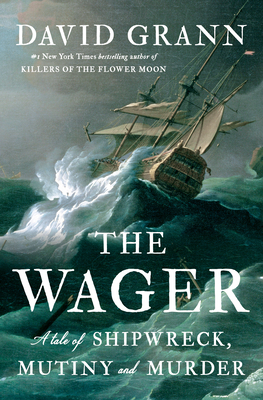
Review 2290: The Wager: A Tale of Shipwreck, Mutiny, and Murder

In 1740, a small fleet of ships set out from Portsmouth on a mission to try to capture Spanish ships laden with treasure in the Pacific Ocean. This poorly conceived and executed mission was part of the War of Jenkin’s Ear, essentially an excuse to try to gain wealth by pillaging Spanish ships.

Because of delays in refurbishing and equipping the ships, they left late. They were trying to round Cape Horn during the southern hemisphere’s summer, which they thought was the calmest time to venture through those dangerous waters. By the time they got to the Horn, the Wager, the smallest ship, had already experienced a bout of typhus and another of scurvy. The loss of officers to illness had given them a new leader, newly promoted Captain David Cheap. They made it around the Horn but lost contact with the other ships and then were shipwrecked.

Nearly a year after they were last sighted at the tip of South America, a few of the sailors made it back to England. Six months after that, a few more appeared, including Captain Cheap, accusing the first group of mutiny and other crimes. Two more appeared even later, accusing the first group of abandoning them on the coast of Patagonia.

Using the widely varying accounts in the journals and memoirs of some of the survivors, David Grann has attempted to reconstruct a fair account of what happened. One of these survivors was the sixteen-year-old midshipman, John Byron, who became the grandfather of the poet, Lord Byron. It’s a fascinating account, with some of the thrills of fictional naval adventure. Yet its all true.

Related Posts

Killers of the Flower Moon: The Osage Murders and the Birth of the FBI
The Lost City of Z

Fatal Journey: The Final Expedition of Henry Hudson

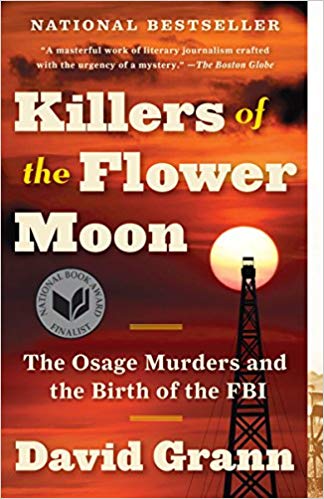
Review 1335: Killers of the Flower Moon: The Osage Murders and the Birth of the FBI

Cover for Killers of the Flower MoonDavid Grann’s book Killers of the Flower Moon details a past that was once infamous but now almost forgotten except in Osage country. In the 1920’s, the Osage nation in Oklahoma was the richest population per capita in the United States. This phenomena was a result of wise decisions by the tribal leaders during the 19th century land grab by the whites. They voluntarily moved from their homelands, purchasing land in Oklahoma that they thought white men would deem worthless. Then oil was discovered on their property. Because the nation had purchased the property, it couldn’t be taken back.

However, the federal government, in its infinite wisdom, deemed the Osage unfit to handle their own money. So, they appointed white guardians for them. As you can imagine, there were many eager to cheat these people out of their headrights, as were called their shares of the tribal fortune.

The Osage began dying. Grann centers much of his book on Mollie Burkhart, the Osage wife of Ernest Burkhart. One by one, her family started dying. First, her sister, Annie, was found shot in the head. Then her mother, Lizzie, died of a mysterious illness, believed by many to be poison. When her sister Rita’s husband, Bill Smith, tried to investigate, he and his wife and servant girl were killed one night when their house exploded. Other Osage were dying, too, and investigators either came up with nothing or were themselves murdered.

As the FBI was in its infancy and trying to figure out its own jurisdictional powers, new director J. Edgar Hoover decided that the Osage murders, which were becoming infamous as indicators of failure and corruption, would be good ones to solve. So, he sent out a former Texas Ranger, Tom White, to investigate.

Grann follows their investigation, and it is a fascinating one. This is a shameful period in our history that should not be forgotten. Grann goes further than the FBI, though, by looking into other deaths that were not investigated.

This book tells a mesmerizing story about a shocking time not so far in the past.

Related Posts

The Lost City of Z: A Tale of Deadly Obsession in the Amazon

The Midnight Assassin: Panic, Scandal, and the Hunt for America’s First Serial Killer

The Wicked Boy: The Mystery of a Victorian Child Murderer

Day Seventeen: The Lost City of Z: A Tale of Deadly Obsession in the Amazon

Cover for The Lost City of ZThe Lost City of Z by David Grann tells the story of a famous British explorer, Percy Fawcett, and his obsession with finding the fabled city of El Dorado in the Amazon. He was the last of the great Victorian adventurers and possibly the inspiration for Indiana Jones (and for the explorer in the movie Up).

Fawcett made a career of exploring the Bolivian and Brazilian Amazon, beginning with being hired by the Bolivian government to establish its border in the Amazon. He became convinced that there had been a large city, which he called Z, in the region of the Xingu River. Hundreds of expeditions had been made to find it, beginning in the 16th century, and many of them were never seen again.

In 1925 Fawcett set off on an expedition funded by the Royal Geographical Society with a small party that included his son and son’s best friend. He sent daily dispatches back from the jungle that were published in the newspapers and waited for with anticipation by the general public. Then the dispatches stopped, and he was never seen again.

But the story wasn’t over. Others went into the jungle to try to find out what happened to him, including a famous movie star. Many of them never returned, either.

Grann, a staff writer for The New Yorker, became interested in the subject, which he came upon while working on another project. During his research, he met with members of the Fawcett family and was given access to a some previously unpublished personal papers. He is able to provide insight into the explorer’s character and thought processes, which makes for a fascinating story.

Grann also became consumed with the fate of the Fawcett expedition and found himself deciding to follow in Fawcett’s footsteps. Although his trip through the Amazon in a jeep was no Victorian expedition, he himself is no explorer. He was surprised to find the Amazon almost as wild today as it was 100 years ago.

And maybe he solved the mystery of what happened to Fawcett’s expedition. The story of Fawcett’s adventures makes compelling reading, and the ending is unexpected.