Review 2631: Instead of the Thorn

I’m on my second of three recently discovered (by me, anyway) Georgette Heyer books, and I’m beginning to think there’s a reason they’re not well known. Although the print-on-demand book I purchased has astonishingly few errors, it also contains absolutely no publication information, not even the name of the POD company. But I see that Instead of the Thorn was published in 1924. It is one of Heyer’s few contemporary novels that aren’t mysteries.

Elizabeth Arden is brought up by her Aunt Anne, a Victorian spinster who disapproves of everything modern and has taught Elizabeth to bury her own feelings and always be agreeable. Her father doesn’t pay attention to her, and when his old friend Mr. Hengist warns him that Anne may not be the best person to raise his daughter, he thinks that’s ridiculous.

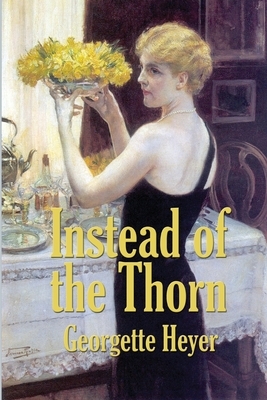
When Elizabeth reaches her older teens, she is old-fashioned but beautiful (and probably doesn’t dress like the girl on the cover above). Her father begins to take an interest, and soon she is attending parties and dances.

She meets Stephen Ramsey, a famous author who is about 10 years older, and he falls in love with her. She likes him and finally agrees to marry him, hoping for a long engagement. But it is not to be, and three months later, knowing absolutely nothing about what to expect, she marries him.

Elizabeth is young for her age, and she has been raised to be a prig. She is shocked by what marriage entails, and so she begins finding fault with Stephen’s habits and so on. Eventually, they split.

Interestingly, but perhaps not surprisingly, their problems are all Elizabeth’s fault (except for how their marriage got its start, which is blamed on Aunt Anne). Aside from being messy, unpunctual, and intellectual, Stephen is perfect. Elizabeth has a long, perhaps unlikely way to go.

There are some hints of a sense of humor here, but not many. One scene between Elizabeth’s father and his sister is quite funny, and Stephen’s mother is a fun but lovable character. I guess I should give this book points for showing the harm that can occur by not telling girls the facts of life—but that problem was probably much more prevalent at that time.

Stephen’s family and friends are so much more interesting than her own that you’d think Elizabeth would go over to them immediately, but she is too much of a prig. She becomes quite unlikable for a while.

It’s clear that Heyer was still finding her feet as a novelist as well as her genre. This is not it. I will give Heyer some credit, because she does seem to be trying to capture the clash between the Victorian and Edwardian generations in both this book and Helen.
Related Posts

Helen

Arabella

Behold, Here’s Poison

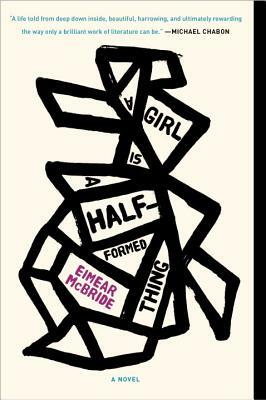
Review 2551: #ReadingIrelandMonth25! A Girl Is a Half-Formed Thing

I was going to review this book in February, but then I decided to hold it a few weeks so it could be part of #ReadingIrelandMonth25 hosted by 746 Books. This may be my only contribution, because I’m busy finishing my A Century of Books project. And now for my review.

When he was two, the unnamed narrator’s brother had brain cancer. To her mother’s mind, her praying rather than the surgery saved him, and she became extremely religious. Her father left, saying he couldn’t take it. So, she, the younger child, her brother, and her mother grew up in a sort of microcosm.

When she isn’t praying, their mother is full of anger, which is expressed at them, particularly at her. Their classmates think they are weird—he because he is slow and has a scar across his head, she because she scorns them and is intelligent. She doesn’t care, but he wants to fit in.

Then at 13, she begins a sexual relationship with an older relative that forms her later relationships with men around violence and mistreatment.

This book isn’t for everyone. For one thing, it is written in an experimental, half-incoherent style. It takes a while to get used to it. However, it is bold and bleak and ultimately it made me cry, which to me means it’s very good. It’s ground-breaking.

It contains scenes of verbal and physical abuse, sexual violence, and rape. Also, suicide and death. So be warned.

Related Posts

The Lesser Bohemians

Milkman

The Virgin Suicides

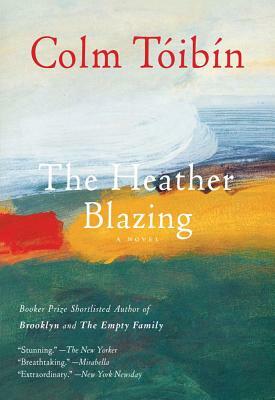
Review 2484: The Heather Blazing

Eamon Redmond is a judge in Ireland’s high court. When the novel opens, he is reconsidering his decision in a complex case and at the same time getting ready to leave for his summer house in Cush. The novel follows him back and forth in time as he examines his relationships with his deceased father and his wife.

His wife Carmel complains twice in the novel that he is distant, and she finds him unknowable. Toíbín presents us with a description of his everyday actions and key moments in his life, but we never understand how he feels about these things. However, there is a warmer ending to this novel, in which there seems to be human interaction in his future.

The descriptions of the Irish coastline, where Toíbín himself spent every summer, are beautiful. And sad, because the landscape is changing—the cliffs are being eaten by the sea.

This is Toíbín’s second novel. It is moody, sometimes a little funny, but mostly sad. As with Toíbín’s character, I felt a bit removed from it.

Related Posts

The Empty Family

Nora Webster

Brooklyn

Review 2135: The Tortoise and the Hare

Imogen Grisham has a relationship with her husband, Evelyn, that is probably not unusual when this novel was written, in the 1950s. His job as a barrister being demanding, she feels it is her job to provide a stress-free home life. Unfortunately, since he is difficult to please and often impatient with her, she placates him. Her young son, Gavin, is like his father and treats her with disdain.

Imogen, who is some years younger than her husband, notices his growing friendship with Blanche Silcox but doesn’t worry about it because Blanche, a spinster, is old and unattractive, to her mind. However, Evelyn and Blanche have more in common, and eventually Imogen finds herself being excluded from occasions in which Blanche is included.

Although I thoroughly disliked Evelyn and Blanche, it was hard for me to be sympathetic at times with Imogen because she is superficial and so passive. For example, there is a situation in which Gavin has a serious problem at school while Evelyn is involved in an important case. Instead of going to school herself, she sends her friend Phil to deal with it, I assume because she believes she will be ineffectual. Even Imogen’s best friend thinks, not that Imogen should have gone herself, but that Evelyn would have respected her more if she’d interrupted him at work. Maybe there’s something about mothers going to school at that time that I don’t understand.

However I felt about the characters, this novel is a realistic portrayal of the breakdown of a marriage with all of its hesitations and heart-rendings on the one side and its self-justifications on the other. It is layered and ultimately affecting.

Related Posts

Harriet

A View of the Harbour

Ties

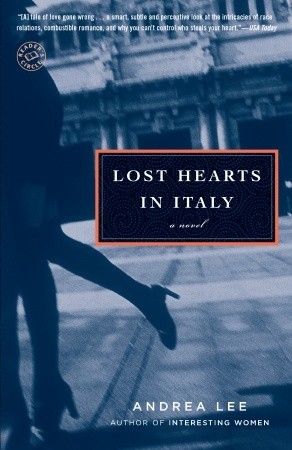
Review 2114: Lost Hearts in Italy

I absolutely loved Andrea Lee’s Red Island House—in fact, it was on my Best of the Year list this last year—but I think I would have liked Lost Hearts in Italy better if I hadn’t read the other book first. I make this comment because Lee seems to be rehashing the same story except the Red Island House also dealt with other themes.

In Red Island House, a young, beautiful American mixed race academic is married to an older, uneducated, self-made wealthy Italian businessman, a marriage that seemed to me inexplicable. In Lost Hearts in Italy, a young, beautiful American mixed race journalist meets an older, uneducated, self-made Italian billionaire when she is on her way to join her young, beautiful nice husband who loves her in their new home in Rome. Mira doesn’t even seem attracted to Zenin (she calls him by his last name as the heroine of Red Island House calls her husband), but eventually she begins having an affair with him, one that (this is no spoiler—it’s clear from the beginning) spoils her marriage with Nick. The novel moves backward and forward in time between 1986 and 2005, examining the lasting repercussions of Mira’s actions.

The only difference I can see between Zenin and Senna of Red Island House is that Zenin is tall and Senna is short. Lee is obviously obsessed by this relationship. Although she is an excellent writer, I think Red Island House, with its themes of identity, colonialism and the responsibility of the rich to the poor, has more to offer than just a dissection of this relationship. In Lost Hearts in Italy, Mira is like a moth drawn to a flame except she knows she is doing something against her own nature. My question was, then why did she do it? Zenin is not an attractive character at all. It’s inexplicable.

Related Posts

Red Island House

Ties

Siracusa

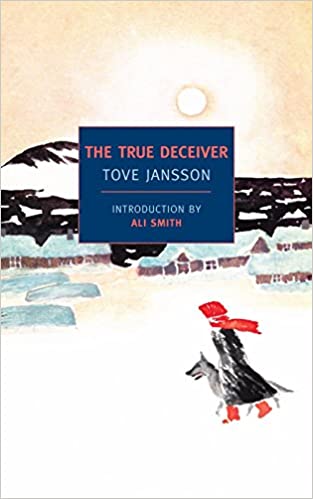
Review 2043: The True Deceiver

Katri and Mats Kling are village outcasts. Katri has strange yellow eyes, and although she is very intelligent, she is brusque and has no people skills. Mats, her younger brother, is more accepted but seems lacking intellectually and is treated like the village idiot.

Katri wants two things—to find a stable home for Mats and get enough money to build the boat he wants. To do so, she has her eye on Anna Aemelin, an elderly illustrator of children’s books who is known for her drawings of fluffy bunnies.

By offering to deliver Anna’s mail and supplies, Katri begins to strike up a relationship with Anna and is soon working in her house as a servant. Katri sees herself as scrupulously honest, and when she begins managing Anna’s finances, she sees that Anna is being cheated by almost everyone. But Anna doesn’t want to see some things.

This is an odd little book about deception and self-deception but also about an unusual kind of friendship. Katri is accompanied everywhere with a wolf-like dog, while Anna is compared to the fluffy bunnies covered in flowers that she draws all over her meticulous forest floorscapes. But by the end of the novel, the dog has run away, and Anna has stopped painting bunnies.

Related Posts

Lolly Willowes

Miss Plum and Miss Penny

Your Presence Is Requested in Suvanto

Review 1775: My Lover’s Lover

At the beginning of My Lover’s Lover, I thought O’Farrell was writing an updated version of Rebecca, and indeed she references the movie early in the book. However, if she had that in mind at all, she moves away from it.

Lily meets Marcus at a party and feels an attraction to him. When he mentions that he needs a flat mate, she asks if she can take the room. However, when she goes to see it, she is surprised to find it still full of another woman’s possessions. She takes the room in the renovated Victorian warehouse with Marcus and his friend Aidan, but she becomes obsessed with Marcus’s old lover, Sinead. Although he refuses to talk about Sinead, Lily understands him to have told her Sinead is dead. Once Lily and Marcus become lovers, Sinead begins haunting her, appearing in the flat.

But Sinead isn’t dead. Once Lily finds that out, she goes to see her to ask her what happened. Then the story is told of the beginning and the end of their relationship.

This is another beautifully written, insightful tale by O’Farrell. Sadly, I think I have now read all her books. I’m going to have to wait for the next one to come out.

After You’d Gone

The Distance Between Us

This Must Be the Place

Review 1764: Literary Wives! The Summer Wives

Today is another review for the Literary Wives blogging club, in which we discuss the depiction of wives in fiction. If you have read the book, please participate by leaving comments on any of our blogs.

Be sure to read the reviews and comments of the other wives!

Eva of Paperback Princess
Lynn of Smoke and Mirrors
Naomi of Consumed By Ink

* * *

In the summer of 1951, young Miranda Schuyler arrives on Winthrop Island for her mother’s wedding to Hugh Fisher. There, she is immediately drawn to the young fisherman, Joseph Vargas, one of the lower class full-time population of the island that is in summer also occupied by the wealthy elite. She doesn’t care about his social position, but her new stepsister, Isobel, claims him for her own despite being engaged to someone else.

In the summer of 1930, a very young and naïve Bianca Medeiro falls madly in love with Hugh Fisher. She does not understand how he views their relative social positions and believes that having sex with him means they are spiritually married, despite his engagement to another girl.

In the summer of 1969, Miranda, now a movie star, returns to the island, where she has been a pariah since the events of 1951. Slowly, we learn what happened back then and what led to Joseph’s imprisonment for the murder of Hugh Fisher.

My Review

Literary Wives logo

First, I have to say that this is absolutely not my kind of book, so I only read it because it was a selection for Literary Wives. I have read one other book by Beatriz Williams, but I’m guessing it was improved by being a collaboration with two other writers, Lauren Willig and Karen White. The Summer Wives is definitely chick lit, which I do not read, so I will attempt to comment on the other aspects of it.

The plot develops so slowly that I considered quitting about page 50, when nothing much had happened except girls swooning over boys. I was about at page 5 when I thought I knew every secret that was going to be revealed, and I was just about right, barring that by then only a few of the characters had appeared. I also expected more of a sense of what the island looked like and who the characters were, but they were very much one- or maybe two-dimensional.

The dialogue was uninteresting, and the writing was either fairly mundane or overstated. For example, Bianca is stunned at being given gin to drink, not surprised, not startled, but stunned.

The novel picked up a little at the end, but had a frankly unbelievable ending. And what is this fascination chick lit books seem to have with wealth? The novels all seem to be about rich people or poor girls brought into worlds of wealth. So, of course, Miranda’s mother marries a wealthy man and despite Miranda having been ostracized from the family at a young age, she doesn’t become just an actress but a movie star.

What does this book say about wives or the experience of being a wife?

Well, really not much. Despite its title, the novel isn’t really about wives so much as a series of illicit relationships and love affairs. In fact, the word “wives” is used ironically, I think. Bianca considers herself married to Hugh despite his engagement to another woman and is shocked when he actually marries her. The marriages that are depicted are all in some sort of dysfunction. Hugh Fisher and Bianca Medeiro marry others but cheat their spouses throughout their marriages. Miranda has just left her abusive husband who, of course, is a movie director. Another middle-aged wife has been seducing the young men on the island. These are not sincere depictions of marriage but stereotypes, and I find nothing much to say about them.

The Forgotten Room

War of the Wives

An American Marriage

Review 1693: An Orchestra of Minorities

An Orchestra of Minorities has an unusual narrator. It’s the chi, a guardian spirit, of Chinonso, a young Nigerian poultry farmer. The chi has come before a sort of heavenly court to plead for leniency for his host, who has harmed a pregnant woman.

The chi’s story begins when Chinonso prevents a young woman, Ndali, from throwing herself off a bridge. Later, they meet again and become lovers. However, Ndali’s family is wealthy, and they don’t consider Chinonso a suitable partner for their daughter. Ndali is ready to split with them, but Chinonso decides to go back to school and earn his degree so he can get a good job.

His friend, Jamike, is attending a college in Cyprus, so Chinonso sells his farm and gives Jamike the money to pay for tuition and board and open a savings account in Cyprus, all without discussing this with Ndali. When he reaches Cyprus, he finds he has been scammed, that Jamike only paid for one semester in college but not for board, and there is no savings account.

Some people in Cyprus try to help him, but the hapless Chinonso falls into one misfortune after another. It takes him four years to get home.

I really struggled with this novel for so many reasons. It incorporates Igbo mythology and culture, which can be interesting, but every chapter and most of the smaller divisions of the novel begin with a story or a series of sayings or other digressions that slow down the narrative.

Then there is the character of Chinonso. He has low self-esteem and is weak, he is unbelievably naïve, he falls into traps that we can see coming pages ahead, he makes poor choices, his reactions to meeting Ndali’s parents seem cowardly. This might be a cultural thing. I have no idea what wealthy displeased Nigerians might be able to do to poor ones.

Then there’s his relationship with Ndali. For all we know of her, she might be a cipher. She is pretty much just something he wants. He calls her Mommy, for god’s sake. This is not a cultural thing, because she asks him why, and his answer creeped me out. I won’t say what happens to her, but it’s not good.

The only way I can justify not personally detesting this novel is if I look at it as a character study of what happens when a weak person is pushed beyond endurance. I strongly feel, though, that this novel shows an underlying hatred of women. What do women do in this novel? One dies at his birth. One leaves him without explanation. One is a prostitute. One makes a false claim of rape. One is steadfast and suffers a horrible fate. None have a personality. Detestably, at least for me, this novel is described as one about a man who will do anything for the woman he loves. Right.

And let’s not even mention the mistreated gosling that we hear way too much about. I read this novel for my Booker project.

Related Posts

Americanah

Stay with Me

Little Bee

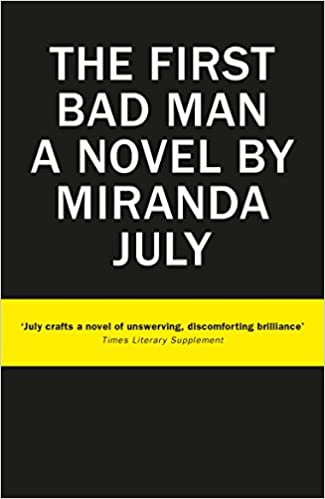
Review 1624: The First Bad Man

The First Bad Man reminds me of Eleanor Oliphant is Completely Fine except on steroids, because while Eleanor is one eccentric character, all of the characters in The First Bad Man are eccentric. I read this novel for my James Tait Black project.

Cheryl Glickman is a bit out of touch with normal human behavior. She is a manager at Open Palm, a martial arts/exercise company, but she has been directed to work from home and is only allowed to come to work one day a week. She has long been in love with Phillip Bettelheim, a much older man who is on the company’s board, and she consults a chromotherapist to treat her Globus hystericus simply because Phillip recommended him and so she can report back to him about it.

When she gets up enough nerve to show some interest in him (she tells him “When in doubt, give a shout”), he responds by asking her whether she thinks it is okay for an older man to be interested in a much younger woman. Of course, Cheryl takes this question as an interest in herself, when he is really in love with a 16-year-old schoolgirl. He continues to update her on the progress of the relationship, using explicit language.

As if this weren’t enough, the owners of the business, who routinely help themselves to supplies and the employees’ food when they come in, force her to let their daughter Clee stay with her until she gets a job. Clee is surly and unresponsive and then physically abusive when Cheryl tries to set her eccentric limits.

Cheryl herself is positive and upbeat most of the time, although she has arranged her house so that it doesn’t get dirty during occasional depressions simply by having almost no possessions. But Cheryl finds a way to respond to Clee that is unusual but ends up lightening the atmosphere.

Cheryl has some surprises for herself in this bizarre but touching novel. I liked it very much.

Related Posts

Eleanor Oliphant Is Completely Fine

Where’d You Go, Bernadette?

This Is Your Life, Harriet Chance!