Review 2427: Impact of Evidence

The area around St. Brynneys on the English side of the Welsh borderlands has been snowed in for days. It has finally started to thaw, and that has brought flooding to the valleys like the residents have never seen before. Up at St. Brynneys, the Lambton family is safe from floods and working hard on their dairy farm when they hear old Dr. Robinson go out in his car. The doctor is a menace on the road, being deaf and nearly blind, but it is his habit to drive to the top of Hollybank and back, a short distance. This time, however, they all hear a crash.

It’s a while before they can get the old Ford going, but when they do, they head to the accident, meeting Mike and Sue Dering coming home on their bikes. They all find the doctor’s car in the stream and Bob Parson standing nearby all bloody with his Jeep wrecked. Bob tells them he was driving fast down the road to get up the next hill when the doctor emerged without stopping from the side road.

The Lambtons, the Derings, and Ken, Lambton’s young hand, manage to haul Dr. Robinson’s body out of the water. But Ken notices another body. This man is a total stranger.

The phone is out and driving still dangerous, so after delivering the concussed Bob and the two bodies to the farm, Henry Lambton and Mike Dering decide to walk to the magistrate Colonel Wynne’s house to notify him of the accident. Since the area is now isolated because of floods, Colonel Wynne rides his horse the next morning to the nearest constabulary. Eventually, Chief Inspector Julian Rivers and Inspector Lancing are dispatched to find out who the second body is, when he arrived in the area, and why he was apparently in Doctor Robinson’s car.

Carol Carnac is another pen name for E. C. R. Lorac, who always writes beautiful descriptions of the local landscape. With quite a few suspects but most of them likable, I was never sure where this one was going to end up. The culprit was a complete surprise. I liked this one a lot.

Related Posts

Crook O’Lune

Fell Murder

The Theft of the Iron Dogs

Review 2426: Mrs. Martell

Mrs. Martell is not a nice person. She is beautiful and ambitious. Her goal has always been to marry a wealthy, influential man. She’s always had plenty of attention from men, but somehow she has not been lucky. Mr. Martell was a mistake, of course.

Cathie Martell never paid much attention to her cousin Laura until Laura married Edward West, wealthy and with great connections. Since then, she has made it her business to befriend Laura and has almost succeeded in detaching Edward for herself, but somehow he stays married to Laura.

Just in case Edward doesn’t come up to scratch, Cathie has encouraged the attentions of Mr. Hardy, a young newspaper reporter, who is able to get free tickets for shows. He is madly in love with her, but she doesn’t want Edward to find out.

This darkish social satire rivals the story of Becky Sharp, only Becky is more likable. Eliot’s prose is sharp and biting, although she tends to shift point of view without warning, sometimes in the middle of a paragraph, which I found confusing at times. Still, I was driven to find out if Cathie would succeed or get her comeuppance.

Related Posts

Alice

Burmese Days

The Eustace Diamonds

Review 2336: An English Ghost Story

In an attempt to solve their family problems, the Naremores decide to look for a house outside the city. As soon as they see the Hollow, they love it. It is a large house with towers set in an apple orchard. The previous owner was Louise Magellan Teazle, the author of many children’s books. At the Hollow, all four Naremores feel a sense of well-being.

Although the family loves living at the Hollow, they are much like four islands. Steve is a successful business owner who believes he is constantly trying to rescue his wife Kirsty from ill-conceived business ventures instigated by her best friend, Veronica, whom he dislikes. The latest one cost him a lot of money, especially because Kirsty made Veronica a partner even though she invested no money—and Veronica is still racking up debts against the closed business. Steve spends most of his time in his office working.

Kirsty was a reader of Teazle’s Weezy series, so she’s the first one to realize that the house played a part in the books. She has even found the magic chest of drawers—which produces something new from the bottom drawer, a jumble from the middle drawer, and always the same thing from the top drawer. She misses Veronica and believes her family’s demands have kept her from succeeding at something of her own. Although she has taken on the traditional housewife role, most of the time it is hard to tell what she is doing.

Teenage Jordan is wrapped up in her first romance with her boyfriend, Rick. She spends most of her time in her room imagining showing Rick around the Hollow.

Ten-year-old Tim spends his time outside pretending to be a soldier patrolling the perimeter. No one seems to pay him any attention, but he is aware of the “locals” almost immediately.

All but Steve are aware on some level that there are other presences in the house and on the property. As these presences seem friendly, the family feels renewed, but when the family starts falling into old patterns, the house turns against them.

I am always looking for a good ghost story, but at some point this wasn’t it. It seemed promising. Newman did the buildup really well. However, when the horrors got going, they just seemed silly to me. I always find horrors that seem possible a lot scarier than things that are invented just to be scary. For me, the events during the haunting didn’t make sense, although there was logic in the overall idea.

Also, the Naremores out of the influence of the house are not very likable people. Steve gets more and more wrapped up with a macho sense that he’s taking care of his family—to the point where he ultimately seems insane. Kirsty is disdainful toward Steve and resents her family. Jordan is a fairly typical teenager wrapped up in herself, and Tim seems to have no personality at all. He is so obsessed with his game that he is truly boring.

Related Posts

A Haunting on the Hill

The Darkest Room

This House Is Haunted

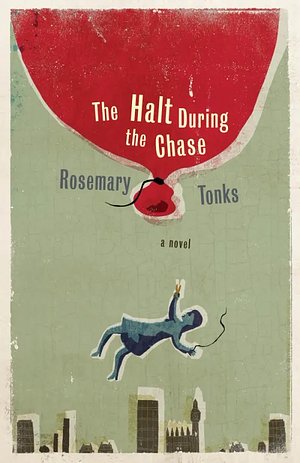
Review 2333: The Halt During the Chase

Sophie is an intelligent, vivacious young woman who is in love with Philip, whom she considers perfect. It’s clear, however, that she is subduing her personality and dressing to please him. She, her mother, and friends have been waiting for a proposal of marriage, but none has been forthcoming. Then, during a romantic tryst in a hotel room, he says something that she finds unforgivable, and it becomes clear to her that, although he loves her, he wants a wife with money.

Sophie realizes she needs to be more independent of her mother, too. After attending some “spiritual” lectures that sound like they are about self-realization, she realizes that their relationship as it is, with her coddling and reassuring her mother, is bad for them both.

Sophie decides to split from Philip, although it is difficult to do so because she still loves him. But she wants to live her own life. Her elderly friend Pussy has told her that once she tries to leave, he will try to get her back, and he does.

This novel is intelligent and funny. It contains unusual turns of phrase and vividly conveys emotions. Sophie is a sparkling heroine. I just loved this novel.

Related Posts

Sing Me Who You Are

Sally on the Rocks

Beneath the Visiting Moon

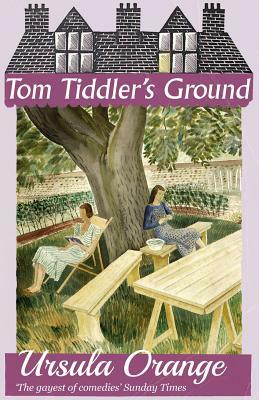
Review 2328: Tom Tiddler’s Ground

At the beginning of World War II, socialite Caroline Cameron takes her baby daughter to stay in a country village with her old school mate, Constance Smith. Caroline is witty but spoiled, and she has begun to feel that her husband John is coddling her too much. She thinks that Constance is nice but naïve, and her husband Alfred, who married up, is a social climbing bounder.

Caroline is surprised by how involved she gets with the lives around her. Constance also has an evacuee mother and baby staying with her. The mother is a sullen girl who pays little attention to the badly underweight baby. Once Nurse and Caroline change his food, he begins to gain weight and Constance begins to care for him.

Alfred is embarrassed because his half sister Mary moved to town as the grocer’s wife. He tries to avoid her, but Constance welcomes her.

Caroline, however, is being tempted into an affair with Vernon, an actor friend. She is displeased with her husband because he doesn’t want to discuss his first marriage, which she’s heard conflicting stories about. When she is in town with Vernon’s friends, she finds herself telling stories about her country friends and then feeling a little disloyal to them.

Although it deals with some serious issues, this is a charming novel about growing to understand other people.

Related Posts

Company in the Evening

Begin Again

Which Way?

Review 2326: Fear Stalks the Village

Joan Brook has been working as companion for Lady D’Arcy, a woman suffering from dementia, when she is visited for the day by a friend from London. The village where Joan lives is so perfect that her friend begins making up stories about the villagers’ dirty secrets.

It’s not too much later when Miss Asprey, a respectable old lady who is a social leader of the village, admits to having received an anonymous letter alleging a past of improprieties. The Rector tries to keep her admission a secret, but the word gets out.

Things seem to settle down except that some people believe that the letter was sent by Miss Corner, a hearty writer of boys’ books. This belief is based on the way the envelope was addressed, using Miss Asprey’s middle initial, which only someone who knew her as a girl would know. Then Miss Corner receives a similar letter. Almost immediately after, she accidentally overdoses with sleep medicine.

The Rector calls his old friend Ignatius Brown for help. The once perfect village is under a shadow. Rumors are going about that Dr. Perry poisoned Miss Corner because of an inheritance, so some people change doctors. He actually did benefit from her will, but he hasn’t received anything yet and is having difficulties because of his wife’s spending and his loss of income. Moreover, he misses Miss Corner, who was his only friend after the Rector, whom he thinks has been indiscreet. Ignatius thinks that the relationship between Miss Asprey and her companion, Miss Mack, has something odd about it.

The novel slowly builds an atmosphere of fear and mutual distrust as more letters appear. Perhaps too slowly. Although White is skilled at building tension, it takes a long time before anything more sinister happens.

The character of Joan is about the only likable one in the novel except for poor Miss Corner. The Rector, Joan’s love interest, is a bit neurotic for me as are most of the villagers. But White does do an excellent job of portraying psychological pathology.

I received this book from the publisher in exchange for a free and fair review.

Related Posts

Some Must Watch

The Wheel Spins

Two-Way Murder

Review 2322: A Well Full of Leaves

Laura is from a poor family, but lack of money isn’t the problem so much as lack of love. Her father earns very little and is often drunk. Her mother constantly complains, offers no affection to her children, and tells them they are ungrateful.

At the opening of the novel, Anda, the oldest at 16, is beautiful but selfish. Robert, at 14, loves reading about history but has been made to quit school for a job as a clerk. Both pick on Steve, the youngest at 11, who deeply feels the lack of affection. Only Laura, who is 12 or 13, seems to care about him, and she has learned to adapt to their circumstances by losing herself in the tiny details of life, to enjoy living. She tries to teach her outlook to Steve, but he just becomes more bitter.

A crisis comes when Steve is 14. Although he is the best student of Greek in school and has a good chance at university, their mother tells him she removed him from school so he can work. This is just meanness, because Anda is leaving home, and Robert and Laura are working, so the household is better off than it ever has been. After a huge family fight, Steve burns all his books.

The novel begins to be about the relationship between Laura and Steve. Steve becomes a famous actor with a very bad reputation. He has many affairs but says he loves only Laura. Once their father dies, Laura goes to live with Steve. The real crisis comes when Laura falls in love.

Although I agree with a lot of Laura’s ideas, Myers expresses them far too often and in a florid writing style that seems to belong to the early Romantics. Sometimes, I had no idea what she was talking about and other times, I didn’t want to think about it enough to figure it out. Parts of the novel are absolutely fraught in tone, especially at the end.

Related Posts

Which Way?

The Old Man’s Birthday

The Other Side of the Bridge

Review 2321: Classics Club Spin Result! Weatherley Parade

Note: the name on this cover image is misspelled. The cover on the book I have looks the same but is spelled correctly.

In Weatherley Parade, Richmal Crompton takes a look at changes in society through the lens of one upper-class family, the Weatherleys. Her novel begins with the return of Arthur Weatherley from the Boer War in 1902 and ends in the midst of World War II in 1940.

The novel is written in vignettes, chapters that take up a few hours, a few days, or a few months. What with children, grandchildren, and other relatives, there are many characters. No one is completely lovable or unlikeable. They are shown with their good points and flaws.

During the years, there are many events—happy and unhappy marriages, separations, a divorce, and deaths. Among these events, there is one treatment of a child that is hard to forgive.

Among some of the characters is Aunt Lilian, a young woman in 1902 of whom her brother Arthur despairs. He can’t understand why she keeps jilting one fiancé after another. She runs with a fast crowd and seems restless and bored. At first, I thought she was just ahead of her time, dissatisfied with traditional women’s roles, but I liked her less as time went on, and she eventually turns to alcoholism.

Arthur’s two children are Clive and Anthea. Clive is a boy who thinks everything should be done properly and by the rules, which doesn’t make him a popular schoolboy or, later, schoolmaster or father, even though his intentions are good. Anthea likes to have people’s attention, which works well when she is the mother of many children but isn’t so successful when they begin leaving the nest.

The novel stops in to visit these characters and their descendants at key periods of their lives. The scope here is broad rather than particular, so we don’t get to know any characters extremely well. I thought the depiction of changing times and attitudes was interesting, but I felt fairly neutral about most of the characters.

Related Posts

Family Roundabout

The Old Man’s Birthday

Greenbanks

Review 2317: William

William Nesbitt is a successful ship builder and owner, and at the beginning of this novel, he is contemplating the successes of his life. The only thing he feels he has missed is some romance in life, his wife Kate being a very practical woman. But he experiences romance vicariously, through his favorite daughter, Lydia, whom he views as a source of light.

Kate Nesbitt is a worrier, and she has a sense of impending doom. She also is extremely conventional and I think old-fashioned, even for the time (1925). For example, she disapproves of her daughter Dora going to visit Lydia in London without her husband. Kate has a sense that something is going to go wrong with what she sees as her family’s happy and content existence.

Of course, she is being almost willfully blind. Their son Walter and his wife Violet are content, but their daughter Dora is increasingly discontented with her husband Herbert. Their daughter Mabel and her husband John are self-righteous, and Mabel likes to complain and pretend they are poor when John’s business is going well. Janet, the youngest, unmarried daughter is silent and unhappy. Later, it becomes obvious that she thinks she’s in love with Oliver, Lydia’s husband.

Then, something bad does happen: Lydia leaves Oliver for Henry Wyatt, a writer. William is still accepting of Lydia, thinking she is trying to live her life honestly, but he begins to see that Kate is more rigid and unaccepting than he realized.

This novel is an insightful and nuanced study of how a crisis can affect a family. Since Young ran off with a married man, it’s interesting to speculate how autobiographical this novel may be. I found the novel deeply interesting, with complex characters.

Related Posts

The Misses Mallett

Chatterton Square

The Curate’s Wife

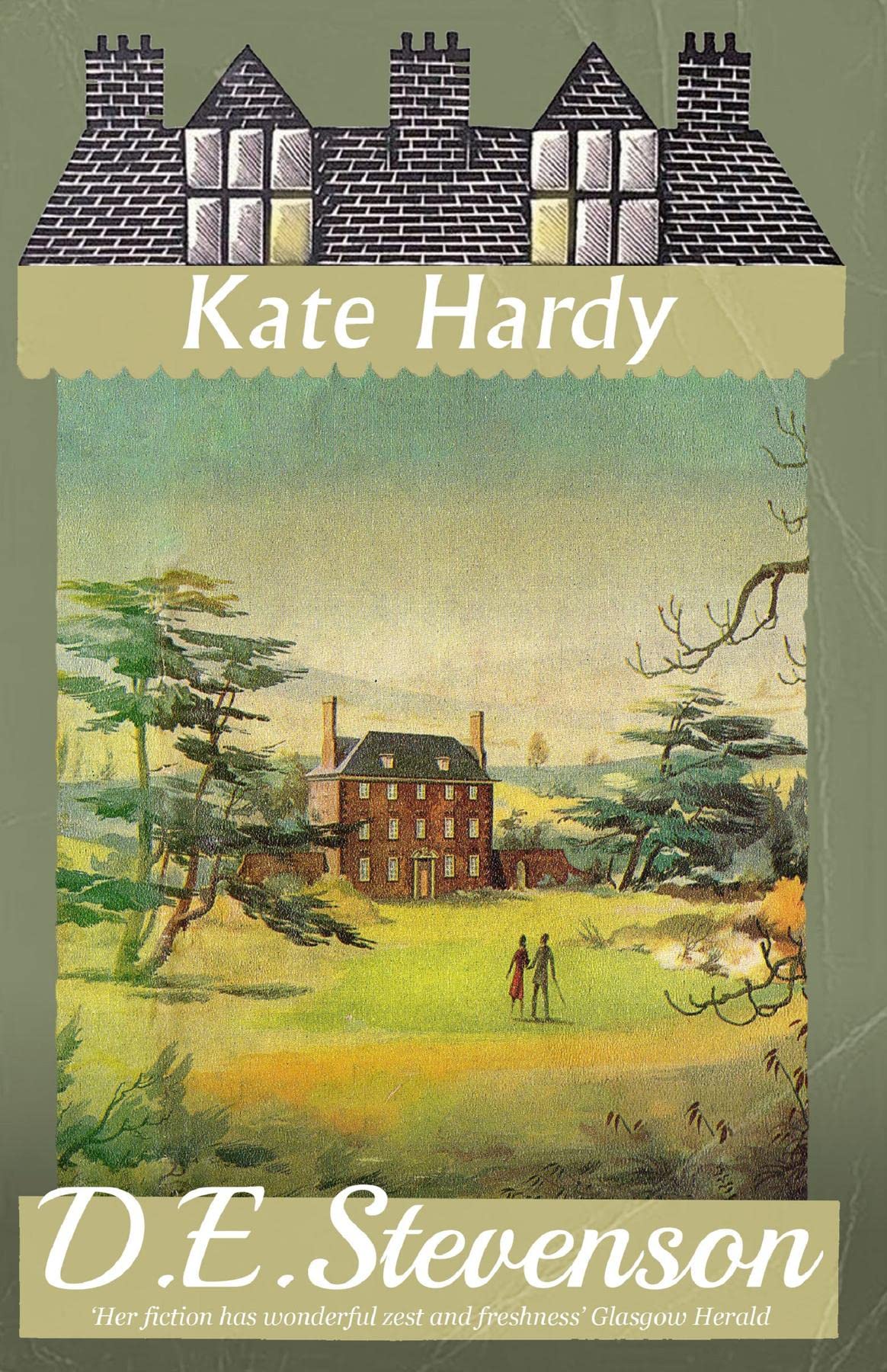
Review 2313: Kate Hardy

I usually like D. E. Stevenson’s novels for very light reading, but Kate Hardy seemed all over the place.

Old Quinings is a village that has been left in the past, and the residents like it that way. They are interested to learn, though, that Mr. Morven has sold the Dower House. The new owner is Kate Hardy, a writer of adventure stories who has been yearning to get out of London and away from her selfish sister and spoiled niece.

Kate has bought the Dower House sight unseen, but she loves it as soon as she sees it, even the resident ghost. She meets Mr. Morven early on, but he is careful to visit only rarely because he is old-fashioned and married, although he and his wife live apart.

Kate doesn’t mean to be a recluse even though she needs time to write, and she gets involved in all kinds of things. When she barely knows Mr. Morven, she receives an anonymous letter alleging an improper relationship between them. Another letter goes to Mrs. Morven, who comes back from America hoping her husband wants a divorce. Then Kate arranges to take care of the couple’s nine-year-old daughter Susan, which is an odd offer to a stranger and even odder for the stranger to accept. Susan arrives, but we hardly spend any time with her.

In a gesture that seems sweepingly condescending, Kate also gives a party to welcome back Mrs. Stack’s son Walter from his service in India even though she has just met Mrs. Stack and doesn’t know Walter. There’s a class issue here, not only because of the invitation but because Walter has bettered himself in the service but is stubbornly insisting on keeping his promise to take back his old job and take care of his mother. His old mates are resentful of his getting his job back, although that was promised when he went to war, and his mother and Kate think he could do better.

Then there is the witch plot, which is just silly.

I think there is too much going on in this novel. Maybe the whole thing with the witches was meant to give atmosphere, but it just seemed sort of thrown in, as does the presence of Mr. Morven’s daughter. Also, Kate ends up with two suitors without us having much of a sense of what they are like. I noticed in addition a couple of occasions when Stevenson tells us what people talked about without recounting the dialogue—and the dialogue gives us a better sense of what people are like. Its not very convincing to be told a character’s views are interesting instead of learning what they are or hearing the character say them.

So, I don’t think that this was one of Stevenson’s best.

On the old subject of mistakes in the Furrowed Middlebrow series, which we haven’t encountered in a while, Mrs. Stack is called Mrs. Stark on the back cover of the book, and there is a section after the novel ends that was apparently written by Stevenson but in my copy appears to be missing pages, because it has no heading and starts in the middle of a sentence.

Related Posts

The Baker’s Daughter

The Blue Sapphire

Vittoria Cottage