Review 2208: The Foolish Gentlewoman

When crusty, prim Simon Brocken goes to live with his widowed sister-in-law Isabel while his home is repaired from bomb damage shortly after World War II, he isn’t expecting to enjoy living so closely with other people. However, the household gets along comfortably together even though the four occupants don’t have much in common. Isabel is kind and generous, although Simon thinks she’s an idiot. Her Australian nephew Humphrey has come to stay, and he is slowly pursuing an understated courtship of Jackie, Isabel’s companion/secretary.

However, something is bothering Isabel, and eventually she tells them what it is. A preacher’s sermon about bad acts in the past being no less bad has made her consider an incident from when she was a girl, when her actions blighted the marital hopes of Tilly Cuff, a poor cousin her family treated a little like a servant. Tilly took a job as governess, and Isabel eventually married Simon’s brother.

Now Isabel thinks she must make amends to Tilly, so she has invited her to stay. But she also intends to give Tilly her entire fortune. Simon is appalled by this but can’t get her to change her mind. Then Tilly arrives, and everyone but Isabel soon realizes that she is actively malicious.

This novel is witty and sharply observant of human nature. It creates a situation that I couldn’t imagine being resolved neatly and that made me want to see what happens.

Related Posts

Harlequin House

Rhododendron Pie

Cluny Brown

Review 2205: Nemesis

Unfortunately, because my husband and I went on a Christie series TV binge last summer, I eventually remembered how Nemesis was going to end. Otherwise, I hadn’t read it before.

Miss Marple reads an obituary for Mr. Rafiel, a wealthy man whose assistance she requested to prevent a murder in A Caribbean Mystery. Some time later, his lawyers summon her. He has left her £20,000 if she will take on a project for him and get a result. The catch is that he doesn’t say what the project is.

She decides to take the project and a few days later receives tickets for a home and garden tour. At one of the stops, she receives an invitation to stay with three sisters, who have invited her at the posthumous urging of Mr. Rafiel. Here, she begins to get a sense of her mission when she learns from another tour participant, Miss Temple, that a former student, Verity Hunt, had been murdered by Michael Rafiel, Mr. Rafiel’s son, and she had been killed by love. Soon after this conversation, Miss Temple is killed by a falling boulder.

Mr. Rafiel wanted to right an injustice, Miss Marple decides. But can she figure out what it is and finish her mission?

I at first thought the writing of this one was a little choppy—lots of subject-verb-object sentences in a row with no variation. But eventually I got caught up into another clever and interesting tale.

Related Posts

A Caribbean Mystery

4:50 from Paddington

At Bertram’s Hotel

Review 2202: Twice Round the Clock

Young Helen Manning is astonished when Anthony Fane asks her father for her hand and he agrees. Not only does he agree, but he invites the Fanes and their friends over to celebrate.

The reason Helen is astonished is because she has always been terrified of her father. But her friends, Sir Anthony and his wife, daughter Kay, friends Doctor Henderson, Teddy Fraser, and Bill Brent, accompany Tony to the Mannings for dinner.

All the guests find Manning disturbing, especially when the famous scientist shows them an experiment where he brutally poisons a kitten belonging to the cook, Mrs. Geraint. Unfortunately, a tremendous storm strands them all there for the night.

Bill Brent is awakened at four by a noise downstairs in Manning’s office. When he goes down, he finds Manning dead at his desk with a carving knife between his shoulder blades. The French doors behind him are broken, and the room is in chaos.

This is a lively novel that goes some surprising places, including espionage and hidden family relationships. It has some unlikely plot points, and why everyone’s tires are slashed is never explained. But it’s a quick, fun read.

I received this book from the publishers in exchange for a free and fair review.

Related Posts

Jumping Jenny

Death of Jezebel

Thirteen Guests

Review 2190: Bleeding Heart Yard

Detective Inspector Harbinder Kaur has transferred to London, where she is just meeting her two flatmates and her new team. Then she gets a high-profile case—while attending a school reunion, Conservative MP Garfield Rice, called Gary by his friends, has died of an apparent cocaine overdose. The only thing is, his friends say he doesn’t take drugs.

Attending the reunion are some notable figures—Isabelle Ister, a famous actress; Kris Foster, a rock star; Henry Skep, Labour MP—who used to belong to a popular group in school called The Group. Also members of The Group were Anna Vance, a teacher now living in Italy who is in London caring for her dying mother, and Cassie Fitzberbert, Harbinder’s Detective Sergeant. We know right from the beginning that Cassie believes she killed a boy when she was in school.

Of course, it turns out that Gary was murdered by an injection of insulin. His friends find it hard to believe, because Gary was liked by everyone.

There turns out to be more than one line of inquiry. Gary had received several anonymous letters featuring a bleeding heart, and he was regularly meeting other Conservative leaders at a restaurant in Bleeding Heart Yard. Also, the team learns that during exam week before the reunion attendees graduated years ago, a boy named David died when he fell in front of a train, and Gary was the principal witness. Harbinder wonders if David was actually pushed.

The book alternates narrators with members of The Group in first person and Harbinder in third person. I don’t remember if Griffiths used this form of narration in the other Kaur novels, but it began to irritate me. First, the first-person narrators should each sound different, but they don’t. More importantly, with the narration skipping around across very short chapters, the novel started to feel choppy.

So far, I have enjoyed the Harbinder Kaur series, but I didn’t like this one as much, despite it having an unpredictable ending. I still like Griffiths’ Ruth Galloway series best.

Related Posts

The Stranger Diaries

The Postscript Murders

The Locked Room

Review 2188: Which Way?

Which Way? is an early speculative novel about how a small choice can affect the rest of your life. After a beginning section that introduces us to Claudia Heseltine and gets her to the age of 22, she is presented with a choice of invitations—two by letter and one by phone—for the same weekend. Then the rest of the novel is split into thirds depending upon the invitation she decides to accept.

Claudia is a popular girl with intellectual and cultural interests. She has a close friendship with Hugo Lester, and at the point where the decision comes in, she has promised to visit his family home, and it is clear that he plans to propose to her. So, selecting another of the invitations means breaking her promise.

I found interesting what Benson makes of Claudia’s three fates and how these reflect the times. In two stories she marries, although only in one does she marry Hugo. In one she has a romantic (as opposed to sexual) affair with a married man and in another a full-fledged affair with the same man. All of the stories involve some pain, but Claudia herself changes with the situations she is in, so that in the story where she is faithful to her husband she seems the most superficial and frivolous.

Although, interestingly, she ends up happiest in the story where she remains single, she thinks she has missed the most important things in life—which are, of course, marriage and motherhood. There’s no happy career girl in the novel, although Simon Thomas points out in the Afterword that at her marriage she is much more innocent than he would have expected for the 1920s. In both stories in which she is married, she spends her honeymoon crying after ignoring the vaguely ominous things her mother tries to tell her.

I thought this book was most interesting as a portrait of the times, for the choices that are available and how Claudia views them.

I received this book from the publisher in exchange for a free and fair review.

Related Posts

Strange Journey

A Footman for a Peacock

Miss Hargreaves

Review 2187: Dead Woman Walking

I enjoyed Sharon Bolton’s thriller The Craftsman, but I have to say that I had lots more problems with Dead Woman Walking.

Jessica and her sister Isabel are on a hot-air balloon excursion in Northumberland National Park with 10 other passengers when they pass low over a farm and see a man beating a girl over the head with a rock. The man has a rifle, and once he notices them, he starts firing at them. They get away, but then they find that the pilot’s head has been shot off. In trying to flee and land the balloon, they make several mistakes and end up crashing.

The man has followed them through the forest on an ATV, so by the time the police get there, all the passengers that can be found are dead, apparently from the crash. Jessica, however, is missing. The police can’t figure out why she seems to be fleeing rather than trying to contact them, especially as it turns out she is also a police officer.

The plot switches between the investigation by Detective Alex Maldanado, the past history of Jessica and Isabel, and the hunt for Jessica by the murderer. It is written, especially at first, in short chapters and paragraphs which I think are supposed to heighten the urgency but instead irritate. I didn’t really buy that a man firing a rifle from the ground could shoot off the pilot’s head, but even if he could, I found that detail unnecessarily gruesome. There is enough to indicate he’s a ruthless killer.

None of the characters are well defined, even Jessica and Isabel. There are family secrets confusing the issue, and Jessica’s investigation to find out about. And speaking of which, the odds of the balloon going over this particular farm seem very low, even given my knowledge having read the book.

Finally, Bolton has a big reveal at the end, only I guessed it about halfway through the book.

Although Bolton starts with an interesting idea, it’s not a very thrilling book. In fact, it dragged for me in several places.

Related Posts

The Craftsman

In a Dark, Dark Wood

Nightwoods

Review 2185: The Transit of Venus

The Transit of Venus spans the 1950s through the 1970s. It is a modernist exploration of the love affairs, both unconsummated and consummated, of the characters surrounding two Australian sisters in England, Caroline and Grace Bell.

The novel begins when Grace Bell is engaged to Christian Thrale. Grace is a few years younger than her sister Caroline, who is 21. Both are staying with the Thrales when Ted Tice, an astronomy graduate, arrives to plan the placement of a new telescope with Professor Sefton Thrale, Christian’s father. Ted, who is shabby and unprepossessing at the time, falls in love with Caroline at first sight.

Caroline, for her part, falls in love with Paul Ivory, whose play is being produced and who has just become engaged to Tertia Drage, the daughter of a neighboring lord. Caroline and Paul have an affair, but Paul drops her for Tertia, choosing position and wealth over love.

Caroline is devastated. She goes off with a friend of the Thrales, a middle-aged roué who has been bedding Tertia, but she ends up in London, working at a poorly paid government job and leading a bleak existence. All the while, she is loved by Ted Tice.

As the years go by, most of the main characters of the novel are overtaken by love. Caroline and Paul rekindle their affair for a time, but Caroline eventually happily marries a wealthy American philanthropist, Adam Vail. Christian becomes briefly obsessed with a young secretary, while Grace falls deeply in love with her son’s noble doctor. Grace and Caroline’s difficult older half-sister marries, to their relief, but then is robbed and abandoned by her husband.

Until the ending of the novel, I felt that the novel was a fairly detached examination of these various relationships in terms of the dynamics of who holds the power. Then Caroline learns a secret that makes her re-examine her entire adult life and made me re-evaluate my liking for the book. It turns everything on its head and makes the novel a great one.

Related Posts

Outline

Old Filth

Stoner

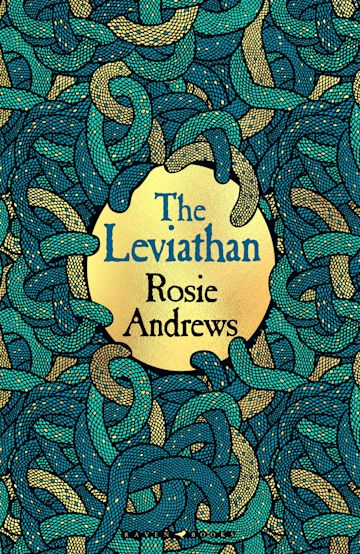
Review 2183: The Leviathan

In 1703, someone has awakened, someone Thomas Treadwater has been watching over for 60 years.

In 1643, Thomas is on leave from the Parliamentary army, on his way home because of an urgent summons by his sister Esther. When he arrives home, he finds many of his father’s sheep dead and his father felled by an apoplectic fit.

Thomas is disturbed to find that Esther has incriminated a servant girl, Chrissa Moore, for witchcraft, blaming her for the state of their father and claiming that the girl has had relations with him. Worse, he finds that Joan, a long-time servant, is also incriminated. Almost immediately after Thomas arrives, Rutherford, an officer of the court, arrives to escort Esther to make a statement, and Thomas finds that Joan and her mother have been arrested as well as Chrissa, who is refusing to speak.

Esther goes down to the jail to see Joan but says she and her mother wouldn’t speak to her. When Thomas goes down to the jail, Chrissa asks him to speak to Lucy Bennett in Norwich. Then he discovers that Joan and her mother are dead, poisoned by hemlock.

Although I figured out part of what was going on almost immediately, thus begins a truly gothic story that involves an ancient legend, a family secret, and the poet John Milton. It’s full of adventure and is rivetting.

Related Posts

The Nature of Monsters

Melmoth

The Silent Companions

Review 2182: The Love Child

I guess I can say I’ve been theme reading lately with no plan to do so. By this I mean that I’ve been accidentally reading books with something unusual in common within weeks of each other. For example, I never read any books set in Sri Lanka (except one historical romance I read several years ago), yet within weeks I ended up reading two literary novels set there, one in the 80s and one more recently. Similarly, last summer I read two books set in Madagascar. Now, who would think that there were two books about an imaginary person who comes to life? Yet, a few weeks ago I reviewed Miss Hargreaves for the 1940 Club, and here is another novel on the same subject.

The Love Child is a different kettle of fish from Miss Hargreaves, though. The latter is an amusing romp, while the former looks more seriously at the fate of women in post-World War I England, where there was a surplus of them by nearly two million.

With the death of her mother, Agatha Bodenham (considered middle aged at 32) finds herself unexpectedly lonely. She and her mother have been very reserved and have not engaged in society, so she has no friends.

She remembers having an imaginary friend when she was a girl, a friend named Clarissa whom she romped with until her mother told her she was too old for such things. She begins by remembering the games she played with Clarissa, and eventually Clarissa reappears as an 11-year-old girl. Clarissa is a graceful, delicate girl, completely Agatha’s opposite. Agatha plays make-believe games with her and enjoys herself. But slowly Clarissa becomes visible to others.

When called upon to account for Clarissa’s existence, Agatha is confused and says she is her “love child.” No one believes this, but everyone assumes Clarissa is some relative.

Problems begin, though, when Clarissa starts to have a mind of her own.

This novel is quite a sad story, maybe, depending on how you understand the ending. It rests on then-current beliefs about how the lack of motherhood might affect women (it was published in 1927) and in the fate of unmarried women. I found it sometimes flagging for me but was interested to see how it ended.

I received this book from the publishers in exchange for a free and fair review.

Related Posts

Miss Hargreaves

Strange Journey

Miss Plum and Miss Penny

Review 2180: They Do It With Mirrors

I am fairly sure I have never read They Do It With Mirrors before, but as I recently watched a TV adaptation, it was difficult for me to judge how easy it would have been to predict the outcome. I suspect it wouldn’t be.

Jane Marple has not seen her old school friend Carrie Louise for many years, but their mutual friend Ruth thinks something is not right, so she asks Jane to visit if invited. Carrie Louise is a frail woman whom others yearn to protect. She was left with a fortune after the death of her first husband. Her second husband left her for a dancer. Her third husband, Lewis Serrocold, is using wings of her massive home as a rehabilitation center for young criminals.

When Jane arrives, she finds quite a few people residing in or visiting the main house. Carrie Louise’s granddaughter Gina is there with her American husband Walter. Carrie Louise’s daughter Mildred is widowed and living there. Alex and Stephen, the two sons of Carrie Louise’s second husband, are there (well, Alex soon arrives on a visit), and they all get a surprise visit from Christian Gulbrandsen, an executor of the estate trust and Carrie Louise’s stepson. He is there to talk to Lewis, who is momentarily away, but Miss Marple sees them conferring outside when Lewis returns home.

After dinner, Christian has gone to his room to write letters when one of the inmates, Edgar Lawson, strikes up an argument with Lewis Serrocold and starts flashing a gun around. Edgar sometimes says different important men are his father and has moments of confusion and paranoia. This time he says Serrocold is his father and has been spying on him. The two go into his office, from which the others can hear the argument. They hear a gun fired outside, and then the gun in the office is fired, but when they get into the office, both men are fine. Later, though, Christian Gulbrandsen is found shot to death.

When questioned by the police, Lewis tells them Christian suspected Carrie Louise was being poisoned, her arthritis symptoms being similar to slow arsenic poisoning. And sure enough, when the police check a bottle of tonic that Serrocold told her not to take, it’s poisoned.

Soon there are two more deaths, and insights are needed from Miss Marple.

There are a lot of characters in this story and perhaps they’re not as vivid as Christie’s usually are, but she has set us an entertaining puzzle to solve.

Related Posts

4:50 from Paddington

Sleeping Murder

Murder at the Vicarage