Review 2145: The Locked Room

Just before the Covid lockdown in 2020, the attention of Harry Nelson’s team turns to an apparent suicide. Although they can’t find anything about it that points to murder, another “suicide” that is similar involves the bedroom door being locked from the outside. Harry tells his team to look at all recent suicides.

At the isolated three cottages where Ruth Galloway and her daughter Kate live, they have a new neighbor, a nurse named Zoe who seems disposed to be friendly. And speaking of the cottage, Ruth finds a photo of it in her mother’s things, which she is sorting. Ruth is surprised to find the photo, as her mother disliked the cottage. Then she realizes it is painted the wrong color and marked “Dawn 1963,” years before Ruth was born.

While Ruth is investigating the cottage’s past and Nelson’s team is looking for links between the apparent suicides of several middle-aged or older women, Covid hits and a lockdown begins.

Although several characters flagrantly break Covid restructions, this is another exciting entry in the series, featuring a new member on Harry’s team, several disappearing characters, a woman imprisoned in a locked room, a discovery about Ruth’s family, the possibility of Nelson leaving Michell, a threat to an important characters, and a true reflection of the difficulties of the lockdown.

Related Posts

The Night Hawks

The Lantern Men

The Stone Circle

Review 2143: Death of an Author

Death of an Author wasn’t my favorite book by E. C. R. Lorac, but it certainly is a clever one. And Lorac airs that recurring question, Can a women’s writing be differentiated from a man’s? in her book set in the publishing world.

Andrew Marriott, the managing editor of a publishing company, is asked by one of his best-selling authors, Michael Ashe, to invite another of his authors, Vivian Lestrange, to dinner along with himself. Since Lestrange is a recluse, this subterfuge is necessary if Ashe is to meet him. Lestrange accepts, and Ashe is astonished to meet a self-possessed young woman.

A few months later, the same young woman goes to a police station. There she explains that she is Eleanor Clarke, the secretary for the author Vivian Lestrange, and she fears something has happened to her employer, as when she tried to go to work, no one answered her knock.

The police find the house impossible to enter except through a walled door and have to climb a ladder to get in. They find a perfectly cleaned house with no one inside but open French doors with a bullet hole through one. Miss Clarke says that not only is her employer missing but his housekeeper, Mrs. Fife, is not even known at the address she gave Clarke.

Inspector Bond is suspicious of Miss Clarke, and after some investigation shows no proof that Lestrange even existed, he theorizes that she was the author of the Lestrange books and is for some reason spoofing the police. However, Chief Inspector Warner is inclined to believe her, and his belief seems justified when a body with Lestrange’s notebook in his pocket is found burned up in a remote cottage.

After learning about Michael Ashe’s interest in Lestrange, the police look for him, but he appears to be out of the country. However, the timing of his departure makes it feasible for him to be the killer.

The detectives find a possible connection to two brothers, one of whom embezzled funds from a trust both were responsible for and escaped, while the other served in prison for it claiming he was innocent. Could one of the authors be one of these brothers? or both?

Although I had a feeling that the police made a mistake about the brothers, I did not figure out exactly what happened. I’m not quite sure why I didn’t enjoy this one as much as some others by Lorac, though.

I received this book from the publisher in exchange for a free and fair review.

Related Posts

Post after Post-Mortem

Checkmate to Murder

Death of a Bookseller

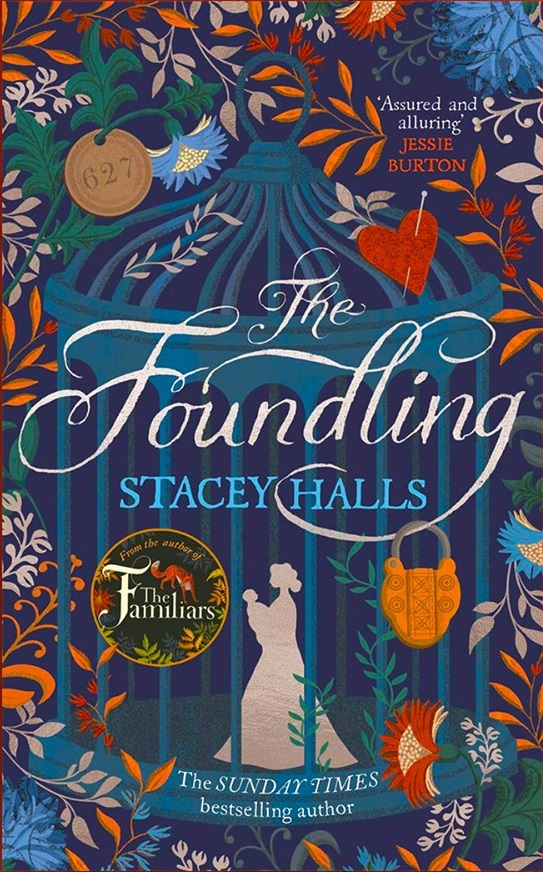
Review 2141: The Foundling

As a young woman, Bess Bright, a shrimp seller, has a first sexual encounter with Daniel Callard, a merchant. He disappears, leaving her with only a keepsake, half a whalebone heart, and a pregnancy. In 1748 London, she and her father, who already support her lay-about brother, cannot afford to keep the baby, so she takes her newborn daughter to a lottery at a foundling hospital, and she is accepted. She leaves the half heart as an identifier, so she reclaim her daughter.

Six years later, Bess believes she has saved enough money to redeem her daughter. But when she returns to the foundling hospital, she is told that she herself redeemed her daughter one day after leaving her, even identifying the keepsake.

Bess has discovered that Daniel died a few months after their encounter and that he was married. When she goes to consult Dr. Mead of the foundling hospital, he takes her to chapel, where she sees Mrs. Callard. With her is a six-year-old girl that Bess knows immediately is her daughter.

With unwitting help from Doctor Mead, Bess gets a position as a nursemaid with Mrs. Callard. There, she finds a strange household, where no one leaves the house except for the weekly chapel visit. Here the point of view shifts to that of Alexandra Callard, a woman full of fears and given to ritual.

I thought I had read a book by Stacey Halls before, but I was mistaken. I was at first disturbed by the first person narration, because it sounds nothing like a woman of Bess’s time and lack of education. Also, the first person narrative taken up later by Alexandra doesn’t sound like a different person. Hall could have easily avoided this problem by employing limited third person instead.

I got accustomed to the narrative style eventually and was pulled along by the story. However, without saying what it was, I found the ending spectacularly unlikely, especially the sudden change in Alexandra.

Related Posts

Birdcage Walk

The Mermaid and Mrs. Hancock

The Bass Rock

Review 2140: Postern of Fate

Postern of Fate is the last of Christie’s Tommy and Tuppence novels. In reading them in order, I chose not to revisit By the Pricking of My Thumbs because I had posted its review several years ago. Since Christie aged these characters along with the years, in 1973, when this book was written, we find Tommy and Tuppence in their 70’s.

The Beresfords have sold their London apartment and bought a house in a small village. This activity has resulted in renovations and clearings out, as apparently the previous occupants made no effort to remove everything. Tuppence finds a lot of old children’s books, and as she’s sorting them, she naturally begins dipping into them. In Stevenson’s The Black Arrow she finds a basic code made from reading only the first letters of some underlined words. It says, “Mary Jordan did not die naturally. It was one of us.” By asking around the village about the history of the house, she finds that Mary Jordan worked for the Parkinsons before World War I. She was thought to be a German spy. Tuppence also finds the gravestone of Alexander Parkinson, the boy who owned the book, who died at fourteen.

Tommy in the meantime has met with some old contacts and found that Mary Jordan was indeed a spy but for the British side, sent to infiltrate a nest of Nazis. It’s believed that papers are still hidden in the house that would affect some people now high in the government.

Although this book has an intriguing premise, I don’t think it was one of Christie’s best. For one thing, early on Tuppence finds an object that is later referenced several times before she figures out the connection. To me, it was all too obvious just from the first reference, but it takes Tuppence another 100 pages or so.

However, Tommy and Tuppence are still a pleasing pair, and there is even some danger. Tommy and Tuppence save the day with the help of their dog, Hannibal, who was himself an entertaining character.

Related Posts

N or M?

By the Pricking of My Thumbs

Partners in Crime

Review 2135: The Tortoise and the Hare

Imogen Grisham has a relationship with her husband, Evelyn, that is probably not unusual when this novel was written, in the 1950s. His job as a barrister being demanding, she feels it is her job to provide a stress-free home life. Unfortunately, since he is difficult to please and often impatient with her, she placates him. Her young son, Gavin, is like his father and treats her with disdain.

Imogen, who is some years younger than her husband, notices his growing friendship with Blanche Silcox but doesn’t worry about it because Blanche, a spinster, is old and unattractive, to her mind. However, Evelyn and Blanche have more in common, and eventually Imogen finds herself being excluded from occasions in which Blanche is included.

Although I thoroughly disliked Evelyn and Blanche, it was hard for me to be sympathetic at times with Imogen because she is superficial and so passive. For example, there is a situation in which Gavin has a serious problem at school while Evelyn is involved in an important case. Instead of going to school herself, she sends her friend Phil to deal with it, I assume because she believes she will be ineffectual. Even Imogen’s best friend thinks, not that Imogen should have gone herself, but that Evelyn would have respected her more if she’d interrupted him at work. Maybe there’s something about mothers going to school at that time that I don’t understand.

However I felt about the characters, this novel is a realistic portrayal of the breakdown of a marriage with all of its hesitations and heart-rendings on the one side and its self-justifications on the other. It is layered and ultimately affecting.

Related Posts

Harriet

A View of the Harbour

Ties

Review 2132: Death of Mr. Dodsley

On his rounds, a young police constable encounters a drunken young man late one night. The man tells him he saw a door opened and closed by a cat, so after the man leaves, the constable goes ahead checking doors and finds the door to a bookstore open. When he looks into the store, he finds a man shot to death in the office. It’s Richard Dodsley, the owner.

Inspector Mallet’s team finds that someone, possibly two people, waited in the store while Dodsley was out and shot him when he returned late to work on a sale catalog. They also learn that a mystery was recently published by Margery Grafton, the daughter of a prominent politician, the circumstances of which closely match those of the murder. It seems more than a coincidence that Margery Grafton is keeping company with Dick Dodsley, the dead man’s nephew, who worked in the shop.

The police find that Dodsley hired a private investigator, MacNab, to find out who has been stealing rare books from his store. MacNab has not been successful, but he gets more closely involved when Margery Grafton hires him to find the murderer because she thinks the police suspect Dick.

Death of Mr. Dodsley does not present us with a super-complicated puzzle , which is a point in its favor. On the other hand, characterization isn’t super important and there are a few important characters that we see almost nothing of, such as Dick Dodsley, the prime suspect. MacNab himself is a fairly laid-back character, and at times the plot seems to be moving very slowly.

Although it’s possible to guess the murderer, there is a surprise at the end that I didn’t see coming. It’s also fun that British Library has been lately publishing these “bibliomysteries.”

I received this book from the publisher in exchange for a free and fair review.

Related Posts

Death of a Bookseller

The White Priory Murders

Death in the Tunnel

Review 2128: Phineas Redux

In summarizing Phineas Redux, the fourth of Trollope’s Palliser novels, I can’t help giving away some of what happened in the previous books, so if you’re planning to read them, beware. All of the books so far in the series have shared characters but been reasonably independent. In fact, it didn’t much matter that I read the first two out of order. Although you could probably read this one by itself, it begins to tie the events and characters from the previous novels more closely.

Phineas Finn has been working at a government job in Ireland since we last saw him two books ago. However, after a short marriage, his wife Mary has died, and his friends, who think there will be a change in government, ask him to run for a seat in Parliament. He does and loses by only a few votes, but there are indications of bribery on the other side, so the election is challenged and Phineas must wait until January for the result.

Phineas has not seen his friend Laura Kennedy since she left her husband and went to Dresden to live with her father. However, she begs him to visit her. Before he leaves for Dresden, he is summoned by Kennedy, he believes to take a message to Laura. But all Kennedy does is berate Laura, tell Phineas it is her duty to return, and allege that she and Phineas are having an affair. They are not, but Phineas feels he owes Laura friendship. Unfortunately, Laura has learned too late that she married the wrong man.

Phineas gets his seat in Parliament, but he has managed to offend the editor of the equivalent of a tabloid newspaper, who brings him a libelous letter from Kennedy that he intends to print. Phineas goes to Kennedy about it, but Kennedy tries to shoot him. The editor is compelled not to print the letter but begins attacking Phineas in print, making suggestions about his relations with Laura and referring to the attack as if Phineas is to blame. The result is that he doesn’t receive a paid position in government as he expected, and he is still very poor.

In the meantime, Phineas’s friend Mrs. Max Goesler has befriended the failing Duke of Omnium. She has refused his proposal of marriage but continued to visit him. When he dies, she finds he has left her a large sum of money and his jewels, none of which she wants. As a result of his death, Plantagenet Palliser becomes the Duke of Omnium and Lady Glencora the Duchess. Plantagenet is mostly upset because his new position forces him into the House of Lords and out of the House of Commons, where he feels he has been doing important work.

Things are not going well for Phineas, and they are about to get worse, even to threaten his life.

In this book, I found the parliamentary issues a little harder to follow, but I was not expecting what is essentially a murder mystery. Once that plot got started, I was rivetted.

Related Posts

The Eustace Diamonds

Phineas Finn

Can You Forgive Her?

Review 2127: The Mystery of a Butcher’s Shop

The Mystery of a Butcher’s Shop is the second Mrs. Bradley mystery, published in 1930. It is written in a flippant, comic style and depicts Mrs. Bradley, a psychoanalyst (very 30s), as all-knowing.

When Rupert Sethleigh’s solicitor appears at his house about a will, his cousin, Jim Redsey, says he left unexpectedly for America. No one else in the household seems to be aware of Sethleigh’s departure, and Jim Redsey behaves in a suspicious manner. Then human remains are discovered, dismembered in the local butcher’s shop but lacking a head. Inspector Grindy soon assumes that the body belongs to Sethleigh, but they have no way of proving it.

So much confusing activity goes on in this novel that, after a while, I stopped paying attention. The head appears and disappears, someone in a Robin Hood outfit almost kills Mrs. Bradley with an arrow. A suitcase disappears and reappears. Clothing of the dead man is worn by several people. Some curtains are burned.

One of the events is impossible. The skull is found and taken to an artist, Cleaver Wright, for reconstruction. It returns looking like Sethleigh but constructed on a coconut. The skull is lost again. But you can’t do facial construction on a coconut. Nor, if you’ve finished it on a skull, could you remove it and put it on a coconut. It’s just silly.

The next-to-last chapter is Mrs. Bradley’s notebook, with which we are expected to correlate her comments with the appropriate chapter of the book. I didn’t bother.

Related Posts

Seven Keys to Baldpate

The Mayor’s Wife

The Iron Clew

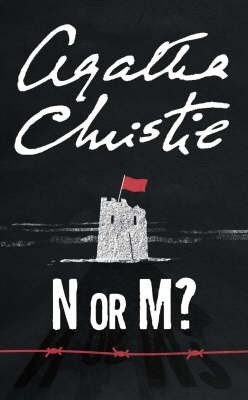
Review 2125: N or M?

Agatha Christie said she liked Tommy and Tuppence best of her protagonists, so I decided to read them all in order. N or M? is the third. Unfortunately, they tend to be espionage novels, which are not her best even though Tommy and Tuppence are fun.

It’s 1940, and both Tommy and Tuppence are frustrated because no one wants them to help in the war effort. Tommy at 49 is considered too old for intelligence work. However, shortly after he makes another attempt, he’s called on by a Mr. Grant who has an independent operation for Tommy only.

England has become infiltrated by Nazi sympathizers in all levels of government, which is why Mr. Grant wants someone from the outside. He has information that either N or M—both German spies, one male and one female—is at the San Souci rooming house in Leamington. Tommy is to pretend to have got a boring job in Scotland then go to Leamington and check into the San Souci. He does so, only to find one of the guests is Tuppence, who has eavesdropped on his meeting with Mr. Grant. So, pretending they don’t know each other, the two begin investigating the household.

I thought that Tommy and Tuppence were a little dense about the identities of the spies. I knew who one was almost immediately. However, this was the usual romp with some adventure and risk to our hero.

Related Posts

The Secret Adversary

Partners in Crime

The Man in the Brown Suit

Review 2122: The Mysterious Mr. Badman

The Mysterious Mr. Badman starts out with an intriguing premise. Athelstan Digby is on holiday in Keldstone waiting for his nephew, Jim Pickering, to be free for a walking trip through Yorkshire. His landlords have to attend a funeral, so Digby offers to watch their bookstore. During the afternoon, three men come in at separate times looking for John Bunyan’s Life and Death of Mr. Badman—the rather shifty looking Reverend Percival Offord, a foxy looking man, and a genial chauffeur. Shortly after Digby has disappointed them, a boy comes in with books to sell, including Life and Death of Mr. Badman.

Naturally, Digby takes the book home. Later that night, someone breaks into the bookstore. Digby confides in his landlord, Mr. Lavender, who suggests they put a note in the bookstore window asking the person who accidentally took the book to return it. That will prevent further break-ins.

The boy who brought the books in says they were given to him by Miss Diane Conyers. Before Digby and Jim have a chance to talk to her, Digby finds a letter in the book that brings to mind a recent crime. A man named Neville Monkbarns was to be hung for murder but he was reprieved and sent to a mental hospital. However, the letter shows that Neville Monkbarns is actually the estranged son of the Home Secretary, Sir Richard Mottram. Sir Richard is Diane’s father, and it’s clear that the letter was going to be used to blackmail him.

Then, the body of the foxy looking man is found on the moor.

If you ignore the unlikelihood that any of the unsavory characters would know about the letter, this situation kicks off a lively and adventurous investigation, with Digby and Jim trying to help Diane protect her father. The main characters are likable and interesting, the dialogue is often amusing, and the book is light and fast-moving. I would like to read more of Digby’s adventures.

The cover explains that the original novel has been exceedingly rare, so I’m glad British Library Crime Classics chose to reprint it.

I received this book from the publishers in exchange for a free and fair review.

Related Posts

Death of a Bookseller

The Murder of My Aunt

The Iron Clew