Review 2575: Lanark

I was going to start my review of Lanark, considered by many to be a landmark of literature, by saying it has nothing to offer women. Its female characters are either cardboard creatures or sex objects or both. Its male protagonist fantasizes as a boy about raping girls. Its cover, with drawings by Gray, has a total of six naked women and one clothed man. (The rest of the figures are heads.) I was going to start with this (in fact, I have) until I came across a review in The Guardian from 2019 by Sarah Detum that calls it superb and talks about how clearly it sees how men regard women. But was it looking at that or exhibiting it? I’m not sure. And I don’t think that was Gray’s purpose. And I hope Detum isn’t right, because if so, it’s a depressing thought for most women.

The novel is broken into four parts and starts with Part 3. Then it breaks off into an apparently unrelated (but it isn’t) story, Parts 1 and 2, before returning to the original story in Part 4.

The novel begins in a city that has no sunlight. The protagonist, Lanark, is told it’s because developers have built the buildings so high up that light can only be seen for a few minutes at dawn. The city, Unthank, is an allegory for hell. Lanark can’t remember his past, and everyone else seems to spend their time hanging out in bars. Lanark can’t even get laid, despite ogling every woman he sees. What fresh hell is this?

I haven’t mentioned much of the science fiction/fantasy spin that seemed to fascinate critics in 1981, but that’s not unusual now. Of course, there’s the no-sun, but also people are developing weird diseases. Lanark begins getting dragon skin, where his skin turns black and scaly. And a woman has a mouth that talks appearing on her arm. I have to confess that this stuff seemed childish to me or like Gray took too much LSD when he was younger.

Lanark finally decides to make an end of it and drown himself in the sea. When he wakes up, he’s in an institute in an entirely different world. There, a seer begins telling him a story, set in post-World War II Glasgow, about Duncan Thaw (Part 1!).

The two sections about Duncan follow him through boyhood to young manhood. He is a stubborn person with his own ideas about what he wants to do, so he’s always butting up against authority figures. He finally begins studying to be an artist.

None of the sci-fi/fantasy elements exist in these two parts, and I found them the most readable. But Duncan is also the character with no social skills who fantasizes about raping women and never gets laid. What fresh hell is this again? (He gets a girl in the end. I can only wonder about her taste.)

Although the writing is such that I felt the novel was clipping along fairly well, it was when the book gets to Part 4 and returns to Unthank that I suddenly realized I had no interest in continuing it, in fact was dreading the return to Unthank despite knowing that most of the plot was in the last part of the book. That made me look around a bit to see if there was even one critic who agreed with me instead of gushing about what a masterpiece it was. (I was thinking maybe it was too dated.) Thank god for Jim Crowley of The New York Times, who, although largely complimentary, says, “The longer the book goes on, the more rapidly its magic leaks away,” (I didn’t think it had any) and calls its structure a Mobius strip.

Frankly, by then I was done, 200 pages from the end. Yes, it didn’t seem right to repay the effort it took to get that far by not finishing, but that’s what I did.

Lots of reviews called this novel playful, but to me it seemed distasteful and heavy. As for any magic it may have, that was overwhelmed for me by its misogyny.
Related Posts

The Fishermen

Snow Country

The Man in the High Castle

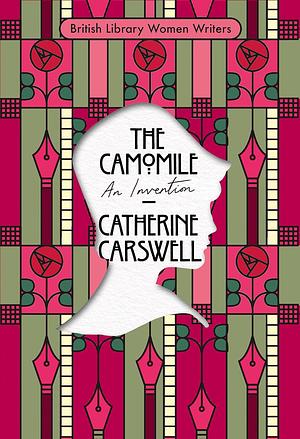
Review 2525: The Camomile

As Simon Thomas points out in the Afterword, The Camomile is a novel that “sets out to be distinct from the ‘marriage plot’.” This although its heroine, who says she strains for Reality, thinks sometimes that marriage is a way to achieve it.

That heroine is Ellen Carstairs, who has just returned to Glasgow after four years in Germany studying music. She knows herself not to be a prodigy, but she begins giving music lessons to contribute to the household, that of her religious Aunt Henry and her brother Ronald, an architecture student.

Apparently, Ellen’s mother wasted a lot of money publishing her writings, to the point where it seems to be considered a mental disease, so Aunt Henry dreads the possibility that Ellen may be writing. Yet, that’s exactly what she begins doing. She gets herself a room where she can practice the piano undisturbed, but she also spends a lot of time at a library, where she meets an impoverished scholar she calls Don John, who helps her with her writing.

The novel, which is related in letters to her friend Ruby and in diary entries, deals with fairly innocuous social engagements, but Ellen spends a lot of time pondering ideas and trying to understand people’s relationships with each other. First, there is the marriage of Laura, one of Ellen’s friends, who doesn’t seem to love her fiancé at all, while being determined that people think she does. Ellen herself doesn’t mind not being married but on the other hand seems to accept that it is a goal of a kind, a way to achieve Reality.

Ellen pretty much dissects every idea she comes across, and after a while, I felt it was too much, especially after she herself (spoiler!) becomes engaged. However, over all I found the novel engaging with Ellen a lively heroine.

Related Posts

The Fountain Overflows

The Pumpkin Eater

O, The Brave Music

Review 2229: The Field of Blood

Ever since I read my first Denise Mina book, back in the Garnethill days, I thought I kept up with her. But it seems I might have missed The Field of Blood, which is the first Paddy Meehan book.

Two boys, 11 and 10 years old, take Brian Wilson, a three-year-old, out into a field and murder him. They are quickly found and thought to have committed the crime by themselves.

Paddy Meehan is an 18-year-old copy “boy” for the Scottish Daily News who wants to be an investigative reporter. When she reads about the story the police have put together of the crime, it doesn’t make sense to her. Why would the boys, who are from poor families, have taken a train out to a relatively posh area to kill Baby Brian when there are many desolate areas in their own neighborhood? She begins investigating and decides the boys were driven out to the scene.

Since she is not a reporter and is told to stop saying she is one, she uses the name of Heather Graham, the only woman reporter on staff. She is at outs with Heather, whom she previously considered a friend, because when the boys’ photo appeared in the paper, she recognized one as the cousin of her fiancé Sean and confided in Heather. Ambitious Heather suggested she break that story; however, she refused, saying her family would never forgive her. When Heather broke it instead, Paddy, who knew her family would think she did it, had a fight with Heather.

Heather is murdered, and Paddy doesn’t realize that because she was using Heather’s name, Paddy’s investigations have unwittingly caused her death.

Mina’s early mysteries are gritty. This one, set in 1980s Glasgow, is no exception—gritty and thrilling. Paralleling Paddy’s story is a real one about another Paddy Meehan, a thief who was framed by the police for murder.

Related Posts

The End of the Wasp Season

Still Midnight

The Red Road

Review 2121: Young Mungo

Twice recently I’ve had the same unusual experience with my reading. I was looking forward to reading a second novel by an author who wrote a book that I loved, only to find the second novel seemed to be very much the same as the first, as if the writer was stuck somehow. This happened with Young Mungo.

Mungo is a caring 14-year-old Glaswegian gay boy with an alcoholic mother, a sister planning her escape, and a violent brother. Sound familiar, those of you who have read Shuggie Bain? The novel begins with Mungo being packed off on a camping trip with two men his mother barely knows from her AA meetings. He is poorly clad and equipped, the men are drunk, and a feeling of dread is the immediate effect. In between chapters that continue this story, the novel returns to scenes from Mungo’s past.

Set in the 1990’s, the novel is similar to Shuggie Bain except that Mungo is older and the novel is even more grim and violent at times. Still, it is compelling and becomes less like the other novel as it goes along. I ended up liking it but not so sure I want to visit that world a third time.

Related Posts

Shuggie Bain

A Little Life

Edinburgh

Review 1822: Shuggie Bain

Shuggie Bain lives the first five or six years of his life in his grandparents’ flat in Glasgow with parents and older sister Catherine and brother Leek. The family is poor but respectable. His father Shug is a taxi driver, and his mother and grandmother keep a neat house. Shuggie’s mother Agnes is beautiful and always immaculately made up.

Shug is a horrible womanizer, though, and from jealousy Agnes hounds him by making calls to his dispatcher. Then Shug decides they should move to get a fresh start. What he describes as an outdoor paradise turns out to be a tiny shack next to a mine in a neighborhood built for miners’ families. But the mine is all but closed. It isn’t until the family unloads their possessions that they realize Shug’s aren’t among them. He has taken Agnes and her children out into the country to dump them.

Agnes descends into alcoholism, and as his older siblings grow old enough to leave, Shuggie is left trying to hide money for food, trying to keep Agnes’s drinking buddies out of the house, trying to get her to eat. All the while, he has a growing realization that he’s not like other boys. He likes pretty things and colors and is attracted to boys.

This novel is a moving and empathetic portrait of working-class Glasgow in the 1980’s, when there is not much hope for many people. It’s also a convincing depiction of the effects of alcoholism. It is absolutely gripping and heartbreaking. It was the winner of the 2020 Booker Prize, and it deserves it.

A Little Life

A Heartbreaking Work of Staggering Genius

Crow Lake

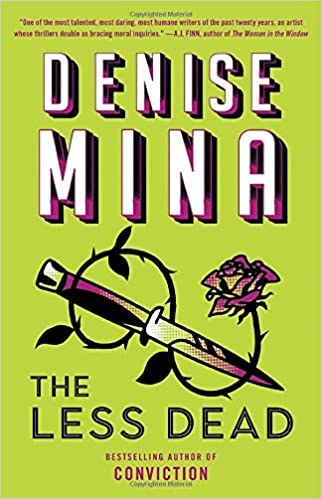
Review 1659: The Less Dead

When Margo gets in touch with her birth family, her Aunt Nikki, Nikki tells Margo that her mother, Susan, was a prostitute and a junkie who was murdered in an alley at 19. Then she tells Margo she knows who did it and tries to get her to help find evidence. She is asking Margo to break the law and endanger her position as a medical doctor. Margo is horrified by the story and the request and gets away as fast as she can. What she doesn’t know is that meeting Nikki has brought her to the attention of Susan’s murderer. Soon, she has received a threatening letter like the ones Nikki has been getting.

Although set in the gritty neighborhoods of Glasgow like most of Mina’s fiction, The Less Dead is less grim than her earlier work, populated by likable characters such as Margo’s ex-boyfriend Joe and her bestie Lilah, as well as, eventually, Nikki and her friends. It is definitely creepy, though, and a satisfying thriller. Mina always knows how to spin a tale.

Related Posts

Conviction

The Red Road

Gods and Beasts

Review 1317: Dandy Gilver and the Unpleasantness in the Ballroom

Cover for Dandy Gilver and the Unpleasantness in the BallroomDandy Gilver fears that her summons to a house named Balmoral in Glasgow may prove to be a humdrum affair, but she is mourning her dog, Bunty, and feels a need to get out. When she and her partner, Alec Osborne, arrive, their doubts about their customers are confirmed, for Sir Percival and Lady Stott are vulgar nouveau riche. However, they fear that their spoiled daughter, Theresa, or Tweetie, is in danger.

Tweetie is taking part in a ballroom-dancing competition. She has begun receiving veiled threats that someone wishes her harm. The Stotts have urged her to quit the competition, but she is determined to continue. So, Dandy and Alec repair to the Locarno Ballroom to investigate. It seems that only Tweetie’s partner, Roly; her cousin, Jeanne; the pianist, Miss Thwaite; or another couple, Bert and Beryl, could have access to leave some of the messages. But what Dandy and Alec can’t figure out is why everyone around the ballroom seems so terrified. Shortly, they discover that there was a similar incident the year before that resulted in a death.

Although I am gaining enthusiasm for McPherson’s contemporary thrillers, my taste for the Dandy Gilver mystery series is losing momentum. I like Dandy and Alec but feel that perhaps this series gets a little too mired in red herrings, if that makes any sense.

Related Posts

The Reek of Red Herrings

Dandy Gilver and a Bothersome Number of Corpses

Dandy Gilver and a Deadly Measure of Brimstone

Day 1172: The Long Drop

Cover for The Long DropAlthough it too is set in Glasgow, The Long Drop is a departure from Denise Mina’s usual crime series. Instead, it is an account of the crimes and trial of Scotland’s first serial killer, Peter Manuel. In the 1950’s, Manuel was tried and found guilty of the murders of two families and a woman. Although he likely killed other women, a charge against him for the murder of another woman was found not proven.

The novel follows two paths—testimony about the events of a night following the murders in which Manuel met William Watt, a man whose family were Manuel’s victims and who almost certainly paid to have his wife killed, and the actual events. Pretty much everyone in the court is lying.

This novel is billed as a thriller, but it is more of a court procedural. Although it is interesting, it suffers from not having a single character you can feel sympathy for. The wild city of Glasgow in the 1950’s is very atmospheric, however.

Related Posts

Still Midnight

The Red Road

The End of the Wasp Season

Day 649: The Death of Bees

Cover for The Death of BeesBest Book of the Week!
It may take some fortitude for readers to get past the foul language and bad behavior at the beginning of this novel. But I think most readers will feel it is worth it to have read this dark, funny, and ultimately touching little modern gothic novel.

Marnie and her younger sister Nelly find themselves with a problem. Their parents are dead, and they have already once experienced the joys of the foster care system. So, the two girls bury their mother Izzy in the back garden and hide their father Gene in the shed.

Izzy hung herself, but it is not altogether clear for quite some time what happened to Gene. The couple were terrible parents in any case, Izzy a self-obsessed, neglectful addict and Gene also an addict and molester of his own daughters. The two girls will do their best to take care of themselves until 15-year-old Marnie can do it legally.

Lennie, the old man next door, is a social outcast. After the death of his long-time partner, the lonely Lennie was once tempted by a male prostitute, only to be arrested and charged because the prostitute was a minor. Lennie doesn’t see that well anymore, so although he knew the man was young, he didn’t know how young and feels thoroughly ashamed. Despite his poor eyesight, Lennie is the only person who notices that the two girls are on their own. Soon, he is inviting them over and feeding them, happy to have someone to cook for.

The meat of the novel is the characters of these three. Marnie is brash, foul-mouthed, and smart. She is determined to protect her unworldly sister. But she is more vulnerable than she seems.

Nelly speaks like someone out of a Jane Austen novel and seems strangely clueless for a girl growing up in a tough Glaswegian neighborhood. She has a tendency to see only what she wants to.

Lennie misses his partner. He is meticulous but still ready to open his house to the two teenage girls.

Marnie’s world is populated with drug dealers, butch girlfriends and unreliable boyfriends, a best friend who was ready to run off with her father, and other difficult personalities. As Lennie’s dog Bobbie insists on digging up the bones in the garden and the girls evade questions about their parents, they both learn who they can love and depend upon.

Related Posts

NW

All the Birds, Singing

Mercy Snow

Day 505: The Red Road

Cover for The Red RoadIt is 1997. Young Rose Wilson is waiting for her pimp Sammie one night when Pinkie Brown, a young man she knows, asks her to hide a knife for him. Although she has had a crush on him, she suddenly understands he is attempting to use her. She tries to push him away and ends up accidentally stabbing him to death. Terrified about what Sammie will do to her, she attempts to hide from him that she is covered in blood as they drive away from the area. But he finally sees the blood, so she attacks him in panic, killing him. Then she realizes she has nowhere to go and no way to hide her crime, so she sits in the car and waits for the police.

In the present time, Detective Inspector Alex Morrow is set to testify against Michael Brown. He was found guilty years ago of the murder of his older brother Pinkie. Now he is up on weapons charges, as caches of guns with his fingerprints on them were found buried in his back yard. But Alex soon learns something puzzling. Brown’s fingerprints were found at the scene of a murder that happened three days before in an abandoned building on the Red Road, when Brown was in custody. Although Alex is inclined to believe this is some ploy by Brown’s defense, Anton Atholl, she can’t figure out what they have to gain from it. In any case, court is dismissed because of news of the death of another defense attorney, Julius McMillan.

Back in the past, it is Julius McMillan who saves Rose. After Rose admits everything she did, he figures out a way for her to serve minimal time for Sammie’s death, as long as no one connects her to the killing of Pinkie Brown. To save her, he is forced to make a deal with some powerful but unscrupulous men.

Alex’s investigation is taking some unexpected detours, and eventually she figures out that there was a conspiracy to pin Pinkie’s murder on Michael years ago. Michael’s fingerprints were switched for those of the real murderer, who has just killed again. Although Alex begins to realize she will be up against some powerful people, she just can’t let something like that go.

Denise Mina’s mysteries are set in a gritty Glasgow. Alex is an abrasive and stubborn heroine whose career keeps being dead-ended because she insists on going up against corrupt politicians and police. The novels are smart and interesting, with convincingly drawn characters.