Review 2332: The Circular Staircase

Rachel Innes, a 40-some-year-old spinster who has raised her niece Gertrude and nephew Halsey, is persuaded to leave the city and take a house in the country near where they have friends. She leases a large house from the Armstrongs, a banking family who are visiting California for their health.

Miss Innes arrives first with her servants and passes a comfortable night. However, the next night she and her servant see a face at the window and later on hear noises as if someone has broken in, although the windows and doors remain locked.

Gertrude and Halsey arrive with a friend, Jack Bailey, who is a clerk at the Trader’s Bank in town. That night, there is another disturbance. This time, an intruder is shot to death at the bottom of the circular staircase. He is Arnold Armstrong, the estranged son of the house owner, who should not have had a key. If that’s not bad enough, both Halsey and Jack have vanished. Right about this time it becomes known that the Trader’s Bank has failed because someone has stolen millions of dollars of securities. Suspicion has fallen on Paul Armstrong, the bank president, but maybe also on Jack, to whom Gertrude is engaged.

The house now becomes the target of a series of mysterious intrusions. Strangers appear on the grounds, noises are heard in the house, holes appear in the walls of an unfinished ballroom. Miss Innes runs up against someone on the staircase in the dark, and the events continue even with police guarding the house.

It’s not hard to guess why people are trying to break in, especially after Paul Armstrong dies in California, leaving an unexpectedly small estate. But Rinehart keeps the action going with lots of perplexing incidents.

The novel is engagingly written and moves along quickly. There isn’t much character development here, but that’s not to be expected from a thriller from 1908. However, we like Miss Innes and we also like Mr. Jamieson, the police detective who gradually lets Miss Innes in on the investigation.

Related Posts

The Uninhabited House

Seven Keys to Baldpate

The Iron Clew

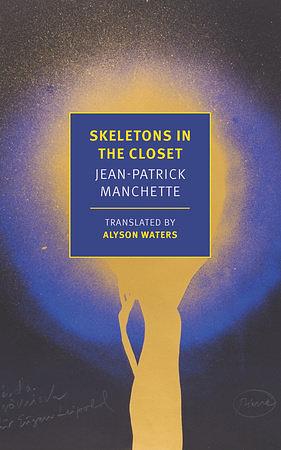
Review 2331: Skeletons in the Closet

A quote by Frederick Méziès on the cover of my edition of Skeletons in the Closet says, “Writing so dark it gives a new meaning to the word noir.” The novel was written in 1976, a bit after the height of French film noir, and it is certainly violent, although probably not as shocking to modern readers.

Eugene Tarpon is a private detective whose office is next to his bedroom. He only has one client when one of his contacts in the police department sends him an old lady, Mrs. Pigot. Her daughter, Philippine Pigot, has disappeared. She left for work one day and never arrived. Further, she is blind.

Tarpon’s contact, Coccioli, has strongly hinted that he shouldn’t actually look for Philippine, but he does. The next day, Mrs. Pigot arranges to meet him in a public square, and she is shot to death before his eyes. Soon, people are trying to kill him.

This novel is dark; nevertheless, there is a certain lightness and humor about it. Manchette is credited with redefining the noir genre for social criticism, but although there is certainly corruption going on, that theme is not so stressed in this novel.

I received this book from the publishers in exchange for a free and fair review.

Related Posts

The Disappearance of Adèle Bedeau

The Blank Wall

The Blunderer

Review 2329: The Warrielaw Jewel

I have read a few novels by Winifred Peck, so I was intrigued to learn she had also written some mysteries.

Betty Morrison is the newly married wife of an Edinburgh lawyer, John. She accompanies her husband on a call to the Warrielaws, an old family whose members are constantly feuding. The most recent dispute concerns the fairy jewel, a chunk of amber said to be given to an ancestor by a fairy and subsequently encrusted in jewels. Jessica Warrielaw, the old lady who was left the estate, hadn’t spent a penny on its upkeep but instead has been selling off treasures and giving the money to her nephew Noel. Shis is planning on selling the fairy jewel.

Jessica’s sister Mary as well as the other potential legatees are horrified by this. Mary, who lives with Jessica in shabby rooms divided in half by physical markers, wants the jewel to stay in the family as does niece Cora. Niece Rhoda, on the other hand, would like money to start over in America. She is horribly managing and makes the life of weaker Aunt Mary miserable. Other potential heirs are Neil, of course, and Rhoda’s much younger sister Alison.

First, there is an odd incident at the house that seems like a break-in except nothing is missing. Then Jessica leaves for London, presumably to sell the jewel—and isn’t heard from again. John, as trustee of the estate, finally hires Bob Stuart, an ex-police detective and friend, to find Jessica.

Weeks later Jessica is found dead, not in London but in the estate’s dilapidated stables. The jewel is nowhere to be found. Was Jessica murdered? How did she get back home when Betty herself saw her on the train to London?

As is often the case with mystery novels of the period (1933), this novel is more concerned with the puzzle than characterization. However, several characters do have strong personalities. The plot is rather slow moving, and once or twice just when things were getting exciting, Peck drove me crazy by inserting a several-page description. However, I liked Betty and though the novel was entertaining.

Related Posts

Bewildering Cares

House-Bound

4:50 from Paddington

Review 2326: Fear Stalks the Village

Joan Brook has been working as companion for Lady D’Arcy, a woman suffering from dementia, when she is visited for the day by a friend from London. The village where Joan lives is so perfect that her friend begins making up stories about the villagers’ dirty secrets.

It’s not too much later when Miss Asprey, a respectable old lady who is a social leader of the village, admits to having received an anonymous letter alleging a past of improprieties. The Rector tries to keep her admission a secret, but the word gets out.

Things seem to settle down except that some people believe that the letter was sent by Miss Corner, a hearty writer of boys’ books. This belief is based on the way the envelope was addressed, using Miss Asprey’s middle initial, which only someone who knew her as a girl would know. Then Miss Corner receives a similar letter. Almost immediately after, she accidentally overdoses with sleep medicine.

The Rector calls his old friend Ignatius Brown for help. The once perfect village is under a shadow. Rumors are going about that Dr. Perry poisoned Miss Corner because of an inheritance, so some people change doctors. He actually did benefit from her will, but he hasn’t received anything yet and is having difficulties because of his wife’s spending and his loss of income. Moreover, he misses Miss Corner, who was his only friend after the Rector, whom he thinks has been indiscreet. Ignatius thinks that the relationship between Miss Asprey and her companion, Miss Mack, has something odd about it.

The novel slowly builds an atmosphere of fear and mutual distrust as more letters appear. Perhaps too slowly. Although White is skilled at building tension, it takes a long time before anything more sinister happens.

The character of Joan is about the only likable one in the novel except for poor Miss Corner. The Rector, Joan’s love interest, is a bit neurotic for me as are most of the villagers. But White does do an excellent job of portraying psychological pathology.

I received this book from the publisher in exchange for a free and fair review.

Related Posts

Some Must Watch

The Wheel Spins

Two-Way Murder

Review 2311: Big Ben Strikes Eleven

Financial tycoon and former politician Sir Robert Boniface is found shot to death in his limousine in the Vale of Health on Hampstead Heath. At first, the police aren’t sure if the death is murder or suicide—only the lack of the gun tells them it is murder.

The body is discovered by a window washer, but Matt Caldwell, an artist, is present in a nearby pub. He is not only able to identify the victim and his car, having painted Sir Robert’s portrait, but he is happy Sir Robert is dead.

Enquiries by Inspector Beckett and Superintendent Mooney lead in the direction of Sir Robert’s nephew, Frank Littlewood, who was recently fired by Sir Robert. However, two office mates, Sir Robert’s confidential secretary Miss Pritt and the obsequious Mr. Fuller, seem too eager to drop him in it.

Then the police find the gun and establish that it belongs to Matt Caldwell. Unfortunately, he is nowhere to be found.

I haven’t paid much attention to this issue until other bloggers pointed it out about other novels, but I would say this novel is about 100 pages longer than it needs to be. First, the action is brought to a screeching halt while the author lays out the case against the original three suspects—as if readers haven’t been paying attention—then we follow Matt Caldwell’s progress in a completely unnecessary romance that coincidentally brings more clues to light. The information is important, but it seems as if it could have been introduced in a different way that didn’t take two or three chapters.

But my biggest problem was with the actual investigation. Early on, Miss Pritt tells the police that the murder had nothing to do with business and uses that reason to withhold information about Sir Robert’s appointments. And the police just go along! Later, the Superintendent just hands her her handkerchief, which he found at the scene of the crime! In other ways, the approach to evidence is just as casual.

Finally, an interview with the Earl of Rollesborough, on the board of the trust that Sir Robert works for, seems called for from the beginning but doesn’t take place until the end. And no wonder, because it pretty much makes everything obvious.

I was able to identify the murderer fairly early on, but that didn’t bother me as much as the sloppy police work, or possibly lack of knowledge about police work.

I received this novel from the publishers in exchange for a free and fair review.

Related Posts

Death of an Author

Death of Mr. Dodsley

Partners in Crime

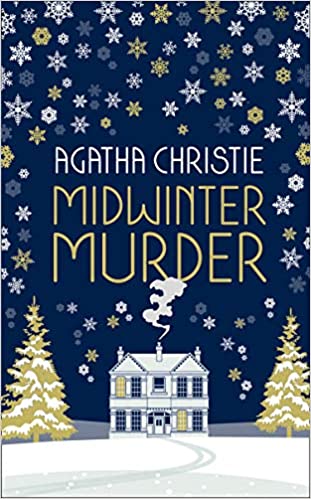
Review 2304: Midwinter Murder

Even though I don’t always get on with mystery short stories, I’ve observed Midwinter Murder going around and thought it sounded like good winter reading. And so it proved to be.

For one thing, with Christie’s stories I didn’t feel that lack of characterization that I often feel with other mystery short stories, since Christie is so deft at depicting characters with just a few strokes. Not all of these stories involved murders, and some are quite benign. Poirot appears in several, Miss Marple in one, Tommy and Tuppence in one, and in two, a Mr. Satterthwaite and his mysterious friend, Mr. Quin.

“The Clergyman’s Daughter,” about a woman who inherits a house only to find odd things happening in it, was unfortunately already included in Partners in Crime, which I read last year. Similarly, the Miss Marple story, “A Christmas Tragedy,” was included in The Tuesday Club Murders.

Just for a change, I believe I preferred some of the more benign stories. For example, in “The Problem at Pollensa Bay,” Mr. Parker Pine receives a plea from an overprotective mother to find a way to get her poor son Basil away from a girl she deems unsuitable. But Mr. Pine doesn’t see anything wrong with the girl.

I also liked “The World’s End,” in which the mysterious Mr. Quin appears in a desolate location in Corsica to right a wrong.

And in “The Manhood of Edward Robinson,” Edward is a clerk who yearns for romance but his too-practical fianceé Maud thinks he’s a spendthrift and chides him when he tries to make a romantic gesture. Edward wins £500 in a contest and decides to spend it all on a sportscar then take it away for a day before Maud ruins his fun. And he has an unexpected adventure.

There are lots of stories with clever puzzles, for example, “Christmas Adventure,” in which Poirot figures out why there is a jewel in the plum pudding. But I thought I’d point out some of the more unusual stories.

Related Posts

Partners in Crime

The Tuesday Club Murders

The Christmas Card Crime and Other Stories

Review 2301: Someone from the Past

I found Someone from the Past to be the best of the British Library Crime Classics I’ve read so far. It has a smart, feisty, occasionally indiscreet heroine, is fast moving, sometimes exciting, and presents an interesting, character-based mystery.

Nancy is at a restaurant about to receive a proposal from her boyfriend Donald when her estranged friend Sarah approaches the table. This approach creates some awkward moments, because Donald was the last in a string of Sarah’s lovers and didn’t take her departure well. Finally, he leaves the table so the women can talk.

Sarah tells Nancy she is about to marry a wealthy man, Charles. Then she says that someone has been writing her letters threatening her life. As Nancy is a reporter and knows all the suspects—Sarah’s discarded boyfriends—Sarah asks her to try to find out who is writing the letters. She says she’ll send her one of them in the morning.

Nancy’s evening ends poorly, with Donald stomping off. But the next morning, he arrives at her flat, confused and frightened. He tells her he went to see Sarah in the early hours of the morning and ended up falling asleep in the sitting room. When he awakened shortly after eight, he found Sarah murdered in her bed. He is sure the police will think he did it.

To protect Donald, Nancy lets herself into Sarah’s apartment and tries to remove all traces of his visit. In doing so, she notices some odd things about the scene. Unfortunately, when the cleaning lady arrives, Nancy puts the chain on the latch instead of hiding or going out another way so it was obvious someone was in the flat.

Shortly after she arrives home, the police are at her door. They think she killed Sarah, partly because she left her own fingerprint in the apartment and because the cleaning lady recognized her when Nancy met one of Sarah’s other lovers in a pub before going home. Nancy thinks the only way to clear herself and Donald is to figure out who did it herself. The list of suspects consists of Sarah’s last four lovers, including Donald.

Nancy finds she isn’t very good at lying to the police, keeping secrets, or fleeing the country, but she is good at figuring out clues. I’m not so sure she’s that good at picking future husbands, though.

I received this book from the publishers in exchange for a free and fair review.

Related Posts

In a Lonely Place

Excellent Intentions

Water Weed

Review 2281: Who Killed Father Christmas?

British Library Crime Classics’ latest book is another of their holiday mystery collections. This one includes some clever puzzles, some ghost stories, and one truly exciting chase.

“The Christmas Thief” by Frank Howel Evans, published in 1911, features the adventures of two endearing young men, Tommy and Harry, two homeless boys who thwart a gang of thieves.

In “The Christmas Spirit” by Anthony Gilbert from 1952, Sedley busts the ghost of the Green Girl—or does he?

In Patricia Moyes’ “Who Killed Father Christmas?” from 1980, someone murders the substitute Father Christmas in the toy department of a store, and he turns out to have been an undercover policeman. The motive for the murder was fairly obvious, I thought, but not so much identity of the murderer.

In “Death at Christmas” by Glyn Daniel from 1959, a colleague dies of a heart attack after telling Dilwyn Rees he is being haunted by his dead wife. Although his boss thinks an overactive imagination killed him, Rees isn’t so sure.

Another crime in the toy department takes place in “Scotland Yard’s Christmas” by John Dickson Carr from 1957. Detective Inspector Robert Pollard is accompanied by his girlfriend and her nephew, and all I can say is, he’d better not marry her.

Will Scott’s “The Christmas Train” from 1933 features a Simon Templar-ish thief who intends to steal some jewels on the train, even though the owner is accompanied by the police.

“Herlock Sholmes’ Christmas Case” by Peter Todd from 1916 is a spoof of another mystery writer’s detective stories.

“A Present for Two” by Ellis Peters from 1958-9 features a quite exciting kidnapping and chase after someone steals a priceless manuscript from the village museum.

As usual, I enjoyed some of the stories more than others, but this is a fun seasonal read for mystery lovers.

I received this book from the publishers in exchange for a free and fair review.

Related Posts

The Christmas Card Crime and Other Stories

Silent Nights

Murder at the Manor

Review 2262: The Theft of the Iron Dogs

The Theft of the Iron Dogs is another novel by E. C. R. Lorac that is set in the beautiful Lune valley of Lancashire, along with Fell Murder and Crook O’Lune. In order, it comes after Fell Murder and before Crook O’Lune.

Giles Hoggett has been busy with the harvest for weeks, but it is over, and he decides to walk over to check a cottage he owns next to the river. After he notices that someone has disarranged his woodpile, he goes into the cottage and finds someone has stolen an old coat, hat, and glasses as well as a bag, rope, and the iron firedogs out of the fireplace. In speaking with neighbors, he finds that another cottage owner has had his waders stolen.

Giles is inclined to blame small thefts on a tinker couple, referred to as potters in the North. No one has seen the potter’s wife, Sarah Gold, for some time, and it’s not lost on Giles and his brother George that the missing items could point to the disposal of a body. Hoggett knows that Chief Inspector Macdonald was in the area earlier investigating the fell murder, so he writes a letter to Macdonald expressing his concern.

Macdonald is investigating the theft of clothing coupons that he thinks might involve a criminal named Gordon Ginner, and he takes a weekend off after a trip up to Manchester on this case to check out the situation in the fells. While he is there, he finds a body hidden under tree roots in a deep pool of the river. It is Gordon Ginner.

I especially like these mysteries set in the fells, because they are so atmospheric. It is clear Lorac loved that area of the country. And incidentally, from this one I learned what a fell is. I just had a vague idea that it was a valley.

I received this book from the publisher in exchange for a free and fair review.

Related Posts

Fell Murder

Crook O’Lune

Murder in the Mill-Race

Review 2256: He Who Whispers

I was going to schedule this review for November, but this novel was at times so exciting and with a plot point so appropriate for the season that I had to move it to October.

Miles Hammond thinks of a meeting of the Murder Club for the first time in five years as another indication that life is returning to normal after the war. He is not a member, but he has been invited by his friend Gideon Fell. However, when he arrives for the meeting, only the speaker, Professor Rigaud, a woman named Barbara Morrell, and himself are there.

The three decide to hold the Murder Club anyway, so Professor Rigaud tells the story of an unsolved French case, in which Howard Brooke was murdered at the top of a tower that no one else had entered. Implicated in the crime but found not guilty was the fiancée of Brooke’s son Harry, Fay Seton. A verdict of suicide was found, but no one could account for a missing briefcase that Brooke took up to the top of the tower.

Miles has recently inherited his uncle’s estate, including an extensive library. The next day he has an appointment to hire a librarian, and to his surprise, the applicant turns out to be Fay Seton. He hires her and they travel to his house in the New Forest.

Miles and Miss Morrell did not hear all of Professor Rigaud’s presentation, because it was interrupted, so Miles does not know that before the murder, a whispering campaign accused Fay of infidelity and vampirism. But during the next night, something terrifies Miles’s sister so much that she is almost scared to death. And Gideon Fell and Professor Rigaud are already on their way there, because the inhabitants are in danger.

This attack on Miles’s sister leads them all to re-examine the original case. How was Howard Brooke murdered when no one else was on the tower? Is Fay Seton a murderer or has her past somehow followed her to the New Forest?

I received this book from the publisher in exchange for a free and fair review.

Related Posts

The Seat of the Scornful

The Lost Gallows

The Black Spectacles