Review 2578: Catherine the Ghost

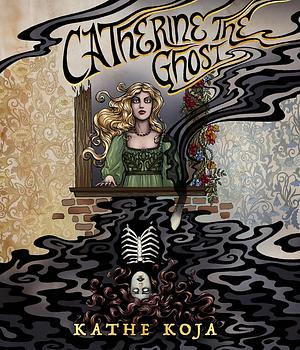
I took a break from reading A Short HIstory of Nearly Everything to read this novella. After putting it on my list, I had forgotten that it was based on Wuthering Heights. If you’ve read that book, you should be okay, but otherwise Catherine the Ghost may be hard to follow.

Like Wuthering Heights, Catherine the Ghost begins with the arrival to the house of Mr. Lockwood, who is stranded and spends the night in Catherine’s bedroom. The ghost Catherine demands to be let in.

The novella begins there but goes forward with glimpses into the past instead of the other way around. It focuses on Catherine’s haunting of Heathcliff and ends at about the same place as the original novel. The ghost is one narrator.

The other narrator is the other Catherine, Catherine the ghost’s daughter, who was tricked into marrying Linton, her cousin, the son of Heathcliff’s enemy, Hindley.

Koja’s style of writing is poetical and unusual, as she frequently uses sentence fragments. However, it is easy to follow. This is a haunting novella. I liked it a lot.

Related Posts

The Tenant of Wildfell Hall

The Solitary House

Murder at Mansfield Park

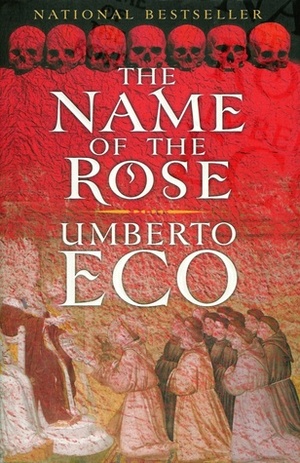
Review 2573: The Name of the Rose

Adso of Melk, an elderly monk, feeling he is nearing his death, leaves this manuscript that tells, for the first time, the events of 1327 in an Italian abbey.

It’s been a long time since I read this book, so I remembered more vividly the movie version, which concentrates on the mystery aspects of the novel. But the novel is more about the religious and political upheavals of the time.

As a Benedictine novice, Adso travels into Italy with a learned Franciscan monk, William of Baskerville from Hibernia. William has been asked to mediate an important meeting between two factions of monks—the Franciscans and other Minorite sects who believe in the vow of poverty and are aligned with the French King, and other sects who think the vow is heretical and follow the Pope in Avignon.

Once they arrive at the magnificent abbey high on a mountaintop, the Abbott, Abo, asks William to look into another issue that has recently occurred. Adelmo of Otranto, an illuminator from the scriptorium, has been found dead on the slope below the abbey’s Aedificium, a fortified building that contains the kitchen, the scriptorium above it, and the library above that. It’s not clear whether Adelmo jumped or had help, and Abo wants William to figure out what happened, preferably before others arrive for the meeting. William quickly ascertains that Adelmo must have fallen from the library, but he learns that only the librarian is allowed in the library, a man named Malachy.

Although William has been denied access to the library by Abo, he soon figures out that there is a way to get into it besides the locked entrance. After a visit to the scriptorium, where William and Adso inspect Adelmo’s work area and meet some of the monks, another monk is found dead, Venantius, a Greek scholar. This makes William surer that the deaths have something to do with the library.

He and Adso sneak into the library at night. It is a labyrinth. Moreover, they disturb someone who runs away and are almost poisoned by the air in one of the rooms.

More monks associated with the library die, and William becomes convinced that they are dying because of a secret book. He and Adso must learn the secrets of the library, and William comes to believe that the murders are related to the history of the monastery.

I have concentrated on the mystery, too, but there’s a lot more going on in this book. It is concerned with the conflict between Louis of France and the illegitimate Holy Roman Emperor, between two popes, and the then recent history of the Inquisition against certain heretical religious groups. It has several learned debates, in which the monks disagree about what seem, to the modern eye, to be obscure and trivial issues. And it fully shows the superstitions of even the most learned of men (except William) and the pit of fear that was life in this monastery.

Although the novel seems straightforward, there is a lot more going on. To me, Eco seems to be mocking the beliefs of the church at times—some of the learned disputes make such ridiculous statements (believed at the time) that I couldn’t help laughing. And I couldn’t help noticing that at least two of the characters’ names, William of Baskerville and Adelmo of Otranto, hearken back to previous mystery and gothic fiction.

A New York Times reviewer from 1980 asserts that the entire novel refers to the time when it was written (the 1970s, I assume), so obviously he also found second meanings and playfulness in the novel.

The novel moves you along despite several learned discourses. The medieval mind also seems to like lists, and I have to admit skipping through several of those. This is at once a challenging and compelling read.

Related Posts

Mistress of the Art of Death

Dissolution

A Morbid Taste for Bones

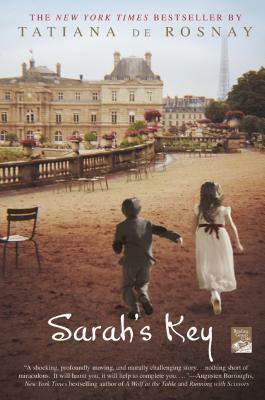
Review 2572: Sarah’s Key

In 1942, Sarah Starzynski is 10 years old, a Jewish child in Paris. There have been rumors of a raid on Jewish homes, but usually the French police take only the men. So, Sarah’s father hides in the basement while Sarah, her mother, and her four-year-old brother go to bed as usual.

But this time, the French police are there to take everyone. They don’t seem to know about her brother, so Sarah locks the little boy in his secret place, thinking she will come back soon and let him out. In the street, her mother has hysterics and screams her father’s name so that he comes out. All of them are taken to the Vélodrome d’Hiver, ultimate destination Auschwitz.

In 2002, Julia Jarmond, an American journalist who lives in Paris, is assigned to write an article about the 60th anniversary of the infamous roundup at Vel’ d’Hiv’, as the velodrome is known. Julia has never heard of it before. Aside from the ultimate destination, the Vel’ d’Hiv’ is known because, like with Hurricane Katrina, thousands of people, mostly women and children, were there for days without food, water, or sanitary facilities.

As part of her research, Julia asks French people if they know about this story. Most of them claim not to, but Julia learns from her father-in-law, Edoard, that the flat her husband Bertrand has been renovating became a possession of the family after the removal of its Jewish family on the night of the Vel’ d’Hiv’. In fact, that family was the Starzynskis.

The novel follows Sarah’s journey for a time, alternating with Julia’s story, as her personal life becomes entwined with her desire to find out what happened to the Starzynskis, particularly Sarah, who was not recorded as having died in Auschwitz. After about half the book, Sarah’s narrative stops.

I know I never read this book before, but some plot points seemed familiar, so perhaps I saw the movie. The plot was compelling enough, but I still had some issues with it, particularly that I couldn’t imagine that after a while a four-year-old child wouldn’t have made enough noise to be found in almost any apartment building.

I had more problems with the writing, though, particularly of Sarah’s sections, and the characterization. I think Sarah’s sections are written in a way to suggest childishness—the sentences are short, most of them in a subject-verb-object order that results in choppiness. Her reactions are naïve, much more so than I can imagine from any Jewish child of ten at that time and place. And ten-year-olds can have as complex thoughts as adults. She seemed, especially at first, more like a much younger child.

The writing is better for Julia’s parts, but there are still inapt word choices and no very strong use of language. It’s mediocre. For example, a glass of limoncello is described as “a beautiful yellow.” Ho-hum.

I felt the novel was interesting enough to finish, but just barely.

Related Posts

The Oppermanns

The Postcard

Suite Française

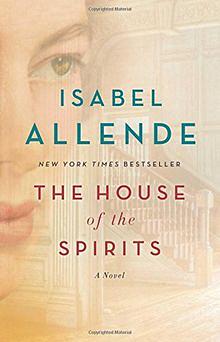
Review 2562: The House of the Spirits

The House of the Spirits fills another hole in my A Century of Books project, and although I believe I’ve read at least one book by Allende, it isn’t this one.

For a long time, you don’t have any sense of when this novel is set. Even when it mentions a big war in Europe, you’re not quite sure if it’s World War I or II. (It’s I.) It took a lot of attention to establish a time setting for this expansive, wandering account that, although generally written in chronological order, sometimes skips forward and sometimes backward. I finally figured out that the novel takes place from shortly before World War I until 1973.

Although the novel contains some information about previous generations, it concentrates mostly on Clara, her children, and her granddaughter Alba. It is narrated mostly by Clara and Alba, with short passages by Esteban Trueba, Clara’s husband.

Clara lives in the house of the spirits, where she can see and hear the wandering spirits and is herself clairvoyant. When Clara is still quite young, Esteban Trueba falls in love with her older, green-haired sister Rosa, and they become engaged. But Rose dies, and Trueba goes off to reclaim the family estate, ruined by his father. There, if he wasn’t one already, he becomes a brutal man with an uncontrollable temper.

Clara grows up in her eccentric family performing experiments in the supernatural with her mother and some of her friends. When Trueba returns years later, having accomplished his goal of making his estate the most prosperous in the area, he asks if the family has any more marriageable daughters. There is Clara.

The novel follows the couple’s story and that of its descendants, their eccentricities and fates, in a wandering way. It ends shortly after Chile’s brutal military coup in 1973.

This is an eccentric, enthralling novel. Although I am not usually a fan of magical realism, in this novel it seemed almost organic. I think once you start it, you just can’t help being pulled along.

Related Posts

In the Time of the Butterflies

Great House

The Ten Thousand Things

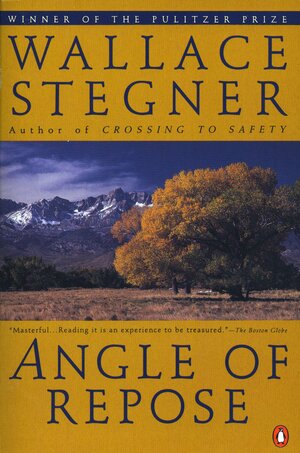
Review 2555: Angle of Repose

Again, when I finished reading this book, which was supposed to be for my A Century of Books project, I found the year already occupied. I have been using Goodreads and often Wikipedia to find books for each year, but Goodreads seems particularly inaccurate. I suspect that what happened here was that it listed the novel for, say, 1981, where I still have a hole (as of this writing in February), because of a 10-year anniversary reprint. I often check the dates if they seem suspicious, but this one didn’t. It’s especially bad now because it took eight days to read, and I am way behind on my reading. I only have a few more books to go, but from now on, I’m double-checking the publication date before I start reading.

Lyman Ward, a former academic just in his 50s, has contracted a bone disease that has frozen his neck so that he can’t turn it, confined him to a wheelchair, and resulted in the amputation of one of his legs. He is almost completely helpless, so his son wants to move him into care, but he stubbornly remains in his grandparents’ home in Grass Valley, California, being taken care of by Ada, a local woman.

His wife, Ellen, left him abruptly for his surgeon when he was helpless in the hospital. Although her partner died soon after and she has shown signs of wanting to return, he stubbornly refuses to see her.

Lyman can read, though, and do other sedentary activities. He was raised by his grandparents, and his grandmother was in her time a famous illustrator and writer, Susan Burling Ward. He has come across newspaper clippings and letters she wrote to her best friend, so he decides to write a biography of her, partly to answer questions for himself about events in his family he doesn’t understand.

Angle of Repose combines Lymon’s current experience and thoughts as he does this work with the events in the biography he is writing. The historical arc of the novel predominates, so much so that I occasionally wondered why Lyman’s story was there at all. However, by the end I understood how his grandparents’ history informs his own.

It’s a mismatch. Susan Barling as a young woman is from Upstate New York, a gifted artist just beginning to become known. She yearns for a life of culture. Her best friend, Augusta, comes from a prominent, cultured New York City family, and as young women, Susan and Augusta make a threesome of friends with Thomas Hudson, a poet and editor who goes on to become famous himself. She meets Oliver Ward, a young mining engineer, when she is very young. Unlike her other friends, he is taciturn and maybe too respectful of them all. He goes away on a job in the West for five years.

Thomas, sensitive, intelligent, and delicate, is Susan’s idea of a perfect man. He picks Augusta, though, and Oliver returns around the same time. Despite her friends’ misgivings, Susan decides to marry Oliver. Her idea is that Oliver can get some experience in the West and then move back East to live a more cultured life. She doesn’t seem to realize that to do his work, he must be in the West, and he is suited for that life.

As far as his career is concerned, Oliver seems too prone to consult Susan’s convenience, and she has unrealistic ideas. He turns down some opportunities because they don’t seem suitable to Susan. He takes a short-term job and they live apart. (She is too genteel for these rough mining camps.) She finally joins him near a mining town named New Almaden, southeast of San Jose. He has taken a house away from town, which anyway she removes herself from, as she does everywhere they live, thinking herself too good for the company. As Lyman says, his grandmother is a snob. Here she begins a pattern of not joining into society and their life but enduring it.

The couple doesn’t thrive financially. At this time, there are lots of qualified engineers available and most of them aren’t as fussy about where they’ll go. Susan’s work writing articles about the West and illustrating other writers’ work is helping support them, despite Oliver’s dislike of the situation and Susan’s complaints about it. They move to Leadville, Colorado, which although it is primitive, allows her to open her home to some intelligent visitors and have lively, informed discussions, which she loves. But the Leadville mine eventually grinds to a halt because of a lawsuit brought by would-be claim jumpers.

The couple goes to Mexico, which Susan loves, but the mine doesn’t prove promising. Their projects gain and then lose funding, and so on.

Susan writes to Augusta constantly, but Augusta never acknowledges Oliver as a fit husband. I fear that much of Susan’s growing disappointment has to do with wanting to justify her choice to her friends.

In the novel’s current time (the late 1960s and early 70s), Lyman expresses some irritating views on the times and young people. I wasn’t sure whether they were Stegner’s own views or more delineation of Lyman’s character, but Lyman eventually forms a sort of friendship with a young woman who acts as his secretary for a time.

This is ultimately a fascinating and absorbing story, but this time through (I apparently read it in the mists of time but didn’t remember anything about it) I kept getting distracted from it. I’m not sure why. I think, though, that it deserved more attention from me. Although I was bothered by Lyman seeming to blame all his grandparents’ problems on his grandmother (and after unfortunate events, his grandfather’s intransigence), the novel is considered Stegner’s masterpiece and won him the Pulitzer.

Related Posts

Obscure Destinies

The Town

North Woods

Review 2550: Literary Wives! Lessons in Chemistry

Today is another review for the Literary Wives blogging club, in which we discuss the depiction of wives in fiction. If you have read the book, please participate by leaving comments on any of our blogs.

Be sure to read the reviews and comments of the other wives!

My Review

I finally got to read Lessons in Chemistry. It’s been sitting in my pile for more than a year waiting its turn for the club.

Elizabeth Zott is a chemist in the 1950s, when any career for a woman besides secretary, teacher, or nurse is unusual. She was accepted as a Ph.D. candidate at her university when her advisor sexually assaulted her, so she stabbed him with a pencil. Although he had a reputation, she was accused of cheating and expelled. So, she has no doctorate.

She gets a job at Hastings Laboratories in a town in California, but she is treated like a secretary. However, she meets Calvin Evans, a scientific genius with no social skills, and after a misunderstanding, she interests him in the work she is doing on abiogenesis. Soon, they fall in love. The people at their workplace interpret their synergy to Zott’s ambition to succeed. The couple acquires a dog, which they name Six Thirty (a great, if slightly unlikely, character). Zott is determined not to be married because she knows any breakthroughs she makes will be attributed to Calvin, but Calvin determines to ask her to marry him. We never find out how this will work out, because he is killed in a freak accident.

I may seem to be giving a lot away, but there’s a lot more to this story. For one thing, Garmus has created a unique character in Elizabeth Zott. She is straightforward, forthright, and determined to be treated equally with men. She doesn’t understand the meaning of compromise or of hidden messages.

I know I’m not conveying what this book is like, though. Despite the many obstacles and injustices that Elizabeth encounters, the tone of this novel is light and often funny, as Elizabeth misunderstands the other characters, and they misunderstand her. Yet, the novel has a strong message of feminism, and if younger readers think the misogyny in it is exaggerated, I can tell you it isn’t. (I remember talking to my father, who was a vice president of a large corporation, about a job interview at his company—for which, by the way, he gave me no assistance because he thought it would be unethical. I complained that the first thing they wanted to do was give me a typing test. He told me that was how to get started. I asked him if he had to pass a typing test when he first went to work. He didn’t understand my point.)

As someone who wanted to be a boy when I was a child, because boys got to do things, I really related to Elizabeth Zott. She’s a great character, and I loved this book.

What does this book say about wives or about the experience of being a wife?

Literary Wives logo

The marriage examined in this book is more of an implied one about everyone else, since Elizabeth and Calvin aren’t married. The problems that Elizabeth has are rooted in the attitudes about marriage at the time, the clichés that Elizabeth doesn’t want to have anything to do with—that the wife is the homemaker and mother, and the husband earns the bread, that women don’t have careers, that the women who work are basically there to be sex toys for their bosses, that women are subservient to their husbands and probably not even intelligent, that in terms of science, findings would be attributed to the husband.

Elizabeth and Calvin, the main relationship in the book, are not married, and they have an intellectual synergy that is above these notions. But the implications of the notions have all their coworkers buzzing that Elizabeth is sleeping her way to the top, rather than that she is contributing to the work intellectually.

The point of the novel is to break all these stereotypes and show what Elizabeth is able to do despite all the setbacks. And have fun reading about it.

Related Posts

Euphoria

Recipe for a Perfect Wife

The Time of Women

Review 2546: The Temptations of Big Bear

I can’t remember whether I found this book when looking for more about native peoples or for filling holes for my A Century of Books project. In any case, it does both.

Readers from the U. S. may not be familiar with the name “Big Bear,” but I’m betting Canadian readers are. He seems to have been their equivalent of Sitting Bull.

In The Temptations of Big Bear, Wiebe tells Big Bear’s story beginning in 1876, when the Cree, of whom Big Bear was a chief, along with other groups of native peoples and the Métis, meet to discuss a treaty with British officials. The treaty calls for the people to “sell” several hundred thousand acres to the government in exchange for small reservations and regular payments as well as assistance when they are hungry. Big Bear does not sign the treaty. He wants to wait to see what happens.

Within a few years, it becomes apparent that the buffalo, upon which the Cree depend, are dying out, so Big Bear signs the treaty. However, he does not select a reservation for his people. Instead, they continue to move among their usual environs.

This novel leads up to events at Frog Lake in 1888, where some of the Cree warriors attack the settlers, kill some, and take others prisoner. These attacks follow years of broken promises and starvation. Although Big Bear tries to stop them, he is disregarded. Of course, he is held responsible by the authorities and tried, despite all the white witnesses but one having testified for him.

This is an eloquently written novel. It is insightful and interesting, and Big Bear’s last speech at his trial made me cry.

Wiebe doesn’t cite sources, and it’s hard to tell whether some of the speeches and writings are verbatim from records or not.

Related Posts

One Thousand White Women

Mayflower: A Story of Courage, Community, and War

The Sentence

Review 2538: The New Life

The New Life was a slow read for me. It took me almost a week, which is unusual for me with fiction. I read it for my Walter Scott Prize project.

The novel is loosely based on two men, John Addington Symonds and Havelock Ellis, who in the early 1890s wrote a book together. When I looked them up, it didn’t seem as if it was very loosely based—Crewe gives his characters almost identical names. But then I realized it is set after Symonds’ death in order to bring in the trial of Oscar Wilde.

John Addington is a gay man who is married and has three grown daughters. He is known for writing about a vast array of subjects. Henry Ellis is an idealistic, naïve younger man, a doctor. He marries a good friend, Edith, and their intention is to lead the way to the New Life. I wasn’t exactly sure what that entailed, but at minimum it seems to be that spouses are equal partners. Unfortunately for Henry, they never discussed the sexual side of marriage. He thought there would be consummation; Edith, a lesbian, did not. So, Henry continues a virgin with a fascination for the subject of sex. They live separately, and soon Edith has a new friend, Angelica.

Henry wishes to make a scientific study of sex and publish the results, and since he knows some gay friends, referred to at that time as “inverts,” he decides to start with them, having a theory that rather than an illness or perversion, inversion is natural. He decides to invite John Addington to join him in his project, not because he thinks he is gay, but because of his reputation as a writer about various topics.

John has been getting more tired of keeping his secret as an invert. He has confessed to his wife and occasionally has brought a man home for sex, an action that I thought was breathtakingly cruel. Now he meets Frank, a much younger, lower-class man who wants to be his friend. When John sees Henry’s proposal, he thinks such a project will change people’s ideas about inversion so that he can be free to do what he wants.

The men write the book and begin looking for a publisher. However, just at that time, Oscar Wilde is found guilty of inversion and is sentenced to jail. The backlash is such that the two fear their work is unpublishable.

If you are not a fan of graphic sex scenes, this won’t be the book for you, especially the first few hundred pages. The novel opens, for example, with a very explicit and detailed wet dream. I am not really a fan of explicit sex scenes in novels, so I found the first half of the novel hard going, despite it being well written and having vivid descriptions of life in Victorian London. (It has a wonderful description of a day that is so smoggy no one can see where they’re going.)

The novel picked up for me after the book, entitled Sexual Inversion, is published and the police go after a bookseller for selling indecent material, their book. Then it becomes about the reactions of the various characters once there is a threat to their own lives.

Related Posts

After Sappho

Murmur

The Children’s Book

Review 2532: Beauvallet

I am fairly sure I read Beauvallet to fill a hole in my A Century of Books project, but as has happened too many times already, once I had read it, I saw that I had already filled that hole. This book is one of Heyer’s earlier novels, and it is more of a swashbuckler than her other ones, showing a possible influence of writers like Dumas, Rafael Sabatini, or Baroness Orczy.

In 1586, Beauvallet is a privateer like his colleague Drake, a daring, laugh-in-the-face-of-death type guy. His ship is fired on by Don Juan de Narvaez, who wants to show off for his lovely passenger, Doña Dominica de Rada y Sylvan, who is traveling with her father, the ailing late governor of Santiago. They are returning to Spain because of his health.

Beauvallet takes their ship and puts the crew into a boat for shore. However, he promises to take Doña Dominica and her father to Spain, because of her father’s illness. Beauvallet immediately begins to court her. Dominica is at first hostile but eventually falls in love. When he drops them at a smuggling port in Spain, he vows to come get her within a year and make her his wife. Obviously, this poses difficulties because England and Spain are at war. Once Dominica’s father dies, things become worse because her relatives, into whose custody she falls, want her to marry her cousin for her fortune.

I don’t think this is one of Heyer’s best. Her main characters aren’t as appealing as usual, and I think her social comedies are more effective than her adventure novels. However, it’s always worth it to read Heyer. If you haven’t read her, I suggest you start with one of her Regency romances.

Related Posts

An Infamous Army

The Talisman Ring

The Toll-Gate

Review 2508: I Am Not Your Eve

This is an interesting yet difficult novel about one of Gauguin’s Polynesian “wives,” whom the blurb calls his muse. Although much of it is about her, Teha’amana, a very young girl, it is told with several voices—those of Gauguin’s daughter, his European wife (briefly), Teha’amana’s Foster Mother (called only that in the book), and very occasionally Gauguin himself.

The broad story is of Gauguin arranging a “marriage” on Tahiti with a very young girl. Their relationship is one-sided. She basically does what he tells her to do while he continues to talk about her as if she were free. Their relationship starts with rape and mostly consists of sex and posing for his paintings. She dislikes the food he eats. When she returns home after eight days to her mother as custom dictates, she tries to stay there.

From Denmark, Gauguin’s daughter writes about him in her diary. She seems to be the only family member who misses him. When his painting of Teha’amana arrives, her mother shoves it into the attic instead of taking it to Paris to sell, and she goes up to commune with it.

Interleaved with these stories are Polynesian creation tales and other myths.

This novel is poetically written, but it was sometimes difficult to know which narrator was speaking. There were a few times, for example, when I thought I was reading a myth but it was actually part of Teha’amana’s story. Also, I was occasionally startled by Gauguin’s point of view of Teha’amana’s behavior that seemed radically different from how she was feeling. Teha’amana’s expression of her point of view is very different from a Western way of telling things, so I didn’t always feel I understood what was going on.

The book only briefly mentions other girls, but apparently Gauguin had three very young Polynesian “wives,” hopefully one after another rather than at once. I couldn’t tell. Much of the content within the mythology sections and in Teha’amana’s story are very sexual in nature, although not graphic.

I read this book for my Walter Scott project.

Related Posts

Moloka’i

Under the Wide and Starry Sky

Euphoria