Day 1046: The Whale: A Love Story

Cover for The WhaleIt seems as if I’ve read several novels lately where Herman Melville is a character or Moby Dick a theme. Such is the case with The Whale, a story about the relationship between Herman Melville and Nathaniel Hawthorne.

The novel begins with a literary outing. Melville is invited along with Oliver Wendell Holmes and others by Melville’s editor while Melville is vacationing in the Berkshires. The reclusive writer Hawthorne is also of the party, and Melville falls in love with him at first sight.

Melville is also dealing with Moby Dick. He is supposed to be nearly finished with it, but he is unsatisfied with the ending. His philosophical and literary discussions with Hawthorne inspire him to massive rewrites. In a way, Ahab’s pursuit of the whale represents Melville’s pursuit of a meaningful relationship with Hawthorne.

For, there is a mutual spark, but as a friend, Jeannie Field, tells Melville, Hawthorne is a Puritan. While Melville tries to get Hawthorne not to deny his true feelings, Hawthorne is determined to avoid an entanglement. Yet, he gives Melville a certain amount of encouragement.

Although I enjoyed this novel very much, I felt it was a little too modern in this regard. I couldn’t imagine a man in the mid-19th century trying to convince another man not to deny these feelings and being so obvious as Melville was at times. At this time and place, Melville would have been trying to hide it. I also have no idea what basis in reality this story has, although the author cites affectionate letters between the two. I was not sure whether Beauregard was aware that at this time men expressed themselves more affectionately than they do now. It’s fiction, though, which does not require any basis in reality.

Still, with language sometimes echoing that of Moby Dick, with really exceptional dialogue, with a fully realized Melville in all his self-absorption, this novel was really a treat to read.

Related Posts

Moby Dick or, The Whale

The Night Inspector

The Art of Fielding


Day 1042: Troy Chimneys

troy-chimneysTroy Chimneys is a curious novel. Written in the 1950’s by a contemporary of the modernist Elizabeth Taylor, Troy Chimneys is set in the early 19th century and feels more like a Victorian novel except for the complexity of the morality. As such, I preferred it over the spare works of Taylor.

Miles Lufton is an ambitious man, but he has no fortune or title, so he must make his own way. He becomes a member of parliament and so must please people and curry favor.

Mr. Lufton sees himself as two different people. The ambitious, political Lufton who is always diplomatic and conciliating and has sometimes had to associate with the wrong people he calls Pronto, after a character in a play. The more retiring, thoughtful Lufton, who has no particular ambition and tends to the naive he calls Miles. Lufton dreams of the day when he has earned enough money that he can retire to his home, Troy Chimneys, and become wholly Miles.

After only one adventure in romance when he was young, Pronto has been content with flirtation (well, almost). But he finally realizes he is in love with a serious, intelligent spinster named Caroline. Caroline has had the perception to notice the two Luftons, but she has a different opinion of them than Lufton does.

The introduction of my Virago edition states that, like Taylor, Kennedy was examining virtue in this novel. That seems rather stuffy sounding, but the novel is quite enjoyable, full of ironies.

Related Posts

Red Pottage

A Wreath of Roses

The True Heart

Day 1040: The Orchardist

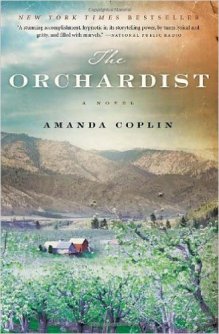
Cover for The OrchardistOn Tuesday, I meant to say that my review was my tribute to Valentine’s Day, with an unusual story of love. Well, here is another one.

Talmadge is a man with a sad history. When he was still a boy in 1857, his father died in a mining town in Oregon. He and his mother and sister then walked all the way along the Columbia River to Wenatchee, Washington. They created an orchard from the start of two diseased apple trees.

Talmadge’s mother died in 1860, when he was 12, and after that, he and his sister Elsbeth were everything to each other. But then when he was 17, his sister went into the forest to gather herbs and was never seen again. Talmadge searched for her for years.

At the opening of the novel, Talmadge is in his 40’s. He has lived his subsequent life alone, working his orchard. He has friends, particularly Caroline Middey, an herbalist, and Clee, a Nez Perce horse trader whom Talmadge and Elsbeth were friends with since they were children. Every year, he and his men stop by with their horses to work the harvest.

One day in town, Talmadge spots two wild young girls who appear to be homeless. Although barely in their teens, they are both pregnant. They find their way to the valley where Talmadge has his orchard, and he leaves food out for them. Although he tries to make a shelter for them, they stay outside. The girls are named Jane and Della.

Talmadge hears someone is offering a reward for the girls. He does not intend to turn them in but travels to see what type of person this Michaelson is. He finds Michaelson runs a brothel for young girls and is an erratic opium smoker.

Michaelson eventually finds the girls, just after they have their babies. The result is disaster. Della has lost twins in childbirth, but the resulting tragedy leaves Jane dead and Jane’s child Angelene alone with Talmadge and Della.

The rest of the novel is driven by Talmadge’s sense that it is his duty to keep Della and Angelene safe. But Della is a wild girl whose actions are controlled by her unrecognized grief. She learns how to ride and finally goes off to work with Clee and his men. But she proves too unruly for them.

This novel is deeply interesting and beautifully written. It is also incredibly sad. It is about the loneliness of the human condition, about our ties to one another, about responsibilities to other people.

Related Posts

Sweetland

West of Here

Neverhome


Day 1036: Edwin High King of Britain

Cover for Edwin High King of BritainIn the 7th century, Edwin has found refuge with Rœdwald, king of the East Angles. Edwin is the king of Deira and Bernicia, but he was long ago exiled when Aethelfrith usurped his throne. Edwin learns that Rœdwald is plotting to turn him over to Aethelfrith, and that provokes him to take back his kingdom.

Over time, through wars and alliances, Edwin is able to overcome his enemies and become High King of Britain. One of these alliances is his marriage with Aethelburh, daughter of the king of Kent, who is Christian.

I didn’t get terribly involved in the novel. I’m not sure if my problem was the flat characterization, the emphasis on battles and religion, or the lack of any sense of the characters’ day-to-day lives. If it was all feasting, fighting, and lusting after gold, then I don’t find this period very interesting. But I think the problem is that the characters and their lives are not fully realized. I couldn’t help contrasting this novel with King Hereafter by Dorothy Dunnett, set a few centuries later, which has similar themes and story arc, but it is so much richer. Or, for that matter, The Long Ships, set a little nearer in time, about characters leading a similar life, but with a rollicking sense of humor.

Related Posts

King Hereafter

The Long Ships

The Buried Giant

Day 1034: Ulverton

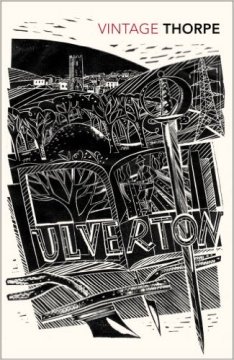
Cover for UlvertonBest Book of the Week!
We’re now more familiar with novels written as related short stories, but Ulverton was written in 1992 and may be the first novel of this kind. The novel covers 300 years of English history and is set in one place, the fictional village of Ulverton. Other hallmarks of this unusual novel are that each chapter is written in a distinctly different voice and the chapters are written in different formats, from a tale told in an inn to the captions from a photographic display to the script of a documentary.

In 1650, the novel opens with the return of Gabby Cobbold from the Cromwellian wars. He meets the narrator, a shepherd named William, on his way home, but William does not have the courage to tell him that his wife, Anne, thinking he was dead, has remarried Thomas Walters. Gabby explains that he was away earning money to support the farm. Gabby disappears, and William is sure that Thomas and Anne killed him. But three hundred years later, Gabby gets his own back against a descendent of Thomas.

In 1689, the foolish Reverend Brazier tells the story of a strange night out on the downs, when he, William Scablehorne, and Simon Kistle were making their way through a snowstorm. As related in his sermon, they were apparently attacked by the devil and Mr. Kistle went mad.

Diary entries made in 1717 reveal a farmer’s preoccupation with improvements to his property and begetting an heir. Since his wife is ill, he does not touch her but begins trying to impregnate the maid.

In 1743, Mrs. Chalmers writes letters to her lover while shut away after childbed. Apparently having read her letters, her husband gets his doctor to keep her isolated longer.

And so it goes, stopping in about every 30 years, so that we sometimes hear of characters again. Through time, names are repeated and the story of incidents changes.

On occasion I had problems with the vernacular, although I tried to stick with it. The most difficult stories for me were the 1775 letters of Sarah Shail to her son and one side of the 1887 conversation between a man plowing and two boys. Sarah Shail is illiterate and is dictating her letters to John Pounds. However, this chapter has its own humor as Sarah is writing to her son Francis, who apparently answers her abusively, to the indignation of Pounds, who begins adding threats to the letters. Pounds’ spelling is so bad, though, that the letters are sometimes incomprehensible. In the case of the plowman, his dialect is so thick that I kept rereading parts of it but was unable to understand very much.

This was just one chapter, though. Overall, I found this novel deeply original and interesting. The countryside is so integral to the story that it features almost as a character. The writing is lovely, and the novel contains a great deal of drama and humor.

Related Posts

The Wake

Harvest

The Quickening Maze


Day 1033: The Miller’s Dance

Cover for The Miller's DanceThe Miller’s Dance is the ninth Poldark novel in a series of 12. Perhaps 12 books is too many for a series, or perhaps the shift of focus more to the activities of Ross and Demelza’s children is a problem for me. I just feel a winding down of interest fighting with the feeling that, having read so far, I should finish the series.

It is 1812, so there are important historical events on the horizon, but they only receive a modicum of attention. Instead, we are focused on the love affairs of the two oldest Poldark children, Jeremy and Clowance.

In the last book, Jeremy proposed to Cubie Trevanion and was not accepted. He assumed it was because his lineage wasn’t good enough, but when he confronts her brother, he finds that what he needs is money.

Jeremy doesn’t have money, although he seems to have a future as an engineer. The person who has money is George Warleggan, and he sets about arranging a marriage between Cubie and his son Valentine.

Clowance betroths herself to Stephen Carrington, who for my money is not to be trusted for a minute. Ross and Demelza do not interfere but insist on a long engagement.

Although the novel contains brief accounts of the wars in Europe and with America, as I said before, it concentrates on Jeremy and Clowance. They are not the vivid characters their parents make, and I’m not that interested in their romances or in Jeremy’s steam engines, which we hear about in great detail. Three more books to go, but I probably wouldn’t read them if I didn’t want to know what happens to the family and if I hadn’t already bought the books.

Related Posts

The Stranger from the Sea

The Angry Tide

The Four Swans


Day 1031: A Country Marriage

Cover for A Country MarriageMary Springer marries George Strong even though she hardly knows him. She has been raised with the idea that a good marriage is her only option in life, and George is a good catch. His family owns the farm of Summerleas, and even though he is not the oldest son, she will be provided for. What Mary doesn’t know is that someone else wants her new husband, Annie, his brother Tom’s wife.

Mary has other surprises in store. She is not to live at Summerleas after all, because the farm will not support the two youngest sons. Instead, she and George will live at dark, damp Keeper’s Cottage. Also, George has only one idea about their intimate life, and it doesn’t include affection or companionship.

George is also involved with a group called the Radicals, who are working for better pay for farm laborers. But they use extreme tactics, like destroying farm machinery and burning hayricks.

This novel conveys the difficult life of rural workers in the early half of the 19th century and covers an important issue of the times. I sympathized with Mary’s plight, but felt that some of her behavior later in the novel was completely out of character.

At some point, the plot devolves into a focus on two illicit love affairs. I didn’t find this plot line interesting, nor do I care for three-page-long sex scenes, although some may think they’re romantic. Goddard has given this novel a subtitle “A Summerleas Novel,” so she seems to be planning a series about the family. I didn’t have enough interest to continue, however.

Related Posts

Far from the Madding Crowd

Tess of the D’Urbervilles

The True Heart

Day 1026: Imperium

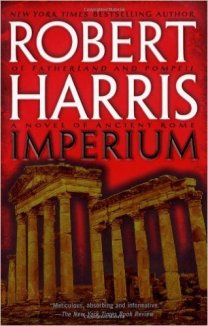
Cover for ImperiumBest Book of the Week!
One of the books on my Walter Scott prize list is the second in Robert Harris’s trilogy about Cicero, so I thought I’d start with this first book. The only other straightforward historical series about this period of Roman history that I’ve read is Colleen McCullough’s Master of Rome series about Julius Caesar. This series makes an interesting contrast.

The novel is narrated by Tiro, Cicero’s slave and amanuensis. Cicero is already in his 30’s when the novel begins with his decision to prosecute the corrupt governor of Sicily, Verres. Cicero is usually an advocate, but he sees in this case a way to further his ambitions to ultimately become consul.

Although corrupt governors are apparently not unusual, Verres has completely abused his authority, by even condemning to death without due process a Roman citizen or two, something that was unspeakable to the Romans. Still, as a policy the powerful aristocrats are behind him, including the renowned orator Hortensius, who is defending Verres. Cicero must take a trip to Sicily to collect evidence.

This novel is a really fine combination of a legal and political thriller. McCullough’s series was mostly positive on Julius Caesar and negative on Cicero, even faintly ridiculing him. Harris’s novel makes Cicero a complicated sympathetic character and Caesar a slippery conniver. If you are at all interested in this period, I highly recommend this novel. And for excellent plotting and writing, I recommend it if you are at all interested in historical fiction.

Related Posts

An Officer and a Spy

Master & God

Acté

Day 1023: The Second Mrs. Hockaday

Cover for The Second Mrs. HockadayBest Book of the Week!
Shortly after the American Civil War, Placidia Hockaday begins a series of letters to her aunt about the peril she finds herself in. But she refuses to say exactly what happened. While her husband, Major Gryffth Hockaday, was away fighting for the South, Placidia had a child and is being accused of murdering it. But at first, all she wants to talk about in her letters is her first meeting with Major Hockaday and the circumstances of her wedding. She was a naive 18, and he was twice her age and a widower with a baby son. They knew each other all of one day.

Eventually, we learn that Placidia, or Dia, as her family calls her, does not know how her baby died. It seems obvious that her real crime is her pregnancy and her refusal to name the father of her child. All she will say is that she cannot betray someone who helped her. Rumors are rampant.

Susan Rivers is pretty clever about how she spins out her story, although at times I got impatient with Dia’s relatives’ squeamishness in avoiding reading her diary of the time. Her son has found it written on the backs of the pictures in a copy of David Copperfield, and the contrast between the picture captions and the content of Dia’s diary provide a note of irony and a whole other level of information. Nevertheless, we are completely captured by the story of her difficult life during the war, as she slowly and with great suspense works her way to the point.

Dia has been left without enough support on a remote farm in South Carolina after only being married a few days. She soon dismisses the slave woman caring for baby Charlie when she sees her smack him. Eventually, she is left with too little help on a farm that is repeatedly looted by deserters and bandits, as well as undergoing normal threats to agriculture by the weather.

link to NetgalleyThis is a powerful novel. If I have any complaints about it, it is for Dia’s devotion to her husband after he leaves her without word or enough help for several years and then, upon returning home and hearing rumors of her illegitimate child, apparently turns her over to the authorities without even speaking to her. Then she decides not to tell him what happened for his own sake.

Told in a series of letters and diary entries, this story gripped me from the first page. it is a forceful depiction of the vicissitudes of war on the innocent civilians and a great character study of a strong woman.

Related Posts

The All-True Travels and Adventures of Lidie Newton

Shiloh

Little Women

Day 1020: One Thousand White Women

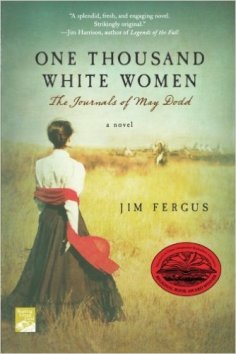
Cover for One Thousand White WomenWhen I first began reading One Thousand White Women, I didn’t think I was going to like it. I was unconvinced, under the circumstances, by its narrator’s facetious tone, and I felt that the way some characters told her their deepest secrets on first meeting was unrealistic. I was also afraid that most of the characters would turn out to be caricatures of real women. However, I eventually changed my mind from my first impressions.

This novel is a completely fictional imagining of what would have happened if an actual event had taken place. During an 1854 peace conference, a Cheyenne chief suggested that the United States trade 1000 white women for horses, reasoning that this assimilation of cultures would ultimately result in understanding between the two. This suggestion was indignantly received, but Fergus’s novel imagines what would have happened if the experiment were tried.

In 1874, May Dodd is one of those women. She has decided to participate to escape from a mental institution to which her family committed her after she had children outside of marriage with a man they found socially inferior. With her on the train west is a colorful group of women, some of them fleeing ruined lives and others hoping for a family.

On the way out, May falls in love with Captain John Bourke, in charge of their escort from Fort Laramie. Unfortunately, Captain Bourke is engaged to be married, and May feels herself pledged to the mission, which has been presented to the women as a patriotic one.

May is chosen as the bride for Little Wolf, a respected chief of the Northern Cheyenne. He is an older man with two current wives, but he is a man May can respect.

Fergus is strongest in his descriptions of the western landscape and life among the Cheyenne. As I mentioned, at first all the women seem like types, but eventually I came to care for most of the major characters, from the timid Martha to the African-American Amazon, Phemie. And the major Cheyenne characters are sympathetically depicted.

Of course, we know what kinds of things were going on in the West at this time (and if you don’t, I recommend Dee Brown’s excellent and affecting Bury My Heart at Wounded Knee). This novel is a sensitive and powerful depiction of the native American life and struggles of the time.

Related Posts

True Grit

Appaloosa

The Loon Feather