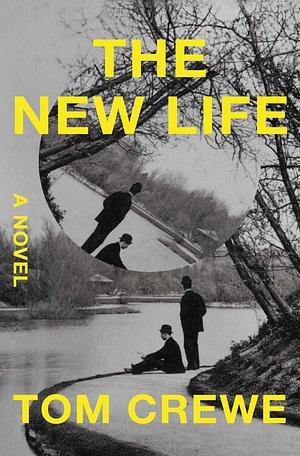
Review 2538: The New Life

The New Life was a slow read for me. It took me almost a week, which is unusual for me with fiction. I read it for my Walter Scott Prize project.

The novel is loosely based on two men, John Addington Symonds and Havelock Ellis, who in the early 1890s wrote a book together. When I looked them up, it didn’t seem as if it was very loosely based—Crewe gives his characters almost identical names. But then I realized it is set after Symonds’ death in order to bring in the trial of Oscar Wilde.

John Addington is a gay man who is married and has three grown daughters. He is known for writing about a vast array of subjects. Henry Ellis is an idealistic, naïve younger man, a doctor. He marries a good friend, Edith, and their intention is to lead the way to the New Life. I wasn’t exactly sure what that entailed, but at minimum it seems to be that spouses are equal partners. Unfortunately for Henry, they never discussed the sexual side of marriage. He thought there would be consummation; Edith, a lesbian, did not. So, Henry continues a virgin with a fascination for the subject of sex. They live separately, and soon Edith has a new friend, Angelica.

Henry wishes to make a scientific study of sex and publish the results, and since he knows some gay friends, referred to at that time as “inverts,” he decides to start with them, having a theory that rather than an illness or perversion, inversion is natural. He decides to invite John Addington to join him in his project, not because he thinks he is gay, but because of his reputation as a writer about various topics.

John has been getting more tired of keeping his secret as an invert. He has confessed to his wife and occasionally has brought a man home for sex, an action that I thought was breathtakingly cruel. Now he meets Frank, a much younger, lower-class man who wants to be his friend. When John sees Henry’s proposal, he thinks such a project will change people’s ideas about inversion so that he can be free to do what he wants.

The men write the book and begin looking for a publisher. However, just at that time, Oscar Wilde is found guilty of inversion and is sentenced to jail. The backlash is such that the two fear their work is unpublishable.

If you are not a fan of graphic sex scenes, this won’t be the book for you, especially the first few hundred pages. The novel opens, for example, with a very explicit and detailed wet dream. I am not really a fan of explicit sex scenes in novels, so I found the first half of the novel hard going, despite it being well written and having vivid descriptions of life in Victorian London. (It has a wonderful description of a day that is so smoggy no one can see where they’re going.)

The novel picked up for me after the book, entitled Sexual Inversion, is published and the police go after a bookseller for selling indecent material, their book. Then it becomes about the reactions of the various characters once there is a threat to their own lives.

Related Posts

After Sappho

Murmur

The Children’s Book

Review 2532: Beauvallet

I am fairly sure I read Beauvallet to fill a hole in my A Century of Books project, but as has happened too many times already, once I had read it, I saw that I had already filled that hole. This book is one of Heyer’s earlier novels, and it is more of a swashbuckler than her other ones, showing a possible influence of writers like Dumas, Rafael Sabatini, or Baroness Orczy.

In 1586, Beauvallet is a privateer like his colleague Drake, a daring, laugh-in-the-face-of-death type guy. His ship is fired on by Don Juan de Narvaez, who wants to show off for his lovely passenger, Doña Dominica de Rada y Sylvan, who is traveling with her father, the ailing late governor of Santiago. They are returning to Spain because of his health.

Beauvallet takes their ship and puts the crew into a boat for shore. However, he promises to take Doña Dominica and her father to Spain, because of her father’s illness. Beauvallet immediately begins to court her. Dominica is at first hostile but eventually falls in love. When he drops them at a smuggling port in Spain, he vows to come get her within a year and make her his wife. Obviously, this poses difficulties because England and Spain are at war. Once Dominica’s father dies, things become worse because her relatives, into whose custody she falls, want her to marry her cousin for her fortune.

I don’t think this is one of Heyer’s best. Her main characters aren’t as appealing as usual, and I think her social comedies are more effective than her adventure novels. However, it’s always worth it to read Heyer. If you haven’t read her, I suggest you start with one of her Regency romances.

Related Posts

An Infamous Army

The Talisman Ring

The Toll-Gate

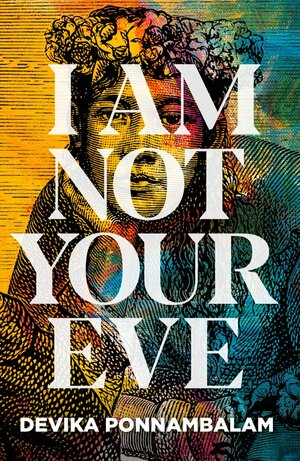
Review 2508: I Am Not Your Eve

This is an interesting yet difficult novel about one of Gauguin’s Polynesian “wives,” whom the blurb calls his muse. Although much of it is about her, Teha’amana, a very young girl, it is told with several voices—those of Gauguin’s daughter, his European wife (briefly), Teha’amana’s Foster Mother (called only that in the book), and very occasionally Gauguin himself.

The broad story is of Gauguin arranging a “marriage” on Tahiti with a very young girl. Their relationship is one-sided. She basically does what he tells her to do while he continues to talk about her as if she were free. Their relationship starts with rape and mostly consists of sex and posing for his paintings. She dislikes the food he eats. When she returns home after eight days to her mother as custom dictates, she tries to stay there.

From Denmark, Gauguin’s daughter writes about him in her diary. She seems to be the only family member who misses him. When his painting of Teha’amana arrives, her mother shoves it into the attic instead of taking it to Paris to sell, and she goes up to commune with it.

Interleaved with these stories are Polynesian creation tales and other myths.

This novel is poetically written, but it was sometimes difficult to know which narrator was speaking. There were a few times, for example, when I thought I was reading a myth but it was actually part of Teha’amana’s story. Also, I was occasionally startled by Gauguin’s point of view of Teha’amana’s behavior that seemed radically different from how she was feeling. Teha’amana’s expression of her point of view is very different from a Western way of telling things, so I didn’t always feel I understood what was going on.

The book only briefly mentions other girls, but apparently Gauguin had three very young Polynesian “wives,” hopefully one after another rather than at once. I couldn’t tell. Much of the content within the mythology sections and in Teha’amana’s story are very sexual in nature, although not graphic.

I read this book for my Walter Scott project.

Related Posts

Moloka’i

Under the Wide and Starry Sky

Euphoria

Review 2507: Literary Wives! Euphoria

Today is another review for the Literary Wives blogging club, in which we discuss the depiction of wives in fiction. If you have read the book, please participate by leaving comments on any of our blogs.

Be sure to read the reviews and comments of the other wives!

My Review

Oh, dear, Elin Cullhed and editors, morels come out in the spring. By October, it’s unlikely that any could be found, worm-eaten or not. Chanterelles are what you pick in the fall, among others.

Euphoria is about Sylvia Plath, set in the last year or so of her life. It begins when her daughter is one year old and she is pregnant with her son. It ends a few months before her death.

Before I get into my review, I want to comment on something. When I began reading this novel, I knew very little about Plath except she was a poet, she was married to Ted Hughes, and she committed suicide. Very recently, I read her novel, The Bell Jar, just by coincidence because it filled a hole in my Century of Books project. While I was reading Euphoria, I got the sense that there was a big controversy when Plath died. Some blamed her death on Hughes, who left her a few months before for another women. Certainly, there was a lot of anger against him for burning her diaries. Perhaps I’m seeing some reflection of the opposite side, but I ran across a post by All That’s Interesting, a blog produced by material collected from other sources, that states that Plath was at the nadir of her career when she died. Actually, her novel was recently published (one month before), she had been on BBC reading her poetry, and had recently finished her most famous poem, “Daddy.” So, where did this “nadir” idea come from? Maybe from Ted Hughes’s supporters?

That novel starts with the couple having moved to Devon at Hughes’s insistence. Plath liked living in London and feels lonely in the country, pregnant and left alone with her one-year-old Frieda while Ted goes up to London. Frieda wants attention all the time, and Sylvia has difficulty finding time to work or get anything done. Her marriage already seems rocky to me, alternating sometimes vicious verbal battles with voracious sex. Sylvia admits to liking being mistreated and having a fascination with death. She is extremely needy and jealous. He is always walking away.

The novel is written from Sylvia’s point of view. She is almost always either ecstatic or depressed. With her, as depicted by Cullhead, it is I, I, I. There isn’t so much a plot here as a detailed examination of her feelings as her children grow and her marriage breaks down. Jealous or not, she immediately recognizes that Aissa Wevill is after Ted.

This novel is sometimes difficult to read. Sylvia’s shifts in mood or reactions are sometimes hard to understand, and occasionally her thought processes were hard for me to follow.

What does this book say about wives or about the experience of being a wife?

Literary Wives logo

Well. Certainly Sylvia would be a difficult woman to be married to. First, she’s possibly bipolar, unsure of herself, and obsessed with Ted. But Ted, I think, is not exactly a model husband, even for his time. He helps out sometimes (which is actually unusual for his time) but he withdraws a lot because he has to write. Sylvia has to ask for time to write even though it is her fellowship that is supporting them at the beginning of the book. There are a few signs that he may be threatened by her as a writer, although other times he celebrates with her.

I know this is a time when men generally weren’t involved much with family life and childcare—and sometimes he cooks, does dishes, or takes care of the kids—but I was shocked when he left Sylvia, sick with puerperal fever but with an infant and toddler to care for, to go fishing, in winter no less.

I don’t think this book says anything about marriage in general, just something about this particular, very volatile marriage. It seems like the volatility that made it exciting at first was what did it in finally.

As so often happens when one person in a couple is attracted to someone else and wants to leave, that person begins finding fault with the person he wants to leave in order to make himself feel better about this betrayal. Often, the very things that attracted him in the first place are the things that irritate him later. You may find fault with my pronouns, but it is often these pronouns that this applies to.

Related Posts

Mrs. Hemingway

Passion

Owls Do Cry

Review 2506: The Voyage of the Narwhal

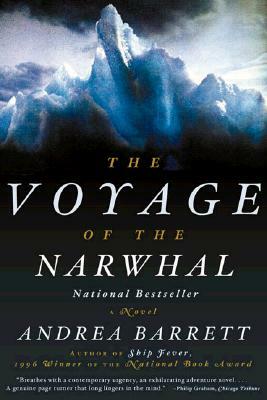
In 1855, Erasmus Wells has spent years working with the items in his father’s collection of specimens, ever since he himself returned from an ill-fated exploration in the South Pacific. The members of the expedition were mocked, but the worst thing was the acclaim given to the leader after he released his book—cut and pasted from the journals and records he confiscated at the end of the trip—including Erasmus’s—but giving them no credit.

But Erasmus almost unwillingly finds himself departing on a voyage to the Arctic, to be lead by his sister Lavinia’s young fiancé, Zeke Vorhees. Zeke was raised like a younger brother to Erasmus and his brothers. He is handsome and charismatic, but may not make good leadership material. However, Erasmus has promised Lavinia he will take care of Zeke.

And Zeke proves divisive as a leader almost from the beginning, determined to do what he wants even if it unnecessarily risks the lives of his men. He almost immediately gets on bad terms with Mr. Tyler, the sailing master, even though he should be relying on Tyler’s experience. Although the purpose of the voyage is to find out more about the Franklin expedition, Erasmus becomes worried that Zeke has other intentions.

Periodically, the novel looks back at the people left behind, particularly Alexandra, who has been hired to keep Lavinia company. She is also hired by Erasmus’s brothers to color illustrations for a book of exploration, and later begins to engrave, but she yearns to travel herself.

Barrett builds suspense as the novel moves from Erasmus’s loneliness and sense of isolation to his fears about the results of Zeke’s leadership to a sense of true peril. This is a truly fascinating novel that builds on the records of actual voyages of exploration during this period. Although Erasmus has his flaws, he is a sympathetic main character. I’ve read several really good historical novels this year, and this is one of them.

Related Posts

Minds of Winter

The Wager: A Tale of Shipwreck, Mutiny, and Murder

The Ghost of the Mary Celeste

Review 2504: Novellas in November! Margaret the First

Margaret the First is another of the short books listed on the Literary Hub’s 50 Best Contemporary Novels under 200 Pages post. I read it for Novellas in November.

This biographical novel is about Margaret Cavendish, Duchess of Newcastle, called Mad Madge in her time. She was the first woman to write for publication. And write she did—philosophy, poetry, plays, and even utopian speculative fiction. She was also very shy, tended toward agoraphobia, and wore extravagantly creative clothing.

Although some of the book is about her childhood, most of it concerns her life during her marriage. Her husband, William Cavendish, was about 30 years older than she, was a Marquess when they married, and was fighting on the King’s side of the English Civil Wars. The court was banished to France, where she had been a waiting lady to the English queen. Although she returned to England to try to reclaim some of her husband’s possessions, he was considered too big a traitor to the Parliamentary side to come back himself. It wasn’t until the Restoration that the couple was able to return and reclaim some of his fortune.

The novel is written in a telegraphic style that doesn’t seem telegraphic. That is, Dutton manages to convey a great deal of substance in a very short work (160 pages) through clever word choice and phrasing. The first half of the novel is in first person but it switches to third person, while still remaining from Margaret’s point of view.

I enjoyed this novel a lot. It is a feminist work written in a sharp, modern style, and it has inspired me to look for more to read about Cavendish. It ends with some recommendations for further reading and a few pages of bibliography.

I should note that the title of one of my favorite books, The Blazing World by Siri Hustvedt, came from the title of a utopian novel by Cavendish. I didn’t know that.

Related Posts

The Blazing World

Lark

Samuel Pepys: The Unequalled Self

Review 2502: Novellas in November! Picnic at Hanging Rock

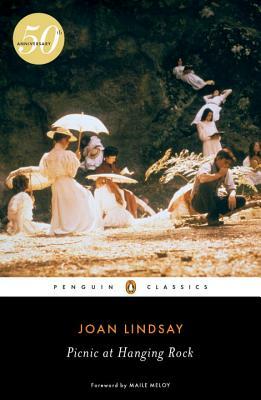
I have meant to read Picnic at Hanging Rock for years, so when I saw it on a list of short novels, I got a copy from the library for Novellas in November. It turns out I’m stretching a point with this one, though, at 204 pages, a little over the stated limit.

Let me warn you about this one. I suggest you don’t do too much poking around or read the Introduction before reading it. Even the Introduction suggests that you read it afterwards. Part of this suggestion has to do with a chapter that was removed at the suggestion of the original publishers. The Introduction to the Penguin edition summarizes this chapter, but I agree that the novel is much more powerful without it.

On a hot Valentines Day in 1900 Australia, most of the girls of Appleyard College for Young Ladies are bound for an outing—a picnic at Hanging Rock, an ancient local geographical and anthropological wonder. With them are three teachers and the coachman. The only student left behind is Sara, a 13-year-old orphan whom Mrs. Appleyard, the headmistress, uses as a scapegoat.

Although the girls are told to stay off the rock, after tea three senior girls ask to walk closer to it. They include Miranda, a girl loved by everyone at the school but especially by Sara. With her are her best friends, Irma, a beautiful heiress, and the brainy Marion. Edith, a younger girl who they think is a pest, tags along after them.

Although a couple of young men in a family party see them crossing a stream, no one sees them after that—or at least no one sees some of them. The girls fall asleep on a circular platform, and when they wake up very late, Miranda wanders away, seeming to hear no one’s calls. Later, Edith comes running screaming away from the rock but can’t remember anything except that she saw Miss McCraw, the mathematics teacher, running away without her skirt. By then, the party has been searching for the girls and has noticed that Miss McCraw is missing, too.

The whole countryside erupts into an uproar. On a subsequent search after the official police ones, the two young men who glimpsed the girls at the rock try searching again, and Mike Fitzhubert finds one of them barely alive. He is injured running for help, but his companion and groom, Albert Crundall, rescues them both.

Most of the novel is about the aftermath of the disappearances. This is an atmospheric and mysterious, even haunting novel that holds the attention. It’s an Australian classic.

Related Posts

The Sun Walks Down

The Secret River

A Room Made of Leaves

Review 2496: The Covenant of Water

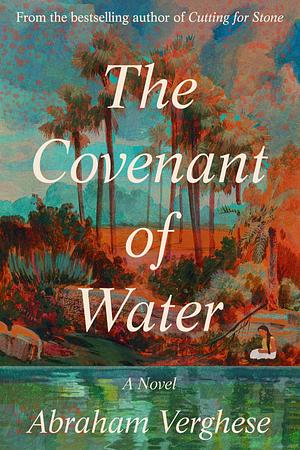
In 1900, a 12-year-old girl, later known as Big Ammachi, travels to meet her future husband and marry him. Almost immediately after her father died, her uncle married her off. She is lucky, though, because her thirty-some husband makes no effort to consummate the marriage until she is 19. In the meantime, she acts as a mother to his little son Jo Jo and takes care of the house.

Although they live in southwestern India, on the Malabar Coast, an area where people are constantly in boats or on the water, she notices that her husband and Jo Jo avoid the water. It is not until Jo Jo dies in a tragic accident that she learns some members of her husband’s family suffer from the condition of disorientation in water that often results in drowning.

In 1933 Madras, Digby Kilgour, a Scottish surgeon, arrives to take up a position at the hospital. Although he was at the top of his class, he has found that his origins as a poor Glaswegian have kept him out of the positions where he can work with a more experienced surgeon. At the urging of one of his professors, he has applied for a position in India.

He finds fairly quickly that his superior, Claude Arnold, is incompetent, so he begins spending time at another hospital, working with an Indian surgeon. He falls in love, however, and this ultimately results in tragedy, turning his life toward a different direction.

Verghese takes his time, introducing many characters and stories and taking the reader through two more generations to the 1970s. He moves between these stories, eventually linking them.

Verghese is an enthralling story teller. Although on occasion he gets a little too deep into medical topics, for the most part, he gets us involved, depicts vivid sights and smells, and carries us along with his tale. Like those of some other writers of Indian descent that I’ve read, his tales loop and branch, but they eventually converge and resolve.

Related Posts

Cutting for Stone

Sea of Poppies

The Glass Palace

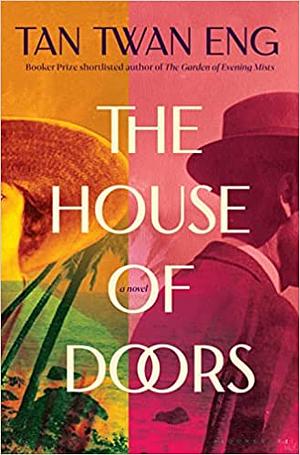
Review 2495: The House of Doors

In 1947 South Africa, shortly after her husband Robert’s death, Lesley Hamlyn receives a package that has come a long way, through circuitous routes, to find her. It has no note and does not say who sent it, but it is a book written by Somerset Maugham more than 20 years ago.

This gift returns her memories to 1921, when she and Robert lived on the island of Penang and were visited by Maugham. The point of view shifts to that of Maugham, who soon learns that his broker has gone under and lost all his money. Although he is dreading his wife’s reaction from England, he is more afraid that Gerald, his secretary and lover, will leave him if he is broke.

He and Lesley begin to get to know each other. Eventually, she tells him about her life 10 years before. On the same day that she heard her best friend, Ethel, had been arrested for murder, she also learned her husband was having an affair.

Tan skillfully weaves the story of Lesley’s relationship with Ethel and the trial with her experiences resulting from meeting Dr. Sun Yat Sen, who has been attempting the overthrow of the Manchu dynasty in China. Lesley begins helping his organization translate its brochure and eventually has an affair with a Chinese man. They meet in the House of Doors.

I was interested in all these stories and although I know very little about Maugham, I spotted the seeds of more than one of his stories in them. For example, Ethel’s story is very similar to that of The Letter, which I am familiar with because of the movie with Bette Davis.

As much as I enjoyed The Garden of Evening Mists, I think I liked this novel even more. Although I read it for my Walter Scott Prize project, I probably would have read it anyway.

Related Posts

The Garden of Evening Mists

The Ten Thousand Things

The Glass Palace

Review 2492: #RIPXIX! The Witching Tide

In 1645, Martha is a mute middle-aged serving woman who has worked for the Crozier family since her master Kit was a baby. She is also a midwife and healer, who at the beginning of the novel is called out to help with a difficult birth. She takes along the young housemaid, Prissy, who is learning to be a midwife.

The birth doesn’t go well. The baby is born with a deformed nose and mouth that wouldn’t allow him to live, and the mother is bleeding too much. The baby soon dies.

Martha and Prissy return to taking care of their own difficult mistress, Agnes, Kit’s upper-class wife, who is heavily pregnant. However, everyone soon hears that a witch master has come to their town, and Prissy is one of the first to be taken.

It is Martha who actually has a poppet, given to her by her mother. Martha doesn’t really know how to use it, but she feels she should have been taken instead of Prissy, as Prissy is of course being blamed for the deformed baby.

In his attempts to free Prissy, Kit arranges for Martha to be one of the women who examines the accused for witch marks, hoping Martha can help her. But marks are found on Prissy, and Martha can do nothing. Prissy is one of the first to be hanged.

Others have doubted whether Martha isn’t a witch herself, and Martha is torn between fear and guilt. Soon, many of the women are accused, along with the community’s innocent, naïve young minister.

This novel evokes a constant feeling of dread. In addition, it is unsparing in its descriptions of the conditions of the time. It is also fully aware of the underlying misogyny of the witch trials. I think it qualifies for RIPXIX!

Related Posts

The Witches: Salem, 1692

The Mercies

Corrag