Day 680: As Chimney Sweepers Come to Dust

Cover for As Chimney SweepersAfter 12-year-old Flavia de Luce’s last adventures, she starts out this most recent novel in the series on her way to Toronto. She has been sent away to school, to Miss Bodycote’s Female Academy. Lest you worry that this will turn the series into a nonmagical version of Harry Potter, never fear.

Flavia has arrived by boat in the company of Dr. and Mrs. Rainsmith, an unlikable couple who are associated with the school. They drop her there late at night, and true to form, Flavia has discovered a corpse by morning.

Or rather, another of the boarding students by the name of Collingwood has. In an attempt to hide from the headmistress when she is out of her room at night, Collingwood crawls up the chimney in Flavia’s room, only to fall down again along with a desiccated body wrapped in a Union Jack.

Of course, Flavia is soon on the job, trying to identify the body. Several girls are rumored to have disappeared from the school. And then there is the mysterious death of Dr. Rainsmith’s first wife, even though she went overboard during a cruise, which makes the death a little harder to fit.

Although the series has taken a somewhat fantastical turn, with Flavia seemingly being groomed to be some sort of spy, she continues her inimitable self, naive enough to draw some pretty ridiculous conclusions from her evidence but smart enough to find the facts, and entirely neglectful of the school rules. I have to admit, though, that I miss Flavia’s village and the eccentric members of her family.

I’m sure I am not the only one to enjoy Flavia, an expert in chemistry who thrills over an electron microscope but still believes in Santa Claus, as we discovered a few volumes ago.

Related Posts

The Sweetness at the Bottom of the Pie

The Dead in Their Vaulted Arches

Speaking from Among the Bones


Day 667: Alias Grace

Cover for Alias GraceBest Book of the Week!
Most of what I have read by Margaret Atwood has been futuristic and dystopian, so I was quite surprised to find that Alias Grace is an apparently straightforward historical novel. But then, nothing with Atwood is exactly straightforward.

The novel is based on a notorious Canadian murder, in which two servants were found guilty of murdering their master and his paramour housekeeper. The man was hanged, but there continued to be debate about the extent of the guilt of the woman, Grace Marks.

The novel begins some years after the event, when Dr. Simon Jordan, studying new discoveries in the field of mental illness, is hired by a group trying to gain Grace a pardon. Grace has always claimed she cannot remember the crimes, and he hopes to revive her memory. He begins in a way meant to slyly nudge a modern sense of humor, by bringing her an apple followed by a series of root vegetables he hopes will remind her of a cellar, where the bodies were discovered.

Grace, who was very young at the time of the crime, eventually tells him what she can remember, beginning with her early life. She relates her story in a simple way, conveying the persona of a proper young girl.

Dr. Jordan appears as if he is going to be the hero of this novel, but he has his own obsessions and difficulties.

As Grace tells her story, we are drawn slowly in, waiting to learn what really happened. This novel is rich in detail and beautifully written, but it is also slyly humorous and dark.

Related Posts

Stone Mattress

Corrag

Burial Rites


Day 660: Straight Man

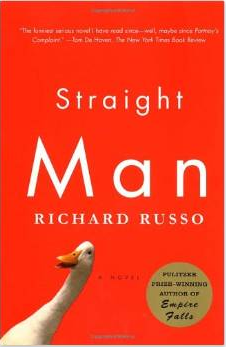
Cover for Straight ManSo far, I have enjoyed Empire Falls the most of Richard Russo’s novels, and Straight Man is at least also set in the rust belt, which he depicts so well. However, rather than being a depiction of small-town life, it is a rich spoof of academia. My husband, formerly the spouse of an academic, tells a joke, probably an old one, that the reason politics in academia is so vicious is that the stakes are so low. That these battles are being fought not on the campus of a great university but of an obscure college in a small Pennsylvania industrial town makes it more ironic.

William Henry Devereux, Jr., (Hank) sees himself as a bit of a rebel, although his rebelliousness mostly confines itself to snarky comments in faculty meetings and satiric opinion pieces on academic life in the local paper. He was once the author of a decently reviewed novel, but now he finds himself the interim head of the English department at a small Pennsylvania college.

Hank has been ignoring rumors that the college is to undergo stringent cuts on the grounds that the same rumors make the rounds every April. The faculty members in his department are constantly embattled, most recently over the job search for a new department head. Hank is better at enraging them than smoothing things over, and at the beginning of the novel suffers a wound to his nose when a professor hits him with her spiral notebook.

Maybe Hank wouldn’t have gotten himself into quite so much trouble, but his wife Lily is out of town on a job interview, and he is preoccupied by a possible kidney stone when he begins taking the rumors seriously. One of the reasons he has discounted them is that the college is breaking ground on an expensive new technology center and he can hardly believe they could claim financial problems requiring layoffs at the same time.

Such is the case, he finds, and with his department members all worried about their jobs, he chooses the groundbreaking ceremony to stage a protest, claiming he will kill a duck (which is in reality a goose) from the campus pond for every day he doesn’t get his budget. Soon he finds himself a minor media celebrity and a suspect of campus security when someone actually does kill a goose. In the meantime, his daughter’s marriage is imploding, he keeps imagining his wife is having an affair with the dean, his scholar father who years before deserted him and his mother for a graduate student is returning, and an attractive daughter of a colleague might be trying to seduce him. The events of this week force him to examine his relationship to his own life.

I found this novel both a bit over the top and amusing, as well as true. If I have a criticism, it is to wonder about some modern male authors’ fascination with bodily functions, and why they seem to think they’re funny. But I guess I can’t constrain this complaint to just novelists, because I’ve been staying away from comic movies for years for the same reason.

Related Posts

That Old Cape Cod Magic

Lucky Jim

The Bridge of Sighs

Day 657: The Fish Can Sing

Cover for The Fish Can SingÁlfgrímur is an orphan boy who has always known life in a simple turf cottage with his foster parents, Björn of Brekkukot, whom he calls Grandfather, and Grandmother. His grandfather lives a life of integrity, with no interest in ambition. Words are so important in their household, Álfgrímur explains, that they are only spoken to hide things.

Álfgrímur grows up with his only ambition to live in his grandparents’ cottage and fish for lumpfish with his grandfather. But his grandmother has other ideas, so when he is old enough, he goes reluctantly off to school.

Most of this novel is an account of everyday life at Brekkukot, peopled by the peculiar residents of the grandparents’ loft, some permanently there and others passing through. These people are all good but eccentric. For example, there is the Superintendent, whom Álfgrímur as a boy thinks is the superintendent of the entire city of Reykjavic but turns out to be in charge of the public toilets at the harbor.

Hanging on the wall of their neighbor Kristín’s cottage is the picture of a young man. When Álfgrímur asks about him, his grandparents answer “He was a nice little boy, that Georg,” Kristín’s son. But Georg is now Garðar Holm, a famous Icelandic opera singer. Garðar Holm seldom comes home. When he does and his patron schedules a concert, he never appears, but he does take an interest in Álfgrímur. Álfgrímur can sing and he wants to learn to sing “one true note.”

In this novel, Laxness is interested in exploring the tension between fame and obscurity, but he is also interested in the importance of morality and honest dealing. Serious as its intent is and primitive as are the characters’ surroundings, this is not at all a grim novel. It is told with a wry and ironic sense of humor and is full of colorful characters. With Laxness, you can be sure that there is plenty going on beneath the surface of things.

Related Posts

Independent People

Cod: A Biography of the Fish That Changed the World

The Beautiful Mystery

Day 649: The Death of Bees

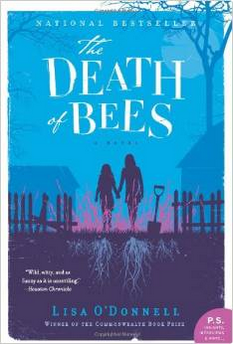
Cover for The Death of BeesBest Book of the Week!
It may take some fortitude for readers to get past the foul language and bad behavior at the beginning of this novel. But I think most readers will feel it is worth it to have read this dark, funny, and ultimately touching little modern gothic novel.

Marnie and her younger sister Nelly find themselves with a problem. Their parents are dead, and they have already once experienced the joys of the foster care system. So, the two girls bury their mother Izzy in the back garden and hide their father Gene in the shed.

Izzy hung herself, but it is not altogether clear for quite some time what happened to Gene. The couple were terrible parents in any case, Izzy a self-obsessed, neglectful addict and Gene also an addict and molester of his own daughters. The two girls will do their best to take care of themselves until 15-year-old Marnie can do it legally.

Lennie, the old man next door, is a social outcast. After the death of his long-time partner, the lonely Lennie was once tempted by a male prostitute, only to be arrested and charged because the prostitute was a minor. Lennie doesn’t see that well anymore, so although he knew the man was young, he didn’t know how young and feels thoroughly ashamed. Despite his poor eyesight, Lennie is the only person who notices that the two girls are on their own. Soon, he is inviting them over and feeding them, happy to have someone to cook for.

The meat of the novel is the characters of these three. Marnie is brash, foul-mouthed, and smart. She is determined to protect her unworldly sister. But she is more vulnerable than she seems.

Nelly speaks like someone out of a Jane Austen novel and seems strangely clueless for a girl growing up in a tough Glaswegian neighborhood. She has a tendency to see only what she wants to.

Lennie misses his partner. He is meticulous but still ready to open his house to the two teenage girls.

Marnie’s world is populated with drug dealers, butch girlfriends and unreliable boyfriends, a best friend who was ready to run off with her father, and other difficult personalities. As Lennie’s dog Bobbie insists on digging up the bones in the garden and the girls evade questions about their parents, they both learn who they can love and depend upon.

Related Posts

NW

All the Birds, Singing

Mercy Snow

Day 609: Good Behaviour

Cover for Good BehaviourMolly Keane was a successful author and playwright in the first half of the 20th century. Although she was known mostly for romantic frolics, Good Behaviour is certainly not in that category. In fact, at the time that she wrote it, it was rejected as being too dark. It was not published until years later, when Keane’s friend Peggy Ashcroft encouraged her to try again.

Good Behaviour is a comedy of manners and a satirical look at the life of a certain type of the Irish upper class. It startlingly begins with a murder, but I’ll leave it to readers to find out who the victim and murderer are.

After the murder, the book returns in time to recount the childhood and upbringing of Aroon St. Charles. But first it oddly shoots off to explain how Mrs. Brock, Aroon’s governess, came to them. It is telling to learn that the proper and kindly Mrs. Brock was “let go” by a friend of St. Charles, notwithstanding a good reference, because she committed the crimes of encouraging one of the boys to read poetry and comforting him after he was whipped by his father. The boy, Richard Massingham, becomes important to Aroon in later years.

Aroon is a large, unattractive girl who is desperate for affection and some acknowledgment of her own importance. She is not stupid, but she sees only what she wants to see and is incredibly naive. Although she loves Mrs. Brock, it is indicative of her character that she nevertheless makes fun of her later in life as a way to fit in with Richard and her brother Hubert. She loves her father, who treats her with casual affection, but expressiveness is considered bad form in their set.

Her relationship with her mother is more complex. Although Aroon steadfastly maintains the fiction that her parents are devoted to each other, it is clear that they are not. Mrs. St. Charles is cold and removed from her family. She has no interests in common with her husband, who spends most of his time pursuing outdoor sports and philandering. Aroon knows that, but does not seem to notice what is going on in her own house.

The events in this novel are largely trivial except for some deaths. The novel is not plot-driven but centers around the behavior of Aroon and her horsey upper-class friends, who maintain their snobbishness despite a consistent lack of funds. We see the irony when Aroon throws away her opportunity to escape her unhappy household through a combination of willful blindness and snobbery. Aroon finds her place eventually and it is a deserved one.

Although we can find some sympathy for Aroon, she is definitely an anti-heroine. If you appreciate a sly, dark, understated humor and a masterly characterization, you should look for a copy of this novel.

Day 592: Literary Wives! Wife 22

Cover for Wife 22Today is another meeting of Literary Wives, where a group of bloggers read and discuss depictions of wives in fiction.

* * *

I guess by definition chick lit is predictable, so perhaps it is unfair to criticize Wife 22 because I could tell where it was going before it got there. Still, I do criticize it for that, although it is well written, has funny, believable dialogue, and is quite enjoyable to read.

Alice Buckle is feeling a little dissatisfied with life. She has a handsome husband, but he has seemed withdrawn of late. She is often at loggerheads with her fifteen-year-old daughter, although she is very close with her younger son. She enjoys her work as a drama teacher at an elementary school. Still, the spark is gone between her and her husband.

She is invited by email to take part in a survey about marriage. To maintain anonymity, she is assigned a login of Wife 22 and a caseworker, Researcher 101. She finds it exciting to have a harmless secret and cathartic to answer the questions.

But it isn’t too long before the two are emailing each other outside the survey. Alice feels as if Researcher 101 really listens to her and understands her. Soon, she is fighting to keep herself out of an emotional affair. The situation is made more difficult because her husband William has abruptly lost his job.

I liked all the characters in this novel except the one I wasn’t supposed to like. However, I seldom read chick lit and again, I felt that this novel was predictable.

Literary Wives logoWhat does the book say about wives or about the experience of being a wife? In what way does this woman define “wife”—or in what way is she defined by “wife”?

I have to admit this portrait of a modern wife is more well rounded than we have seen in some other books. Alice is a failed playwright—her one produced play was a flop—but she really enjoys her job working with children. As a mother, she is actively engaged with her children, although inclined to worry unnecessarily and feel inadequate. Her relationship with her husband is friendly but a bit distant. When she tries to feel him out about emotional issues, he is abrupt and dismissive. In this regard, she is needy, letting a feeling of being unloved and inadequate prevent her from dealing honestly with her husband. I’m not sure, though, that any of this says something about being a wife. I feel as if this novel comments more on marriage itself and what can happen to it if it’s allowed to grow stale. There are problems between Alice and her husband, but her husband also has his own troubles that Alice is too preoccupied to pay attention to.

The Wives

Be sure to read the reviews and comments of the other wives!

Day 521: The Dead in Their Vaulted Arches

Cover for The Dead in Their Vaulted ArchesThe tone of The Dead in Their Vaulted Arches is a little more somber than in the previous Flavia de Luce mysteries. Just as Buckshaw was about to be sold out from under the family in the previous novel, we learned that Flavia’s mother was found. Years ago lost in a mountaineering accident, Harriet de Luce was the owner of the house. Her fortune could not be passed along to her family without proof of her death. Now, her body is on the way home.

Flavia is surprised to find her mother’s remains have received a military escort. In fact, ex-prime minister Churchill is at the village’s small train station when the body arrives.

A tall man approaches Flavia at the station and asks her to tell her father that “the Gamekeeper” is in jeopardy. Moments later he is dead, having been pushed under a train.

I was a little surprised to find Bradley playing a few of the tricks that I associate with less skillful mystery writers. One of them is to spin out the story by having a character delay doing what is obviously urgent. Flavia waits quite awhile to convey this message from the tall man.

Part of the charm of these novels is always 11-year-old Flavia, who combines high intelligence with childish naïveté and some wild ideas. This time she decides to bring her mother back from the dead using some old chemistry experiments. While trying to do this, she finds her mother’s will inside her jacket. She doesn’t pass that on right away, either.

Flavia’s adventures this time include flying in a Gipsy Moth and getting involved in espionage. Of course, there is a murderer to capture and family secrets to explore.

Still, I didn’t find this novel as much fun as I usually do. Probably because of the subject matter, Bradley has to step back quite a bit from the humor.

Flavia is growing more thoughtful, although she is still as reckless. The novel hints at a change of scene in upcoming books, and although I think Buckshaw is wonderful, perhaps we need one.

Day 516: Oryx and Crake

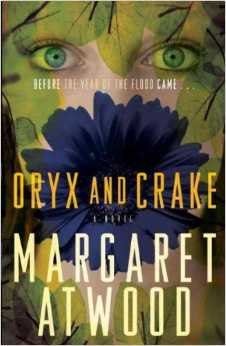
Cover for Oryx and CrakeBest Book of the Week!
Snowman may be the last human left on earth after the plague. He is not alone, though, because nearby is a race of human-like beings that his friend Crake bioengineered. Snowman himself lives like a vagrant—wearing nothing but a sheet in the unbearable heat from global warming, scrounging through the detritus of a lost civilization for food.

Snowman soon realizes that he will starve if he doesn’t return to the compounds for food. Not long before, he lived in a world where the privileged workers for the biochemical industry and their families lived apart in their own secure compounds. The other people, called pleeblanders, could fend for themselves. Gene splicing to create new species was rampant without regard for any consequences, and greed and consumerism all-important.

As Snowman makes his journey, he recalls his childhood with an embittered mother and oblivious father and his long friendship with Crake. Most fondly he remembers Oryx, the love of his life. Through these memories we learn how the world got into this dire situation.

This novel is both inventive and absorbing. Although Atwood’s descriptions of the pre-plague world with its abominations of nature seem comic at times, they are still horribly believable. This is dark humor with a knife edge about a world that has lost its sanity.

Oryx and Crake is the first of a trilogy, and I am looking forward to reading the other two volumes.

Day 512: Troubles

Cover for TroublesBest Book of the Week!
It is the summer of 1919. Major Brendan Archer has just left the hospital after his experiences in the trenches of France. When on leave in 1916, he met Angela Spencer. Although he has no recollection of having asked her to marry him, she has ever since then written him exhaustive letters signed “Your loving fiancée.” Determined to find out if he is engaged, the Major travels to the Majestic, Angela’s family hotel in County Wicklow, Ireland.

Troubles is about the decline of the once powerful Anglo-Irish aristocracy. Nothing symbolizes this decline quite as effectively as the state of the Majestic. Once a grand resort hotel, the Majestic is now the crumbling permanent home for a handful of old ladies who knew it from their heyday.

The Palm Court is so overgrown that it gets more and more difficult to find the chairs. No staff is visible when Archer checks in, and he is finally vaguely shown around by Ripon, Angela’s brother, who urges him to pick a room. When Archer retires, he finds his bed has no sheets, and his investigation of a sickly smell leads to the discovery of a sheep’s head in a pot in his room. Most frustrating, though, is that he can find no opportunity to speak to Angela, who shortly after his arrival shuts herself up in her room.

Major Archer soon finds himself drawn into the activities and personalities of the household. Angela’s father Edward seems unconcerned about the increasing decrepitude of the house. He occupies himself with projects such as raising piglets in the squash court or conducting bizarre experiments in “biological research.” He is most concerned with preventing Ripon from marrying the daughter of a merchant, whom Ripon has made pregnant. Edward’s objection? She is Catholic.

It is the time leading up to the partition of Ireland, with events that 40 years later will result in The Troubles. To Edward’s way of thinking, along with most of his class, those who want independence from Britain are nothing but hooligans. He refuses to recognize that his impoverished and desperate tenants have legitimate grievances.

The growing sense of dissolution both in Ireland and—periodically interjected by newspaper articles—in other parts of the British Empire keeps the novel from being simply a comedy such as Cold Comfort Farm. That, and Farrell’s writing style of cool and precise satire. As poor Major Archer bumbles in a well-meaning way through the political briars and Edward becomes more detached from reality, the Majestic slides perceptibly into ruin.

This is another book from my Classics Club list.