Review 2294: Hotel Silence

Jónas Ebeneser has begun to think his life has no meaning. His wife Gúdrun has divorced him, and recently she told him his daughter Gúdrun Waterlily isn’t his. Aside from getting a lily tattooed on his chest, hanging out with his neighbor, and visiting his senile mother, he hasn’t been doing much, except fixing things, which he is good at.

He decides to kill himself, but he is worried that Gúdrun Waterlily will find his body. So, he decides to travel to a dangerous foreign country, feeling sure he can find a way to die. He travels to an unnamed country where a war has just finished, taking a shirt, his tool box, and his old diaries, and checks into Hotel Silence, formerly occupied by the famous and now run down with three guests.

This quietly quirky novel is another joy from Ólafsdóttir. It’s at times serious and sad but full of hope.

Related Posts

Miss Iceland

Pastoral

This Is Your Life, Harriet Chance!

Review 2272: The Other Day

The Other Day is Dorothy Whipple’s charming memoir of her childhood in Blackburn, starting when she was very young until she was about 12. She clearly has a vivid memory of such things as her inability to understand when someone was teasing her, the ways she misunderstood things, and her great ideas based on childish misconceptions.

Her experiences of school were especially unfortunate. She was hopeless at mathematics, and her math teacher at her first school ridiculed her mercilessly until she “cheated” by claiming to get two answers right on a quiz. Later, she was entered into a convent school and became confused about what she was told about religion.

Most of her stories, whether happy or not, reflect a happy childhood, especially when the family later takes a cottage. Her memories reflect a lot of humor even though she seems to have been a serious child.

Related Posts

Someone at a Distance

Young Anne

Greenbanks

Review 2269: Fanfare for Tin Trumpets

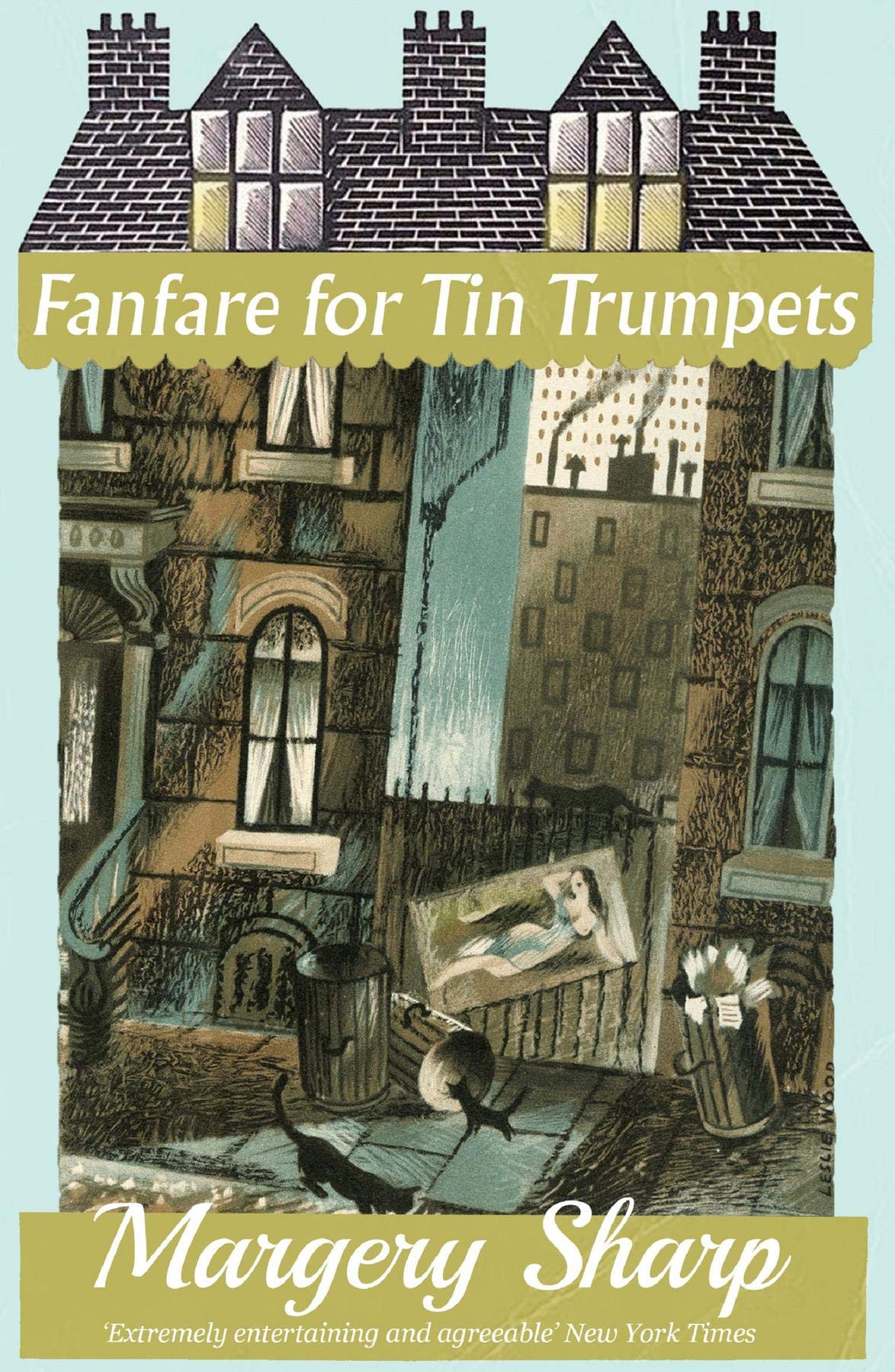
Young Alastair French is offered a place in his family’s stationers business, but he decides to take a room in northwest London with his friend Henry, who is going to be a student. Alastair has £100, and he figures he can support himself for a year while he becomes a writer.

Alastair and Henry move into an apartment building with an assortment of friendly neighbors, particularly Winnie Parker, who is always surrounded by young men. Although he starts a novel, Alastair decides to become a playwright mostly because plays are shorter. He doesn’t do much work but he does write up a scenario.

Then he meets Cressida Drury, an actress, and is immediately smitten. She returns some of his interest when she learns he is a playwright, but it’s hard to tell how much, and he didn’t think of dating when he made his budget.

This is a frothy, funny novel about youthful optimism and first love. It’s a lot of fun.

Related Posts

Harlequin House

Rhododendron Pie

The Foolish Gentlewoman

Review 2255: Introduction to Sally

Ever since Sally Pinner was very young, her parents have tried to keep her isolated. That’s because, although she is obedient and good, she is the most beautiful creature anyone has ever seen. Crowds gather when she goes out, and Mr. Pinner views the extra profit he makes when she helps him in his small grocery store as dishonest.

After his wife dies, Mr. Pinner is at his wit’s end trying to protect her in London, so he swaps stores with a man who lives in the middle of nowhere. This plan seems to work very well at first, most of their neighbors being widows and spinsters, but Mr. Pinner gets a shock after Christmas. He lives only ten miles from Cambridge. Term has been out, but as soon as it starts, the village fills up with young men.

Jocelyn Luke, a young man with a promising future in the sciences, spots Sally and immediately loses his head. He decides to marry her, throw up his university career, and go work in London as a writer. When Mr. Pinner hears the word “marry,” he hastily agrees, because other men have wanted something from her, but it wasn’t marriage. Soon poor Sally finds herself married to a stranger, who quickly realizes that her accent and her way of expressing herself are not going to impress his mother. So, he begins trying to get her to say her h’s. Everyone she meets has plans for Sally, but no one bothers to ask her what she wants.

This novel is played mostly for laughs, but it has some serious messages about the treatment of women and people’s view of women. A Pygmalion-like story where the girl to be transformed has no aptitude for change turns that idea on its head. Chaos ensues.

I received this book from the publisher in exchange for a free and fair review.

Related Posts

Expiation

Cluny Brown

Sally on the Rocks

Review 2254: #1962 Club! The Reivers

The Reivers is William Faulkner’s last novel, written in 1962, which I chose as my last selection for the 1962 Club. Unlike some of his more famous novels, it is told straightforwardly by its main character, Lucius Priest, as a grandfather telling a yarn about his childhood to his grandson. I believe Faulkner wrote this novel, which reminded me of Huck Finn, for pure fun.

Key to the story, which is set in 1904 when Lucius is 11, is Boon Hoggenbeck, an overgrown man-child who works for Lucius’s grandfather, referred to as Boss. Lucius’s grandparents and parents have no sooner departed for the funeral of Lucius’s other grandfather than Boon decides to take Boss’s brand new automobile and Lucius to Memphis, both sort of colluding in this misbehavior without actually discussing it. On the way there, they discover that Ned, Boss’s Black coachman, has hitched a ride with them by hiding under a tarpaulin.

In these early days of cars in Mississippi, the trip to Memphis is in itself an adventure, but things heat up when Boon delivers himself and Lucius to a whorehouse (although Lucius calls it a boarding house) where Boon has a favorite girl, Miss Corrie.

A bunch of colorful characters appear, including Otis, a boy described as having something wrong and who you don’t notice until it’s almost too late. But the story really kicks in when the miscreants learn that Ned has traded Boss’s automobile for a horse that he plans to race against another horse that already beat it twice.

I wasn’t sure this was going to be my kind of story, but mindful of the time (it is definitely not politically correct in so many ways), and I mean 1904 not 1962, it is funny and contains some philosophizing about right and wrong.

Related Posts

The Hamlet

The Town

The Mansion

Review 2208: The Foolish Gentlewoman

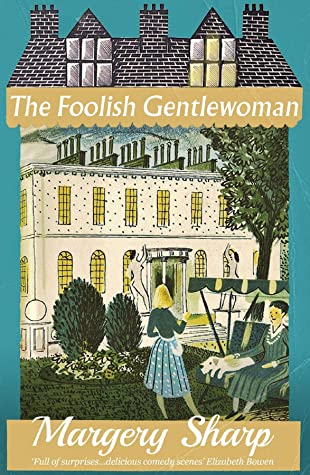
When crusty, prim Simon Brocken goes to live with his widowed sister-in-law Isabel while his home is repaired from bomb damage shortly after World War II, he isn’t expecting to enjoy living so closely with other people. However, the household gets along comfortably together even though the four occupants don’t have much in common. Isabel is kind and generous, although Simon thinks she’s an idiot. Her Australian nephew Humphrey has come to stay, and he is slowly pursuing an understated courtship of Jackie, Isabel’s companion/secretary.

However, something is bothering Isabel, and eventually she tells them what it is. A preacher’s sermon about bad acts in the past being no less bad has made her consider an incident from when she was a girl, when her actions blighted the marital hopes of Tilly Cuff, a poor cousin her family treated a little like a servant. Tilly took a job as governess, and Isabel eventually married Simon’s brother.

Now Isabel thinks she must make amends to Tilly, so she has invited her to stay. But she also intends to give Tilly her entire fortune. Simon is appalled by this but can’t get her to change her mind. Then Tilly arrives, and everyone but Isabel soon realizes that she is actively malicious.

This novel is witty and sharply observant of human nature. It creates a situation that I couldn’t imagine being resolved neatly and that made me want to see what happens.

Related Posts

Harlequin House

Rhododendron Pie

Cluny Brown

Review 2155: #1940 Club! Miss Hargreaves

When I saw Miss Hargreaves on the list of books published in 1940, I knew I had to read it for the 1940 Club, mostly because of recommendations by Simon Thomas.

Norman Huntley is quite a young man, impetuous and given to making up stories. He is traveling with his friend Henry in Ulster when they take refuge from the rain in a church they agree is hideous. However, the sexton appears and insists on giving them a tour.

When the sexton shows them a commonplace inscription dedicated to a previous vicar, Norman blurts out that he has a friend who knew him. Together he and Henry describe an eccentric old lady named Miss Hargreaves, continuing after they leave to add details.

To cap the joke, Norman writes a letter to the address they made up, inviting Miss Hargreaves to visit. Shortly after he returns home, he receives a letter from Miss Hargreaves saying she is arriving on Monday.

Miss Hargreaves is exactly as Norman described her, including a dog named Sarah and a parrot named Dr. Pepusch. Norman is confused and his friends treat him badly because of his relationship with the old lady. But he comes to believe that Miss Hargreaves exists only because he created her. He both likes and hates his creation.

Although some events seem to confirm this idea, after he gives Miss Hargreaves a title, she begins to go in her own direction, and things get even more complicated.

Of course, this frothy story is meant in fun, but I couldn’t help thinking that the novel could be a metaphor for an author and his creations—how they sometimes take control and don’t want to do what you planned, and how you can love them and hate them at the same time.

Although I don’t usually like magical realism, I found this novel madcap and funny, and I especially loved the character of Norman’s father.

Related Posts

Cluny Brown

The Stone of Chastity

Berry and Co.

Review 2115: Summer Lightning

I intended to read Summer Lightning for the 1929 Club last fall, but it didn’t arrive in time from the library. It is one of the Blandings books, and I have not read many of those.

The country is buzzing at the news that Galahad Threepwood, that old reprobate, is planning to publish his memoirs. Old men up and down the country are terrified of what he might reveal.

At Blandings Castle, where Galahad has repaired to write, both Mr. Ronald Fish, Lord Emsworth’s nephew, and Miss Millicent Threepwood, a niece, are in love, unfortunately not with each other as their daunting aunt, Lady Constance, intends. Millicent has fallen for Hugo Carmody, Lord Emsworth’s secretary, and Ronnie for Sue Brown, a chorus girl.

As usual, Lord Emsworth is besotted with his pig, the Empress of Blandings. Ronnie gets the idea to steal the Empress and hide her away then pretend to find her, thereby winning Lord Emsworth’s regard.

In the meantime, Hugo has to run up to town and takes the opportunity to go dancing with Sue. Unfortunately, he has promised Millicent he will do no such thing. Mr. Pilbeam, an oily detective, has just accepted a job from Hugo to find the Empress (which he only accepted because someone is paying him a lot of money to steal Galahad’s manuscript) when he comes upon Sue waiting at their table for Hugo. He has been calling her and sending her flowers, to which she hasn’t responded, so he sits at her table uninvited. At that moment, jealous Ronnie appears.

As if this isn’t enough silly fun, Sue impersonates a wealthy American so she can visit Blandings and make things up with Ronnie. The novel also features the reappearance of Baxter, Lord Emsworth’s previous secretary, whom Lord Emsworth thinks is batty. And he’s on the tail of the Empress, too.

I enjoyed this book, but I think the Blandings series is missing something compared to Jeeves and Wooster. That something is Bertie’s insouciant, dim-witted yet witty and kind narrative style.

Related Posts

Berry and Co.

Tea Is So Intoxicating

The Stone of Chastity

Review 2103: Kill Me Tender

When I asked Dean Street Press to send me books for Dean Street Press in December, I felt that a mystery starring Elvis Presley might be clever and amusing. This was despite my usual dislike for mysteries using an actual person or someone else’s character as the detective. So, I asked for the first book in the series. Unfortunately, I wasn’t able to post my review until now, so I missed the event.

Elvis is feeling strange and unfocused since he returned from his army service. He keeps an eye on his correspondence and is distressed to learn that the president of one of his fan clubs, a young girl, died of a heart attack. Also, someone has sent him a record of an Elvis impersonator singing one of his songs, only with the lyrics horribly changed. Then, he learns that another fan club president has died unexpectedly—and both girls had a red spot on their tongues. After a third death, Elvis begins to suspect that someone is killing off his fans. Elvis feels he must get to the bottom of this.

His investigation leads him to meet colorful characters—an uncredentialed doctor serving the Black community and his beautiful nurse, a whole room of Elvis impersonators, an expert on criminology, and a hippy-like jail resident who seems to be psychic.

The humor of this novel seems to be based in strange encounters and outrageous behavior, and it didn’t really work for me. Far from the witty maybe sharp novel I expected, it comes off as a fanboy tribute.

What bothered me more, though, was that while Klein obviously researched Elvis, he didn’t spend the same amount of time checking the accuracy of his memory of 1965. For example, a 14-year-old Southern girl of the time would be very unlikely to even know the language that one character uses. Elvis’s affair with a black nurse is also unlikely. But there is at least one downright anacronism—the use of the term “serial killer” ten years before it was coined.

Characterization is mostly one-dimensional in this novel except for Elvis himself. The rest of the characters are just being put through their paces.

I received this book from the publisher in exchange for a free and fair review.

Related Posts

Scot Free

Eight Perfect Murders

Insomniacs, Inc.

Review 2088: Mrs. Tim Flies Home

I intended to read the Mrs. Tim books in order, but that hasn’t quite worked out, and I received this one just in time for Dean Street Press in December.

Hester Christie (Mrs. Tim) reluctantly leaves her husband in Kenya, where he is now posted, to form a household in England that her children can return to for the summer holidays. But en route she stops for two days in Rome. There she is unexpectedly met by family friend Tony Morley. Her couple days of sightseeing with him create a misunderstanding that travels all the way back to England to cause trouble for her through the person of Mrs. Alston, whom she met on the plane from Kenya to Rome.

Mrs. Tim has found a house in Old Quinings called the Small House. Although she loves the house, she finds she has a troublesome back neighbor and a landlady who isn’t to be trusted. She also meets some pleasant neighbors and helps out a young man in his romance with a nice young girl. She solves a mystery and finds out why some of the villagers are treating her oddly.

This book is another breezy entry in the Mrs. Tim series, written in the form of letters to her husband. It gets a little patronizing toward the ancient Romans (conveniently forgetting about the Inquisition), but they’re dead so they won’t mind. Otherwise, it’s an entertaining read.

I received this book from the publisher in exchange for a free and fair review.

Related Posts

Mrs. Tim of the Regiment

Mrs. Tim Gets a Job

The Two Mrs. Abbotts