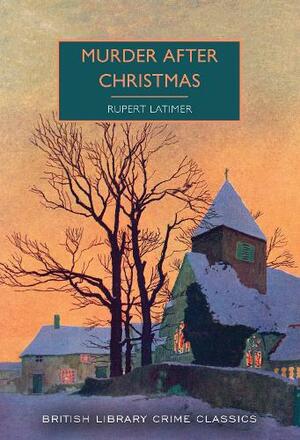
Review 2519: Murder after Christmas

There’s nothing like a nice, cozy mystery to read at Christmas time. This one is so cozy, in fact, that you don’t want any of the characters to be murderers. And what better day to post the review of a book called Murder after Christmas than New Year’s Eve?

When Rhoda Redpath invites her eccentric, elderly, very wealthy stepfather to spend Christmas, none of the Redpaths expect him to come. After all, he has never come before. Uncle Willie is nearly 90 and has lived a rambunctious life, so there are lots of people who want to meet him. Thus, when he agrees to come, the Redpaths decide to throw a real blowout, a Christmas Tree on Boxing Day, and invite everyone.

Once he arrives, his behavior is a bit odd. He eats a lot, stuffing down loads of mince pies and chocolates even though it is wartime. He gets the order of his wives mixed up, and all the Christmas packages disappear. He also starts writing his memoirs, so they have to hire a secretary.

During the party, he is hardly to be seen except when he appears dressed as Santa to pass out the packages. Frank Redpath, the host, also appears as Santa, but having been upstaged by Uncle Willie, his appearance is a bust. Then the next morning, Uncle Willie is found frozen stiff out by the snowman, still in his Santa suit. Was it a natural death or did someone murder him? When everyone learns that his wife died on Christmas day, the timing becomes very important.

Uncle Willie is found to have laudanum in his system. Nevertheless, the coroner’s hearing finds the cause of death accidental, assuming the batty old man took an overdose. Inspector Culley isn’t quite sure, so when Frank and Rhoda Redpath ask him to stay and figure out what really happened, he agrees.

Inspector Culley’s clue collection involves lots of mince pies—sewn into a chair cushion, eaten before Christmas, eaten after Christmas, packages hung from the ceiling, chocolates hidden in the snowman, and a turkey in the wardrobe—among other things. The whole thing is ridiculous and hard to keep track of, so I just went along for the ride.

Lots of fun, this one. I’ll never look at mince pies the same again.

Related Posts

The Iron Clew

Who Killed Father Christmas?

Silent Nights

Review 2499: Novellas in November! Highland Fling

I read Highland Fling to fill a hole in my Century of Books project but found it also qualifies for Novellas in November!

The novel begins with Albert Gates, who almost on a whim, moves to Paris to become a painter. There, he at least seems serious about it and actually arranges a showing at a gallery in London before returning home to arrange his show.

Now the point of view shifts to that of Jane Dacre. She has been spending time with her married friends, Walter and Sally Monteath, who are having difficulty living on their incomes, Walter, a poet, apparently being unable to hold a job. The Monteaths are asked to travel to Scotland to host a house party at Dulloch Castle, Lord and Lady Craigdulloch having been called out of the country. They are not excited about it but agree thinking it will be a good way to save money. They invite Jane and Albert.

The rest is a no-holds-barred satire of country house parties, sporting people, Scottish customs, and surprisingly, the young people themselves. In Scotland, Albert comes off as an intellectual snob, his remarks rude and his likings absurd, his outfits unsuitable and ridiculous. (He reminded me of an obnoxious artist character in Angela Thirkell’s series, but try as I might, I cannot figure out which book he appears in. If anyone knows who I’m talking about, please tell me.)

Nevertheless, Jane falls in love with him and everything he says is wonderful. This plot point may be explained because Mitford herself fell in love with a young man on a similar Scottish visit, and they eventually split, possibly because he was gay.

This novel seemed a lot less polished than Mitford’s later ones, but it is her first. The caricatures are very broad, and the supposedly bright banter seemed puerile. However, there are some funny moments here, the description of Albert’s art being one of them.

Related Posts

The Pursuit of Love

Love in a Cold Climate

Pigeon Pie

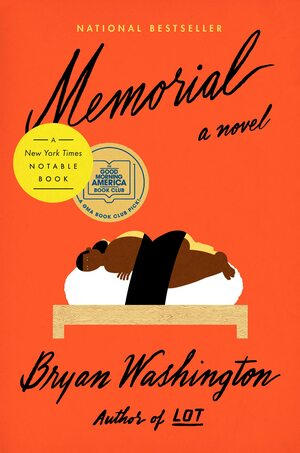
Review 2481: Memorial

Benson is a young Black gay man living in Houston with his Japanese boyfriend Mike. When Mike’s mother is due to arrive for a visit for the first time in years, Mike tells Benson that his father is dying and he’s going to Osaka to be with him, leaving his mother with Benson, who has never met her before.

While Benson navigates the situation with Mitsuko, Mike’s mother, he also considers his relationship with Mike, which has been deteriorating lately. For his part, Mike must work through his resentment that his father deserted him and his mother when he was a teen. That, and Eiju’s general prickliness.

This novel explores the difficulties both men have had with their families and their relationships with each other. Each man also tentatively begins getting to know another gay young man.

Although this novel is supposed to be funny, the humor went right over my head. I found it perceptive and sometimes touching, although I am not a fan of explicit sex scenes. I read it for my James Tait Black project.

Related Posts

Real Life

Edinburgh

Murmur

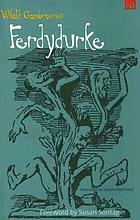
Review 2448: Ferdydurke

I thought that Ferdydurke would be something different that I could read for the 1937 Club, but I couldn’t bring myself to finish it. When I returned to it, I still couldn’t make any headway. I didn’t finish it but read about 70 pages.

The unnamed narrator is turned from a middle-aged writer into a juvenile boy by an old schoolmaster and forced to go back to school. The sense of humor is juvenile, jokey, and forced, and I didn’t think it was funny. I quit reading during the mock introduction to a story (the first of two, apparently) that Gombrowitz chose to interrupt the flow of the novel. Not that the flow was very interesting.

Gombrowitz uses a Polish word, “pupa,” which means the butt or core of the body, to signify the concept of infantilization. He uses the word so often that I never wanted to hear it again.

This novel is supposed to be a masterful satire, but I couldn’t stand it.

Related Posts

The Finkler Question

Quichotte

The Broom of the System

Review 2341: #1937Club! Beginning with a Bash

I really enjoyed reading Alice Tilton’s The Iron Clew a few years ago for the 1947 Club so when I saw that Beginning with a Bash qualified for the 1937 Club, I was delighted. And this novel proved to be as much of a romp as the other.

This year, because I had so many previous reviews for books published in 1937, I did a separate posting. You can see that list here.

Beginning with a Bash is Tilton’s first book featuring Leonidas Witherall, the ex-teacher who looks just like William Shakespeare, so that his friends call him Bill. The novel begins with Martin Jones fleeing the police down a Boston street on a wintry day, clad inappropriately in flannels and carrying a set of golf clubs. He takes refuge in a used bookstore, where he finds Leonidas, his ex-teacher, as well as Dot, an old friend and new bookstore owner. There Martin explains that after he got his dream job at an anthropological society, $50,000 in bonds disappeared. (In a nod to Bookish Beck and what she calls book serendipity, this is the second book I’ve read in a month that involved stolen bonds.) Even after Martin was proved innocent, his boss John North fired him. He has lost his home, got accidentally mixed in with a demonstration by Communist sympathizers and got arrested again, and is a vagrant, so when someone snatched a lady’s purse, the police thought it was him.

Martin is hiding out in the bookstore when he discovers John North dead in the back, having been bashed over the head. The police naturally arrest Martin for murder. However, Leonidas notices that on that same morning two different customers came in looking for volume four of the same obscure book of sermons, and John North was one of them.

Leonidas decides that there’s nothing for it but that he and Dot must figure out who killed John North so that Martin can be set free. In no time at all, they have accumulated helpers in the form of North’s maid Gerty, her gangster boyfriend Freddy, and the indomitable widow of the governor, Agatha Jordan. They blithely engage in house breaking, vehicle theft, and even kidnapping while being chased around by other gangsters and hiding from the police. And let’s not forget that aside from stolen bonds, the story involves secret passageways, gun battles, and capture. All of this is told in a breezy style with lots of humor. It’s a totally improbable story but lots of fun.

Related Posts

The Iron Clew

The Circular Staircase

Partners in Crime

Review 2294: Hotel Silence

Jónas Ebeneser has begun to think his life has no meaning. His wife Gúdrun has divorced him, and recently she told him his daughter Gúdrun Waterlily isn’t his. Aside from getting a lily tattooed on his chest, hanging out with his neighbor, and visiting his senile mother, he hasn’t been doing much, except fixing things, which he is good at.

He decides to kill himself, but he is worried that Gúdrun Waterlily will find his body. So, he decides to travel to a dangerous foreign country, feeling sure he can find a way to die. He travels to an unnamed country where a war has just finished, taking a shirt, his tool box, and his old diaries, and checks into Hotel Silence, formerly occupied by the famous and now run down with three guests.

This quietly quirky novel is another joy from Ólafsdóttir. It’s at times serious and sad but full of hope.

Related Posts

Miss Iceland

Pastoral

This Is Your Life, Harriet Chance!

Review 2272: The Other Day

The Other Day is Dorothy Whipple’s charming memoir of her childhood in Blackburn, starting when she was very young until she was about 12. She clearly has a vivid memory of such things as her inability to understand when someone was teasing her, the ways she misunderstood things, and her great ideas based on childish misconceptions.

Her experiences of school were especially unfortunate. She was hopeless at mathematics, and her math teacher at her first school ridiculed her mercilessly until she “cheated” by claiming to get two answers right on a quiz. Later, she was entered into a convent school and became confused about what she was told about religion.

Most of her stories, whether happy or not, reflect a happy childhood, especially when the family later takes a cottage. Her memories reflect a lot of humor even though she seems to have been a serious child.

Related Posts

Someone at a Distance

Young Anne

Greenbanks

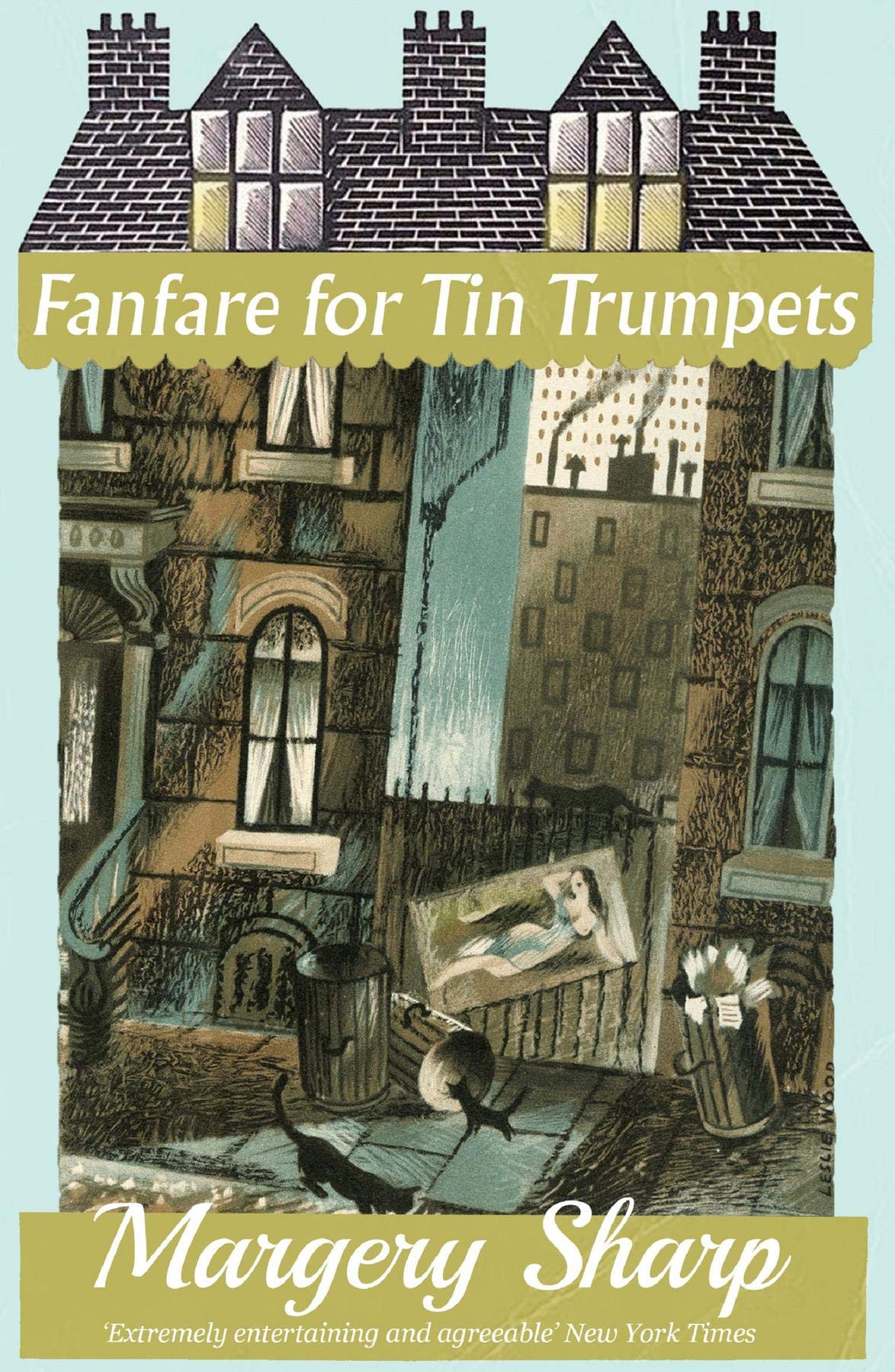
Review 2269: Fanfare for Tin Trumpets

Young Alastair French is offered a place in his family’s stationers business, but he decides to take a room in northwest London with his friend Henry, who is going to be a student. Alastair has £100, and he figures he can support himself for a year while he becomes a writer.

Alastair and Henry move into an apartment building with an assortment of friendly neighbors, particularly Winnie Parker, who is always surrounded by young men. Although he starts a novel, Alastair decides to become a playwright mostly because plays are shorter. He doesn’t do much work but he does write up a scenario.

Then he meets Cressida Drury, an actress, and is immediately smitten. She returns some of his interest when she learns he is a playwright, but it’s hard to tell how much, and he didn’t think of dating when he made his budget.

This is a frothy, funny novel about youthful optimism and first love. It’s a lot of fun.

Related Posts

Harlequin House

Rhododendron Pie

The Foolish Gentlewoman

Review 2255: Introduction to Sally

Ever since Sally Pinner was very young, her parents have tried to keep her isolated. That’s because, although she is obedient and good, she is the most beautiful creature anyone has ever seen. Crowds gather when she goes out, and Mr. Pinner views the extra profit he makes when she helps him in his small grocery store as dishonest.

After his wife dies, Mr. Pinner is at his wit’s end trying to protect her in London, so he swaps stores with a man who lives in the middle of nowhere. This plan seems to work very well at first, most of their neighbors being widows and spinsters, but Mr. Pinner gets a shock after Christmas. He lives only ten miles from Cambridge. Term has been out, but as soon as it starts, the village fills up with young men.

Jocelyn Luke, a young man with a promising future in the sciences, spots Sally and immediately loses his head. He decides to marry her, throw up his university career, and go work in London as a writer. When Mr. Pinner hears the word “marry,” he hastily agrees, because other men have wanted something from her, but it wasn’t marriage. Soon poor Sally finds herself married to a stranger, who quickly realizes that her accent and her way of expressing herself are not going to impress his mother. So, he begins trying to get her to say her h’s. Everyone she meets has plans for Sally, but no one bothers to ask her what she wants.

This novel is played mostly for laughs, but it has some serious messages about the treatment of women and people’s view of women. A Pygmalion-like story where the girl to be transformed has no aptitude for change turns that idea on its head. Chaos ensues.

I received this book from the publisher in exchange for a free and fair review.

Related Posts

Expiation

Cluny Brown

Sally on the Rocks

Review 2254: #1962 Club! The Reivers

The Reivers is William Faulkner’s last novel, written in 1962, which I chose as my last selection for the 1962 Club. Unlike some of his more famous novels, it is told straightforwardly by its main character, Lucius Priest, as a grandfather telling a yarn about his childhood to his grandson. I believe Faulkner wrote this novel, which reminded me of Huck Finn, for pure fun.

Key to the story, which is set in 1904 when Lucius is 11, is Boon Hoggenbeck, an overgrown man-child who works for Lucius’s grandfather, referred to as Boss. Lucius’s grandparents and parents have no sooner departed for the funeral of Lucius’s other grandfather than Boon decides to take Boss’s brand new automobile and Lucius to Memphis, both sort of colluding in this misbehavior without actually discussing it. On the way there, they discover that Ned, Boss’s Black coachman, has hitched a ride with them by hiding under a tarpaulin.

In these early days of cars in Mississippi, the trip to Memphis is in itself an adventure, but things heat up when Boon delivers himself and Lucius to a whorehouse (although Lucius calls it a boarding house) where Boon has a favorite girl, Miss Corrie.

A bunch of colorful characters appear, including Otis, a boy described as having something wrong and who you don’t notice until it’s almost too late. But the story really kicks in when the miscreants learn that Ned has traded Boss’s automobile for a horse that he plans to race against another horse that already beat it twice.

I wasn’t sure this was going to be my kind of story, but mindful of the time (it is definitely not politically correct in so many ways), and I mean 1904 not 1962, it is funny and contains some philosophizing about right and wrong.

Related Posts

The Hamlet

The Town

The Mansion