Review 1870: Absent in the Spring

For some reason, I always thought that the novels Agatha Christie wrote as Mary Westmacott were romance novels. Absent in the Spring, however, is a character study with an edge, reminding me more of some of the novels of Elizabeth Taylor.

Middle-aged Joan Scudamore gets stranded for several days at a guest house on her way from Baghdad to London. Before this happens, there is a revealing encounter between her and an old school friend, Blanche Haggard. Joan is judgmental toward Blanche, thinks she looks old and untidy and blames her appearance on the unfortunate choices she has made in life. Blanche cheerfully admits her bad choices but says she has enjoyed her life. She also hints at something about Joan’s daughter Barbara. We realize we like Blanche more than Joan.

During the five days Joan is stranded, she begins reconsidering her self-satisfied attitude, realizing some truths about herself and her family that she has hidden from herself. It is clear to the reader that she has bullied her husband and children, but she sees her behavior as doing her best for them. She thinks she has helped them to happy lives, but she has tried to make them all do what she thinks is right.

The big question is whether Joan can change her attitude. Let’s just say the novel is much more in the Realism school than Christie’s mysteries.

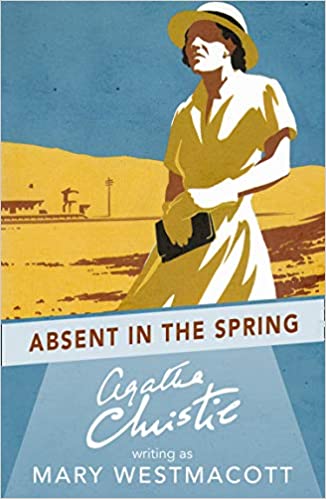
And by the way, let me just state my objection to this book being relabeled under Christie’s name. On the cover of my edition, the Christie name is more noticeable than Westmacott. Although I see no harm in acknowledging somewhere that they’re the same person, this is a marketing ploy that I don’t agree with. She wrote the book under the name Westmacott, so that should be the predominant name.
Related Posts

Appointment with Death

A View of the Harbor

Tales from the Queen of the Desert

Review 1652: The Silk Roads: A New History of the World

In the opening of The Silk Roads, Peter Frankopan talks about his uneasiness with the narrow focus of his historical studies in school, to Europe and the countries affecting Europe. This struck a chord with me, because I remember discussing this with my father when I was in high school. “Why don’t we learn about China or Japan?” I remember asking, and I didn’t even think of Central Asia or the Middle East. So, The Silk Roads seemed as if it would be very interesting to me.

Frankopan shows that while Europe was a backwater, the countries of Central Asia and the Middle East were vibrant with trade, of goods, culture, and ideas. His thesis is that this area of the world has long been its heart and is becoming so again.

The subject matter of this book is interesting, in a way that changes one’s preconceptions. Frankopan’s writing style, though, is clear but very matter of fact, with no attempt to be stylistically interesting or eloquent.

Although I’m sure this is a simplistic statement, it seems as if there are two ways of approaching historical content. One is to relate it more as a series of stories. The other is to throw in every fact that supports your thesis. Unfortunately, at least the later chapters use the second approach, making the last few chapters sort of a slog for me. For example, most of the last chapter is just lists to show the ways Central Asia has become wealthy. I believe that Frankopan’s ideas are important, but I sometimes found this book putting me to sleep.

The irony is that Frankopan’s book is, after all, westerncentric, especially the last half, which focuses on the mistakes England and then the U. S. made in the Middle East.

Related Posts

The Great Game: On Secret Service in High Asia

The Great Railway Bazaar

Tales from the Queen of the Desert

Day 884: Tales from the Queen of the Desert

Cover for Tales from the Queen of the DesertTales from the Queen of the Desert is a set of excerpts from two books by a remarkable woman, Gertrude Bell. Bell was a travel writer, diplomat, linguist, archaeologist, even a spy during World War I. She was widely regarded as an expert on the Near and Middle East and helped establish the country of Iraq.

She wrote the first book, Persian Pictures, after she visited her uncle in Persia (modern-day Iran) in 1892. She was very observant, and whether she is describing the landscape, the bazaar, or her impressions of Tehran, her descriptions are so vivid that it’s possible to imagine exactly what she saw.

In this book, she is sometimes a little snide, in a superior sort of way, although sometimes funnily so, as when she reports her impressions of the famous Peacock Throne of the Shah. At first she is astounded when she realizes that every inch of the room, including the carpet, is encrusted with jewels. But then she notices other objects among the jewels—patent medicine pills and toothbrushes, for example, which are also treated as treasures. As a final touch, she notes that the room is lined with boxes, which turn out to be music boxes. She understands that the Shah likes to turn them on all at the same time.

Some of her observations resound strongly even today. For example, at the beginning of the first chapter, she describes entering Tehran from the west gate. From that side, the city at the time was relatively unpopulated, the desert creeping in. But by the east gate, the town was vibrant and full of people. She concludes, “The East looks to itself, it knows nothing of the greater world of which you are a citizen, asks nothing of you and your civilization.”

Syria: The Desert and the Sown was published in 1907 after what was apparently Bell’s second trip to Syria, as she references a visit five years before. In this book, although she visits some of the area’s most important cities, the excerpts concentrate more on her travels in the hinterlands, where she meets many interesting people and examines archaeological sites. She also has another errand, which she does not discuss.

The excerpts from this book seem more fragmentary, for she begins chapters in different locations than she left off. Again, her descriptive powers are notable. By now, she gets by very well in Arabic and has studied the customs and courtesies of the area. Her attitude of slightly amused superiority is gone.

In both books, Bell’s writing is almost poetic at times. It’s easy to feel the romance and dangers of the East. There is nothing like some books for taking you to another place and time.

I received a copy of this book from the publisher in exchange for an honest review.

Related Posts

The Cruelest Journey: Six Hundred Miles to Timbuktu

The Great Game: On Secret Service in High Asia

Wild

Day 503: Tomorrow There Will Be Apricots

Cover for Tomorrow There Will Be ApricotsBest Book of the Week!
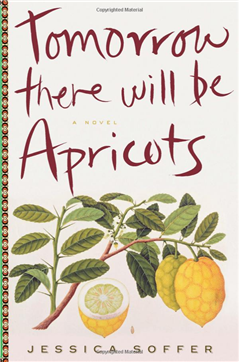
Tomorrow There Will Be Apricots is a brilliant, touching novel about the complexity of human relationships and the longing for love and acceptance. It is also a mouthwatering novel centered around food and the love of cooking. (I have no idea, though, why lemons are on the cover instead of apricots.)

Lorca is a teenage girl who yearns for love and affection from her mother Nancy. Nancy is a noted chef who remains emotionally aloof, so Lorca tries to please her by cooking food that she likes. The two live in a small New York apartment with Nancy’s sister Lou, who seems jealous of any attention Lorca gets from Nancy.

Lorca cuts herself for release, because something feels better than nothing. When she is caught doing it at school, she is expelled for a week. Instead of getting Lorca help, her mother informs her she is sending her away to boarding school.

One night Lorca overhears Nancy tell Lou that the best food she ever ate was masgouf at a restaurant that has since closed. Lorca believes that if she can learn to cook that dish for her mother, she won’t be sent away. So, she begins trying to find out about the restaurant with the help of her friend Blot.

Victoria narrates the novel in alternate chapters with Lorca. She is an old Jewish woman who fled Iraq with her husband Joseph when they were young. The two used to own and run the restaurant, which they closed when Joseph became ill. He dies early in the novel.

Victoria is full of regret, because she was so afraid that Joseph would love their child more than her that she insisted upon giving up their daughter for adoption when they were young and refused to have another child. Now she feels she deprived Joseph of part of his life and wants above all things to find their daughter. When she first sees Lorca, she is sure she is her granddaughter, and Lorca, whose mother was adopted, soon believes Victoria is her grandmother.

Whether this is magical thinking or not you can find out by reading the novel. It is ripe with the flavors and scents of the Middle East. This novel will touch you. It will also make you want to run out and eat some Middle Eastern food. Oh, and the recipe for masgouf is included.