Review 1799: Summer Will Show

I have enjoyed the two other books I read by Sylvia Townsend Warner, but I am not as sure how I feel about Summer Will Show. According to the Introduction by Claire Harman, the two main characters bear a strong resemblance to Warner’s real-life companion, Valentine Ackland (Sophia) and herself (Minna). This may be the problem I have with this novel, because, as with Vita Sackville-West’s Challenge, depicting a semblance of her own true-life relationship, I think perhaps the closeness of the relationship inhibits the writing. In this case, I didn’t really get the attraction between the two women. It didn’t seem convincing.

in 1848, Sophia Willoughby has been running her estate and raising her children on her own for some time. She has long tolerated her husband’s affairs, but when she hears of one with Minna Lemuel, she is enraged. Minna is famous as a sort of actress/prostitute/mountebank, and she is not only unattractive but older than Sophia. Sophia tells her husband Frederick he can stay in Paris.

Although Sophia is an extremely competent manager, she is impatient in many ways with her woman’s role. She wants to live a free life. She is not happy in society and has no friends. Although an attentive mother, she thinks her children are too soft and doesn’t coddle them. Then a mistaken attempt to toughen them up ends in their deaths.

With no one to care for, Sophia decides to go Paris and talk her husband into having another child with her. She arrives there as the Parisians are preparing for another revolution.

In searching for Frederick, Sophia meets Minna and is immediately captivated. In a short time, she is caring for her instead of a new child. Minna is a revolutionary, however, and although Sophia is skeptical of the movement, whose advocates seem to hang around Minna’s flat and do little, she is slowly drawn to Communism. In the meantime, Paris is starving.

Aside from what I felt was an unconvincing love affair, I wasn’t really interested in the revolutionary setting or the turn to Communism, which wasn’t very coherently explained. I was also appalled by Sophia’s treatment of Caspar, her husband’s illegitimate half-caste son. So, not so excited about this one.

Lolly Willowes

The True Heart

Challenge

Review 1676: The Last of the Wine

It’s the fifth century BC, and the Peloponnesian War has been going on as long as Alexias can remember. As a boy almost reaching manhood, he is more interested in his training as a runner and the teachings of Sokrates. He is often at odds with his father, who has a poor opinion of the Sophists, in which group he includes all the philosophers. Alexias is a beautiful boy who fends off in disgust the advances of his father’s friend Kritias, but he eventually falls in love with Lysis, a man about 10 years older than he, and they form a fast friendship.

Things change as his father Myrom is dispatched to fight against Syracuse. The city of Athens has approved an attack proposed by the charismatic, mercurial Alkibiades. Then, shortly before the fleet is due to leave, someone destroys all the Herms in town, and Alkibiades is accused of this impious act. He leaves with the fleet and is found guilty in his absence without a trial, so he flees, leaving the fleet without the only leader who could have prevailed. Myron is sent with the second wave of warriors.

Before Alexias has even reached his official manhood, he goes off with Lysis to fight Spartans encroaching into the Attican farmlands. The Spartans attack every year to steal or spoil the harvest. The novel follows the two in war, under siege, in famine, and in civil conflict through 10 turbulent years in the history of Greece.

As usual, Renault’s novel is meticulously researched and elegantly written. After so recently reading her Alexander trilogy, though, I began to feel a sameness about her writing. The narration from book to book sounds the same to me, not like different characters (except the one narrated by the Persian boy), and she examines the same themes in Greek culture, although the books are set in different times. Maybe I’m just a little tired of ancient Greece. I read this book for my Classics Club list.

Related Posts

Fire from Heaven

The Persian Boy

Funeral Games

Review 1645: The 1936 Club! Nightwood

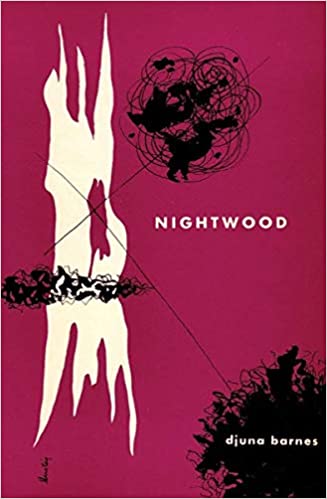
When I looked for books to read for the 1936 Club, I picked a couple of rereads, as I usually do, but also tried to find one I hadn’t read before. That novel was Nightwood, which I had heard of for years.

T. S. Eliot, who wrote the original Introduction and had a great deal to do with its publication, said that it would “appeal primarily to readers of poetry.” That comment struck dread into my heart, because I am not a big poetry reader. And indeed this is a difficult novel.

The plot is relatively slight. Felix, an Austrian Jew and pseudo-baron, marries Robin Vote because he wants a son to pass his heritage to. Robin is an enigma whom we only see through the eyes of those infatuated with her. She is boyish, and the Doctor, an intersex character who is also an enigma, implies that she is also intersex. Robin seems to view motherhood with horror, so she leaves Felix with his son and takes up with Nora, who is madly in love with her and spends most of her time dragging her, dead drunk, out of sleazy Parisian nightclubs. Then Robin dumps Nora for Jenny, a woman who always wants what other people have.

All the characters are distraught.

The novel is most known for its style and language. It is crammed with images and metaphor, but it is difficult to understand what the characters are talking about, especially the Doctor. I felt like I understood him less than half the time.

The novel seems filled with dread, as it might well in pre-World War II Europe, even though its characters’ preoccupations are not political. I found it disturbing, thought-provoking, and astonishing.

Related Posts

The True Heart

Fidelity

My Husband Simon

Review 1332: Fire from Heaven

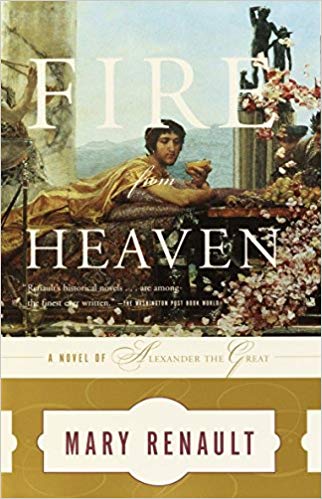
Cover for Fire from HeavenIt seems like I’m in the middle of a lot of trilogies lately. I just wrote up my review of the last of Gerald Durrell’s Corfu Trilogy (coming soon) and in two weeks the review of the first book in Olivia Manning’s Balkan Trilogy will appear. I actually just finished reading the second book in that trilogy (review coming in a few months) and liked it enough to purchase her Levant Trilogy. Now, here’s the beginning of another trilogy. Fire from Heaven is the first book in the great Mary Renault’s trilogy about the life of Alexander the Great. Renault, of course, is known for the historical accuracy, admired by authors and classicists, of her novels set in Ancient Greece.

Fire from Heaven follows the life of Alexander from the age of four to nineteen, when he became king of Macedon. His life is plagued by the battles between his mother, Olympia, allegedly a sorceress, and his father, King Philip. Philip’s crime is to have taken additional wives, even though Olympia is at total enmity with him. She sees this as a mortal affront and teaches her children to hate him. She is also cagey about whether Philip is actually Alexander’s father, hinting that he is not.

As Alexander gets older and begins learning about fighting and diplomacy from his father, they begin to understand each other. Olympia’s machinations and Philip’s womanizing continually create problems and misunderstandings, however.

An important person to Alexander is his friend Hephaistion, who becomes his lover. The two are inseparable, and Alexander is fascinated by the Sacred Band of Thebes, a group of soldiers composed of pairs of lovers, said to fight the more doggedly because of it.

This novel is rich in the intrigues among the city-states of the area, the myths surrounding Alexander’s life, and the depth of characterization. I read it long ago but found I didn’t remember it well and am pleased to have begun rereading this trilogy.

Related Posts

The Silence of the Girls

The Secret Chord

Dictator

Day 1211: Days Without End

Cover for Days Without EndI so much enjoyed Sebastian Barry’s On Canaan’s Side when I read it for my Walter Scott Prize project that I was excited to see his Days Without End on the shortlist, too. Again, his protagonist is an Irish immigrant to the U. S., but this time a man, Tom McNulty.

Tom and his best friend, John Cole, enlist in the army sometime in the mid-nineteenth century. Their job in Daggsville has disappeared with the miners. That job, which they have had since they were boys, was to dress up like women and dance with the miners.

Tom and John enjoy the army but have some difficult experiences when their unit is sent west to deal with Native Americans. After some brutal experiences, they leave the army, taking with them a little Native American girl they call Winona. Although she is purportedly their servant, they treat her as a daughter.

Tom and John are lovers, and they have adventures that have raised some skepticism among other bloggers, particularly when Tom goes back to cross dressing to entertain miners in Grand Rapids. Some commenters did not believe this act would be accepted so easily during that time. I’m not sure what I think about that, except that Barry presented it in a convincing way.

In Tom, Barry creates an engaging character, and his descriptions of events, many of them horrific, as Tom and John go from serving in the Indian Wars to the Civil War, is masterful. However, none of the other characters in the novel were fully developed, including John.

This lack, and my doubts about the probabilities of some of the situations in which the pair find themselves lessened my enjoyment in this novel. It is certainly worth reading, but I didn’t like it as much as On Canaan’s Side.

Related Posts

On Canaan’s Side

Neverhome

A Place Called Winter

Day 1207: White Houses

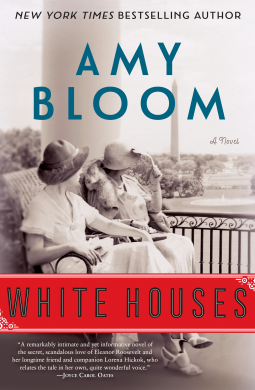
Cover for White HousesAmy Bloom’s latest novel, White Houses, leads me to a topic that I’ve mentioned before. I think it is important, when writing fiction about real people, to keep their characters true to that of the original person. Historians disagree about whether Eleanor Roosevelt’s warm friendship with Lorena Hickok was a full-blown lesbian affair. Those who believe it was, base their supposition on Eleanor’s exuberant letters. Those who do not, base it on Eleanor’s dislike of being touched. I think that’s significant, and I think people these days misinterpret the tone of letters from earlier times, when friends expressed themselves more affectionately than we do.

Amy Bloom has chosen to believe that the women’s relationship was a lesbian affair, and that’s what White Houses is about—and all that it’s about. It is written from the point of view of Lorena Hickok—or Hicky, as she was called.

link to NetgalleyThe novel paints a relatively convincing portrait of Eleanor, although I don’t buy the bed bouncing, and it is a sad story and ultimately touching. Its premise, though, makes me uncomfortable for the reasons stated above.

Franklin does not appear in a positive light, and in terms of their marriage, he should not. The character study of Hicky as a downright, plain-speaking reporter who gave up her career for love is a good one, and one I can believe.

Related Posts

Lucky Us

No Ordinary Time

Rules of Civility

Day 1178: Do Not Say We Have Nothing

Cover for Do Not Say We Have NothingBest of Five!
When Balzac and the Little Chinese Seamstress was so popular, I was not a fan. I disliked how the two male college students patronized and abused the girl, even though she won through in the end. I also vaguely felt that the events of the Chinese Cultural Revolution were being trivialized, even though I was not really sure about the facts. Reading Do Not Say We Have Nothing confirmed that I was right.

Marie is a young immigrant Chinese girl living in Vancouver, British Columbia, in 1991. She and her mother are confused and grieved, because after the family escaped from China, her father, Jiang Kai, first deserted them to move to Hong Kong and later committed suicide.

Marie’s mother receives a call from China, from Ling, the wife of Jiang Kai’s beloved teacher, Sparrow. Ling says that her daughter, Ai-Ming, has had to leave China because of involvement in the Tiananmen Square protests, but she has missed the amnesty offered by the U.S. Ling asks that they give Ai-Ming a home.

Ai-Ming becomes an older sister to Marie. She tells her stories about her family—her great uncle, Wen the Dreamer, who courted her aunt Swirl with chapters from a forbidden book called the Book of Records; her grandparents, Big Mother Knife and Ba Lute, wandering musicians; and her father Sparrow, a composer of music. Ai-Ming tells of the days of her father, her cousin Jhuli, and Marie’s father, Jiang Kai, at the Shanghai Conservatory. Shadowing all their lives is the Cultural Revolution and its horrible excesses—murder and exile of intellectuals, forced denunciations of relatives, ransacked homes, humiliation and ruining of the innocent.

At first, I was irritated by the style of Ai-Ming’s story, which feels a little like a fairy tale, but it was not long before I was completely absorbed in it. The novel is a heart-rending tale about identity, music, love, and political destructiveness. This was another excellent book that I read for my Man Booker Prize project.

Related Posts

Red Sorghum

The Kitchen God’s Wife

Shanghai Girls

Day 1100: The Stranger’s Child

Cover for The Stranger's ChildI had the oddest experience with The Stranger’s Child. Although it was well written and sounded like something I would be interested in, for a while every time I started to read it, I fell asleep. There is very little movement to this novel, which isn’t necessarily a bad thing, but the end of it had me wondering what the point of it was.

The novel is multigenerational, beginning in 1913 and ending in 2008. In 1913, Daphne Sawle, who is 16, is attracted to her brother George’s friend, Cecil Valance, down for a visit from Cambridge. Cecil is an aristocrat and a poet. Unbeknownst to naive Daphne, he and George are having a wild affair.

The next section of the book takes place ten years after World War I. Cecil died in the war, and the family is dedicating a memorial to him. The family includes Daphne, as she has married Cecil’s younger brother, Dudley, and they have two children. However, she is in love with Revel Ralph, a set designer for the theater.

By far the bulk of the novel is set in the 1960’s and 70’s and is from the point of view of Paul Bryant. In the 1960’s, he is a shy bank clerk. He has become involved with the family through his boss, who has married into it, and through his affair with Peter Rowe, a schoolteacher at Corley House, which used to be the Valance home. Cecil is now regarded as one of England’s minor poets.

Ten years later, Paul is a biographer, determined to out Cecil as a gay man despite the claims of Daphne to have been his fianceé. It is unfortunate that I found this main character of the longest section to be so unappealing and completely focused on who was or was not gay, although I realize that the 1970’s was the time for that kind of revelation.

Part of my problem with the novel may have been the blurb, which really oversells aspects of the plot. For example, it says, “Over time, a tragic love story is spun . . . .” Well, there are several love stories that come out, but I wouldn’t call any of them tragic, and it’s actually difficult to tell which of them this comment refers to. One of the secrets is so understated during the novel that even though it is the last revelation, it seems anticlimactic. I suppose it’s supposed to be ironic that Paul is so focused on the possibility of one affair that he completely misses another.

Finally, this is a novel so focused on the sexuality of its characters that it gives the impression that the entire upper class male population of England is gay. We see a little into Daphne’s infatuations, but otherwise, only from the point of view of various gay men trolling for sex or obsessing about it. Those of you who know me will realize that I would have the same complaint if the sole focus was on heterosexual sex. So, not one of my favorites for my Walter Scott prize project.

Related Posts

Arctic Summer

A Place Called Winter

The Summer Before the War

Day 911: A Place Called Winter

Cover for A Place Called WinterI read A Place Called Winter for my Walter Scott Prize project, the second book I’ve read for the 2016 list. Like one of the other books I read recently for that project, Arctic Summer, it has as a major theme the main character’s homosexuality. However, I found myself feeling much closer to the characters and more interested in the plot of this novel than I did for Arctic Summer.

At the beginning of the novel, Harry Cane is being treated, or rather mistreated, in an asylum in Canada. Shortly thereafter, he is transferred to an experimental center that treats the patients much more humanely. We understand that Harry has committed a crime, but we don’t know what it is. Between short chapters about his life at the center, we learn what brought him there.

The story of Harry’s life begins when his wealthy father dies. His brother Jack is still in school, and Harry undertakes his education and expenses. Harry is a man of no occupation who feels that he would like one, but he doesn’t know what to do about it. He feels vaguely that he would like to work an estate or a farm but thinks he has to be born to it. A shy man with an occasional stammer, he likes reading and horses. Eventually, he marries a shy woman, Winnie, who informs him on their wedding night that she loves someone else. Nevertheless, he cares for his wife and loves his daughter.

An investment recommendation by his brother-in-law takes a large part of Harry’s inheritance, and Harry and his family are forced to move in with his in-laws. He is an innocent-minded person, so it is not until he meets an actor named Browning that he realizes he is homosexual. He begins an affair with Browning, but then disaster strikes. His affair is exposed to his in-laws by a blackmailer and Harry is forced out of the family. Even his brother Jack, whom he loves, is pressured by his wife not to correspond with him.

Now totally alone, Harry emigrates to Canada and ends up in Saskatchewan, which is just being opened to settlement by the arrival of the Grand Trunk Railway. On shipboard, he meets Troels Munck, who finds him a position where he can learn farming and then helps him purchase a homestead. Munck, though, is a bully, and from the moment Harry meets him, we know that relationship will not end well.

link to NetgalleyHarry finds that a farmer’s life suits him. He settles in, works hard, and makes friends. But we know where he is at the beginning of the book, so the tension builds as we find out how he got there.

Although the time spent to get him to Canada, where the book really captured me, seems a little long, by the time he gets there, we know Harry very well. He is a kind and polite person, but he earns our respect when he finds his niche. Eventually, I became deeply involved in his story. It was also interesting in its details of early homesteading and treatment of mental illness.

Related Posts

Arctic Summer

This Godforsaken Place

Giants in the Earth


Day 865: Arctic Summer

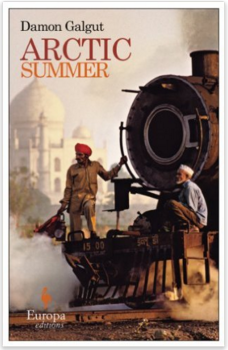
Cover for Arctic SummerFrom its description, I thought that Arctic Summer might be one of the most interesting books I’m reading from the Walter Scott Prize list. It is described as a fictional biography of E. M. Forster, particularly leading up to his publication of A Passage to India.

That is certainly the time period the novel covers, and A Passage to India is one of its preoccupations. But the novel spends most of its time on Forster’s obsession with his homosexuality and his desire for sexual experience. As I’m not all that interested in reading about anyone’s obsession with sexuality, this novel was not the best fit for me.

The novel begins in 1912 on Forster’s first trip to India. While he is there, he will visit a good friend, Masood, and he has hopes that his life will open up, particularly in regard to sex. At the age of 33, he is still a virgin, his fear of disgrace holding him back from expressing his sexuality at home. Perhaps in India he will have an experience, maybe with Masood, whom he loves.

Unfortunately, Forster, who goes by Morgan, has a tendency to fall in love with heterosexual men and prefers men from a lower class, so nothing quite works out the way he wishes. Even when he finally has some encounters, years later, what he is actually looking for is love, which he never finds. The novel follows him during the long gestation of his novel about India, back to England, to Alexandria during World War I, and back to India again. During this time, his most significant relationships are with two friends who do not return his feelings.

The novel is extremely well written, and Galgut deeply characterizes Morgan, if not the other characters. It did make me wonder if any person could be so relentlessly focused on sex, although of course he is also lonely. It also made me wonder how, if he really felt this unrelenting focus, he ever got anything written. Certainly this novel makes you feel for Forster—he was a sad man.

Related Posts

The Master

Under the Wide and Starry Sky

Studio Saint-Ex