Review 1511: Nocturnes

Nocturnes is a collection of five loosely linked short stories all on the themes of music and night. A few of them are linked a little more closely by repeating characters. All but one feature struggling musicians.

In “Crooner,” the unnamed narrator is an Eastern European guitarist eking out a living in Venice when he meets Tony Gardner, a once-famous singer his mother listened to. When Tony invites him to help serenade his wife, Lindy, he learns that Tony is so eager to make a comeback that he is willing to give up something he loves.

In “Come Rain or Come Shine,” Ray, a middle-aged English language instructor, is invited to stay with his old school friends, Charlie and Emily. Once there, though, he finds he’s been invited to be a negative contrast to Charlie, showing how much more successful Charlie is. He finds common ground with Emily only in their shared taste in music.

In “Malvern Hills,” a would-be singer-songwriter is staying with his sister and helping out at her café when he meets two professional musicians, Tibs and Sonja, on holiday. He unwittingly gets involved in the breakup of their marriage.

The narrator of “Nocturne” is a gifted saxophone player whose ex-wife and manager convince him that he would be successful if he wasn’t so ugly. Reluctantly, he agrees to have plastic surgery. In a hotel recovering from his procedure, he meets Lindy Gardner, also recovering from plastic surgery.

In “Cellists,” it is perhaps the same narrator from the first story who tells the tale of Tibor, a gifted young cellist he and his friends met seven years earlier. Tibor’s personality changes once he is taken under the wing of Eloise McCormack, who claims to be a virtuoso cellist.

This is a book that explores the place of music in each character’s life, and in some cases, the character’s commitments to music or to fame. Although there is a lot going on in these ultimately sad tales, they felt unsatisfying to me in some way. I felt that some of the situations were ridiculously unlikely, as well. This is a book I read for my James Tait Black project.

Related Posts

Obscure Destinies

In a Strange Room

Anything Is Possible

Review 1510: The Left Hand of Darkness

Best of Ten!
Genly Ai, an envoy to Gethen from the Ekumen, a league of other worlds, has been waiting for an audience with King Argaven XV of Karhide for two years. Although he does not trust Lord Estraven, Argaven’s prime minister, he has understood the prime minister was supporting his efforts to gain an audience. But during a state parade, Lord Estraven tells him it is not a good time.

Genly’s disappointment makes him doubt that Lord Estraven ever had good intentions. When Lord Estraven hints that Genly should leave the capital, Genly ignores him. Soon, he learns that Lord Estraven has been banished from Karhide upon pain of death.

King Argaven encourages Genly to travel around Karhide, and he does so. The planet of Gethen is an ice planet, formerly called Winter by Ekumen, and Genly is constantly cold. He has trouble understanding the Gethenians, who are androgynous; when they are in heat once a month, they take on whichever sex is opposite to that of their partner. Genly has a hard time adjusting to the feminine side of the Gethenians. For their part, they consider him a pervert for always, as they see it, being in heat.

Eventually, Genly decides to leave the more primitive, indirect Karhides for Orgoreyn, an apparently more civilized and direct country, where he is welcomed. This state is much more authoritarian. Whereas in Karhide his presence was known, in Orgoreyn it is being kept secret from all but the government. Soon, the situation takes a turn he doesn’t expect.

When I first read The Left Hand of Darkness years ago, I thought it was about the best book I had ever read. Reading it again, I see no reason to change my mind except to say that others stand up there with it.

It is written as a set of documents, Genly’s story mixed in with records from other envoys and stories from the myths of various cultures on Gethen. It manages to explore many topics with its theme of light and darkness, including the effects on our lives of different sexual orientations. It’s really a masterpiece.

Related Posts

Cloud Atlas

Stranger in a Strange Land

The Martian Chronicles

Review 1454: Milkman

Best of Ten!
Middle sister, the unnamed narrator in a novel where no one has a name, has a stalker. Actually, she has two. She lives in the 1970s in an unnamed city that is clearly Belfast, and at 18 she has no way to explain what is happening to her and no one to tell, anyway. The man she’s worried about is known as the Milkman, rumored to be a powerful renouncer-of-the-state. This stalking begins with him driving up next to her and offering her a ride. She knows not to get into his car.

That is all it takes for rumors to begin flying about that middle sister is having an affair with the Milkman. Eldest sister, egged on by her husband, who has been letching after middle sister since she was 11, arrives to berate her for this supposed affair with a middle-aged, married man.

But middle sister’s strategy for keeping safe in a dangerous world is to tell nothing about herself. That, and her mother’s constant queries about why she isn’t married yet, have caused her to keep secret her real relationship with maybe-boyfriend. It is the maybe part of this relationship that decides her not to tell maybe-boyfriend about the stalking either, when it progresses to the Milkman joining her while running and making clear that he knows every aspect of her life.

She does finally tell her Ma the truth, but her Ma is too busy upbraiding her for bringing shame upon the family with the affair and calls her a liar. So, middle sister is left to cope with her fears alone.

This sounds like a grim tale, and at some times it is, but it is told exuberantly, in a torrent of words, ideas, stories, asides, and circumlocutions. To give you an idea, about page 80 middle sister steps into an area called the ten-minute zone because it takes ten minutes to cross it. She describes the ten-minute zone and an explosion within it, then she goes into what she calls “the provenance of the eeriness of the ten-minute area” from which she relates a discussion with Ma about her asking weird questions, tells about her father’s history of depression and her Ma’s “hierarchy of suffering,” discusses her bafflement in “shiny people,” those who go around looking happy, finds the head of a dead cat and decides to bury it, compares cats and dogs and tells about an incident where the state killed all the neighborhood dogs, has another encounter with the Milkman and then with one real milkman, and so on until page 139, when she steps out of the ten-minute area. I would include an excerpt, but a short one would seem nonsensical and a long one would be, well, long.

Above all, the novel is funny, dazzling, gleeming. I was absolutely entranced by it. It is about more than middle sister and her adventures, it is about the effects on society of everyday terror, paranoia, gossip, constant attention to the behavior of your neighbors. This is a stunning novel that won the Booker Prize. It deserves it.

Related Posts

History of the Rain

After You’d Gone

Tell the Wolves I’m Home

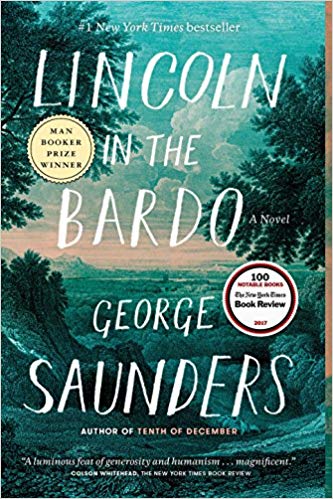
Review 1377: Lincoln in the Bardo

The title Lincoln in the Bardo is the first tip-off that this book is unusual, for it refers to a Tibetan concept of immediate life after death. The novel is set in a graveyard after the death of Abraham Lincoln’s son, Willy, and is narrated by a host of ghosts who don’t know they are dead and are clinging to their worldly concerns. It is also moved along by quotations, some real, some fictitious, by accounts of the time, letters, and historical accounts.

The ghosts in the graveyard are grotesqueries who physically manifest the obsessions they had in life. The two most important ghosts in the novel, for example, are Hans Vollman, who sports an enormous erect penis because he died before he could consummate his marriage; and Roger Bevins III, whose sensual nature is indicated by his multiple eyes, noses, and hands. Okay, this can be comic. It is certainly an amusing idea. But after a while, I began to miss the subtle humor that seems to have deserted us in recent years.

The thrust of the plot is that children aren’t meant to linger in the Bardo or terrible things happen to them. However, Lincoln arrives early in the novel to visit his son in his grief, and he says he will return. Vollman, Bevins, and their friend, the Reverend Everly Thomas, become determined to help Willy leave, and to do so they must get Lincoln to return to the tomb and release him.

This novel is wildly original. Aside from the characteristics I’ve mentioned, it is written more like a screenplay than a novel. It also resonates deeply in its themes of grief, Lincoln’s worries about the war, and the concerns of life affecting the afterlife. Still, I was repelled by how crude and crass it is at times. I also felt that the novel was much longer than it needed to be. You get the idea about the ghosts fairly quickly, but the supernatural chatter becomes boring after a while.

I read this for my Booker Prize project.

Related Posts

Team of Rivals: The Political Genius of Abraham Lincoln

The Second Mrs. Hockaday

Days Without End

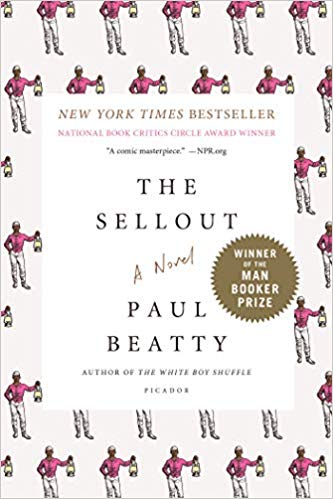
Review 1374: The Sellout

Really? This book won the Booker Prize? I know my sense of humor is getting to be out of date, and when I read on the blurb that the book was “biting satire,” I just sighed. There’s no subtlety in humor anymore, and this novel is a prime example. Its writing style is broad and hectic, like a really long stand-up comedy routine. I’m guessing you either love it or hate it.

The narrator, a black man whose name is Me, starts out the novel at the Supreme Court, where he is being tried as a slave owner and is getting a lot of hatred because of his race. He proceeds to tell the story of how he got there, spending lots of time getting to the crux of the story.

The beginning of the book, where he satirizes his upbringing as a subject of his father’s childhood development experiments, is over the top but amusing. When he introduces the character of Hominy Jenkins, the last surviving Little Rascal, his all-on employment of racial stereotypes (to make fun of them, of course) was too much for me. I quit about halfway, after he reluctantly made Hominy his slave.

Be warned that this novel makes extensive use of the N word. I’m not sure, but Beatty’s intent may be to desensitize us to it. If so, it didn’t work.

Related Posts

The Finkler Question

To Rise Again at a Decent Hour

The Good Lord Bird

Review 1319: The Lesser Bohemians

Cover for The Lesser BohemiansI found The Lesser Bohemians a difficult book to read, in more ways than one. Still, if you are willing to give it a try, you may find it rewarding. It won Britain’s oldest literary prize, the James Tait Black fiction prize, in 2017.

The narrator of the novel, whose name we don’t learn until the end, is an 18-year-old Irish girl who comes to London to attend drama school. She is naive and inexperienced, but she plunges right into a life of partying. Still, she has not yet accomplished what she wants to, losing her virginity.

Then she meets an older man in a pub. He is 38 and a well-known actor. They begin an affair that he makes clear is a casual one. Soon, however, she realizes she is in love with him. Darker times await.

One of the difficulties (but also joys) of this book is the writing style. Although the story is told chronologically, McBride writes in sentence fragments, smashes sentences together, shifts pronouns and verb tense, and plays with typography, leaving gaps between words and placing innermost thoughts in smaller type. Here, for example, is a paragraph about her first friendship.

Vaudeville she, drawing all around. Funniest. And good to found a friendship. At least she’s a side to go side by with to class. Vault a day then with its procession of self. What’s your name? Whereabouts are you from? Live close? I hate the announcing but new futures demand new reckonings so I shuffle around what I have. Not much, not much, only me. Far from exotic when there’s Spaniards and Greeks. And here the first Dane I’ve ever met. Australian girls. Not white or Irish. You mean English up North? I only crossed a sea. Speak French then? Amazing. Fluently? I’d love to slip my homogeneity but. On to the next class. Go.

Like the narrator, none of the characters have names until, toward the end of the novel, the narrator and her lover use their names in the text. This can make it difficult at times to tell which characters are speaking or being referred to. The shift to actual names signals a shift in clarity for the main character.

Another problem for some readers may be the rawness and explicitness of its sexuality and of some other subject matter. For we are dealing with two really damaged individuals. I had to laugh when I realized my library was shelving this novel with the romances. Trust me, this is not a romantic novel.

So, why do I say it is worth reading? For one thing, it has a great deal of energy that carries you along. Also, you come to know these characters, with all their flaws, and care what happens to them.

The novel shifts about 2/3 of the way through, when the man starts being honest about himself. One reviewer thought the novel sags a little here. Certainly, it shifts in style, and perhaps loses some energy, but I was interested in the story.

Perhaps I don’t believe the ending of the novel and what it promises after all the characters’ volatility. Still, I was touched by this book and thought it was well worth reading.

Related Posts

First Love

Dear Thief

All the Birds, Singing

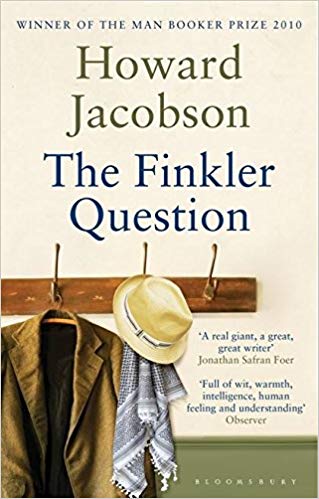
Day 1260: The Finkler Question

Cover for The Finkler QuestionHaving read Howard Jacobson’s J for my Booker Prize project, I was not looking forward to reading The Finkler Question for the same project. Since it won the award in 2010, I was hoping to like it better. I found it, however, very difficult to stay interested in.

Julian Treslove, the main character, is always expecting loss. He imagines himself holding the women he loves as they lie dying. I found him unbelievable and cartoonish.

Treslove has a long friendship with Libor, his former professor, and Finkler, an old school friend. Both of them are Jewish and recent widowers. Treslove, naturally lugubrious, has been hanging out with them while they grieve and argue endlessly about Jewishness and Israel.

I mean endlessly.

Treslove tends to make generalizations about Jewish traits and calls Jews “Finklers.” I ask you, who would do that?

Then one night on the way home from Libor’s house, Treslove gets mugged by a woman who says something to him that might be “You Jew.” After Treslove endlessly examines this event, I mean endlessly, he decides maybe he’s actually Jewish. He hopes he’s Jewish.

It doesn’t help that Jacobson tells this story using the same jokey, ironic tone that drove me crazy in J. I know that there are people who convert, but Treslove is such a ridiculous person I feel he’s there to be ridiculed.

Yet, I briefly became interested in him after he buckles down to become Jewish and meets a woman who seems suited to him. I could not say the same for Finkler, who belongs to ASHamed, Jews who are ashamed of the behavior of Israel.

I assume Jacobson is mocking the different characters and their ideas about Judaism, but no one in this book feels like a real person but Treslove’s girlfriend, Hephzibah. This novel really bugged me. I see it as the type of literary novel honored by the male publishing elite that no one actually likes.

Related Posts

J

The Fixer

The New Sweet Style

Day 1256: Bridge to Terabithia

Cover for Bridge to TerabithiaI read Bridge to Terabithia for the 1977 club (but forgot about it when I was posting for the club). It has become a classic book for preteens since its publication, but it was written after my time as a child, so I never read it before.

Jess is a ten-year-old boy from a poor rural family in, perhaps, Virginia or Maryland. He comes from a family of sisters, and his father works all the time, so he often feels isolated. It is almost time for school to start, and he has been practicing running all summer so he can win the races at recess.

A family moves in nearby, and he hopes they have a boy his age, but all they have is a girl, Leslie. She seems to be disposed to be friendly, but he has no use for a girl.

Then, at the races, when is ready to show everyone how fast he is, someone beats him. It’s Leslie.

Leslie and Jess become friends and create an imaginary world for themselves in a shack across the creek. The world is called Terabithia, and you can only get to it by swinging on a rope across the creek.

This is the kind of children’s book that has more to offer children than adults. I couldn’t help comparing it to The Secret Garden, which does a wonderful job of describing the garden, making it seem like a wonderland. There is no such magical description in this novel, which is more matter-of-fact, so it’s hard to understand the fascination of the kids’ made-up world. However, the novel did get me to cry without being manipulative. It deals with death and handles the subject very well.

Related Posts

The Secret Garden

The Invention of Hugo Cabret

Doll Bones

Day 1190: LaRose

Cover for LaRoseSet in 1999 on a North Dakota reservation, LaRose is about how a community, but in particular two families, are affected by a horrible accident. Out hunting a deer on his property, Landreaux Iron kills Dusty, the young son of his best friend, Peter Ravich, when Dusty falls out of a tree as Landreaux takes his shot.

To try to make amends, Landreaux, who has turned to the old ways to throw off addiction and straighten out his life, offers the Ravich family his own young son, LaRose, to raise. Nola Ravich, Dusty’s mother, is eaten up with hatred against the Irons, even Emmaline, who is her half sister. But having LaRose helps. Emmaline, however, can’t be expected to give up her son forever.

LaRose is the latest in a long line of LaRoses, all of whom had a special connection with the spirit world. LaRose finds himself able to help Nola and her neglected daughter, Maggie, even though he is only a small boy.

Another significant character is Romeo, who long ago was Landreaux’s best friend. He bears Landreaux a grudge because of an incident years before. Slowly, he works at his resentment despite the Irons having taken in his son Julius to raise.

Although I occasionally got distracted by how diffuse the plot is and how many directions it goes, in the main I enjoyed this novel. It isn’t nearly as depressing as a lot of Erdrich’s work, and it paints a powerful portrait of these two families. Dealing with forgiveness, of oneself and others, grief, guilt, and other human complexities, it is a strong novel.

Related Posts

The Round House

Shadow Tag

The Hour I First Believed

Day 1184: The Garden of Evening Mists

Cover for The Garden of Evening MistsBest of Five!
Yun Ling Teoh, a Malayan federal judge of Chinese descent, has decided to retire early. She has been diagnosed with a neurological ailment that will cause more and more frequent episodes of aphasia and will eventually destroy her language abilities. She decides to return to Yugiri, a Japanese garden in Malaya that she inherited from its creator, Aritomo.

On the advice of her friend Frederik, the owner of a nearby tea plantation, Yun Ling decides to record her memories. She begins in 1951, when she went to Aritomo to ask him to design a garden in memory of her sister, Yun Hong, who died in a Japanese labor camp during World War II. Yun Ling also was in the camp, and her hatred of the Japanese makes it difficult for her to ask for Aritomo’s help. But her sister loved Japanese gardens.

Aritomo refuses her request but makes her a different offer. If she will take on the job of apprentice, he will teach her enough to design her own garden. She decides to accept the offer, having quit her job as prosecutor.

It is a difficult time in Malaya. No sooner did the war end than the government began fighting Communist guerillas, who were attempted to take over the country. And Akitomo has his secrets. He came to Malaya before the war, having resigned as the Japanese emperor’s gardener, but Yun Ling occasionally hears that he played a role for Japan during the war. He had some kind of influence, because he saved his neighbors from the Japanese labor camps. Yun Ling, we find, has her own secrets.

The Garden of Evening Mists is the best kind of historical fiction, immersing me in its time and place while informing me of events I was formerly unaware of. I found it deeply interesting and affecting. The descriptions are delicate and evocative, and the characters feel real yet mysterious. This novel was part of both my Walter Scott Prize and Man Booker Prize projects, as well as the winner of the Man Asian Literary Prize. It is a powerful novel.

Related Posts

The Glass Palace

The Narrow Road to the Deep North

The Ten Thousand Things