Day 679: The Bees

Cover for The BeesThe Bees is a collection of more serious poems than those included in The World’s Wife, also by British poet laureate Carol Ann Duffy. This collection is more diverse in subject matter and quite varied in form, containing sonnets, haiku, free verse, and even drinking songs. And many of the poems are about bees.

In “Bees,” Duffy even presents her poems as bees: “brazen, blurs on paper,/besotted; buzzwords, dancing/their flawless, airy maps.” In this poem she finishes with “and know of us;/how your scent pervades/my shadowed, busy heart,/and honey is art.” My niece, a beekeeper, would especially appreciate that.

I understand that after Duffy’s mother died, she did not write for some time. Especially touching are some of the poems about her mother. In one, she gives her dying mother a last drink of water and remembers the times her mother brought her water when she was a child. In another, a remembered kiss from her mother after she was out in the cold as a child makes her think of kissing her dead mother’s lips.

Some of the mythological figures visited so vividly and amusingly in The World’s Wife, Sisyphus and Achilles among them, are revisited more seriously here.

The poetry is lyrical. It is sometimes harder to understand than the works in The World’s Wife, but it always sings.

Related Posts

The World’s Wife

The Greek Myths

The Selected Poetry of Edna St. Vincent Millay


Day 675: Amsterdam

Cover for AmsterdamThe Booker Prize people liked Amsterdam a bit more than I did. Although the shattering last page of McEwan’s Atonement absolutely upended that novel, the same technique did not work as well for this one. Perhaps the problem lies with my having seen McEwan do this several times already.

The novel begins with the death of Molly Lane. Two old friends, both former lovers of Molly, meet at the funeral. Clive Linley is a world-famous composer, and Vernon Halliday is an editor trying to save a floundering newspaper. At the funeral is another of Molly’s former lovers, foreign secretary Julian Garmony, a right-wing bigot whom both men dislike. They all pay stiff respects to Molly’s possessive husband George.

The brush with mortality makes both Clive and Vernon a tad hypochondriac, and they end up exchanging a pledge. But various stresses will soon interfere with their friendship. Clive is struggling to complete what he thinks will be his masterpiece in time for a performance in Amsterdam. And George has offered to sell Vernon some compromising photos of Julian that he found in Molly’s papers. Vernon has to decide whether publication of these photos will result in increased sales or backlash.

This novel is darkly humorous. None of these men is a sterling individual. In fact, they are all morally bankrupt. Clive seems the least at fault for quite some time, but then he does something unforgivable and justifies it as being for his art.

It’s difficult to explain my main criticism without revealing the ending. I can only say that the implications of the final page do not make sense, that there is no way that the character could have known how things would work out. So, I do not think the surprise ending works as well in this case as in other McEwan novels.

Related Posts

Sweet Tooth

The Sense of an Ending

The Child in Time

Day 671: Lila

Cover for LilaBest Book of the Week!
In Lila, wonderful writer Marilynne Robinson returns to the small Iowa town of Gilead, the setting of her previous novels Gilead and Home. In these novels Lila Ames is not much of a presence. She is referred to as the surprising choice of a wife for the elderly, gentle, and educated pastor John Ames—much younger, rough, and uneducated.

Lila has lived almost her entire life on the tramp, ever since Doll stole her away, a neglected, starving, feverish little mite who lived mostly under the table or was locked out of the house. Doll and Lila joined up with a group of travelers lead by Doane, wandering from job to job, and life was just fine until the long, dark days of the Depression and the Dust Bowl. Years later, Lila has stopped outside Gilead and is living in a shack, walking to nearby farms and houses and asking for work.

Lila knows nothing about religion, but on occasion she has been curious about it and was warned away by Doane, who claims all preachers are charlatans. So, one day she ventures into the church. There she sees and is drawn to John Ames, and he to her. Eventually, they marry.

The action of this novel is mostly interior. Lila is tormented by some of the memories of her previous life and feels unworthy of Ames. She is afraid that he may ask her to leave at any minute. All the same, she occasionally wants to return to the freedom of her old life.

Ames, on the other hand, is happy to have Lila’s company, for he has lived alone ever since the death of his wife in childbirth, years ago. He is afraid she will decide to leave him one day.

As with Gilead and Home, this is a quiet novel, characterized by religious discussions as Lila tries to read and understand the Bible. She has no prior relationship to religion, but she has vowed that John Ames’s son will be brought up praying, as his father does. The discussions in Gilead between the two pastors were way over my head, but these are more fundamental.

I am not particularly interested in religion, but what I like about Robinson’s books is that they are about good people trying to be good. That is a refreshing theme these days. And the writing is superb, the subject matter approached with delicacy. I can’t recommend any book by Marilynne Robinson strongly enough.

Related Posts

Gilead

Home

Housekeeping


Day 668: The Sea

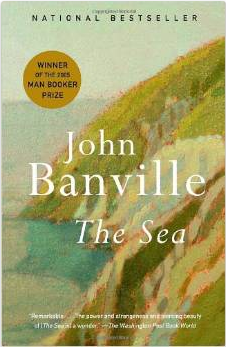
Cover for The SeaIn this contemplative novel, recently widowed Max Morden returns to the small Irish seaside resort where his family used to live when he was a boy. It was there he met and became fascinated by the Grace family, much above his own in social strata.

Max’s memories are assisted by his residence as a boarder at The Cedars, the house where the Graces stayed that summer. The Cedars has become a boarding house that is now managed by Miss Vavasour.

The young Max became the companion of the Grace’s oddly feral twins, Chloe and Myles. They are two very unpleasant children who torment their teenage nanny Rose. At first infatuated with the voluptuous Mrs. Grace, Max eventually turns his attentions to the spiky Chloe.

Through his memories of the extraordinary events of that summer and his feelings about his wife’s death, Max eventually gains some self-knowledge. Looking back, he also gains some understanding of the dynamics between people that he did not grasp as a child.

The Sea is stylistically exquisite, with its sussurating and rhythmic prose a striking meditation on death, grief, and memory. Although I guessed one of its revelations much earlier than intended, that did not take away from the power of the prose.

Related Posts

The Sense of an Ending

Bridge of Sighs

Nora Webster


Day 661: The Bully Pulpit: Theodore Roosevelt, William Howard Taft, and the Golden Age of Journalism

Cover for The Bully PulpitNoted historian Doris Kearns Goodwin approaches her subject of the relationship between Theodore Roosevelt and William Howard Taft from several insightful angles. Although her book examines their careers separately, it is focused on the differences in their personalities and approaches that finally led to the serious rift in their friendship of many years. This rift also led to Roosevelt’s third run for president, which split the Republican ticket.

One of the major differences that Goodwin identifies is their relationships to and use of the press. The journalists particularly close to Roosevelt and involved in the fortunes of both presidents all worked for McClure’s magazine and make up an impressive list of names in journalism: Ida Tarbell, Ray Stannard Baker, William Allen White, and Lincoln Steffens.

I wanted to read more by Goodwin after I read Team of Rivals, the great history of Lincoln’s career that inspired the movie Lincoln. Although I also have her book about FDR and Eleanor Roosevelt in my queue, I was interested in this one because I know only a little bit about Teddy Roosevelt and almost nothing about Taft, just the broad outlines of their careers.

Without going into detail about the careers and personalities of either man, although I developed respect for both, after reading this book, I confess to having a lot of sympathy for Taft over their split. The fact is that Roosevelt regretted his decision not to run for a third term and so looked for excuses to find fault with Taft’s presidency. After Roosevelt’s return from Africa, he criticized Taft’s record of progressive legislation even though it was actually better than Roosevelt’s own. Taft later acknowledged that he wasn’t as good as Roosevelt in publicizing his accomplishments or explaining his policies to the press.

This book is thoroughly interesting and revealing of the characters of both men. It is carefully researched, and it is also very well written. Although quite hefty at 750 pages, it moves along at a good pace and does not get bogged down with extraneous details.

Related Posts

Team of Rivals: The Political Genius of Abraham Lincoln

The River of Doubt: Theodore Roosevelt’s Darkest Journey

The Gods of Gotham


Day 649: The Death of Bees

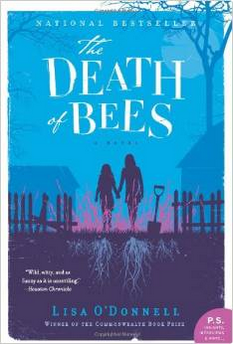
Cover for The Death of BeesBest Book of the Week!
It may take some fortitude for readers to get past the foul language and bad behavior at the beginning of this novel. But I think most readers will feel it is worth it to have read this dark, funny, and ultimately touching little modern gothic novel.

Marnie and her younger sister Nelly find themselves with a problem. Their parents are dead, and they have already once experienced the joys of the foster care system. So, the two girls bury their mother Izzy in the back garden and hide their father Gene in the shed.

Izzy hung herself, but it is not altogether clear for quite some time what happened to Gene. The couple were terrible parents in any case, Izzy a self-obsessed, neglectful addict and Gene also an addict and molester of his own daughters. The two girls will do their best to take care of themselves until 15-year-old Marnie can do it legally.

Lennie, the old man next door, is a social outcast. After the death of his long-time partner, the lonely Lennie was once tempted by a male prostitute, only to be arrested and charged because the prostitute was a minor. Lennie doesn’t see that well anymore, so although he knew the man was young, he didn’t know how young and feels thoroughly ashamed. Despite his poor eyesight, Lennie is the only person who notices that the two girls are on their own. Soon, he is inviting them over and feeding them, happy to have someone to cook for.

The meat of the novel is the characters of these three. Marnie is brash, foul-mouthed, and smart. She is determined to protect her unworldly sister. But she is more vulnerable than she seems.

Nelly speaks like someone out of a Jane Austen novel and seems strangely clueless for a girl growing up in a tough Glaswegian neighborhood. She has a tendency to see only what she wants to.

Lennie misses his partner. He is meticulous but still ready to open his house to the two teenage girls.

Marnie’s world is populated with drug dealers, butch girlfriends and unreliable boyfriends, a best friend who was ready to run off with her father, and other difficult personalities. As Lennie’s dog Bobbie insists on digging up the bones in the garden and the girls evade questions about their parents, they both learn who they can love and depend upon.

Related Posts

NW

All the Birds, Singing

Mercy Snow

Day 643: The Orenda

Cover for The OrendaBest Book of the Week!
The Orenda is a powerful novel about the death of a people. At times it is difficult to read, but do not let that stop you from experiencing this novel.

Father Christophe, one of the first French priests to evangelize the Indians of Canada west of Kebec, finds himself at the beginning of the novel captive to a group of Huron warriors. The group is returning from a trading expedition, but they recently attacked a family of Ojibway, their enemies. Bird, the leader of the party, is seeking revenge for the killing of his wife and daughters by the same group. He keeps one young girl, Snow Falls, to be his daughter but kills the rest of the family.

The novel is narrated in turn by Bird, Father Christophe, and Snow Falls. Father Christophe, whom the Hurons call the Crow, finds life in the village brutal and the customs of the people barbaric, but he is determined to learn the people’s language and convert them.

Bird continues to grieve for his wife and addresses his sections of the book to her. He is concerned about the problems of the village and his people, and not least with his difficult new daughter.

Snow Falls is determined to escape and to at all times demonstrate her defiance.

The novel covers about ten years, during which things go well and then badly for this group of Huron people. A combination of disease from contact with the French and the hostilities between the Hurons and their enemies eventually have results that presage what will happen on a larger scale throughout North America.

The novel paints a fascinating picture of the daily life among the Huron and of the misconceptions and misunderstandings between the native people and the Europeans. It is a wonderfully involving book.

Day 633: Kim

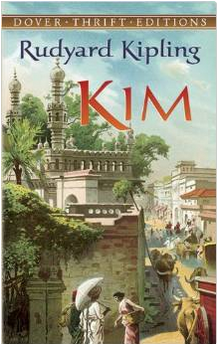
Cover for KimBest Book of the Week!
Up until now, the only book I read by Rudyard Kipling was Puck of Pook’s Hill, which is definitely a children’s book. I always assumed that Kim was a children’s book, too, or at most a boy’s adventure story, but I don’t think I would describe it that way.

Kim is the son of an Irish soldier in India, but both of his parents died impoverished when he was young. He has been brought up by a Eurasian woman who leaves him to himself most of the time, only insisting that he wear European clothing. But he keeps some native clothing hidden away, and when he is wearing it, he cannot be discerned from any other street urchin. He knows everyone in Lahore, and they call him Friend of All the World.

One day he is playing outside the Lahore museum when a holy old lama comes to look at the wonders inside. Kim sees that he is a truly guileless man with no one to help him in a foreign country. The lama explains that he is searching for a holy river that will wash clean all his sins. Kim decides that he will go with the lama as his chela, his disciple who begs for him and takes care of him. Before leaving Lahore, though, Kim goes to see Mahbub Ali, an Afghani horse dealer for whom he has run some errands. Mahbub gives him a dispatch to take to a British Colonel Creighton.

The description of the journey of Kim and the lama is very colorful and interesting, reflecting Kim’s joy in the bustle of the road and a love of the country on the part of the author. But Kim’s father told him long ago that he would be saved by a red bull on a green field, so when he sees a regimental flag flying the device, he goes nearer to look and is suspected of being a thief.

He has always carried his papers in an amulet, and when he is captured, his identity as Kimball O’Hara is established. The priests in the regiment, of which Kim’s father was a member, plan to send him away to a Masonic orphanage. Kept a watch on and forbidden to see his lama, Kim writes to Mahbub for help. Mahbub makes sure that Colonel Creighton understands how valuable a boy like Kim would be as part of the Great Game, of spies and explorers in the far regions of the area.

So, Kim’s fate is taken out of his own hands and he is sent to school to learn to take his part in the Raj. But the lama pays for his schooling and makes sure he goes to a better school than originally intended.

This is really a great novel. I came to it prepared for perhaps some outmoded racism or hints of British superiority but found a novel that reflects a deep love of India and of all its peoples. Of course, there is an implicit assumption that the Raj is a good thing, but the British characters in the novel are as varied as any, and there are comments about mismanagement and misplaced airs of superiority on the part of the British. Kim is rich in colors and smells, in the flavors of language and the stories of the orient, and in this complex tale of a boy with loyalties both to the soldiers who raised him and to his beloved lama.


Day 614: The Bridge of San Luis Rey

Cover for The Bridge of San Luis ReyThe Bridge of San Luis Rey is a moral fable that explores whether there is a purpose in life beyond that of a person’s own will. This theme is not one that interests me, nor do I usually enjoy fables, but I did enjoy Wilder’s rich characterizations in this short novel.

The novel begins in 1714 in Peru, when the bridge of San Luis Rey collapses, killing five people. A monk, Brother Juniper, believes that this event may be his opportunity for scientific proof of the will of God. So, for six years he collects information about the lives of each victim.

What follows is a chapter about each of the lives of the victims, in all their humanness and contradictions. The Marquesa de Montemayor is an ugly, rich old woman who is despised by many for her eccentricity. She obsessively loves her daughter, who has moved to Spain to get away from her, and she writes her rambling but marvelous letters that only her son-in-law reads. With her dies her young maid Pepita.

Esteban is a twin whose brother Manuel recently died. Esteban and Manuel were inseparable until Manuel fell in love with the actress Perichole, who used him to write her love letters. Ever since Manuel’s death, Esteban has been inconsolable.

Uncle Pio was a wanderer who eventually settled down to mentor Perichole, whom he raised from a young barroom singer to become a great actress. But Perichole begins to have ambitions beyond the theatre and eventually throws off Uncle Pio. Uncle Pio has devoted himself only to her, though, and promises to educate her son Jaime.

This novel is beautifully written and touching in its acceptance of the foibles of humanity.


Day 606: Beowulf

Cover for BeowulfI’m planning this post for Halloween, so I decided to write about the quintessential monster tale. I’m not enough of a poetry reader to easily read an extended poem. Still, Beowulf is considerably more accessible than I expected.

The poem is, of course, the oldest known work in Old English, or Anglo-Saxon, written sometime between the seventh to early eleventh centuries. It is the story of the feats of Beowulf, a Scandinavian hero. It is also a poem written by a Christian poet looking back to a time of paganism. I read the award-winning translation by the Irish poet Seamus Heaney.

For me, the interest in the story is not the tale of battling monsters but the glimpses into a different past and mindset. For this poem is about right and proper behavior. The hero honors his lord and behaves rightly to him. When Beowulf is rewarded for killing Grendal and his mother, he rightfully takes his treasure back to his own chief. Later in the story, when all of Beowulf’s guard except Wiglaf desert him in the face of the dragon, Wiglaf is steadfast by his chief’s side to the end.

The poem is melancholy, for it tells of the end of the Geats, Beowulf’s people, when they are left leaderless after his death. It also stops several times to relate tales of revenge and blood money.

I barely remember a semester of Old English classes in graduate school, but it was enough to occasionally pass my eyes over the Old English side of this bilingual edition and recognize some similarity to modern English, an interesting pastime in itself.