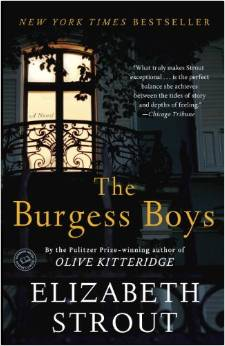
Day 542: The Burgess Boys

Cover for The Burgess BoysBest Book of the Week!
I had an unusual reaction to The Burgess Boys. Part of the way through, I was interested in how it would come out but at the same time wondered if I was liking it. By the end of the novel, though, I found it extremely satisfying.

The novel is about the clearly dysfunctional Burgess family, from a small town in Maine. When the three Burgess children were small, their father was killed in a freakish accident, run over by his own car rolling down the hilly driveway. All three kids were inside the car, and four-year-old Bob was behind the wheel when their mother came out to find their father dead. Mild-mannered Bob has carried this burden all his life, dealing with ridicule from his brother Jim and dislike from his twin sister Susan.

Jim and Bob long ago left Maine for New York City. But they are called back by a distraught Susan. Her son Zach has committed the inexplicable act of throwing a pig’s head into a mosque during Ramadan. Although Susan shows a good deal of ignorance about the local Somali population, the family cannot comprehend Zach’s action. He is a quiet misfit teenager, confused and pathetic, who has no friends. Unhappy especially since his father left for Sweden, he nevertheless does not seem to be angry or have any strong feelings at all except for being plainly terrified by the trouble he is in. He has a reason for his actions that is generally clueless, but it takes awhile for the family to discover it.

A former hotshot lawyer in Maine and famous for having won a high-profile case, Jim is the person Susan is relying on. Zach goes in to the police station to confess to the crime, and it seems as if the case will be handled quietly, but the civil liberties groups get involved and soon there is an uproar. When Jim’s grandstanding at a political event does more harm than good, Zach is charged with a hate crime.

As Jim takes charge while Bob tries to calm and comfort, the dynamics within the family emerge. At the same time, we learn a little about the terrified, disoriented Somali community. During the initial hearings, shopkeeper Abdikarim glimpses the true Zach and tries to help him.

As for the characters, I heartily disliked the person that everyone else admires. I think Strout intended that, and part of my satisfaction with the novel is about how that turns out.

Strout’s rich, detailed exposition is matched by her empathy for all her characters. Although I disliked some of them, they are complex and deeply human. This apparently simple story wisely examines the dynamics of guilt, family tensions, social isolation, and blind political correctness.

Life in the small Maine town seems gray and dismal at first, brightened only by the fall foliage and the hues of Somali garments. Jim and Bob have fled, and Susan and Zach are unhappy. There is little employment or hope for the residents. By the end of the novel, everyone has a little more hope.
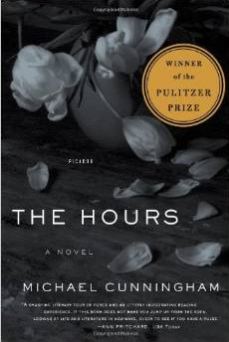
 

Day 539: The Hours

Cover for The HoursBest Book of the Week!
One of our Pandora channels repeatedly plays Philip Glass’s music from the movie soundtrack of The Hours. So, as soon as I began reading it, the intricate notes of the score became a mental accompaniment to the novel. That is, I got an ear worm.

I came to the novel with the slight disadvantage of being unfamiliar with Mrs. Dalloway, having been traumatized by To the Lighthouse in a college English class. But you don’t have to be familiar with it to appreciate this lovely, cleverly constructed novel, an homage to Woolf’s own.

The novel begins with Virginia Woolf’s suicide. But later it returns to 20 years before, when she is writing Mrs. Dalloway.

First, though, we meet a middle-aged woman, Clarissa Vaughn, whose best friend calls her Mrs. Dalloway. Like her namesake, Clarissa is eagerly going out into a crisp, clear morning to buy flowers for her party. This is New York, though, in the late 1990’s, and Clarissa’s party is for her dearest friend Richard, a poet who is dying of AIDS. He has recently been chosen to receive a prestigious prize for poetry, and the ceremony is that night.

Back in 1920’s Richmond, England, Virginia Woolf is trying to decide the plot of Mrs. Dalloway. Someone will die, she thinks, but will it be Mrs. Dalloway herself? Woolf also copes with her own fears about her mental state, her yearning to return to living in London, and a visit from her sister Vanessa Bell.

In 1950’s Los Angeles, Laura Brown struggles with being a suburban housewife and mother. Although she loves her husband and small son, she feels unsuited to this life.

Cunningham presents us with three stories, and a theme of threes recurs. Woolf has bouts of mental illness, Richard suffers from dementia caused by his illness, and Laura is struggling with depression. The jellyfish shapes and voices of Woolf’s migraine visions appear in Richard’s episodes of dementia. And Laura briefly sees a grayish jellyfish cloud floating over her son’s head. A forbidden kiss and the color mustard feature in more than one story. And other links that I will not name are more intrinsic to the plot. The three stories are so cleverly interwoven, we’re not sure if the events of one cause the events of the other.

This is a novel of astonishing beauty, cleverly constructed and entertaining. I’m going to find a copy of Mrs. Dalloway.

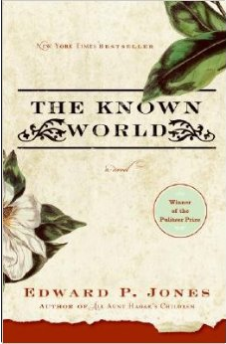
Day 535: The Known World

Cover for The Known WorldBest Book of the Week!
I found The Known World disorienting for some time. I think this was because the standard blurb describes it as being about Henry Townsend, an African-American owner of slaves who is mentored by his white owner. The novel starts with Henry Townsend’s death, and I kept waiting for it to circle back around and cover his history. But it’s not so much about him as about the world around him. Once I settled in to the world Jones creates, I began to appreciate the novel.

Henry Townsend’s act of becoming a slave owner is so shocking to his parents that they refuse to stay in the house he built with his slave, Moses. His parents, Augustus and Mildred Townsend, worked hard to buy themselves and their son free. Augustus at one point muses that he may have made a mistake in buying Mildred first, leaving Henry too long under the influence of William Robbins, his white master and the richest man in the county. We actually don’t see much mentoring going on between Robbins and Henry, except when Robbins chides Henry for rough-housing with his new slave Moses.

Jones’ focus is on a larger story than that of one man. His story is about the life on Henry Townsend’s plantation and in the county and how it is affected by slavery—particularly by the decision of African-Americans to own slaves.

At first, I found it difficult to keep all the characters straight—or even the timeframe—for Jones has a habit of fixing on a character for a brief moment and telling about that character’s entire life. He also interjects facts and census details about Manchester County. These details are so convincing that he had me believing it was a real place. It is not.

This nonlinear narrative means we don’t fully know any one character. Henry himself is one of the biggest enigmas, and we see more of his slave Moses than we do of Henry himself. Certainly, a handful of characters are more important than others, but that handful keeps changing. Still, some threads of the people’s stories are captivating, and even surprising. Does Augustus, kidnapped by unscrupulous slave dealers when he is returning from a job, ever see his home again? Did Moses actually murder his wife Priscilla in hopes of marrying Henry’s widow?

If I had to state briefly the theme of this unusual novel, I would say that slavery corrupts. Characters who start out with good intentions do despicable things because they have absolute power over other people. When we see the effect of the “institution” of slavery on people, especially upon Henry’s blameless parents, it is sometimes shocking.

There are true villains in this novel but no heroes. Some of the characters are doing the best they can; others are not.

Day 529: The Interestings

Cover for The InterestingsIt took me awhile to get interested in The Interestings. (I just had to say that.) Reading it was ultimately worth it, but I found the novel difficult to get into, beginning as it does with a situation and characters to which I do not relate.

Jules Jacobson is an awkward teenager when she arrives at a summer camp for the arts during the mid-1970’s. The campers are mostly rich New Yorkers. She is not rich, but received a scholarship for the camp after her father’s death. Jules feels inferior to these kids, but she is unexpectedly adopted by a small group who call themselves the Interestings.

Ethan Figman is an unattractive but kind boy. He spends most of his time at the camp learning animation and drawing. Jonah Bay is the beautiful but elusive son of a famous folk singer. Cathy Kiplinger is a talented dancer. Ash and Goodman Wolf are a wealthy, attractive sister and brother. It is not clear what Goodman does at camp besides flirt with girls, but Ash is studying drama.

Jules is entranced by her friendship with these people, so much so that her relationship with them becomes a preoccupation of her life. She is particularly attracted to the Wolf family, and Ash becomes her best friend. Ethan early on makes overtures to her of a different nature, but she is not attracted to him.

The novel follows Jules’ relationship with her friends over a period of forty years. It particularly focuses on Ash and Ethan, who marry and become extremely successful.

For Jules, the Interestings glow with a special aura long after most of them have not lived up to their promise. Wolitzer’s intent is to examine issues such as how much value to place on a constant striving for success and its link with the need to feel special. She also examines the life of art—how far do you go for art before giving up? After having little success, Jules abandons her own desire to be a comic actor. She also goes through a long period of envy for Ash and Ethan while she and her “ordinary” husband Dennis struggle financially.

My problem with this novel is that I don’t understand the attraction the group, and particularly the Wolfs, have for Jules. In truth, she seems dazzled by the wealth and privilege of this family, even if she doesn’t realize it. Ash is a nice enough person, although somewhat vaguely depicted. But somehow these fascinating Wolfs manage to raise a self-absorbed, uncaring son and a daughter who is too eager to please her family. Early on, Goodman is accused of a serious crime. The way his family handles this problem is very telling, as is the fact that they never seem to consider he might be guilty.

Wolitzer sometimes tells us other things I personally feel the novel does not demonstrate, for example, how witty Jules is. I saw very little evidence of wit in the dialogue, and when I did, it usually came from Ethan. Maybe the novel would have been more compelling if we could feel the attraction of the Interestings ourselves or hear the sparkling wit. Or has Wolitzer planned for us to remain detached, to see through everyone from the first?

This novel provides many ideas to ponder. After I stuck with it, I got interested in what happened to the characters, but I didn’t  love it.


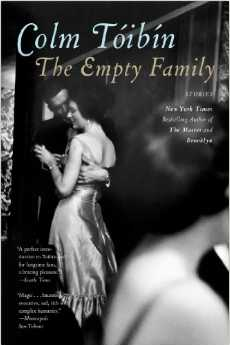
Day 517: The Empty Family

Cover for The Empty FamilyIn this collection of short stories, Colm Toíbín writes empathetically about the human condition. People remember how they have loved, their desire, their loneliness.

In the only historical fiction story, “Silence,” Lady Gregory tells Henry James a tale over dinner. Even though her story is not true, it encapsulates a kind of truth about her relationship with her lover during her marriage to her much older husband.

In “The Empty Family,” a man returns to a seaside village in Ireland after years of absence in California. He meets some old friends and considers his former life in that town and the life he just left.

In my favorite story, “Two Women,” an elderly Irish set dresser remembers her affair with the only man she ever loved. One day on the set where she is working, she meets his widow, the woman who married him after they parted.

In “One Minus One,” a man returns home to be with his dying mother. He is full of regret and longing because she never cared much for him.

These stories are precisely written, sad, and evocative.

Day 512: Troubles

Cover for TroublesBest Book of the Week!
It is the summer of 1919. Major Brendan Archer has just left the hospital after his experiences in the trenches of France. When on leave in 1916, he met Angela Spencer. Although he has no recollection of having asked her to marry him, she has ever since then written him exhaustive letters signed “Your loving fiancée.” Determined to find out if he is engaged, the Major travels to the Majestic, Angela’s family hotel in County Wicklow, Ireland.

Troubles is about the decline of the once powerful Anglo-Irish aristocracy. Nothing symbolizes this decline quite as effectively as the state of the Majestic. Once a grand resort hotel, the Majestic is now the crumbling permanent home for a handful of old ladies who knew it from their heyday.

The Palm Court is so overgrown that it gets more and more difficult to find the chairs. No staff is visible when Archer checks in, and he is finally vaguely shown around by Ripon, Angela’s brother, who urges him to pick a room. When Archer retires, he finds his bed has no sheets, and his investigation of a sickly smell leads to the discovery of a sheep’s head in a pot in his room. Most frustrating, though, is that he can find no opportunity to speak to Angela, who shortly after his arrival shuts herself up in her room.

Major Archer soon finds himself drawn into the activities and personalities of the household. Angela’s father Edward seems unconcerned about the increasing decrepitude of the house. He occupies himself with projects such as raising piglets in the squash court or conducting bizarre experiments in “biological research.” He is most concerned with preventing Ripon from marrying the daughter of a merchant, whom Ripon has made pregnant. Edward’s objection? She is Catholic.

It is the time leading up to the partition of Ireland, with events that 40 years later will result in The Troubles. To Edward’s way of thinking, along with most of his class, those who want independence from Britain are nothing but hooligans. He refuses to recognize that his impoverished and desperate tenants have legitimate grievances.

The growing sense of dissolution both in Ireland and—periodically interjected by newspaper articles—in other parts of the British Empire keeps the novel from being simply a comedy such as Cold Comfort Farm. That, and Farrell’s writing style of cool and precise satire. As poor Major Archer bumbles in a well-meaning way through the political briars and Edward becomes more detached from reality, the Majestic slides perceptibly into ruin.

This is another book from my Classics Club list.

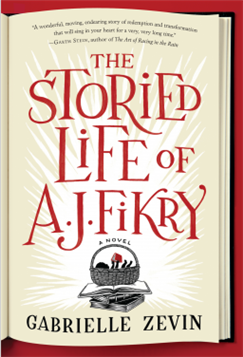
Day 511: The Storied Life of A. J. Fikry

Cover for The Storied Life of A. J. FikryI dislike publicity that compares books by new authors to established, popular books, because the comparison is so often misleading. I’ve seen The Storied Life of A. J. Fikry compared to The Guernsey Literary and Potato Peel Society. The similarities are a certain lightness of tone, the presence of book clubs, and the setting on an island. Otherwise, there is no comparison between the novels. I should add that I didn’t have much of an opinion of “Guernsey.” I like this novel much better, but the comparison almost made me decide not to try it.

A. J. Fikry is a recently widowed bookstore owner when the novel begins. He is normally somewhat of a curmudgeon, but he is also having difficulty coping with his wife Nic’s death. The book actually begins with Amelia Loman, the new account manager for Knightley Press, who has made the trip from the mainland to meet with him. He has forgotten their appointment and refuses to discuss any of the books on the winter list.

Aside from his wife’s death, things are not going well for A. J. He is drinking too much. Without Nic around he’s doing a poor job of managing the store. Then one night when he forgets to lock up his only rare book because he’s been drinking, it is stolen. He had planned to use the book as his nest egg after he drove the book store out of business, but the police can find no trace of it.

After A. J.’s book is stolen, he decides there is no point in locking up the store. When he comes back from a run, he finds a toddler in his store with a note from the child’s mother saying she wants Maya to be raised around books. It is the beginning of the weekend, so A. J. agrees to take care of Maya until social services can come out to the island on Monday. You may guess that by the end of the weekend, he does not want to give the little girl up and his life is changed.

Zevin writes in a breezy third person. Partly because of the style, this novel seems to be the type that will be full of quirky characters, but it isn’t really, just nice ones who seem realistic.

Each chapter begins with a commentary on a short story, which A. J. has written for Maya. Zevin also inserts the occasional literary allusion or joke. One playful element is the reuse of names from works of literature. In a more extended joke, Amelia disappears from the book for quite awhile after the first chapter, so that when A. J. says this

You know the kind of book I’m talking about, right? The kind of hotshot literary fiction that, like, follows some unimportant supporting character for a bit so it looks all Faulkneresque and expansive.

we think the book is being self-referential. But Amelia returns and becomes an important character.

http://www.netgalley.comI liked this novel. It deals playfully with literature if that appeals to you, but I just plain liked the characters. The novel is occasionally amusing and ultimately touching. It is both intelligently written and light in touch.

Day 509: Mountains of the Moon

Cover for Mountains of the MoonBest Book of the Week!
It will be difficult for me to put into words how unusual Mountains of the Moon is. The novel is about a woman’s act of creating herself despite a past that is nearly crippling, but its unusual quality is primarily in the style of narration.

At the beginning of the novel, Louise Adler is 31 and newly out of prison. She is doing what she can to make a fresh start, fixing up her dreary apartment, trying to find any kind of job.

The story shifts to when Lulu is a little girl. Brought up with her grandfather’s stories of the Mountains of the Moon, she pretends she is a Masai warrior, dressed in a bright strip of cloth and holding her spear on a perch high above the neighborhood.

Her home life is difficult. She loves her older brother Pip, but he is sent away to live with his father because of “disloyalty” to his mother. Her verbally abusive mother keeps her out of school and makes her stay up all night listening to her talk. Her physically abusive father is often away with his other family. When Baby Grady arrives, he is left to Lulu’s care much of the time, but she adores him.

This portrait of the imaginative little Lulu is charming, but fear always lurks around the edges of her world. We know something goes wrong for her, but Kay spins the story out by interleaving it with the present one. A third story line returns to when Louise is 21 and learning to deal blackjack at a casino. At that time, she becomes fatefully involved with a girl named Gwen and her friends.

Louise is a woman of many names and identities. As a child she plays gleefully with language, gobbling up new words but only saying parts of the ones she knows. As an adult she finally begins trying to make sense of herself as a person.

This novel is sometimes brutal and harrowing, other times endearing. Its narrative style reminds me a bit of that of The Bone People.We like Louise/Lulu and we want her to succeed, but there are secrets in store. This story is one of an unforgettable character.

Day 506: The Bastard of Istanbul

Cover for The Bastard of IstanbulTwo 19-year-old girls are the focus of The Bastard of Istanbul, which is full of colorful characters. First, though, we meet Zeliha Kazancı, twenty years before most of the action of the novel. She is notable on the streets of Istanbul during the 80’s for her miniskirts and incredibly high heels, her colorful outfits and jangly jewelry. She is defiant of convention, and bitingly invents rules of prudence for Istanbulite women as she makes her way to have an abortion. But fate intervenes.

In Arizona, Zeliha’s brother Mustafa is a student when he meets an American woman and her baby in the supermarket. Rose is newly divorced from an Armenian American, and she thinks nothing would enrage her husband’s family more than her dating a Turk.

Nineteen years later, Armanoush Tchakhmakhchian loves her father’s Armenian family, but because her parents have been at loggerheads her entire life, she does not feel totally at home on the Armenian side. She decides to visit her stepfather Mustafa’s family in Istanbul so that she can see the house her Armenian grandmother used to live in before they had to flee and try to learn more about her heritage.

In Istanbul, Asya Kazancı is even more of a rebel than her mother Zeliha. She is an angry girl who hates being a bastard and thinks of herself as a nihilist. She hangs out with a group of rather effete intellectuals at the Café Kundera. She is not pleased to learn her four aunties expect her to act as a hostess to her uncle Mustafa’s American stepdaughter.

Eccentric women dominate the Kazancı household. Asya’s great-grandmother Petite-Ma is suffering from Alzheimer’s. Her grandmother Gűlsűm is a bitter woman who spoiled her son Mustafa rotten only to have him go to America and never return. Her oldest auntie Banu is the only observant Muslim in the house, but she also is a soothsayer, who learns the future from two djinnis that sit on her shoulders. Cevriya is a rather didactic schoolteacher, and Feride toys with different types of mental illness. Zeliha, whom Asya also calls auntie, is as colorful as ever and owns a tattoo parlor.

Shafak writes in a light-hearted style that mixes in folk tales, superstitions, and family legends and is often comic. Yet it deals with some serious subjects, one being modern Turkish identity and another the Armenian diaspora. Armanoush finds when she arrives that most of the people she meets have never heard of this latter subject that has her American-Armenian friends so angry. The subject matter is an odd contrast with the light tone, for Armanoush’s visit brings old family secrets out into the open, and they are dark ones.

This novel is well written and interesting, but I can’t decide how much I like it. I feel that the narrative style somehow keeps the reader aloof from the characters so that they remain unknowable. Still, the novel gives glimpses into life in a fascinating country and informs us on historical events of which many people still are unaware. And it includes a recipe.


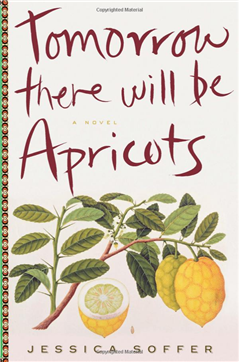
Day 503: Tomorrow There Will Be Apricots

Cover for Tomorrow There Will Be ApricotsBest Book of the Week!
Tomorrow There Will Be Apricots is a brilliant, touching novel about the complexity of human relationships and the longing for love and acceptance. It is also a mouthwatering novel centered around food and the love of cooking. (I have no idea, though, why lemons are on the cover instead of apricots.)

Lorca is a teenage girl who yearns for love and affection from her mother Nancy. Nancy is a noted chef who remains emotionally aloof, so Lorca tries to please her by cooking food that she likes. The two live in a small New York apartment with Nancy’s sister Lou, who seems jealous of any attention Lorca gets from Nancy.

Lorca cuts herself for release, because something feels better than nothing. When she is caught doing it at school, she is expelled for a week. Instead of getting Lorca help, her mother informs her she is sending her away to boarding school.

One night Lorca overhears Nancy tell Lou that the best food she ever ate was masgouf at a restaurant that has since closed. Lorca believes that if she can learn to cook that dish for her mother, she won’t be sent away. So, she begins trying to find out about the restaurant with the help of her friend Blot.

Victoria narrates the novel in alternate chapters with Lorca. She is an old Jewish woman who fled Iraq with her husband Joseph when they were young. The two used to own and run the restaurant, which they closed when Joseph became ill. He dies early in the novel.

Victoria is full of regret, because she was so afraid that Joseph would love their child more than her that she insisted upon giving up their daughter for adoption when they were young and refused to have another child. Now she feels she deprived Joseph of part of his life and wants above all things to find their daughter. When she first sees Lorca, she is sure she is her granddaughter, and Lorca, whose mother was adopted, soon believes Victoria is her grandmother.

Whether this is magical thinking or not you can find out by reading the novel. It is ripe with the flavors and scents of the Middle East. This novel will touch you. It will also make you want to run out and eat some Middle Eastern food. Oh, and the recipe for masgouf is included.