Review 1516: 4321

As we go through life, we make choices and have choices made for us that open up possibilities to us while closing down others. What if we could see the results of taking some of the paths not chosen or those resulting from different circumstances? In 4321, Paul Auster explores this theme.

Archie is the grandson of a Russian immigrant whose name was recorded as Ferguson by an immigration official. 4321 follows Archie as a boy and a young man leading four different lives.

Some things about Archie remain constant while others change. He has the same parents, but in one story they’re happily married, in one a parent is widowed, and in one they are divorced. His father’s business is bought out or burgled or burned down. As a result of the fate of the business, his family is just hanging on to the middle class or wealthy, they live in New Jersey or New York. He always loves Amy Schneiderman, but in one story they are lovers, in another cousins by marriage, in another stepbrother and sister. He goes to college at Columbia or Princeton or not at all. He is a writer—a journalist, a poet, a literary fiction author. And so on.

It is very unusual for me to take more than two weeks to read a work of fiction, but this was the case with 4321. I was reading it for my Booker project, so did not acquaint myself with it before I started. That meant that I had a tough time getting started until I caught on to what was going on with Chapter 1.4. (The chapters are numbered with subsections to help you keep track of the four Fergusons.)

Then, I found myself alternating between being interested and slogging through the book because of my own determination to finish, possibly because I am not that interested in the inner lives (or outer ones) of adolescent boys, and Archie’s story ends at the age of 22. And in fact, the story is uneven. There is way too much information about certain subjects, the political situation at 1969 Columbia University being one, baseball another, Archie’s juvenile fiction, which we get to read (shudder), a third.

I also haven’t seen any references in reviews (not that I read them all) to Auster’s writing style, which is verbose, with long chapters (averaging more than 100 pages) broken down into long paragraphs (often a page or more) and very long, not to say run-on, sentences.

Was this book worth reading? Yes. I was more engaged at the end than in the middle. And spoiler: This book has an interesting ending, as in the last few pages you find out you’ve been reading a work of pure metafiction.

Related Posts

The Rehearsal

1Q84

How to Be Both

Review 1510: The Left Hand of Darkness

Best of Ten!
Genly Ai, an envoy to Gethen from the Ekumen, a league of other worlds, has been waiting for an audience with King Argaven XV of Karhide for two years. Although he does not trust Lord Estraven, Argaven’s prime minister, he has understood the prime minister was supporting his efforts to gain an audience. But during a state parade, Lord Estraven tells him it is not a good time.

Genly’s disappointment makes him doubt that Lord Estraven ever had good intentions. When Lord Estraven hints that Genly should leave the capital, Genly ignores him. Soon, he learns that Lord Estraven has been banished from Karhide upon pain of death.

King Argaven encourages Genly to travel around Karhide, and he does so. The planet of Gethen is an ice planet, formerly called Winter by Ekumen, and Genly is constantly cold. He has trouble understanding the Gethenians, who are androgynous; when they are in heat once a month, they take on whichever sex is opposite to that of their partner. Genly has a hard time adjusting to the feminine side of the Gethenians. For their part, they consider him a pervert for always, as they see it, being in heat.

Eventually, Genly decides to leave the more primitive, indirect Karhides for Orgoreyn, an apparently more civilized and direct country, where he is welcomed. This state is much more authoritarian. Whereas in Karhide his presence was known, in Orgoreyn it is being kept secret from all but the government. Soon, the situation takes a turn he doesn’t expect.

When I first read The Left Hand of Darkness years ago, I thought it was about the best book I had ever read. Reading it again, I see no reason to change my mind except to say that others stand up there with it.

It is written as a set of documents, Genly’s story mixed in with records from other envoys and stories from the myths of various cultures on Gethen. It manages to explore many topics with its theme of light and darkness, including the effects on our lives of different sexual orientations. It’s really a masterpiece.

Related Posts

Cloud Atlas

Stranger in a Strange Land

The Martian Chronicles

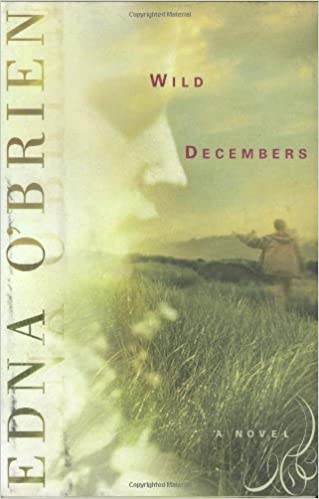
Review 1502: Wild Decembers

Best of Ten!
Although the Bugler and Brennan families have been feuding for generations, when Mick Bugler inherits land in the mountains of Western Ireland near the Brennans, he and Joseph Brennan are disposed to be friends. They are, that is, until Bugler goes behind Joseph’s back to lease the field Joseph has leased for the past 15 years. Joseph must take a huge loss on dairy cows that he can’t feed, but that doesn’t seem to faze the wealthy Bugler.

As the situation deteriorates, Bugler keeps getting the best of Joseph, however inadvertently. Joseph’s attitude is egged on by the villagers, who don’t like Bugler. It doesn’t help that Joseph’s sister, Breege, has fallen in love with Bugler, unaware that he’s engaged to a woman back in Australia.

This beautiful, moody novel winds its way to an inevitable sad end. O’Brien’s writing is gorgeous and evocative. This is quite a book.

Related Posts

Solace

When They Lay Bare

The Spinning Heart

Review 1497: Elmet

Best of Ten!
My very brief research on Elmet tells me that it was a Welsh kingdom in what is currently West Yorkshire, but the Wikipedia article says that Bede refers to it as “the forest of Elmet.” This reference is certainly apt for the novel Elmet.

Daniel, his father Daddy, and his sister Cathy live in the deep forest in a house their father built. Daddy has claimed the land, which the children’s mother owned when she died.

Before they lived there, the children stayed with their grandmother while Daddy was gone for long periods. But Cathy was being harassed by local boys until she finally beat them up. When Daddy took Daniel and Cathy to report the repeated bullying to the head teacher, he could see that she already believed that the attack was unprovoked, believed the middle-class boys’ lies over the poor children’s truth, that is. So, Daddy took them away to the forest and told them he wouldn’t leave them again.

At first, their life seems idyllic as they live mostly off the land, but we know from the beginning that Daniel is running away from some horrible event. So, a feeling of dread builds.

Daddy is an uneducated giant who makes a living fighting illicit bare-knuckles boxing matches. In his past, he also did violent work off the edges of legality, but lately he has used his great strength to help out poor people against injustices by landlords and former employers. Because of his past, however, he can’t seek out legal means to sort out his problems, and the worst one appears with Mr. Price, a man known to have cheated locals out of their land and a poor landlord. He claims that the kids’ mother sold him her land before she left the area.

This novel is stunning in its beauty, full of dread, dark, and wonderful. Set in the present, it depicts life so violent and exploitative for the locals in poverty that you would think it was feudal times. It’s not often I read a book this good. I read this book for my Man Booker Prize project.

Related Posts

History of Wolves

All the Birds, Singing

Milkman

Review 1482: Grace

In the midst of the Irish famine, Grace’s mother awakens her in the middle of the night and hacks off her hair. She tells her she must go out as a boy to get money for the family. Besides, Boggs, who lets the family stay in their house in exchange for sex with her mother, has been eyeing Grace lately. So, Grace is cast out to fend for herself, wandering through a country thronged with starving people, a country that’s becoming more and more desolate.

From the first words of this novel, you know you are reading something different. The prose is beautiful, mesmerizing, occasionally hallucinogenic, as Grace goes through one experience after another, haunted by the people she loses along the way.

What an experience it was to read this book. I read it for my Walter Scott project. It’s a book I probably wouldn’t have come across except for that, and I’m grateful to have read it.

Related Posts

The Mermaid’s Child

Neverhome

The Wonder

Review 1474: The Wolf Border

Best of Ten!
Rachel Caine is an emotionally detached woman who manages a wolf reintroduction program on a reservation in Nez Perce, Idaho. She prefers to keep her sexual liaisons brief and hasn’t returned to her home country of England for years. She takes the opportunity to visit her mother, Binny, when she meets with the Earl of Annandale about a project he has taken on to move wolves into a contained area on his huge estate and nearby national forest lands in Cumbria, near where she grew up. She isn’t interested in the job, but her brother Lawrence has told her that Binny won’t be around long.

After a meeting with the Earl, whom she doesn’t trust, she has a difficult visit with Binny and then returns home. Her personal circumstances change after Binny’s death, though, so she finds herself accepting the Earl’s job.

This is a thoughtful and vital novel that examines the nature of Rachel’s relationships with her family. Events allow her to open the door to people in her life. The novel is complex, not because of the plot but because of the tangle of human thoughts and feelings it examines.

The writing is clear and vivid. I read this book for my James Tait Black project—another winner!

Related Posts

The Lesser Bohemians

First Love

Dear Thief

Review 1454: Milkman

Best of Ten!
Middle sister, the unnamed narrator in a novel where no one has a name, has a stalker. Actually, she has two. She lives in the 1970s in an unnamed city that is clearly Belfast, and at 18 she has no way to explain what is happening to her and no one to tell, anyway. The man she’s worried about is known as the Milkman, rumored to be a powerful renouncer-of-the-state. This stalking begins with him driving up next to her and offering her a ride. She knows not to get into his car.

That is all it takes for rumors to begin flying about that middle sister is having an affair with the Milkman. Eldest sister, egged on by her husband, who has been letching after middle sister since she was 11, arrives to berate her for this supposed affair with a middle-aged, married man.

But middle sister’s strategy for keeping safe in a dangerous world is to tell nothing about herself. That, and her mother’s constant queries about why she isn’t married yet, have caused her to keep secret her real relationship with maybe-boyfriend. It is the maybe part of this relationship that decides her not to tell maybe-boyfriend about the stalking either, when it progresses to the Milkman joining her while running and making clear that he knows every aspect of her life.

She does finally tell her Ma the truth, but her Ma is too busy upbraiding her for bringing shame upon the family with the affair and calls her a liar. So, middle sister is left to cope with her fears alone.

This sounds like a grim tale, and at some times it is, but it is told exuberantly, in a torrent of words, ideas, stories, asides, and circumlocutions. To give you an idea, about page 80 middle sister steps into an area called the ten-minute zone because it takes ten minutes to cross it. She describes the ten-minute zone and an explosion within it, then she goes into what she calls “the provenance of the eeriness of the ten-minute area” from which she relates a discussion with Ma about her asking weird questions, tells about her father’s history of depression and her Ma’s “hierarchy of suffering,” discusses her bafflement in “shiny people,” those who go around looking happy, finds the head of a dead cat and decides to bury it, compares cats and dogs and tells about an incident where the state killed all the neighborhood dogs, has another encounter with the Milkman and then with one real milkman, and so on until page 139, when she steps out of the ten-minute area. I would include an excerpt, but a short one would seem nonsensical and a long one would be, well, long.

Above all, the novel is funny, dazzling, gleeming. I was absolutely entranced by it. It is about more than middle sister and her adventures, it is about the effects on society of everyday terror, paranoia, gossip, constant attention to the behavior of your neighbors. This is a stunning novel that won the Booker Prize. It deserves it.

Related Posts

History of the Rain

After You’d Gone

Tell the Wolves I’m Home

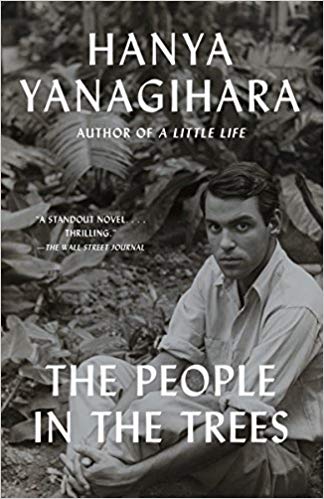
Review 1413: The People in the Trees

Best of Ten!
When everyone was reading The People in the Trees a few years ago, I didn’t think it sounded like something I’d be interested in. Then I finally read Yanagihara’s fabulous A Little Life. That made me pick up this book when I saw it again.

The novel begins with documents written by Ronald Kubodera, a coworker and acolyte of Dr. Norton Perina, a renowned scientist who won the Nobel Prize and now has been imprisoned for child molesting. Kubodera convinces Perina to write his memoir, telling his side of the story.

Just out of medical school, Perina is wondering what to do with himself. He has no intention of becoming a medical doctor, and his graduate school lab work he finds boring. He has managed to offend his laboratory boss, so he is surprised when the man recommends him for a position accompanying Paul Tallent, an anthropologist, to a remote Micronesian island.

Perina’s prize-winning work is based on what he observes on that island. Tallent takes him to the U’Ivu U’ivu Islands, an archipelago of three islands. One of them, Ivu’ ivu, is forbidden, but there are rumors of a strange animal-like people on that island. Tallent hopes to discover an unknown tribe.

The first people they discover are in a state of extreme senility, some almost totally dehumanized. When they find the village, these other people are much like other U’Ivu islanders, only there are no older people in the village.

Perina’s discovery is to figure out that the people of Ivu’ ivu can live almost eternally after eating the meat of the opa’ ivu’ eke turtle, found only on Ivu’ ivu. The downside is that something in the meat also causes increased senility. The older islanders remain physically fit but eventually lose speech and all semblance of humanity.

Perina breaks a taboo to capture an opa’ ivu’ eke turtle and smuggle it out of the country for study. He also takes with him some of the elders, whom he calls dreamers.

This novel is about the abuse of power and what it can lead to. Perina is not a sympathetic character, although he states justifications for his own actions. His view is that any scientist would have taken the turtle even though his action results in the death of a guide whom he likes. Removing the dreamers from their familiar surroundings to a lab increases their decreptitude, but Perina seems to feel no remorse or even responsibility. He is more concerned with the inevitable destruction of the lifestyle on the islands once he publishes his paper.

This is a fascinating character study of a man so driven by ambition and his own needs that he doesn’t even notice the results of his actions. Even the structure of the novel speaks to this theme of power, for Kubodera’s footnotes abound, and he cuts out an important passage from the original manuscript, included at the end of the book. Kubodera’s comment is that it shouldn’t matter. He himself is such a hero worshipper that he’s ready to excuse Perina anything. Perina attempts to tell the truth about his life, but he is so self-deluded that he becomes an untrustworthy narrator.

Yanogihara has blown me away with another terrific novel.

Related Posts

A Little Life

State of Wonder

Euphoria

Review 1412: Classics Club Spin Review! The Wise Virgins

The novel selected for me by the latest Classics Club Spin is The Wise Virgins by Leonard Woolf. This semi-autobiographical novel is partially about the courtship of Leonard and Virginia Woolf, in the characters of Harry Davis and Camilla Lawrence.

Harry and his family have just moved to the London suburb of Richstead and are shortly befriended by the Garland family, which has four unmarried daughters. Harry is disdainful of life in Richstead and of the fates of the spinster daughters, given up to good works or golf and tennis. The youngest daughter, Gwen, is naïve and gives undue weight to his discontented utterances. He amuses himself by giving her books and plays to read of Dostoevsky and Shaw.

In his art class, Harry is drawn to Camilla Lawrence, a cool beauty. When she invites him home, he finds it one of ideas and stimulating conversation. Camilla has suitors, but she is less interested in marriage than in a quest for self-fulfillment. She is repeatedly alleged to be passionless.

This novel was considered somewhat shocking in its time but was notable for examining the fates of conventional young women in Edwardian England. Harry is not a likable hero nor is Camilla very knowable. I personally did not like their glib and superior dismissal of whole classes of people. I always imagine the Bloomsbury circle snidely sniping at everyone else (and behind each other’s backs), and this novel didn’t make me rethink that idea.

This is probably taking the novel out of its time, but simply the continual reference to unmarried women by Harry as virgins irritated me to no end. He is so superior and supercilious. The introduction to the book says that “virgin” was synonymous with unmarried woman to Edwardians, but clearly for Harry there’s a sneer involved. One article I read calls Harry a truth-teller, but some of the things he says seem only designed to stir people up and make him seem more like eighteen than twenty-eight. Also uncomfortable for modern readers is the antisemitism that is accepted unquestioned by Harry and his family, who are Jewish.

Finally, there are lots of references to talking in this book, and for people who are looking for a purpose in life besides marriage and other predictable fates, they aren’t doing much actual acting. I think Woolf is pointing that out, though, by the chapter headings.

Related Posts

Mrs. Dalloway

To the Lighthouse

Flush: A Biography

Review 1408: Love Is Blind

Although generally speaking, I love William Boyd, I should have known better than to read a book named Love Is Blind. Even from the title, I could tell it was about a man who falls in love with a woman who is trouble, a plot that I hate. Although men love to write books upon this subject, most of the women incarcerated in the United States are there because of a man. Of course, it happens for both sexes, but a man enthralled by a lethal siren is the least of it and, for me, not interesting.

In 1894 Edinburgh, Brody Moncur is a piano tuner of significant skills. He is offered a position of assistant manager in his company’s Paris office which he takes, determined to get away from his controlling father.

In a promotional effort, Brody makes a deal with John Kilbarron, a famous pianist, to play only his company’s pianos. Soon, he has fallen in love with Lika, Kilbarron’s mistress, who is an opera singer. They begin an affair, and his life becomes a series of efforts to win her away safely from Kilbarron.

Disturbingly, we get very little sense of what Lika is like as a person. She serves pretty much as Boyd’s MacGuffin. The novel just focuses on Brody’s obsession and its consequences. It’s obvious that Lika has her secrets, and to me, it was even obvious what the major one was.

As well written as it is, I simply didn’t enjoy the theme of this book. As with Boyd’s other recent books, it takes in a sweep of history and visits many places while it meanders to its denouement.

Related Posts

Sweet Caress

Euphoria

The True Heart