Review 2657: Literary Wives! The Soul of Kindness

Today is another review for the Literary Wives blogging club, in which we discuss the depiction of wives in fiction. If you have read the book, please participate by leaving comments on any of our blogs.

Be sure to read the reviews and comments of the other wives!

My Review

Although this novel has a main character, Flora, it is more of a community novel, about a group of people whose lives are affected by Flora. I was going to say by her actions, but Flora doesn’t really act.

Flora’s best friend Meg has never approved of how much Flora’s mother, Mrs. Secetan, cossets her, but in school Meg picks up the cossetting herself. Flora is a beautiful young woman, getting married to Richard in the first chapter, and people tend to worship her and try to protect her. Her influence is well-intentioned, but she doesn’t seem to understand that what she believes is good for other people may not be.

There’s her father-in-law, Percy, for one. He is a widower who drinks a bit too much and whom Mrs. Secetan thinks is uncouth. He has been happy with his mistress Ba for years, living apart, having his days to himself and his nights with Ba. And Ba, who owns a dress shop, likes the independence this gives her. But Flora thinks they will be happier married.

And Kit, Meg’s younger brother, adores Flora. She encourages him in his career as an actor even though he can’t act and is a financial burden on Meg.

And Meg loves her friend Patrick, whom everyone but Flora realizes is gay. Even when Richard tells her that, she can’t believe it and persists in wondering why they don’t get married.

If you ask Richard, he’s happily married, although he works a lot. Yet he occasionally seeks out the company of a neighbor, Elinor Pringle, whose playwright/activist husband leaves her alone almost all the time, even when he is home. Their friendship is entirely innocent, but when Flora learns about it, she can’t grasp that.

In fact, Flora, meaning well, is often cruel because she utterly fails to see anything from anyone else’s point of view. And only Kit’s friend Liz sees her for what she is. Everyone else thinks she’s wonderful.

I feel that Taylor is very observant of people’s foibles. As a realist writer, she doesn’t really deal in unmixed joy. She has a fine eye for complex personalities, though.

What does this book say about wives or about the experience of being a wife?
There are three marriages on view here—Richard and Flora’s, Percy and Ba’s, and the Pringles’, although we don’t get much perspective on the feminine half of the marriages except Elinor’s. From the beginning I didn’t forecast success for Flora’s marriage because she wasn’t paying attention during the groom’s speech and seemed more concerned about her doves. But it seems to be surprisingly successful. Yet, Richard is clearly getting something out of his friendship with Elinor that he doesn’t get from Flora. He is innocent of any intent to deceive, but Flora is beginning to doubt him by the end of the book, and I foresee trouble from that.

Percy was happier with Ba as his mistress, because he had time for himself. And perhaps Ba, although we don’t see much from her point of view, was happier, too.

Literary Wives logo

In the introduction to my edition, Philip Henshir states that Taylor felt it was better to be lonely than bored. Certainly, there are some lonely people in this book. Elinor Pringle is one of them. Between his activist meetings and his time spent writing bad plays, her husband Geoffrey leaves her almost entirely alone. She has little to do, so she is both lonely and bored. In this marrriage, we see only her dissatisfaction.

As for Flora, she seems perfectly happy as wife, mother, and interferer in other people’s business until her interference nearly causes a tragedy and she gets a letter from Liz. And then, at least to her, her husband seems to be meeting another woman.

Related Posts

A View of the Harbour

A Wreath of Roses

Mrs. Palfrey at the Claremont

Review 2619: Literary Wives! Novel About My Wife

Today is another review for the Literary Wives blogging club, in which we discuss the depiction of wives in fiction. If you have read the book, please participate by leaving comments on any of our blogs.

Be sure to read the reviews and comments of the other wives!

My Review

We learn that Tom’s wife Ann is dead, but we don’t know the cause for some time. Tom looks backward and forward along the length of their marriage trying to figure things out. Occasionally, there are scenes from a book manuscript he’s writing in which he tries to guess what happened in Fiji the weekend they got married.

Tom is a script writer, and Ann makes models of cancer patients’ body parts at a hospital. Feeling as if things are going well financially, they have bought a house in Hackney with a lot more space than in their flat. They love it, but when Tom’s job writing a script falls through because the producer leaves the field, he begins having trouble finding another job.

Ann comes home from work one day and tells Tom that she saw her stalker at work. Tom didn’t know she had a stalker, but she says she has spotted him in various places.

Ann is Australian, but she has lost her accent and doesn’t want to talk about her past. She also has a history with drugs that she doesn’t seem as secretive about.

It’s hard to explain what this book is about without giving away too much, although the blurb just goes ahead and gives away a major plot point. Let’s just say that the tension level rises as Ann becomes pregnant, Tom still can’t find a job, and Ann’s behavior becomes manic at times. Ann has secrets, but she’s not telling.

Without being a thriller but more an intense examination of a relationship, Perkins’ book skillfully builds up quite a bit of suspense. It liked it a lot.

What does this book say about wives or about the experience of being a wife?

Literary Wives logo

The relationship described here is so complex that it’s hard to answer that question. Or maybe Ann is complex and unknowable. At first, I was annoyed at this couple and their dismissive attitude to many people and things, but after a while I began to like them. Still, Tom doesn’t seem to notice that Ann’s behavior is getting more bizarre, that she keeps going after ant infestations, for example, when Tom doesn’t see any ants or staying up all night rearranging things into weird configurations. In the meantime, he is both spending money and worrying about debt. Both of them seem to be subject to compulsive behaviors.

Secrets seem to be a big problem. Although the two love each other, they both keep their secrets—Ann about her life in Australia and the events in Fiji, Tom about the state of his work, and the level of their debt. The culmination comes when she finds out the truth about another secret he’s keeping.

Related Posts

Euphoria

The Amateur Wife

Happenstance

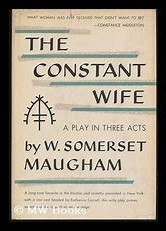
Review 2585: Literary Wives! The Constant Wife

Today is another review for the Literary Wives blogging club, in which we discuss the depiction of wives in fiction. If you have read the book, please participate by leaving comments on any of our blogs.

We also welcome another member to our group! Becky Chapman is a new member from Australia. You can see her bio on my Literary Wives page. Welcome, Becky!

Be sure to read the reviews and comments of the other wives!

My Review

The Constant Wife is a play by Maugham, a social comedy that is reminiscent of one of Wilde’s. It is witty and reflects some interesting attitudes about marriage and faithfulness. It is set completely in Constance Middleton’s drawing room.

The play begins with the revelation that most of Constance’s friends and relatives think her husband John is being unfaithful with her best friend, Marie-Louise Durham. Constance’s sister Martha wants to tell her, but her mother, Mrs. Culver, does not. In any case, once the matter is hinted at, Constance refuses to hear and says she is sure John is faithful to her.

John and Marie-Louise are having an affair, though, and it turns out Constance knows. She has been maintaining the status quo, but when the truth comes out, it turns out she has some unusual ideas about marriage, especially for the time. At the same time, Bernard, a former suitor of Constance’s, returns from years in China.

The play is meant as a light diversion, I think, but its ending was probably considered pleasantly shocking at the time.

I try hard not to judge works out of their time, but although the script is undoubtedly witty, it reflects some attitudes that made me wince. Here’s one that seemed so strange it was funny. I’m not sure what early 20th century British people of a certain class thought feminism was, but in an early speech Mrs. Culver says she told a friend whose husband was unfaithful that it was her fault because she wasn’t attractive enough. (Ouch! But that idea was still around when I was growing up.) What made me laugh, although I don’t think it was meant to be funny, was that Constance in response asks her if she’s not “what they call a feminist.” Maybe it was meant to be funny. Hmm.

What does this book say about wives or about the experience of being a wife?

I think a discussion of this topic probably involves spoilers, which I try to avoid. But here goes.

This play comments in several ways about marriage and fidelity. First, there is the idea that it’s okay and expected for a man to cheat, expressed by Mrs. Culver. The corollary to that is that it is not okay for the wife. Martha does not agree. She thinks both should be faithful. Constance’s attitudes are more complex.

At first, Constance wants to maintain the status quo of her marriage by ignoring the situation. Then when she is forced to acknowledge her husband’s infidelity, she does and says some surprising things. She is very matter of fact about it and expresses the idea that they were lucky because they both fell out of love at the same time. John, more conventionally, affects to love her still.

Constance has been offered a place with a successful decorating business by her friend Barbara, which she originally turned down. Now, she decides to take it, eventually explaining that John’s rights over her have to do with him supporting her, so she wants to be independent. And a year later, there is more to come.

I’m not sure whether Maugham was making serious points about marriage and the relationships between the sexes or just trying to shock and be funny. The upshot of the play is what’s good for the goose is good for the gander—or the other way around.

There are still lots of implicit messages in the play:

  • That women are still property, based on their being supported by men. And Constance discounts running a house and caring for children as if it were nothing
  • That once love has calmed, marriage is basically a financial arrangement
  • That women are more interesting when they’re unobtainable than when they are present and faithful

These are the women’s attitudes, mind you (although I keep reminding myself that this play is written by a man). John isn’t that much heard from, except his cowardly request for Constance to break up with Marie-Louise for him and his conventional assertions that he still loves Constance.

Related Posts

All’s Well That Ends Well

The World’s Wife

Excellent Women

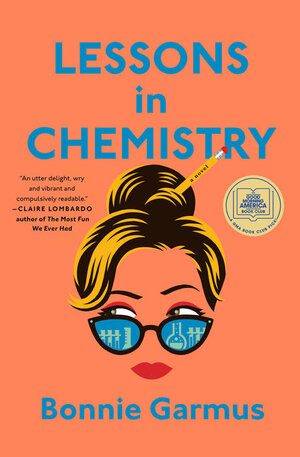
Review 2550: Literary Wives! Lessons in Chemistry

Today is another review for the Literary Wives blogging club, in which we discuss the depiction of wives in fiction. If you have read the book, please participate by leaving comments on any of our blogs.

Be sure to read the reviews and comments of the other wives!

My Review

I finally got to read Lessons in Chemistry. It’s been sitting in my pile for more than a year waiting its turn for the club.

Elizabeth Zott is a chemist in the 1950s, when any career for a woman besides secretary, teacher, or nurse is unusual. She was accepted as a Ph.D. candidate at her university when her advisor sexually assaulted her, so she stabbed him with a pencil. Although he had a reputation, she was accused of cheating and expelled. So, she has no doctorate.

She gets a job at Hastings Laboratories in a town in California, but she is treated like a secretary. However, she meets Calvin Evans, a scientific genius with no social skills, and after a misunderstanding, she interests him in the work she is doing on abiogenesis. Soon, they fall in love. The people at their workplace interpret their synergy to Zott’s ambition to succeed. The couple acquires a dog, which they name Six Thirty (a great, if slightly unlikely, character). Zott is determined not to be married because she knows any breakthroughs she makes will be attributed to Calvin, but Calvin determines to ask her to marry him. We never find out how this will work out, because he is killed in a freak accident.

I may seem to be giving a lot away, but there’s a lot more to this story. For one thing, Garmus has created a unique character in Elizabeth Zott. She is straightforward, forthright, and determined to be treated equally with men. She doesn’t understand the meaning of compromise or of hidden messages.

I know I’m not conveying what this book is like, though. Despite the many obstacles and injustices that Elizabeth encounters, the tone of this novel is light and often funny, as Elizabeth misunderstands the other characters, and they misunderstand her. Yet, the novel has a strong message of feminism, and if younger readers think the misogyny in it is exaggerated, I can tell you it isn’t. (I remember talking to my father, who was a vice president of a large corporation, about a job interview at his company—for which, by the way, he gave me no assistance because he thought it would be unethical. I complained that the first thing they wanted to do was give me a typing test. He told me that was how to get started. I asked him if he had to pass a typing test when he first went to work. He didn’t understand my point.)

As someone who wanted to be a boy when I was a child, because boys got to do things, I really related to Elizabeth Zott. She’s a great character, and I loved this book.

What does this book say about wives or about the experience of being a wife?

Literary Wives logo

The marriage examined in this book is more of an implied one about everyone else, since Elizabeth and Calvin aren’t married. The problems that Elizabeth has are rooted in the attitudes about marriage at the time, the clichés that Elizabeth doesn’t want to have anything to do with—that the wife is the homemaker and mother, and the husband earns the bread, that women don’t have careers, that the women who work are basically there to be sex toys for their bosses, that women are subservient to their husbands and probably not even intelligent, that in terms of science, findings would be attributed to the husband.

Elizabeth and Calvin, the main relationship in the book, are not married, and they have an intellectual synergy that is above these notions. But the implications of the notions have all their coworkers buzzing that Elizabeth is sleeping her way to the top, rather than that she is contributing to the work intellectually.

The point of the novel is to break all these stereotypes and show what Elizabeth is able to do despite all the setbacks. And have fun reading about it.

Related Posts

Euphoria

Recipe for a Perfect Wife

The Time of Women

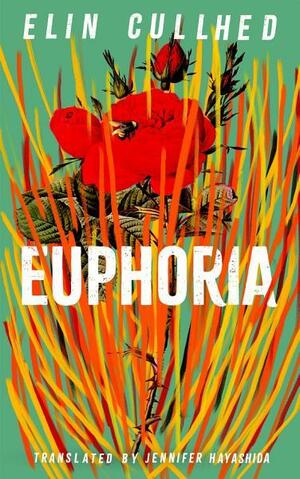
Review 2507: Literary Wives! Euphoria

Today is another review for the Literary Wives blogging club, in which we discuss the depiction of wives in fiction. If you have read the book, please participate by leaving comments on any of our blogs.

Be sure to read the reviews and comments of the other wives!

My Review

Oh, dear, Elin Cullhed and editors, morels come out in the spring. By October, it’s unlikely that any could be found, worm-eaten or not. Chanterelles are what you pick in the fall, among others.

Euphoria is about Sylvia Plath, set in the last year or so of her life. It begins when her daughter is one year old and she is pregnant with her son. It ends a few months before her death.

Before I get into my review, I want to comment on something. When I began reading this novel, I knew very little about Plath except she was a poet, she was married to Ted Hughes, and she committed suicide. Very recently, I read her novel, The Bell Jar, just by coincidence because it filled a hole in my Century of Books project. While I was reading Euphoria, I got the sense that there was a big controversy when Plath died. Some blamed her death on Hughes, who left her a few months before for another women. Certainly, there was a lot of anger against him for burning her diaries. Perhaps I’m seeing some reflection of the opposite side, but I ran across a post by All That’s Interesting, a blog produced by material collected from other sources, that states that Plath was at the nadir of her career when she died. Actually, her novel was recently published (one month before), she had been on BBC reading her poetry, and had recently finished her most famous poem, “Daddy.” So, where did this “nadir” idea come from? Maybe from Ted Hughes’s supporters?

That novel starts with the couple having moved to Devon at Hughes’s insistence. Plath liked living in London and feels lonely in the country, pregnant and left alone with her one-year-old Frieda while Ted goes up to London. Frieda wants attention all the time, and Sylvia has difficulty finding time to work or get anything done. Her marriage already seems rocky to me, alternating sometimes vicious verbal battles with voracious sex. Sylvia admits to liking being mistreated and having a fascination with death. She is extremely needy and jealous. He is always walking away.

The novel is written from Sylvia’s point of view. She is almost always either ecstatic or depressed. With her, as depicted by Cullhead, it is I, I, I. There isn’t so much a plot here as a detailed examination of her feelings as her children grow and her marriage breaks down. Jealous or not, she immediately recognizes that Aissa Wevill is after Ted.

This novel is sometimes difficult to read. Sylvia’s shifts in mood or reactions are sometimes hard to understand, and occasionally her thought processes were hard for me to follow.

What does this book say about wives or about the experience of being a wife?

Literary Wives logo

Well. Certainly Sylvia would be a difficult woman to be married to. First, she’s possibly bipolar, unsure of herself, and obsessed with Ted. But Ted, I think, is not exactly a model husband, even for his time. He helps out sometimes (which is actually unusual for his time) but he withdraws a lot because he has to write. Sylvia has to ask for time to write even though it is her fellowship that is supporting them at the beginning of the book. There are a few signs that he may be threatened by her as a writer, although other times he celebrates with her.

I know this is a time when men generally weren’t involved much with family life and childcare—and sometimes he cooks, does dishes, or takes care of the kids—but I was shocked when he left Sylvia, sick with puerperal fever but with an infant and toddler to care for, to go fishing, in winter no less.

I don’t think this book says anything about marriage in general, just something about this particular, very volatile marriage. It seems like the volatility that made it exciting at first was what did it in finally.

As so often happens when one person in a couple is attracted to someone else and wants to leave, that person begins finding fault with the person he wants to leave in order to make himself feel better about this betrayal. Often, the very things that attracted him in the first place are the things that irritate him later. You may find fault with my pronouns, but it is often these pronouns that this applies to.

Related Posts

Mrs. Hemingway

Passion

Owls Do Cry

Review 2471: Literary Wives! Their Eyes Were Watching God

Today is another review for the Literary Wives blogging club, in which we discuss the depiction of wives in fiction. If you have read the book, please participate by leaving comments on any of our blogs.

Be sure to read the reviews and comments of the other wives!

My Review

Their Eyes Were Watching God is another reread for me. I looked over my original review and still agree with it. I can make one more comment. This time around I really tired of the dialect and was happy that it became less as the work went on. Writing novels in dialect was popular between the late 19th century and the early 20th, but it is sure hard on the reader. You can find my original review here.

What does this book say about wives or about the experience of being a wife?

Janie’s journey is a search for both love and selfhood, and it involves three marriages.

When she is a naïve 16, Janie’s grandmother arranges a marriage for her with Logan Killick, a much older farmer. Janie believes those that say married people learn to love each other, but very soon she finds this isn’t always so. Keeping house isn’t enough for him. He wants her to do heavy work around the farm. The last straw is when he announces his intention to buy a second mule so that Janie can plow, too. For Logan, a wife seems to be someone who can save him from hiring a farmhand. Janie puts up with a few months of this and then walks off with flashy Joe Stark.

Joe is a guy fall of ideas and ambition who becomes a powerful force in the all-black town of Eatonville. (On a side note, I didn’t understand until I read Dust Tracks on a Road what a big deal this town was.) Unfortunately, a trait Joe shares with Logan is that a wife should do as she’s told, so he doesn’t allow Janie to take part in any of the pleasures of living there. She must bind up her beautiful hair, mind the store but not take part in the conversations in it, and act stately, because she is the mayor’s wife. Both these husbands treat Janie more like a symbol of what they want than a person. There is also the issue of Joe’s verbal and sometimes physical abuse of her.

After Joe dies and she’s been a widow for nine months, she takes off with the much younger Tea Cake. She’s in love. When he takes her $200 and loses it gambling, she is only worried that he left her. He does consult her on plans and lets her do what she wants, and certainly he provides opportunities for fun, but he is also jealous and beats her once just for show. It’s a different culture and time, but I was fairly appalled at everyone’s reaction to the beating.

In the Afterword, Henry Louis Gates, Jr., points out that Hurston wanted to show characters who are real, not all good, not all bad. I guess that’s my way to understanding why Janie remains so in love with Tea Cake. And he does treat her as a person. But it seems to me that in the search of love and selfhood, Janie only gains selfhood once Tea Cake is gone.

Related Posts

Dust Tracks on a Road

Go Tell It on the Mountain

Red Island House

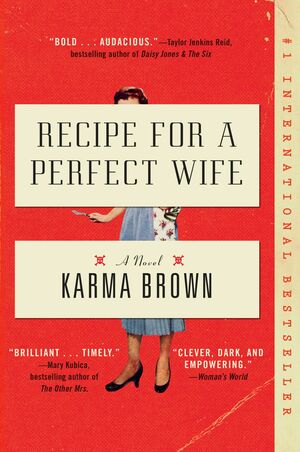
Review 2440: Literary Wives! Recipe for a Perfect Wife

Today is another review for the Literary Wives blogging club, in which we discuss the depiction of wives in fiction. If you have read the book, please participate by leaving comments on any of our blogs.

Be sure to read the reviews and comments of the other wives!

This month we welcome a new member, Kate of booksaremyfavoriteandbest!

My Review

In the present time, Alice Hale has no desire to move to the suburbs, but she finds herself doing so anyway, pushed along by her husband’s desire for a family and a white picket fence. Since she lost her job, she doesn’t feel as if she has as much say in the marriage. This situation is made worse because she told Nate she quit because she wanted to write a novel. Actually, she was fired after a stupid indiscretion, and she hasn’t written a word.

In the 1950s, Nellie Murdoch and her husband have moved into the same house that Alice and Nate buy later. She slowly begins to recognize that her husband, Richard, is controlling. Her culture tells her that this is her fault, but then he begins to be abusive.

Trying to adjust to having the whole day on her hands, Alice begins learning to garden and discovers a cookbook that belonged to Nellie’s mother. She begins cooking recipes from it. For his part, Nate is pressuring her to get pregnant, but she can’t bring herself to tell him she is not ready.

I was somewhat interested in the fates of these two women, but I was much more sympathetic to Nellie than to Alice, who seemed to be creating a lot of her own problems. Overall, though, I felt the novel was okay but nothing special. I had the biggest reaction to the revolting quotes from the old marriage manuals that headed each chapter.

What does this book say about wives or about the experience of being a wife?

These are two marriages with serious problems. The marriage of Nellie and Richard is more straightforward. Nellie does everything she can to be a good wife and housekeeper, as defined by the 50s (although to my memory things were starting to open up about then). However, Richard is an abuser and a philanderer. There isn’t much she can do about this except decide to leave him. She chooses another way, and I think we’re supposed to think her solution is fitting, but I didn’t. I don’t want to reveal it, but since she said she had the resources to leave, I think she should have done that.

I don’t see much hope for Alice and Nate, either. Alice pretty much lies her way through three-quarters of the book, some of the lies seeming totally unnecessary. On the other hand, Nate keeps stepping over the line in his desire to have a child and later exhibits some behavior that is much worse, supposedly done out of concern. (It seems to me that some guys think that if a wife isn’t working, she has no say in her own future.) But Alice doesn’t object, so although he should know he’s being too pushy (they seldom do), he doesn’t, and she doesn’t tell him.

By the end of the novel, Alice has found herself, but although there is some resolution, I foresee eventual resentments. Of course, Nate’s underhanded dealings toward the end of the novel are fairly unforgivable.

Finally, I don’t know what to think about Alice’s slowly turning herself into a replica of a 1950s housewife. Her excuse of “research” is nonsense. It seems like a such a step backwards. Certainly wives are still dealing with some of the same problems they’ve always had, but why go back? And why behave like a 50s housewife, which is sort of what she does until the end.

I know this book is supposed to be funny, but it seemed to be hitting some sore points for me, so I didn’t find it so.

Related Posts

The World’s Wife

How to Be a Good Wife

The Amateur Marriage

Review 2323: Literary Wives! Mrs. March

Today is another review for the Literary Wives blogging club, in which we discuss the depiction of wives in fiction. If you have read the book, please participate by leaving comments on any of our blogs.

Be sure to read the reviews and comments of the other wives!

This month we welcome a new member, Kate of booksaremyfavoriteandbest! She will join in for the next review in June.

My Review

Set in an undefined time that is probably the 1950s or 60s, Mrs. March is a character study of a woman disintegrating. This all begins at her favorite pastry shop. Mrs. March is a woman highly concerned with appearances. She is married to George March, a writer whose most recent novel is a hit. She is figuratively torn asunder when the shop owner asks her if she minds being depicted in George’s book as the main character, Johanna. Mrs. March hasn’t exactly read the book, but she knows that Johana is an ugly whore whose clients don’t even want to be with her.

Mrs. March immediately becomes obsessed by the idea that he has portrayed her and that everyone is talking about it. She doesn’t read the book, which might be a reasonable reaction, but she destroys a few copies and roots through George’s desk trying to discover his secrets. There she finds an article about a missing teenager in Maine and immediately begins to believe that George, who periodically visits a cabin in the same town, has had something to do with it.

This novel takes a deep look at the psychological behavior of a woman who is unraveling. At times it is darkly funny, sometimes tipping nearly to absurdism. Mrs. March is not likable, her behavior is often outrageous, yet it’s hard to turn away from the page.

What does this book say about wives or about the experience of being a wife?

It’s hard to answer this question, actually, because we don’t see much of George. You have to wonder in the first place what would make George give such an unpleasant character as Johanna all of his wife’s rather distinct mannerisms, especially since most of the time he seems affectionate and soothing to her. Artists can be clueless, but it also seems clear that Mrs. March is so self-obsessed that she is detached from everyone, even her son.

Literary Wives logo

What does the poor woman have to do all day except clean up things she doesn’t want her maid to see and prance around town in her fur coat shopping? It’s enough to drive anyone mad. Yet is seems that no one is stopping her from doing whatever she wants to except, possibly, the notion of how it would look if she, say, got a job.

And how things look seems to be the dominating force in her life. We get a few glimpses into her childhood where her cold mother taught her this priority.

George has his secrets, but he is really not at all important in this novel. Mrs. March is able to adjust her notion of George instantly, thinking he’s a murderer while preparing his birthday party. What a book!

Related Books

The Wife

The Tortoise and the Hare

The Bird’s Nest

Review 2277: Literary Wives! Hamnet

Today is another review for the Literary Wives blogging club, in which we discuss the depiction of wives in fiction. If you have read the book, please participate by leaving comments on any of our blogs.

Be sure to read the reviews and comments of the other wives!

My Review

Hamnet is a reread for me for Literary Wives, so if you would like to revisit my original review, including the synopsis of the plot, it’s at this link. Let me also comment that it was one of my Top Ten Books two years ago.

What does this book say about wives or about the experience of being a wife?

Literary Wives logo

There are several reasons why people assume that William Shakespeare’s marriage to Anne Hathaway (whom O’Farrell calls Agnes) was not a happy one. She was several years older than he and pregnant when they married; they lived apart most of the time; he left her his second-best bed (which is misunderstood). But Maggie O’Farrell chooses to take another point of view, that it was a love match.

The novel alternates chapters between the history of their relationship and their son Hamnet’s last days. Then it switches gears to show the aftermath of his death. By the way, Shakespeare is never mentioned by name.

In this novel, Agnes is a wise woman who knows all the healing herbs and can see into a person’s mind by grasping the muscle between their thumb and forefinger. She is thought to be strange and a witch. When she grasps Will’s hand for the first time, she sees vastness.

But Will has a hostile relationshp with his father and dreams of other things than being a glover. When he becomes depressed because he has no work, Agnes puts her head together with her brother Bartholomew, who suggests he be sent to London to sell gloves for his father. Will soon finds his element in London and plans to move the family there when he can afford it. But because of Judith’s poor health, the family can’t follow him there.

But the novel sticks at home, where he visits when he can, sometimes as long as a month—until Hamnet dies.

The novel depicts an Agnes otherworldly but confident in her relationship with Will until Hamlet’s death creates a break. Her grief is so excessive and he can’t bear to be reminded of his son, while she wants only to remember him.

This novel paints a moving depiction of grief and of how Shakespeare’s play eventually creates a mutual understanding. It’s a powerful novel, and there is probably a lot more to say about it, but I find myself unable to convey much more.

Related Posts

The Marriage Portrait

The Secret Life of William Shakespeare

The Marriage Game

Review 2231: Literary Wives! Sea Wife

Today is another review for the Literary Wives blogging club, in which we discuss the depiction of wives in fiction. If you have read the book, please participate by leaving comments on any of our blogs.

Be sure to read the reviews and comments of the other wives!

My Review

At the beginning of Sea Wife, I thought, oh no, it’s in he said/she said format, which I’m already sick of. That’s not really what’s going on, though. Eventually we realize that Michael’s ship log entries are interspersed with Juliet’s thoughts as she reads them.

Juliet is home after a voyage in the Caribbean. Before the trip, she had been suffering from post-partum depression since the birth of her 2 1/2-year-old boy George (or Doodle). Then her husband Michael convinced her they should buy a sailboat and go to sea. She was terrified of this idea, having no sailing experience herself. However, eventually she agreed. Michael wanted to sail around the world, but she convinced him to sail in the Caribbean off Panama, where they ended up buying the boat, so they could stay near land. Along with them went Doodle and seven-year-old Sybil.

Michael is right about one thing—the adventure forces Juliet out of herself. It also focuses attention on their marriage. They have some lovely moments, but dread arises as we slowly realize that Michael has not returned home.

After my initial bad reaction, which only lasted a few pages, I found this novel absolutely compelling. The descriptions of their stops and of the seas are vivid and beautiful. Both Michael and Juliet have the opportunity to unearth some of their own demons.

What does this book say about wives or about the experience of being a wife?

Literary Wives logo

First I have to rant a little about how unprepared this couple were to take on this kind of trip. Michael’s teenage years spent doing a few trips on Lake Erie were definitely not enough experience to set sail on the ocean with his family, especially when Juliet has never sailed. They’re not sailing on a cabin-cruiser-type yacht but on a sailing vessel, which is much more complicated. He tries to teach her during the trip, but she gets confused about the names of things and is afraid of doing something wrong. This mid-life crisis experiment seemed so stupid to me that it took me a while to get past it. They lived in Connecticut, for heaven’s sake. As this was supposed to be his life-long dream, he could have rented a boat and taught her to sail before they went.

In any case, a sailboat, however large, is a good place to focus the mind on the family problems. Michael seems to have been breathtakingly self-absorbed during Juliet’s depression, leaving her alone with the kids almost all the time and not helping with the housework.

Michael loves Juliet, but he harbors a lot of resentment against her for being depressed and for focusing on her memories of being abused by a family friend. He seems angry that she turned out to be a different person than she seemed to be when they met, a woman he thought was brave and self-assured..

Juliet is afraid she no longer loves Michael. Her political beliefs are opposite to his and he hasn’t handled her depression well.

I like how their relationship ebbed and flowed during the trip, with good times and not so good, like a real marriage, instead of (more common with our Literary Wives books) being unrelentingly bad. Living the dream, Michael is nicer and more involved with the kids even though he is occasionally impatient and Juliet has gotten out of herself. The couple end up really having adventures, as well as working out some of their problems. But how does it end? I’m not telling.

Related Posts

Ahab’s Wife, or The Star-Gazer

Dept. of Speculation

Happenstance