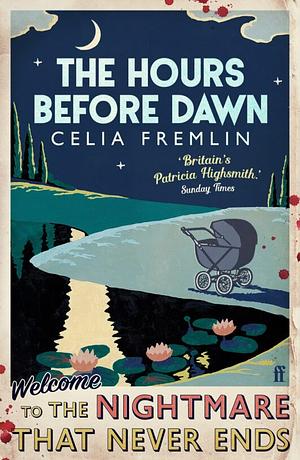
Review 2663: The Hours Before Dawn

Boy, if you like a good thriller, this Celia Fremlin is terrific! I wonder why I never heard of her before. Since the summer before last, I had been trying to find a reasonably priced copy of her Uncle Paul. In May, another blogger told me she had found one, so I looked again and ended up with a set of three novels. One more to go!

Louise is exhausted. She has a young baby, Michael, who won’t sleep through the night and two girls, ages six and eight. In with the times, her husband, Mark, isn’t much help and even complains about the baby and the untidy house. Louise also has some objectionable neighbors. Mrs. Philips, who shares a wall, complains every day about the noise her children make. Mrs. Hooper has a talent for roping Louise into things she doesn’t want to do, like taking care of her baby, Christine. Mrs. Morgan is always condoling with her and criticizing the others, but Louise knows she does the same with the others.

Louise and Mark have decided to rent a room on their top floor, but Louise is surprised when Mis Brandon shows up to take it. She looks too prosperous and respectable to need to rent someone’s room, and there is something intense about her. But she teaches school at a local primary and is too respectable for Louise to turn away.

Louise begins to have strange dreams, but there are also some odd events that occur, and Louise is so tired, she thinks she may be imagining things. Tony Hooper, a young boy, tells her Miss Brandon is a spy, because he saw her going through Mark’s desk as well as his own mother’s. Then one night Louise takes Michael out for a walk so as not to disturb Mrs. Philips and falls asleep on a park bench. When she awakens, Michael and his pram are gone. She goes to the police and incoherently tells them her story only to find Michael and his pram at home, the baby asleep in his bed.

Now she feels she is branded not just a poor housewife but a lunatic. Mark is angry with her because he thinks she is jealous of Miss Brandon on his behalf. But Louise is determined to investigate her lodger.

This is a terrific little thriller that builds suspense throughout and ends with a bang. I’m really enjoying these books.

Related Posts

Uncle Paul

Lady Living Alone

The Circular Staircase

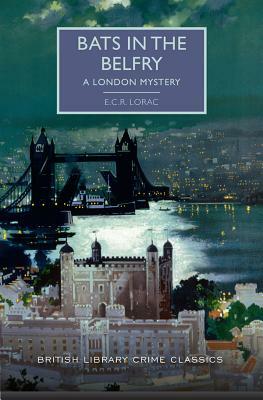
Review 2642: #RIPXX! Bats in the Belfry

Bruce Attleton is a once-successful novelist married to the actress Sybilla Attleton. He has planned to meet up with his friend Neil Rockingham in Paris, but he doesn’t show up. When Rockingham finds that no one knows where Attleton is, he thinks of going to the police.

In the meantime, Robert Grenville, a journalist who wants to marry Attleton’s ward, Elizabeth Leigh, learns that a strange man with a beard named DeBrett might be blackmailing Attleton. He traces DeBrett to a weird studio with a tower, breaks in, and finds Attleton’s briefcase in the coal cellar.

Grenville goes to the police, and eventually they find a body plastered into what had been a niche in the wall. But the body has no head or hands, so is it Attleton or DeBrett, since both seem to be missing?

There’s no love lost between the Attletons, and both were unfaithful, so is that a motive for murder? Or has Attleton faked his own death? Did Grenville kill him since he was denying permission for him to marry Elizabeth? Or does it have something to do with his cousin, who recently died?

If this doesn’t sound complicated enough, the mystery gets more so as it continues. I guessed the motive, but the murderer was just one of many guesses.

I think I like Lorac’s rural mysteries better because of their atmosphere, although the studio is certainly creepy. Of course, Inspector Macdonald is going to solve the crime.

Related Posts

Checkmate to Murder

Murder by Matchlight

Post After Post-Mortem

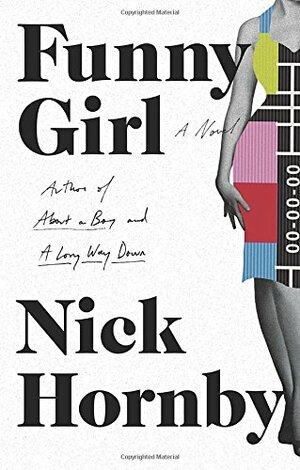
Review 2625: Funny Girl

I have enjoyed some of Nick Hornby’s books very much, particularly some of his early ones, and others not so much. I have been watching the series Funny Woman, though, and when I learned it was based on this book, I thought I’d read it.

It’s the Swinging 60s, and Barbara Parker wants to make people laugh. Her relatives encourage her to enter the Miss Blackpool competition in hopes it will keep her in Blackpool instead of leaving for London. She wins, but when she realizes she’s supposed to participate in activities for a year, she decides not to accept. Soon, she is in London.

The novel follows her as she looks for work and a roommate, and finally an agent. The agent is more interested in sending her for modeling gigs, but she wants to act, so she gets him to send her for auditions. After some failures, she is lucky enough to come upon the writing team of Tony Holmes and Bill Gardiner, their producer Dennis Maxwell Bishop, and actor Clive Richardson. They are working on a different project that they’re not happy with, but they are so charmed by Barbara (now calling herself Sophie Straw) that they decide to write a show for her. Sophie’s offbeat humor makes her a sensation and the show Barbara (and Jim) a success. (Ironically, her character has her true name.)

I didn’t think this book was particularly funny, but it’s still a fun read that is full of detail about early British TV comedies (much of which I wasn’t familiar with), the craziness of London in the 60s, and the progress of our ambitious but likable heroine. Toward the end, it takes a turn toward conventional romance, but the ending lends perspective to everything. Although Sophie is engaging, a lot of this novel hangs on the existing synergy between the members of that original team and what happens when it inevitably cools off. And, of course, the difficulties of a young woman trying to make it in show business.

Related Posts

State of the Union

Miss Iceland

Sweet Caress

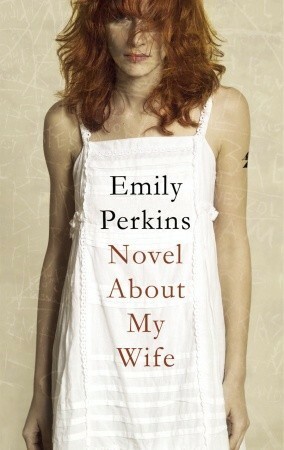
Review 2619: Literary Wives! Novel About My Wife

Today is another review for the Literary Wives blogging club, in which we discuss the depiction of wives in fiction. If you have read the book, please participate by leaving comments on any of our blogs.

Be sure to read the reviews and comments of the other wives!

My Review

We learn that Tom’s wife Ann is dead, but we don’t know the cause for some time. Tom looks backward and forward along the length of their marriage trying to figure things out. Occasionally, there are scenes from a book manuscript he’s writing in which he tries to guess what happened in Fiji the weekend they got married.

Tom is a script writer, and Ann makes models of cancer patients’ body parts at a hospital. Feeling as if things are going well financially, they have bought a house in Hackney with a lot more space than in their flat. They love it, but when Tom’s job writing a script falls through because the producer leaves the field, he begins having trouble finding another job.

Ann comes home from work one day and tells Tom that she saw her stalker at work. Tom didn’t know she had a stalker, but she says she has spotted him in various places.

Ann is Australian, but she has lost her accent and doesn’t want to talk about her past. She also has a history with drugs that she doesn’t seem as secretive about.

It’s hard to explain what this book is about without giving away too much, although the blurb just goes ahead and gives away a major plot point. Let’s just say that the tension level rises as Ann becomes pregnant, Tom still can’t find a job, and Ann’s behavior becomes manic at times. Ann has secrets, but she’s not telling.

Without being a thriller but more an intense examination of a relationship, Perkins’ book skillfully builds up quite a bit of suspense. It liked it a lot.

What does this book say about wives or about the experience of being a wife?

Literary Wives logo

The relationship described here is so complex that it’s hard to answer that question. Or maybe Ann is complex and unknowable. At first, I was annoyed at this couple and their dismissive attitude to many people and things, but after a while I began to like them. Still, Tom doesn’t seem to notice that Ann’s behavior is getting more bizarre, that she keeps going after ant infestations, for example, when Tom doesn’t see any ants or staying up all night rearranging things into weird configurations. In the meantime, he is both spending money and worrying about debt. Both of them seem to be subject to compulsive behaviors.

Secrets seem to be a big problem. Although the two love each other, they both keep their secrets—Ann about her life in Australia and the events in Fiji, Tom about the state of his work, and the level of their debt. The culmination comes when she finds out the truth about another secret he’s keeping.

Related Posts

Euphoria

The Amateur Wife

Happenstance

Review 2613: The Bloater

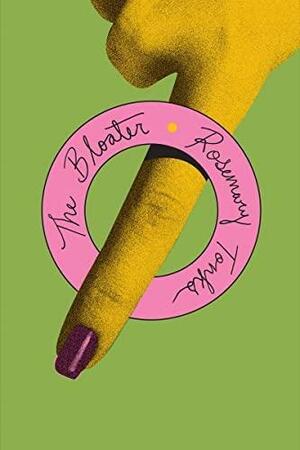
I was so taken by Rosemary Tonks’ The Halt During the Chase that I looked for more by her. I found The Bloater.

Min is a married sound engineer whose husband is seldom home. She occupies herself with witty, frivolous conversations with her girlfriends and flirtations with her admirers. She has one admirer she finds disturbing, though, a large opera singer whom she finds disgusting and attractive at the same time. She talks endlessly with her other friends about whether she wants an affair with him, whom she refers to as the Bloater.

This novella is crammed with witty, sometimes cruel dialogue. It moves along very quickly and is beautifully written. At times, I wondered if Min really wanted to have an affair with anyone—or maybe she does.

When I was reading about this book, I learned that Tonks gave up a successful career and retreated into isolation. You would hardly believe this of the creator of such witty, vibrant characters.

Related Posts

The Halt During the Chase

Sing Me Who You Are

Sally on the Rocks

Review 2570: #1952 Club! Excellent Women

Entry #2 for the 1952 Club!

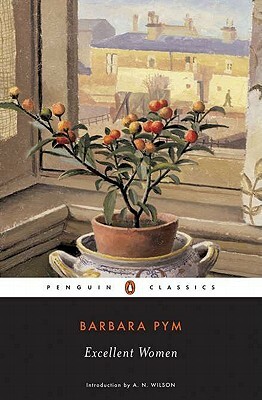
By “excellent women,” Pym seems to mean a type of English spinsters who occupy themselves with charity events and helping others, dress drably, and are taken for granted by men. That’s what Mildred Lathbury seems to think she is. She’s a clergyman’s daughter of limited means, mild-mannered and religious but observant of others’ characters while not wishing them any harm. In Excellent Women, she gets a surprising amount of attention from men, but then she’s always picking up after them.

Mildred lives upstairs of a vacant flat, and she’s curious about what her new neighbors will be like. She knows they’re named the Napiers by the sign at the doorbell. She meets Helena Napier on page 2, a young, stylish woman, and sees her around with a man, whom she assumes is her husband, Rockingham (known as Rocky). But he is not. He is Everard Bone, an anthropologist, and he and Helena, also an anthropologist, are writing a paper together. Rocky is off serving in Italy.

Mildred is good friends with Julian Malory, the vicar of her rather high church, and his sister Winifred. It is the expectation of several characters in the book that Julian will marry Mildred, but she doesn’t seem to expect it. Or does she? It’s hard to tell. Certainly, he is very friendly with her, but she thinks he is not the marrying kind.

Mildred meets Everard before she meets Rocky. Although he seems not to notice her at first, after a while he begins seeking her out. He is abrupt and serious, and she doesn’t think she likes him. Or does she? It’s hard to tell.

Once he shows up, Rocky is utterly charming and handsome. He is very friendly to Mildred and keeps popping up for tea. Mildred senses friction in the Napier home—well, she can hear them arguing. Rocky does all the cooking and cleaning in their home, because Helena is completely undomesticated. (She sounds like my kind of gal, even though she isn’t depicted particularly positively.) Mildred distrusts Rocky’s charm. She understands from Everard that Helena thinks she’s in love with him (Everard).

It being post-war London, it is still hard to find a place to live, so the Malorys decide to lease their upper floor. Soon, it is taken by Mrs. Gray, a beautiful clergyman’s widow. Mildred finds both Julian and Winifred transfixed by her, so she steers clear. It’s pretty evident what Mrs. Gray thinks Julian’s fate should be.

Mildred isn’t at all liberated. She is constantly cleaning up after men or doing ridiculously involved favors for Rocky and Helena, and all take her for granted. Yet, this is a lively, amusing social comedy. It is also a tale of the rapidly disappearing lives of upper- and middle-class English people.

Related Posts

The Camomile

Alice

My Brilliant Career

Review 2534: #ReadingAusten25! Sense and Sensibility

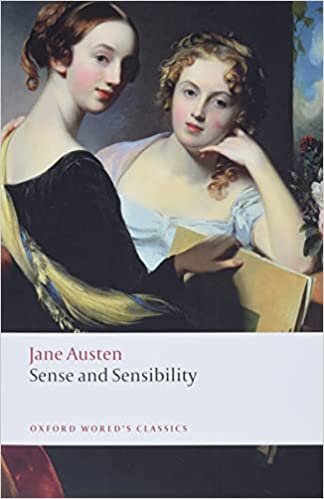
My original intention for ReadingAusten25 was to reread only the books I hadn’t reviewed yet. But I can’t resist Austen, so here I am reviewing Sense and Sensibility. I am not going to repeat my review of 2022, though, so you can find it here. Instead, I thought I’d look at whether the book struck me differently this time and a little at Claire Tomalin’s point of view (the wobble), as cited by Brona.

It did strike me differently. Although Elinor is still my favorite of the two sisters, they both struck me more extremely this time. Marianne seemed like a true modern teenager, not as much for her reactions to Willoughby but more in her sulking (call it what it is), her rudeness to various kind characters whom she thinks ill-bred, and so on. But the thing is, 16 in the early 19th century meant she was supposed to be an adult, or almost. (Of course, she is also under the influence of the Romantic movement in art, literature, and music.)

As for Elinor, sometimes I felt she carried her comments a little too far, into preachiness. I got a little tired of her dissections of other people’s behavior.

I also appreciate the wit of the novel more. Although I always find Austen witty, she has drawn us some priceless characters and written quite a few zingers.

I am not so sure about Tomalin’s “wobble.” I looked for it but didn’t find much evidence for it unless you count Elinor’s dash out of the room after she finds out Edward isn’t married. I’d like to hear if anyone was struck differently. I remember not agreeing with some of Tomalin’s interpretations when I read her biography of Austen.

Related Posts

Jane Austen: A Life

Jane Austen at Home

Persuasion

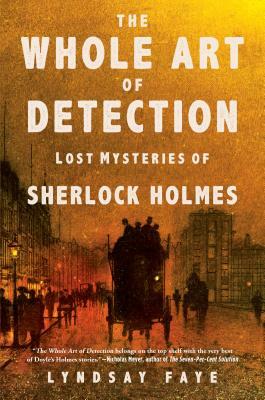
Review 2527: The Whole Art of Detection: Lost Mysteries of Sherlock Holmes

I knew this book might not be a good fit for me, because I usually feel that mystery short stories are too short to do much but pose puzzles, but more importantly, because I usually think it is unsuccessful when an author continues another author’s work. However, I have generally enjoyed Lyndsay Faye’s books, so I tried this one.

Purporting to be lost stories, notes, and diary entries, most by Dr. Watson but some by Holmes, this book’s 15 stories span the time from before the two met until 1902.

I am not going to run through a description of each story. Instead, I’ll comment on how authentic Faye’s stories seemed as stories about Holmes, keeping in mind that I haven’t read a Holmes story in years.

First, how much like the originals are Faye’s Holmes and Watson? Faye clearly is very familiar with the books (this applies to pretty much all the things I’ll look at, not just this one) because she makes lots of references to other cases and certainly has down Holmes’s characteristics. However, it seemed to me that her Holmes is more of a Benedict Cumberbatch Holmes than an Arthur Conan Doyle one. For one thing, he is much more expressive of emotions, more so even than Cumberbatch, especially as the book goes on. Watson seems himself, only even more flowery of description, but smarter. Also, like in the B. C. version mentioned above, his war service is stressed a lot more.

What about the mysteries? Well, you’re reading the words of a person who never once guessed the solution of a Sherlock Holmes story—until now. On the one hand, Faye’s stories are not nearly as ridiculously overcomplicated and unlikely as Doyle’s (spoilers for ACD!)—teach a snake to crawl down a rope? while dying, say “the speckled band” instead of “a snake bit me”? On the other hand, it seemed ridiculously easy to guess at least portions of the solution for most of the stories (unlike in Faye’s other mysteries—this is what I mean by mystery short stories—they’re either totally opaque or too easy). For instance, in “The Case of Colonel Warburton’s Madness,” I guessed immediately that (spoilers) gaslighting was involved and who was doing it. I just didn’t know how. Later in a story about identical twins, I knew immediately that the twins had switched.

Faye writes well and keeps up the interest. I just wish she’d write more of her own stuff.

Related Posts

Seven for a Secret

Back to the Garden

The Edinburgh Mystery and Other Tales of Scottish Crime

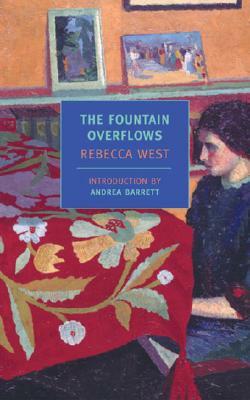
Review 2516: The Fountain Overflows

Rebecca West based The Fountain Overflows on her chaotic family life when she was a girl. I understand it is the first of an unfinished trilogy. If so, I’m interested in reading all of it.

Rose Aubrey is a daughter of an unusual couple. Her father Piers is a writer and editor whom many consider a genius, but he is a gambler who continually impoverishes his family. He has a pattern of collecting followers or benefactors who at first seem to worship him, but eventually they break with him, usually after lending him money. However, his family adores him. Her mother is a gifted pianist, formerly a famous concert performer, who is teaching Rose and her sister Mary with the expectation that they will become concert pianists, too. Their oldest sister, Cordelia, has no talent for music but doesn’t know it. She takes up the violin. Their younger brother Richard Quin is adored by all, a toddler at the beginning of the novel.

The novel covers about ten years of the family’s life. There is plenty of incident, from Mrs. Aubrey’s struggles to keep the family financially afloat to the girls’ struggles at school because they’re considered peculiar but also because they hate wasting time at school when they could be playing piano. Cordelia finds a mentor in one of her schoolteachers who encourages her in the idea that she is talented, which Mrs. Aubrey and the other girls deplore. Rose and Mary meet poltergeist activity at a friend’s house, and the family gets involved in a murder case. Also of importance is the girls’ cousin Rosamund.

It’s difficult to summarize this novel, but this family is so interesting, brilliant, chaotic, well-intended, and right behaving. I found the novel delightful.

Related Posts

Little Women

Apricot Sky

The Pursuit of Love

Review 2499: Novellas in November! Highland Fling

I read Highland Fling to fill a hole in my Century of Books project but found it also qualifies for Novellas in November!

The novel begins with Albert Gates, who almost on a whim, moves to Paris to become a painter. There, he at least seems serious about it and actually arranges a showing at a gallery in London before returning home to arrange his show.

Now the point of view shifts to that of Jane Dacre. She has been spending time with her married friends, Walter and Sally Monteath, who are having difficulty living on their incomes, Walter, a poet, apparently being unable to hold a job. The Monteaths are asked to travel to Scotland to host a house party at Dulloch Castle, Lord and Lady Craigdulloch having been called out of the country. They are not excited about it but agree thinking it will be a good way to save money. They invite Jane and Albert.

The rest is a no-holds-barred satire of country house parties, sporting people, Scottish customs, and surprisingly, the young people themselves. In Scotland, Albert comes off as an intellectual snob, his remarks rude and his likings absurd, his outfits unsuitable and ridiculous. (He reminded me of an obnoxious artist character in Angela Thirkell’s series, but try as I might, I cannot figure out which book he appears in. If anyone knows who I’m talking about, please tell me.)

Nevertheless, Jane falls in love with him and everything he says is wonderful. This plot point may be explained because Mitford herself fell in love with a young man on a similar Scottish visit, and they eventually split, possibly because he was gay.

This novel seemed a lot less polished than Mitford’s later ones, but it is her first. The caricatures are very broad, and the supposedly bright banter seemed puerile. However, there are some funny moments here, the description of Albert’s art being one of them.

Related Posts

The Pursuit of Love

Love in a Cold Climate

Pigeon Pie