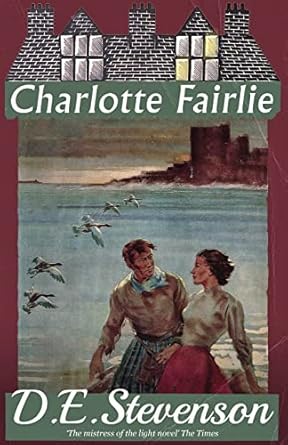
Review 2661: Dean Street December! Charlotte Fairlie

When Charlotte Fairlie was a girl her relationship with her widowed father was close. Then he met someone, and she seemed to be nice, but as soon as they were married, she became jealous of Charlotte. In the end, he sent Charlotte to his brother, and she never saw him again. (Oddly, she reflects later that it was the only thing he could do, but I think not.)

Now Charlotte has achieved her goal since she was in school. She has been appointed head of St. Elizabeth’s, her old school. She is young for such a position but has been wearing a stodgy hat to board meetings to disguise that fact. The only thorn in her side is Miss Pinkerton, who thinks she should have had the position and is a real troublemaker.

A new girl starts at the school, Tessa MacRyne. She is an unusual child, self-possessed but homesick for her island home in Western Scotland. Charlotte catches her running away one day and learns that a letter from her mother has informed her that her parents are divorcing and her mother has returned to her parents in the U. S. Tessa feels she must return home to comfort her father. Charlotte’s handling of the situation earns her Tessa’s affection and an invitation to the island of Targ during summer break.

A friendship begins between Charlotte and Lawrence Swayne, the headmaster of the boys’ school. Unexpectedly, her proposes marriage to her, thinking they would make a great partnership.

I found this novel to be deeply touching and involving. I generally think of Stevenson’s books as very light romance, but I felt this book was a little deeper.

Related Posts

Music in the Hills

Winter and Rough Weather

Kate Hardy

Review 2308: One Afternoon

One afternoon Anna Goodhart, a widow in her mid-thirties with three daughters, runs into Charlie, a young actor whom she met years ago at some event of her husband’s. He invites her to a party. She agrees to go but almost backs out. However, she goes and they soon begin an affair. Although she doesn’t expect it to last, she is wild with joy and makes no secret of their relationship.

This is the story about a woman who begins to rebuild her own life after her husband’s death, to realize things about her marriage, and to identify what she wants her life to be. Although attitudes had begun to change for women in 1974 when this book was published, it reads like a much more modern novel. I was surprised how the people in Anna’s life, with a couple of exceptions, take her affair and her subsequent decisions.

This is a lovely book filled with mostly kind people. It explores memory and how it tangles with reality as well as the complexities of love.

Related Posts

Four Letters of Love

The Transit of Venus

The Women’s Room

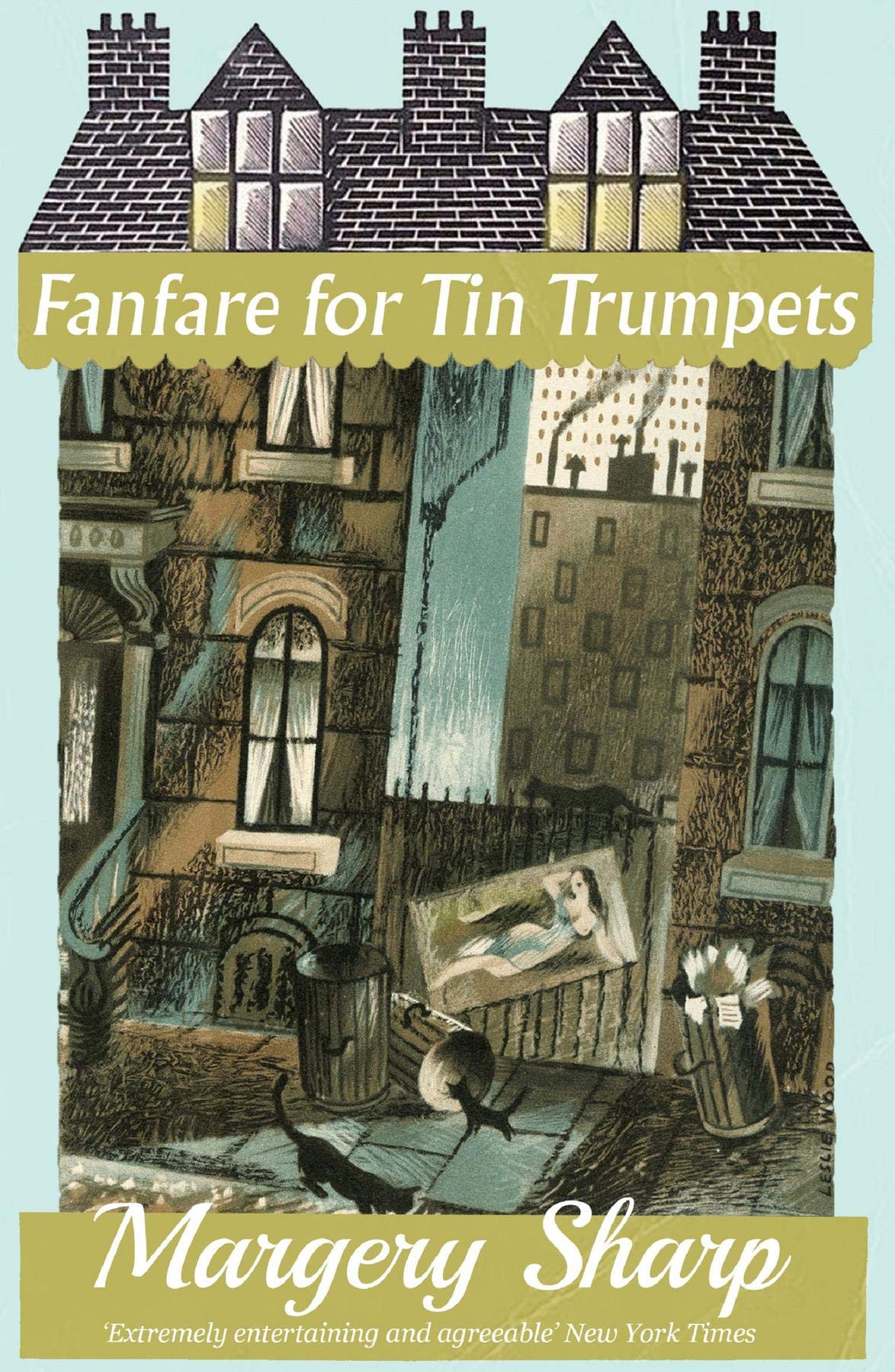
Review 2269: Fanfare for Tin Trumpets

Young Alastair French is offered a place in his family’s stationers business, but he decides to take a room in northwest London with his friend Henry, who is going to be a student. Alastair has £100, and he figures he can support himself for a year while he becomes a writer.

Alastair and Henry move into an apartment building with an assortment of friendly neighbors, particularly Winnie Parker, who is always surrounded by young men. Although he starts a novel, Alastair decides to become a playwright mostly because plays are shorter. He doesn’t do much work but he does write up a scenario.

Then he meets Cressida Drury, an actress, and is immediately smitten. She returns some of his interest when she learns he is a playwright, but it’s hard to tell how much, and he didn’t think of dating when he made his budget.

This is a frothy, funny novel about youthful optimism and first love. It’s a lot of fun.

Related Posts

Harlequin House

Rhododendron Pie

The Foolish Gentlewoman

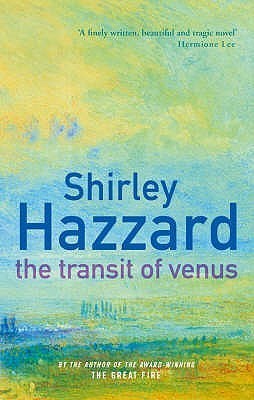
Review 2185: The Transit of Venus

The Transit of Venus spans the 1950s through the 1970s. It is a modernist exploration of the love affairs, both unconsummated and consummated, of the characters surrounding two Australian sisters in England, Caroline and Grace Bell.

The novel begins when Grace Bell is engaged to Christian Thrale. Grace is a few years younger than her sister Caroline, who is 21. Both are staying with the Thrales when Ted Tice, an astronomy graduate, arrives to plan the placement of a new telescope with Professor Sefton Thrale, Christian’s father. Ted, who is shabby and unprepossessing at the time, falls in love with Caroline at first sight.

Caroline, for her part, falls in love with Paul Ivory, whose play is being produced and who has just become engaged to Tertia Drage, the daughter of a neighboring lord. Caroline and Paul have an affair, but Paul drops her for Tertia, choosing position and wealth over love.

Caroline is devastated. She goes off with a friend of the Thrales, a middle-aged roué who has been bedding Tertia, but she ends up in London, working at a poorly paid government job and leading a bleak existence. All the while, she is loved by Ted Tice.

As the years go by, most of the main characters of the novel are overtaken by love. Caroline and Paul rekindle their affair for a time, but Caroline eventually happily marries a wealthy American philanthropist, Adam Vail. Christian becomes briefly obsessed with a young secretary, while Grace falls deeply in love with her son’s noble doctor. Grace and Caroline’s difficult older half-sister marries, to their relief, but then is robbed and abandoned by her husband.

Until the ending of the novel, I felt that the novel was a fairly detached examination of these various relationships in terms of the dynamics of who holds the power. Then Caroline learns a secret that makes her re-examine her entire adult life and made me re-evaluate my liking for the book. It turns everything on its head and makes the novel a great one.

Related Posts

Outline

Old Filth

Stoner

Review 2039: Alien Hearts

It’s hard for me to start this review without a swear word. A lot of discussion goes on in this novel about the nature of love and the difference between men and women, but to my mind, neither Maupassant nor his characters have a clue. But maybe that’s what I should expect from a man who died of syphilis at 43.

André Mariolle is a young, rich dilettante who is introduced into the salon of Madame de Burne, who is known for her flirtations that only go so far. Her salon is peopled with artists and musicians, and Mariolle is an outlier, but she embarks on a flirtation as she would with any new man in her circle. However, this time the two fall in love and begin an affaire.

Mariolle isn’t happy for long, though, because he wants her to be as madly in love with him as he is with her. We get lots of descriptions of heart rendings.

The Introduction to the novel includes a quote about it from Tolstoy: “In this last novel the author does not know who is to be loved and who is to be hated, nor does the reader know it, consequently he does not believe in the events described and is not interested in them.” Yes.

Related Posts

Chéri

The Last of Chéri

The Parisian

Review 1684: #ThirkellBar! High Rising

I have long been saying I will read Angela Thirkell’s Barsetshire novels in order, but I just keep potting way at them as I encounter them. So finally, I decided to go back and read them all, in order, and I hope some others of you will join me at least part of the way. High Rising is the first one.

Mrs. Morland is a widow who has supported her three sons by writing what she calls “good bad books,” featuring skullduggery in the fashion industry. Her old friend, George Knox, is a widower and also an author, of serious historical works.

It is Laura Morland’s habit to work in London while her young son Tony is in school and come to High Rising when he is on holiday. When she and Tony arrive for the Christmas holidays, she learns there is a disturbing new resident at Low Rising. It is George’s new secretary, Una Grey, who is efficient and sweet to George but behaves officiously as if she were the mistress of the house even to George’s quiet adult daughter, Sybil. It is clear that Miss Grey is aiming at marriage with George, and she immediately treats Mrs. Morland as an enemy and rival.

The plot of High Rising is mostly concerned with this situation, but it also introduces more sympathetic characters. There is Miss Todd, who has been doing all the caretaking of her dying mother and works half-time as a secretary for Mrs. Morland. Dr. Ford is in love with her but thinks the difference in their ages makes him ineligible. Miss Todd herself believes she is the type of woman that men don’t marry.

Adrian Coates is Mrs. Morland’s editor. Although he is a good deal younger than she is, early in the novel he proposes. But Laura has no interest in marrying again and thinks he will make a much better match for Sybil Knox.

There are lots of characters, but one of the funniest is Tony, Laura’s single-minded young son. He is absolutely besotted with railways, and Thirkell does a great job of making him a believable motormouth of a boy.

Most of Thirkell’s books are notable for a subtle wit, but this one is a lot funnier than I remembered. I also felt really invested in the problems of these characters. This novel makes a nice start to the series.

So, who read High Rising along with me, and what did you think?

Related Posts

A Winter Away

Bramton Wick

The Native Heath

Review 1673: Writers & Lovers

Ever since reading Euphoria, I’ve been wondering what else Lily King can do. Let’s just say that Writers & Lovers did not disappoint.

Casey Peabody is having a rough time. At 31 she is still waiting tables and trying to work on her novel. Her mother died recently, and she is grief-stricken. She just wasted a spot in a writing workshop on an affair instead of writing, and now she hasn’t heard from the man she spent so much time with. She lives in what used to be a gardening shed, and her landlord frequently belittles her. Finally, she has a crushing student loan debt, and she is working double shifts just to be able to afford to live in Cambridge, Massachusetts.

As if all this isn’t stressful enough, she finds herself dating two very different men. She is supposed to go on a first date with Silas when he abruptly leaves town with no explanation. Then she meets Oscar, a middle-aged, established writer with two delightful young boys. Soon, she is going on outings with the three of them. But then Silas shows back up.

This is an intimate and engaging story of a few months in a complicated woman’s life. This description almost makes it sound like a romance novel, but it is much more than that. I found it absolutely compelling.

Related Posts

Euphoria

Monogamy

Four Letters of Love

Review 1567: Beneath the Visiting Moon

It is the summer of 1939. The Fontaynes are dreaming along in their stately but crumbling home, left without much money since the death of Mr. Fontayne, who had been a noted thinker and politician. Unusually for them, they attend a local dance, where 17-year-old Sarah meets and falls immediately in love with Sir Giles Merrick, a middle-aged diplomat. Sarah begins a series of attempts to develop more of a life for herself so that she can meet more people and perhaps see more of Sir Giles, her hazy mother Elisabeth seeing no attraction in anything but staying home.

The Fontaynes have been trying to sell their house. When they learn that an “artsy” family is leasing a house of no distinction, the children urge their mother to call on them in hopes the family will buy Fontayne. This meeting has unexpected consequences, for soon Elisabeth has agreed to marry Mr. Jones, an orchestra conductor on rest cure.

The Jones children, Peter and Bronwen, are more sophisticated than the Fontaynes and take delight in mocking things the Fontaynes like. The Fontaynes particularly find 13-year-old Bronwen, who has written a book that is being published and constantly quotes poetry, to be ghastly. Shortly after the marriage, Sarah decides it’s time to get a job.

I found this novel delightful and was disappointed to learn it was Cavan’s last, for she became a playwright later on, encouraged by Noel Coward. It’s a vivid picture of life in an eccentric household right before everything is about to change.

Full disclosure: I received a copy of this novel from the publisher in exchange for a free and fair review.

Related Posts

Not at Home

Guard Your Daughters

The Great Fortune

Review 1408: Love Is Blind

Although generally speaking, I love William Boyd, I should have known better than to read a book named Love Is Blind. Even from the title, I could tell it was about a man who falls in love with a woman who is trouble, a plot that I hate. Although men love to write books upon this subject, most of the women incarcerated in the United States are there because of a man. Of course, it happens for both sexes, but a man enthralled by a lethal siren is the least of it and, for me, not interesting.

In 1894 Edinburgh, Brody Moncur is a piano tuner of significant skills. He is offered a position of assistant manager in his company’s Paris office which he takes, determined to get away from his controlling father.

In a promotional effort, Brody makes a deal with John Kilbarron, a famous pianist, to play only his company’s pianos. Soon, he has fallen in love with Lika, Kilbarron’s mistress, who is an opera singer. They begin an affair, and his life becomes a series of efforts to win her away safely from Kilbarron.

Disturbingly, we get very little sense of what Lika is like as a person. She serves pretty much as Boyd’s MacGuffin. The novel just focuses on Brody’s obsession and its consequences. It’s obvious that Lika has her secrets, and to me, it was even obvious what the major one was.

As well written as it is, I simply didn’t enjoy the theme of this book. As with Boyd’s other recent books, it takes in a sweep of history and visits many places while it meanders to its denouement.

Related Posts

Sweet Caress

Euphoria

The True Heart

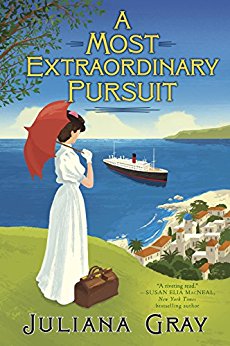
Day 1236: A Most Extraordinary Pursuit

Cover for A Most Extraordinary PursuitHaving read Juliana Gray’s second Emmaline Truelove novel, A Strange Scottish Shore, a few months ago, I decided to read the first. Juliana Gray, by the way, is a pen name for Beatriz Williams, known for her historical romances.

It is February 1906, and Emmaline is finishing up the details for the funeral of her employer, the Duke of Olympia, when the Duchess sends for her. It seems that Maximillian Haywood, the heir to the dukedom, has not been heard from in months. He was off working at the newly discovered archaeological site of the palace of Knossos, but he has not sent in his expected report or responded to any messages. The duchess asks Emmaline to go find him, accompanied by Lord Silverton, a renowned womanizer but apparently also some sort of government agent.

As Emmaline sets off on her journey aboard the duke’s steamship, she finds herself re-evaluating her first impression of Lord Silverton as a simpleton. She also can’t deny he has his charms. Unfortunately, nor can most of the women they meet.

This is a fun adventure story with a bit of a twist—time travel! You’ll like the practical, redoubtable heroine, Emmaline, and the charming Lord Silverton and will probably have a good time along with them on their journey.

Related Posts

A Strange Scottish Shore

At the Water’s Edge

The River of No Return