Review 2290: The Wager: A Tale of Shipwreck, Mutiny, and Murder

In 1740, a small fleet of ships set out from Portsmouth on a mission to try to capture Spanish ships laden with treasure in the Pacific Ocean. This poorly conceived and executed mission was part of the War of Jenkin’s Ear, essentially an excuse to try to gain wealth by pillaging Spanish ships.

Because of delays in refurbishing and equipping the ships, they left late. They were trying to round Cape Horn during the southern hemisphere’s summer, which they thought was the calmest time to venture through those dangerous waters. By the time they got to the Horn, the Wager, the smallest ship, had already experienced a bout of typhus and another of scurvy. The loss of officers to illness had given them a new leader, newly promoted Captain David Cheap. They made it around the Horn but lost contact with the other ships and then were shipwrecked.

Nearly a year after they were last sighted at the tip of South America, a few of the sailors made it back to England. Six months after that, a few more appeared, including Captain Cheap, accusing the first group of mutiny and other crimes. Two more appeared even later, accusing the first group of abandoning them on the coast of Patagonia.

Using the widely varying accounts in the journals and memoirs of some of the survivors, David Grann has attempted to reconstruct a fair account of what happened. One of these survivors was the sixteen-year-old midshipman, John Byron, who became the grandfather of the poet, Lord Byron. It’s a fascinating account, with some of the thrills of fictional naval adventure. Yet its all true.

Related Posts

Killers of the Flower Moon: The Osage Murders and the Birth of the FBI
The Lost City of Z

Fatal Journey: The Final Expedition of Henry Hudson

Review 2284: The Bathysphere Book: Effects of the Luminous Ocean Depths

The Bathysphere Book is an engaging nonlinear account of the expeditions in 1930 made by William Beebe to explore the depths of the ocean as far as he could go in a bathysphere. In his last dive, he got down more then 3000 feet and was awed by the diversity and oddness of the life he found.

Illustrated by photographs and drawings that his fellow scientists made at his descriptions, the book contains his notes . It also goes off on interesting tangents to tell the stories of other explorers of the depths, the accomplishments of his fellow explorers, and some of the characters they encountered in their work and lives. It’s a shame that some of Beebe’s findings were disregarded, as he was considered more of a popular science writer and explorer than a scientist.

I am usually not a big nonfiction reader, but this book was really interesting, full of colorful and often neglected characters.

Related Posts

Cod: A Biography of the Fish That Changed the World

The Luminous Sea

Submergence

Nonfiction November: Week Five

This week’s host is Hopewell’s Public Library of Life, and the theme is New to my TBR:

It’s been a month full of amazing nonfiction books! Which ones have made it onto your TBR? Be sure to link back to the original blogger who posted about that book!

I haven’t participated in this event before, and I am not a big nonfiction reader, but I got a lot of ideas during the month for further nonfiction reading. Here are the nonfiction books mentioned this month that piqued my interest. I’m just dividing these up by weeks to give me a little space between cover images.

Books from Week Two

The theme for Week Two was what attracts you to a book, so a lot of people were just showing interesting covers. But even though I don’t think I use covers to attract me to nonfiction books generally, these made me look at a few books more carefully.

I saw A Place for Everything: The Curious History of Alphabetical Order by Judith Flanders posted on She Seek’s Nonfiction‘s page during week two. It sounds right up my alley, and it has a beautiful cover. I hadn’t heard of it before.

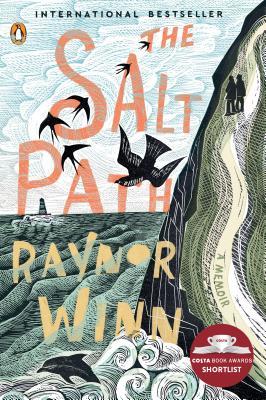
Entering the Enchanted Castle had the cover of The Salt Path by Raynor Winn on the post for Week Two. That reminded me that one of my best friends told me about the book, so I put it on my TBR. And again, what a great cover!

I’m sure I’m not the only one to notice what’s going on in our political arena, so when Silver Button Books put the cover of Cultish by Amanda Montell up in Week Two, I immediately added it to my TBR.

Books from Week Three

The theme for Week Three was pairing a nonfiction and fiction book. I admit that in a few cases, the fiction book looked more interesting to me than the nonfiction. However, here were four nonfiction books that struck my interest.

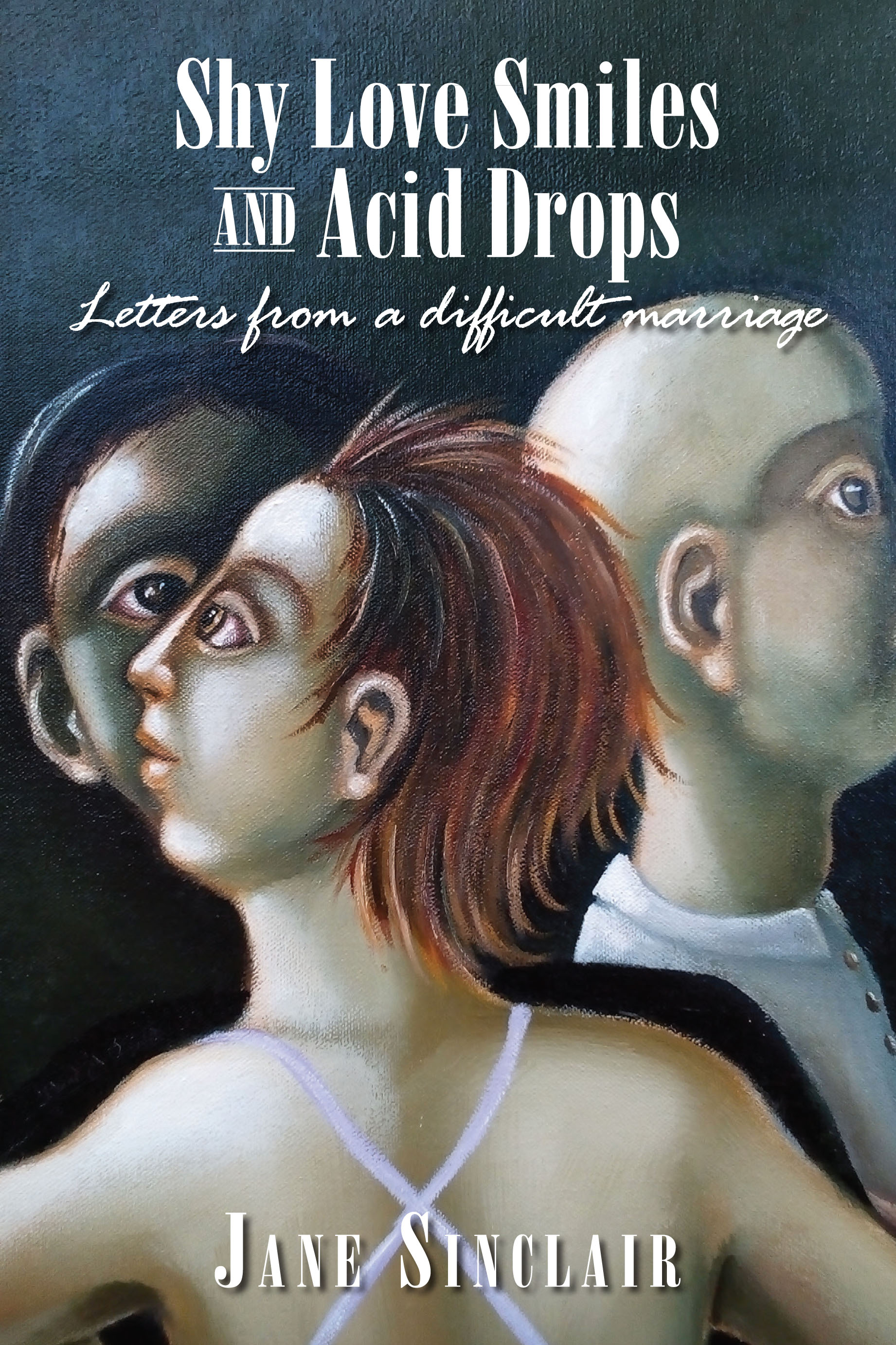
The cover of Shy Love Smiles and Acid Drops that Whispering Gums listed for Week Three as well as its subject matter made me put it right on my TBR. OK, this time I admit picking a nonfiction book for its cover.

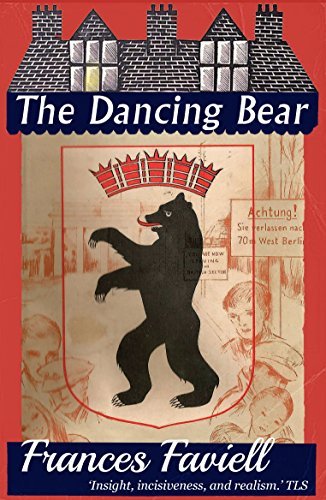
Books Please featured a memoir called The Dancing Bear by Frances Faviell for Week Three, and as I love the Furrowed Middlebrow imprint and have read some fiction by Faviell, I’m definitely putting this one on my TBR.

I love Amitav Ghosh, and I was unaware of the nonfiction book he’d written, The Nutmeg’s Curse: Parables for a Planet in Crisis until I saw it on Unsolicited Feedbacks post.

Entering the Enchanted Castle listed The Wild Silence, also by Raynor Winn, and I have to read it because of the cover and because it’s about Iceland.

Books from Week Four

For some reason many of the participants’ choices for Week Four weren’t grabbing me. The theme was Worldview Shapers, and maybe it was because some of participants didn’t really explain much about their choices but just posted their covers. Many of the participants posted several books on one subject, so I felt a little overwhelmed to pick one of them, even if I was interested in it, as I was by the holocaust books and the ones on the aboriginal experience, for example. In any case, Shoe’s Seeds and Stories selected the graphic nonfiction book Ducks by Kate Beaton, which I was already planning to read and in fact have in my pile right now.

Review 2272: The Other Day

The Other Day is Dorothy Whipple’s charming memoir of her childhood in Blackburn, starting when she was very young until she was about 12. She clearly has a vivid memory of such things as her inability to understand when someone was teasing her, the ways she misunderstood things, and her great ideas based on childish misconceptions.

Her experiences of school were especially unfortunate. She was hopeless at mathematics, and her math teacher at her first school ridiculed her mercilessly until she “cheated” by claiming to get two answers right on a quiz. Later, she was entered into a convent school and became confused about what she was told about religion.

Most of her stories, whether happy or not, reflect a happy childhood, especially when the family later takes a cottage. Her memories reflect a lot of humor even though she seems to have been a serious child.

Related Posts

Someone at a Distance

Young Anne

Greenbanks

Nonfiction November: Week Four

This week’s host is She Seeks Nonfiction, and the theme is Worldview Shapers:

One of the greatest things about reading nonfiction is learning all kinds of things about our world which you never would have known without it. There’s the intriguing, the beautiful, the appalling, and the profound. What nonfiction book or books have impacted the way you see the world in a powerful way? Is there one book that made you rethink everything? Do you think there is a book that should be required reading for everyone?

I can’t answer this one with just one book, and I can think of a few books that I read before blogging that made me see things differently. However, I’ll stick mostly to ones that I have reviewed on this blog.

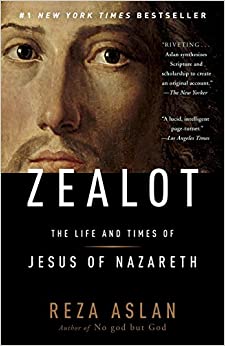
One was a book recommended by my brother called Zealot: The Life and Times of Jesus of Nazareth by Reza Aslan, an acclaimed religious scholar. Aslan’s goal was to try to find as much evidence as possible about the man Jesus aside from the religious claims. In other words, the historical record. What he found was that most of what we think we know about his life is myth, created by the gospel writers years after his death to further the claim that Jesus was the Messiah.

On the subject of religion, another book that affected me profoundly before I started the blog was Jon Krakauer’s Under the Banner of Heaven, about the beliefs and behavior of some fringe apostolic Mormon groups.

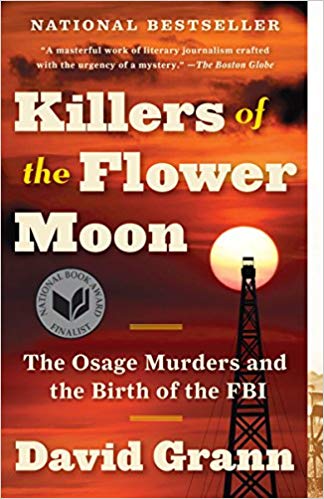
Cover for Killers of the Flower Moon

A book that might be popular again now that told me something I didn’t know about from history is Killers of the Flower Moon: The Osage Murders and the Birth of the FBI, which profoundly shocked me when I read it four years ago. As most of you probably know, it’s about members of the wealthy Osage tribe who were murdered by their guardians (the government deeming they were not able to look after their own interests) or white family members in order to get claims to their share of the oil money. The movie that is out now by Martin Scorsese is excellent.

Cover for Thinking, Fast and Slow

Thinking, Fast and Slow by Nobel Prize winning Daniel Kahneman explains the results of years of scientific experiments that show that most of our decisions are made by our unconscious rather than our conscious mind. This was an entertaining book full of intellectual surprises and little exercises that you can try yourself that show the profound implications of how we make our decisions.

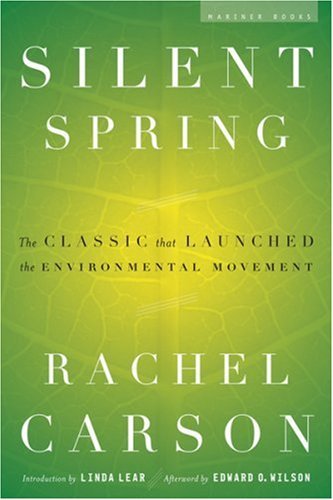
I was aware that DDT was banned as a result of Rachel Carson’s ground-breaking book Silent Spring, but her book about the poisons that we still use every day in agriculture and other industries made me realize why the world seems to be dying of cancer. This book may have been written in 1962, but it still needs to be paid attention to. I think everyone should read it.

Cover for The Omnivore's Dilemma

Finally, for me personally, the first book I ever reviewed on this blog was revelatory. That is The Omnivore’s Dilemma by Michael Pollan, about the foods we eat and how our basis in corn and soy is not really good for us. I was even more profoundly affected by his In Defense of Food, but I read it before starting this blog.

Review 2268: Silent Spring

I have always intended to read Silent Spring, so its appearance on the list of books published in 1962 gave me a good reason to read it for the 1962 Club. However, publishing my review that week didn’t work out on my schedule. That being said, it works out to be a perfect read for Nonfiction November.

People probably realize that the book was largely responsible for the banning of DDT in the United States, but maybe don’t understand that much more about it.

Carson was a biologist in a time when that particular science was not highly regarded because of the fascination with physics and chemistry as a result of World War II. Particularly in the 1950s and 60s, blanket applications of pesticides and other chemicals seemed to have become the knee-jerk reaction to not only agriculture and forestry pest problems but also to problems of disease. What Carson accomplished in Silent Spring was to bring together the results of widely scattered studies to show that (1) the chemicals are deadly poisons, not just to insects but to all life; (2) applications of the chemicals have been largely ineffective and had unintended consequences; (3) continued application could result in the loss of all life; and (4) there are better solutions that are less costly for the same problems. She tells us about these issues in clear prose that instances many stories of failed or successful programs and experiments.

As I read this book, I had a clear memory of myself as a child riding my bike through a cloud of insecticide that was being sprayed from a truck being driven through my neighborhood. There was no sense on my part or apparently on the part of the sprayers that this could be harmful to me or anyone else outside at the time. Over the years, I’ve wondered why there seem to be more and more cases of cancer than there were when I was younger. Now I think I know why.

If you read this book, you’ll continue to be amazed at the instances where, after a disastrous application of pesticides by the Department of Agriculture to try to solve a problem, the next step was found to be . . . another application of pesticides. It’s a wonder there’s a creature left in our forests and fields, not to mention our waterways. This book is said to be the beginning of the environmental movement. I believe it.

Related Posts

The Bird: A Natural History of Who Birds Are, Where They Came From, and How They Live

The Body: A Guide for Occupants

The Omnivore’s Dilemma

Nonfiction November: Week Three

This week’s host for Nonfiction November is Liz of Adventures in reading, running and working from home. The theme is Book Pairings, and here is its description:

This week, pair up a nonfiction book with a fiction title. Maybe it’s a historical novel and the real history in a nonfiction version, or a memoir and a novel, or a fiction book you’ve read and you would like recommendations for background reading. You can be as creative as you like!

This is a toughie. I can think of some obvious pairings, like Middlemarch and My Life in Middlemarch, or the biographies of authors whose books I have read, or Elif Batuman’s The Possessed: Adventures with Russian Books and the People Who Read Them and one of those Russian books, but I was looking for something more creative.

Here’s what I came up with: The Hare with Amber Eyes: A Hidden Inheritance is the world-renowned ceramicist Edmund de Waal’s nonfiction account of a collection of netsuke that belong to his family and what happened to it during World War II, when the family thought it was stolen by the Nazis. In tracing the collection, de Waal traces his own family history, beginning with Charles Ephrussi, the original owner of the collection, who was the cousin of de Waal’s great-grandfather and also the inspiration for Proust’s Charles Swann.

I’m pairing this with Great House by Nicole Krauss, a collection of linked short stories about the migrations of a desk, which the character Nadia tries to find after giving it away because she cannot write without it. The desk turns out to have a sad history and comes to represent all the objects lost in the Holocaust.

Nonfiction November: Week Two

Week Two of Nonfiction November is hosted by Volatile Rune. The theme is Choosing Books, and here is its description:

What are you looking for when you pick up a nonfiction book? Do you have a particular topic you’re attracted to? Do you have a particular writing style that works best? When you look at a nonfiction book, does the title or cover influence you? If so, share a title or cover which you find striking. 

Cover for The Wicked Boy

I am not nearly as big a nonfiction reader as I am a fiction reader, so to answer this question, I had to look back at my list of nonfiction books since I started my blog. It’s clear that I like to read books about literary subjects and biographies and memoirs, often by or about literary figures, but although I have read a few, not often celebrity biographies and memoirs. I think in general I just look for nonfiction books that pique my interest in some way, either because of who wrote them or what they are about.

Although the cover generally influences me for fiction books, I haven’t been able to discover that I read any nonfiction books because of their covers. However, I will read books by certain authors: the biographers Doris Kearns Goodwin, Claire Tomalin, and Ron Chernow, for example. I also like true crime novels, but mostly true crime of an older vintage, so I have enjoyed a couple of books by Kate Summerscale (The Suspicions of Mr. Whicher, The Wicked Boy) and have another one on my pile.

Cover for Annals of the Former World

There are also periods of history I’m interested in, particularly the Wars of the Roses. I’ll read histories and biographies about that time.

I am not very scientific minded, but occasionally I hear of a book about science that sounds fascinating. I have an upcoming review of The Bathysphere Book that I found really interesting, and it has a great cover illustration.

Ten years ago, I discovered John McPhee’s Annals of the Former World, about how our continent was formed geologically, in four big, fat volumes, and I read every one. Fascinating stuff, and McPhee is a great writer.

Review 2226: Dust Tracks on a Road

Dust Tracks on a Road is Zora Neale Hurston’s lively memoir, which I read for my Classics Club list.

Hurston was raised in what was essentially in the wilderness at the time in Eatonville, Florida, the first town in the country, she alleges, founded and run by Black people. She was an energetic and imaginative child, and though her family was poor, she seemed to have an idyllic childhood (if you don’t count being whipped, and she didn’t) until her mother died when she was nine. (Other accounts say four, but she says nine.) Not long thereafter, her father remarried and her stepmother soon ran her and her older brother out of the house. (If, when I read Their Eyes Were Watching God, I had realized she was writing about the founding of Eatonville, I think I would have paid more attention to the information about the town.)

I found it interesting that Hurston had a series of visions as a child and that all of them came true. The first was her mother’s death, the second years of wandering from home to home. Having to go to work at an early age cut into her schooling, but such was her determination to get it that after trying to earn enough at various jobs, she finally just returned to high school, ending up with degrees in anthropology and ethnography from Howard and Barnard Universities.

Hurston relates her life in a lively way with lots of anecdotes, folk stories, and even songs and poetry. Although many of the recollections of her earlier life are very particular, the closer the memoir gets to when she was writing it, the more general it becomes, so we don’t find out much after her first ethnographic studies and novels are completed. Instead, Hurston finishes with a series of discursions on her opinions, which I found less interesting than the story of her childhood and young adulthood.

Related Posts

I Know Why the Caged Bird Sings

Kill ‘Em and Leave: Searching for James Brown and the American Soul

The Yellow House

Review 2218: Romney Marsh

I’m not quite sure what possessed me to look for this little book. I guess it looked interesting on someone ‘s review blog, although I’m not sure whose. It is a short, descriptive book about Romney Marsh as it appeared in 1950 with a little history and some drawings.

After a descriptive section about the marsh and the towns on the coast, it has a section of drawings with short descriptions of the churches on the marsh. Finally, there are a few drawings of marsh features, towns, and more churches. I would have liked the drawings from the final section to have been placed near the appropriate text, but I understand that placement of all the drawings at the back allowed them to be printed on finer paper. It seemed as if the church section might be useful on a tour of churches of the area.

Although I have never been to Romney Marsh, if I ever went there, I would be sure to take this little book along, if only to see how much it has changed in 70 years.

Related Posts

The Rural Life

Notes from a Small Island

Vanishing Cornwall