Nonfiction November: Week Three

This week’s host for Nonfiction November is Liz of Adventures in reading, running and working from home. The theme is Book Pairings, and here is its description:

This week, pair up a nonfiction book with a fiction title. Maybe it’s a historical novel and the real history in a nonfiction version, or a memoir and a novel, or a fiction book you’ve read and you would like recommendations for background reading. You can be as creative as you like!

This is a toughie. I can think of some obvious pairings, like Middlemarch and My Life in Middlemarch, or the biographies of authors whose books I have read, or Elif Batuman’s The Possessed: Adventures with Russian Books and the People Who Read Them and one of those Russian books, but I was looking for something more creative.

Here’s what I came up with: The Hare with Amber Eyes: A Hidden Inheritance is the world-renowned ceramicist Edmund de Waal’s nonfiction account of a collection of netsuke that belong to his family and what happened to it during World War II, when the family thought it was stolen by the Nazis. In tracing the collection, de Waal traces his own family history, beginning with Charles Ephrussi, the original owner of the collection, who was the cousin of de Waal’s great-grandfather and also the inspiration for Proust’s Charles Swann.

I’m pairing this with Great House by Nicole Krauss, a collection of linked short stories about the migrations of a desk, which the character Nadia tries to find after giving it away because she cannot write without it. The desk turns out to have a sad history and comes to represent all the objects lost in the Holocaust.

Nonfiction November: Week Two

Week Two of Nonfiction November is hosted by Volatile Rune. The theme is Choosing Books, and here is its description:

What are you looking for when you pick up a nonfiction book? Do you have a particular topic you’re attracted to? Do you have a particular writing style that works best? When you look at a nonfiction book, does the title or cover influence you? If so, share a title or cover which you find striking. 

Cover for The Wicked Boy

I am not nearly as big a nonfiction reader as I am a fiction reader, so to answer this question, I had to look back at my list of nonfiction books since I started my blog. It’s clear that I like to read books about literary subjects and biographies and memoirs, often by or about literary figures, but although I have read a few, not often celebrity biographies and memoirs. I think in general I just look for nonfiction books that pique my interest in some way, either because of who wrote them or what they are about.

Although the cover generally influences me for fiction books, I haven’t been able to discover that I read any nonfiction books because of their covers. However, I will read books by certain authors: the biographers Doris Kearns Goodwin, Claire Tomalin, and Ron Chernow, for example. I also like true crime novels, but mostly true crime of an older vintage, so I have enjoyed a couple of books by Kate Summerscale (The Suspicions of Mr. Whicher, The Wicked Boy) and have another one on my pile.

Cover for Annals of the Former World

There are also periods of history I’m interested in, particularly the Wars of the Roses. I’ll read histories and biographies about that time.

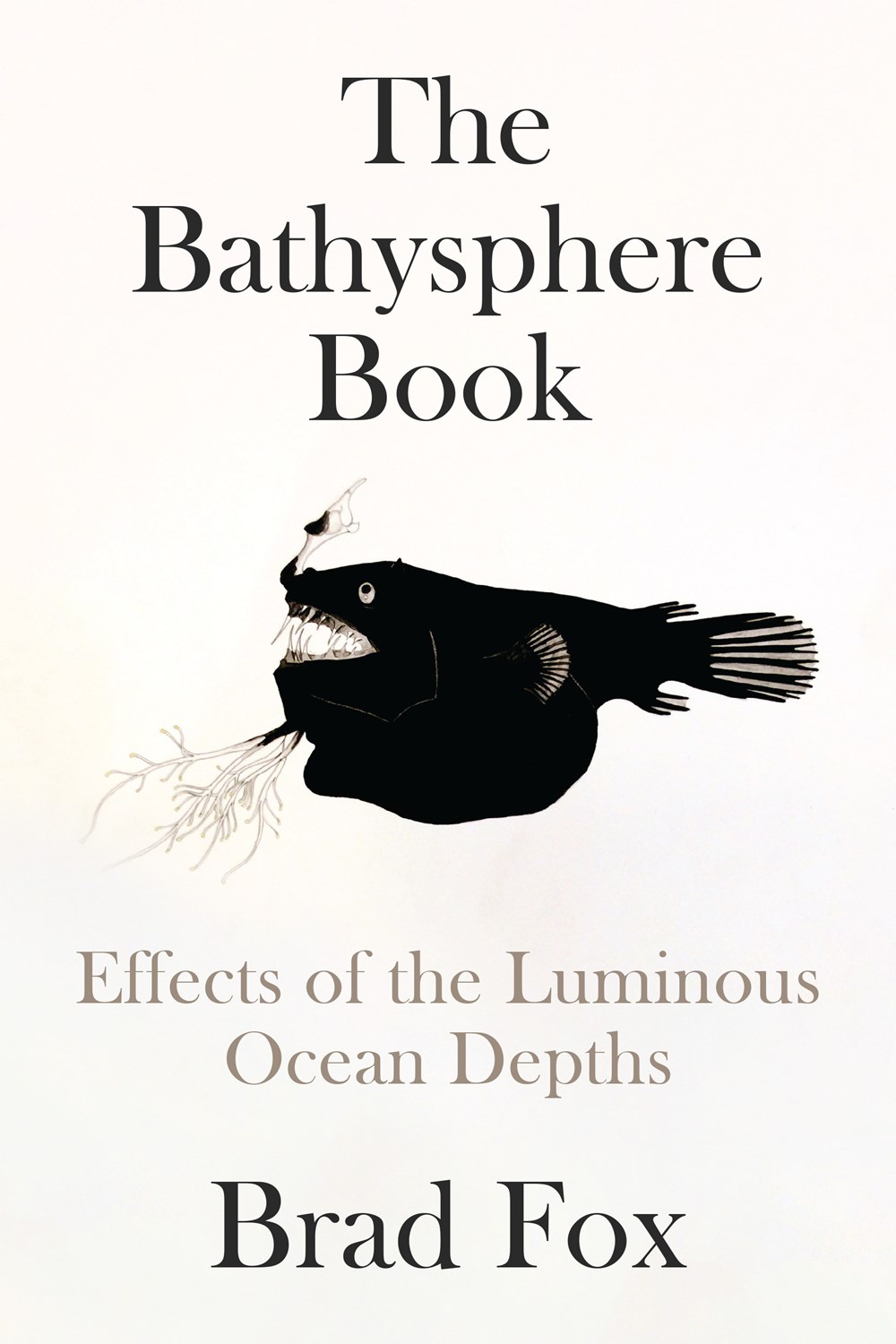
I am not very scientific minded, but occasionally I hear of a book about science that sounds fascinating. I have an upcoming review of The Bathysphere Book that I found really interesting, and it has a great cover illustration.

Ten years ago, I discovered John McPhee’s Annals of the Former World, about how our continent was formed geologically, in four big, fat volumes, and I read every one. Fascinating stuff, and McPhee is a great writer.

Review 2226: Dust Tracks on a Road

Dust Tracks on a Road is Zora Neale Hurston’s lively memoir, which I read for my Classics Club list.

Hurston was raised in what was essentially in the wilderness at the time in Eatonville, Florida, the first town in the country, she alleges, founded and run by Black people. She was an energetic and imaginative child, and though her family was poor, she seemed to have an idyllic childhood (if you don’t count being whipped, and she didn’t) until her mother died when she was nine. (Other accounts say four, but she says nine.) Not long thereafter, her father remarried and her stepmother soon ran her and her older brother out of the house. (If, when I read Their Eyes Were Watching God, I had realized she was writing about the founding of Eatonville, I think I would have paid more attention to the information about the town.)

I found it interesting that Hurston had a series of visions as a child and that all of them came true. The first was her mother’s death, the second years of wandering from home to home. Having to go to work at an early age cut into her schooling, but such was her determination to get it that after trying to earn enough at various jobs, she finally just returned to high school, ending up with degrees in anthropology and ethnography from Howard and Barnard Universities.

Hurston relates her life in a lively way with lots of anecdotes, folk stories, and even songs and poetry. Although many of the recollections of her earlier life are very particular, the closer the memoir gets to when she was writing it, the more general it becomes, so we don’t find out much after her first ethnographic studies and novels are completed. Instead, Hurston finishes with a series of discursions on her opinions, which I found less interesting than the story of her childhood and young adulthood.

Related Posts

I Know Why the Caged Bird Sings

Kill ‘Em and Leave: Searching for James Brown and the American Soul

The Yellow House

Review 2218: Romney Marsh

I’m not quite sure what possessed me to look for this little book. I guess it looked interesting on someone ‘s review blog, although I’m not sure whose. It is a short, descriptive book about Romney Marsh as it appeared in 1950 with a little history and some drawings.

After a descriptive section about the marsh and the towns on the coast, it has a section of drawings with short descriptions of the churches on the marsh. Finally, there are a few drawings of marsh features, towns, and more churches. I would have liked the drawings from the final section to have been placed near the appropriate text, but I understand that placement of all the drawings at the back allowed them to be printed on finer paper. It seemed as if the church section might be useful on a tour of churches of the area.

Although I have never been to Romney Marsh, if I ever went there, I would be sure to take this little book along, if only to see how much it has changed in 70 years.

Related Posts

The Rural Life

Notes from a Small Island

Vanishing Cornwall

Review 2197: The Shakespeare Thefts: In Search of the First Folios

I think how much you enjoy The Shakespeare Thefts depends a lot on your expectations going into it. If you depend on the quotes on the back of the book, which call it “a literary detective story” or put it in the true crime genre, you’ll be misled (although I’ll be listing it under “True Crime” on my blog because I can’t think of another place to put it). What it is, is an entertaining set of essays on a very specific subject—the Shakespeare First Folios.

In 1996, noted Shakespearean researcher Eric Rasmussen and his colleague Anthony James West put together a team to continue a project that West began 10 years earlier—to find and make a thorough catalog of the distinguishing characteristics of all of the existing Shakespeare First Folios. An important impetus for this catalog was the prevalence of thefts of valuable books. Being able to readily identify a copy makes it much harder for a thief to pass it off as a recent discovery and therefore to sell it legally.

In this book, Rasmussen tells anecdotes about the fate of some of the copies, some of the thefts, experiences finding and accessing copies (a bunch are owned by the Japanese, who will not allow access to them), information about the owners, or just about the folios in general. The book is light, easy and entertaining to read, and it is especially notable for its author’s enthusiasm for the subject.

Related Posts

The Secret Life of William Shakespeare

Hamnet

The Library Book

Review 2156: #1940 Club! The Big Sea

I know nothing about Langston Hughes except he was a Black poet, novelist, and playwright associated with the Harlem Renaissance. For the 1940 Club, I thought it would be interesting to read The Big Sea, his autobiography.

Hughes had a pretty interesting life. Although he was in some ways from distinguished stock and his father was wealthy, his parents split up when he was young and he was very poor for much of his life.

Hughes’s parents split for good after his father took the family to Mexico, and almost immediately there was a big earthquake, so his mother took Langston and left. He was raised mostly by his grandmother in Lawrence, Kansas, while his mother traveled here and there trying to make a living. When his grandmother died, he went to some of her friends, rejoining his mother and stepfather as he got older.

Race is a major theme of Hughes’s life. Most of it was during the Great Migration, so housing for Black people was very expensive and scarce. I didn’t realize that at the time Jim Crow laws were all over the United States, not just in the South. The famous Cotton Club in Harlem, for example, was, as he put it, for white people and gangsters.

Hughes’s book opens when, after a year at Columbia University, he signs on with a freighter as a mess boy. He is excited to set foot in Africa, which he sees as a sort of spiritual home. But he is astonished to find that the Africans don’t consider him, a light-skinned man, to be Black.

Hughes seemed to have no fear and went his own way much of the time, traveling fearlessly, quitting good jobs because he didn’t like them and taking menial ones, splitting from a mentor. The book is interesting, written mostly as a series of anecdotes, but it does not tell much about his personal life. That is, it tells what he does but not much about how he feels or anything about very personal subjects. For example, late in the book, he has a break with Zora Neale Hurston that at least partially has to do with a woman he’s seeing (and partially about differences around a play they wrote together), but he does not otherwise mention this woman or any romantic life.

A few chapters about the Harlem Renaissances are a little boring, just mentioning lots of names, many of which mean nothing to us anymore. Here, he is often too general. For example, he recalls a party where amusing stories were told about the Queen of Romania. Of course, we want to know what they are, but he doesn’t tell us.

Considering when the book was written, there are lots of terms used that for our times are cringe-worthy, especially the constant use of “Negro.” He explains why “Black” (which became more socially acceptable during the 70’s) was not acceptable at the time.

I enjoyed most of this novel, but sometimes the descriptions of things that were popular then, some events, and the wording of things made me squirm. It just reads as very outdated.

Related Posts

The Warmth of Other Suns: The Epic Story of America’s Great Migration

I Know Why the Caged Bird Sings

The Yellow House

Review 2100: Mistress of the Monarchy: The Life of Katherine Swynford, Duchess of Lancaster

I looked for a biography of Katherine Swynford after reading Anya Seton’s Katherine, a novel about her life. I had a suspicion that the story was greatly romanticized, and acclaimed biographer Alison Weir agrees with me.

The bare bones of Katherine Swynford’s story are dramatic. Of undistinguished foreign parentage, Swynford was married to a low-ranking knight in the army of John of Gaunt, the Duke of Lancaster and son of Edward III. John was the most wealthy and powerful noble of his time except for the King. Katherine was attached to the Duke’s household as sort of a governess for his children with his duchess, Blanche of Lancaster, to whom he was devoted. Katherine’s husband served overseas. (Weir has him dying of illness rather than being murdered by a servant faithful to the Duke.)

After Blanche’s death, John married Constance, titular Queen of Castile and tried for years to take back her country from usurpers. This marriage was not successful, and soon the Duke began an affair with Katherine that lasted for years. The couple parted then reunited, but Lancaster astounded everyone by marrying her after Constance’s death. Amazingly, Katherine was the ancestress of every king of England since 1399 and of six American presidents.

Although Katherine’s story is an intriguing one, there is so little historical information available about her that the biography is mostly about her husband and sons, with information derived from records of grants and budgets. This is the kind of research that is probably fascinating to the writer but not so interesting to the reader.

Related Posts

Katherine

Queens of the Conquest: England’s Medieval Queens

The Wars of the Roses

Review 2085: The Suspicions of Mr. Whicher

Last summer, my husband and I watched a set of programs on BritBox—not a series but separate movies each with the title “The Suspicions of Mr. Whicher” and a different subtitle. When I looked at the credits, the name Kate Summerscale rang a bell, and I realized I had read her book The Wicked Boy about a Victorian true crime. The Suspicions of Mr. Whicher is also nonfiction, about a famous Victorian murder and the detective whose career was nearly destroyed by the case.

In June 1860, the Kent family awakened to find three-year-old Saville Kent missing. Searches of the property eventually located him under the seat of an outside privy with his throat cut. A window of the dining room was ajar.

The initial investigation was botched, with local police assuming the crime was committed by a servant or outsider, and even hiding some potential evidence. John Whicher, a top detective in the newly formed detective department, was assigned to the case after two weeks, as a result of reported bungling.

Mr. Whicher was thorough in his investigation despite lack of cooperation and even obstruction by the local officials. He concluded that Saville was murdered by his 16-year-old sister, Constance (this is not a spoiler because this information comes out fairly early in the book), but felt he didn’t have enough proof to make an arrest. However, the local magistrates pushed him into it.

It is the national reaction to the crime and Mr. Whicher’s suspicions that Summerscale concentrates on, as well as telling what happened to the principals later. This is a really interesting book, relating how Mr. Whicher was a model for early fictional detectives and how this case affected early crime fiction.

Related Posts

The Wicked Boy: The Mystery of a Victorian Child Killer

The Invention of Murder: How the Victorians Revelled in Death and Detection and Created Modern Crime

Famous Trials

Review 2069: Mobituaries: Great Lives Worth Reliving

TV host and comedian Mo Rocca loves obituaries and little factoids. So does my husband, so I bought him Mobituaries last Christmas. Then, after listening to the podcast, I decided to read it myself.

Unfortunately for me, a good deal of the content of the book was in the podcast and in seemingly greater detail. Still, it’s a fun book to read and full of factoids.

Rocca has written not just about the lives of people, some well-known, like Audrey Hepburn and Elizabeth Taylor, some whose contributions are less known, like Elizabeth Jennings (the first black woman to refuse to leave a streetcar, 100 years before Rosa Parks) or Ada Lovelace (inventor of the computer algorithm in 1843) but also of objects and concepts that are not longer with us—the belief in dragons, Prussia, the station wagon, alchemy, and other medieval sciences. Obviously, this book, while not at all comprehensive, more notional, is wide-ranging. It is also fairly funny, and its asides, quips, and incidental factoids remind me of some of the works of Bill Bryson, although Bryson is a better prose stylist.

In any case, the book is enjoyable to read and provides plenty of fodder for trivia buffs.

Related Posts

At Home: A Short History of Private Life

The Body: A Guide for Occupants

Brief Lives

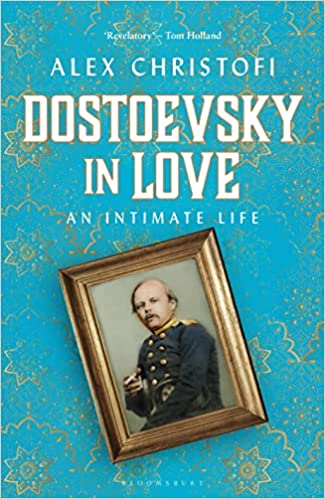
Review 1886: Dostoevsky in Love

Up until now, it has seemed to me that biographies fall into two categories: more academic works that are full of notes and citations and are sometimes turgid or too detailed or works meant primarily for the public that often list no backup material whatsoever and are sometimes sensational or even untruthful. Dostoevsky in Love makes an interesting compromise between the two. It is short at a couple hundred pages, it does include notes, and it somehow distills a sense of the true person that pages and pages of detail may not. Dostoevsky lived an interesting life and Christofi relates the events and Dostoevsky’s ideas in an interesting way, including quotations from his work to illustrate his points.

Dostoevsky’s life was difficult. He was poor for most of it, yet one reason was his generosity. (Unfortunately, another was his addiction to gambling, which he finally conquered.) Most of his life was spent in ill health, including epilepsy, serious bladder infections, and finally emphysema. As a young author, his first work was acclaimed, his next reviled, and then he was arrested for his radical politics and spent four years in Siberia (after suffering through a fake execution), followed by a stint of extra compulsory military service (he had already completed his usual service) with years before he was allowed to go to either Moscow or St. Petersburg.

Finally, in the last few years of his life, he gained the recognition he deserved, but he was still so poor that his wife Anna had no money to bury him with.

I found this to be an absorbing book. I have always wondered why most of Dostoevsky’s characters seemed to be in a frenzy, and now I think it’s because he himself was often in a frenzy, beset as he was with cares.

Related Posts

The Brothers Karamazov

The Idiot

Charles Dickens, A Life