Review 2565: Classics Club Spin Result! Incidents in the Life of a Slave Girl

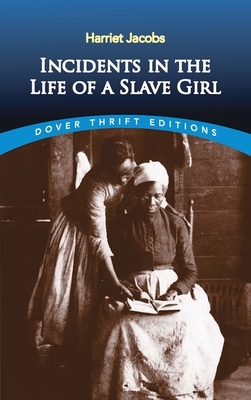
I pulled this book for the Classics Club spin, and I’m very happy to have done so. Because of the state of my reading right now, I was hoping for a short one, and this book is only 144 pages (albeit of very small type). It’s one of the few short works left on my Classics Club list.

The autobiography was written in the 1850s about events earlier than that and published in 1861. Although by then Jacobs was free, she wrote it under the pseudonym of Linda Brent, probably to protect others.

Linda had a fairly cheerful childhood, because she was owned by a kind woman who had promised to set her grandmother free. However, on the woman’s death, her slaves were seized as assets because she owed money, and Linda and her brother William ended up in the home of Dr. Flint, a relative. Linda’s grandmother was not freed and was also owed $300 by her mistress but never got it.

Jacobs recounts many instances of brutality on the part of slave owners, but her own troubles began when she reached puberty and Dr. Flint began relentlessly pressing her, trying to get her to have sex. Essentially out of desperation, she succumbed to another white man who she liked better and had two children by him. He, Mr. Sands, tried to buy her and her children several times, but Dr. Flint refused to sell them.

Eventually, Jacobs tried to escape, and the events of her escape, which took years, are the most harrowing in the book. Even after she escaped, she was in danger of being snatched back because of the Fugitive Slave Act, and Dr. Flint didn’t stop trying to find her until he died.

I thought this book was interesting, although at times it had very religious overtones, applied to events that she thought would make her look bad. But, after all, part of her purpose was to educate people against slavery, and she didn’t want her audience to turn against her. Frankly, she does little to deserve that (mostly, she feels she sinned by sleeping with Mr. Sands), but I can see why in that time she would worry about it.

For some reason, although I had sympathy for Linda’s really horrible troubles, I didn’t get as involved with this book as I might have expected. I’m not sure why.
Related Posts

The Underground Railroad

Booth

Beloved

Review 2170: The Road

When I briefly researched to find out what the second book in John Ehle’s Mountain series was, I came up with The Road. However, the end of the novel indicates that one other book precedes it, and Goodreads lists it as #4, the last one. (Looking back, I see I found a site that recommended they be read in that order, with the last one second.) In any case, the novels don’t seem to be closely linked, only featuring the same families.

The Road begins 100 years after The Land Breakers, in 1876. Weatherby Wright, an engineer born and raised in the mountains, has been tasked with building a railroad from the eastern part of North Carolina up the mountains to the Swannanoa Gap. This railroad will help the mountain dwellers take their crops to market and make medical and other kinds of help available to them. However, no one knows if the effort can be successful.

Most of the novel focuses on Wright and the details of this difficult project. He is dependent mostly on convict labor and hires as the project accountant Hal Cumberland. Another plot is the romance between Cumberland and a mountain girl, Henry Anna Plover.

The novel is powerful at times but at other times reads like a series of anecdotes passed down in the family that don’t really link up into a coherent story. The character of Weatherby is not always involved because of health reasons.

Related Posts

The Land Breakers

Giants in the Earth

Days Without End

Review 2075: The Land Breakers

John Ehle grew up in North Carolina and can trace his ancestry back to one of the first three families to settle the remote western North Carolinian mountains (the Appalachians) in the 18th century. The Land Breakers is the first of a series of seven novels about the families who settled in that area.

It’s 1779: Mooney Wright and his wife Imy have been released from their indentures and are traveling around trying to buy land for a farm. However, no one will sell them land in the more settled areas. They find a store owner who offers them land in the remote western mountains, which have not yet been settled, and almost inadvertently they end up buying 600+ acres.

It is a hard journey to get there, but at last they end up in a pretty valley with soil that has never been cultivated. They are both hard workers, and they set about building a cabin and clearing land for planting the next spring. However, during the winter Imy dies of a sickness, and Mooney sinks into a depression.

Tinker Harrison, a comparatively wealthy man, arrives with his family and slaves the next spring. He wants to establish the valley as a settlement he can control. They arrive shortly after Mooney buries Imy. Following them are Ernest Plover and his family. The Plovers are in-laws to Harrison, because Ernest’s oldest daughter, Belle, married Tinker, although she is younger than Tinker’s son, Grover. Ernest is a shiftless man with seven daughters, the next oldest to Belle being Mina.

Once Mooney starts to come out of his depression, he becomes interested in Mina, who is beautiful but very young. However he has also noticed Lorry, Harrison’s daughter and the mother of two young boys. She married Lacey Pollard, but he left to look for a home in Kentucky four years earlier, and she never heard from him again. Mooney needs a wife to work for and make his plans succeed, and he is torn between the two women.

This novel is a sparely written story of the difficulties faced by those early settlers. These do not so much involve people as problems with wild animals and weather and the sheer remoteness of the area from anywhere else. Occasionally, when describing the landscape, the prose becomes lyrical. With its details of work, it reminded me a bit of the trilogy I read by Tim Pears, although that was set 150 years later. I was interested enough in this novel to order the second in the series.

Related Posts

Giants in the Earth

The Horseman

Harvest

Day 341: Nightwoods

Cover of NightwoodsBest Book of the Week!

Charles Frazier sets his novels in backwoods North Carolina. His first novel, Cold Mountain, was set during the Civil War. His second, Thirteen Moons, went further back to the treatment of the Cherokee in the earlier part of the 19th century. Nightwoods, his third, deals with more recent times, a small mountain town in the early 1960’s.

Luce is a troubled young woman with a traumatized past who has taken up a secluded life as a caretaker for an old disused lodge across the lake from town. She is unprepared when a social worker brings her the young twin children of her murdered sister Lily, an almost feral boy and girl who refuse to speak and like to start fires.

Stubblefield is lazing away his life on the coast of Florida when he learns his grandfather has died and left him, aside from a load of debt, the lodge and a road house and a considerable number of acres on the mountain. When he goes to inspect the lodge, he is immediately smitten by the skittish Luce.

Trouble is on the way, which we know from the beginning of the novel. Bud, the husband and murderer of Luce’s sister Lily has been released from prison because of a hung jury. He is on his way to town in search of the money he stole, which he gave to Lily one night when he was drunk and she refused to give back to him. He beat her to death trying to get her to tell him where it is, and now he thinks the children know.

This novel is at times tender, as Luce blindly copes with the two damaged children in the best way she can, instinctively treating them with delicacy and kindness. At the same time, the violent Bud resembles a character from a Carl Hiaasen or Elmore Leonard novel, almost comic at times in his psychopathic ineptitude.

The result is an enthralling novel that is both a love story, not just between its characters but with the beauty of nature, and a thriller with a true feeling of danger. As usual with Frazier, the novel is wonderfully well written, with entrancing descriptions of nature.

Day 264: The Ballad of Tom Dooley

Cover for The Ballad of Tom DooleySharyn McCrumb has written several series of light mysteries, some better than others. I have usually enjoyed her “ballad” series–atmospheric, sometimes ghostly mysteries set in Appalachia and each named after a traditional folk ballad. The Ballad of Tom Dooley, despite a background of historical research (because this folk ballad is based on a true case), is not her best, however.

According to McCrumb’s notes at the end of the novel, she got interested in the story after researching it for an article and decided that the prevailing theories of the crime are not satisfying. So, she reconstructed her theory of the crime in this book. As such, it is not so much a mystery as an explication.

Most people vaguely know the story, that Tom Dooley (actually Dula) met Laura Foster “on the mountain/stabbed her with [his] knife.” Another defendant, Ann Melton, was let go. But McCrumb says most people in Wilkes County, where the crime occurred, will tell you Ann did it. To McCrumb, knowing that Ann was Tom’s long-time married lover, Tom being guilty didn’t make sense.

The novel is narrated by two characters who were actually involved in the incident: Pauline Foster, who was Ann Melton’s cousin and servant girl; and Zebulon Vance, the ex-governor and senator of pre-Civil War North Carolina who defended Tom. Pauline is an interesting character–McCrumb depicts her as a sociopath who manipulates the others and wants revenge for Ann’s slights.

The biggest fault in the novel is the narration of Zebulon Vance. At first, I thought McCrumb’s intent was to depict him as a maundering old bore, possibly even senile, as his section is so repetitive and adds so little to the narrative. It is mostly about himself and has little to do with the story. But then I read that Vance’s career was one reason McCrumb wanted to do the story. Instead of adding to it, it detracts from and drags against the impetus of the plot.

The fact is that none of the characters are likable people, and the crime isn’t particularly interesting. From the author of some haunting stories, this novel is a disappointment. If McCrumb wanted to write about Vance, she may have done better to write a biography.