Review 2799: #NovNov26: Queen Macbeth

I took one of my breaks from reading Les Misérables to read Queen Macbeth for Novellas in November. Historical fiction, Val McDermid, Scotland, another of the Darkland Tales . . . what’s not to like? Well.

The novella is narrated by Gruoch, Lady Macbeth, and is set in two time periods. One is after Macbeth’s death in battle with Malcolm. The other is when Gruoch, the reluctant wife of Gille Coemgáin, who probably plotted with Malcolm to kill Macbeth’s father, meets Macbeth.

After Macbeth’s death, Gruoch is fleeing Malcolm accompanied by her four maids and Angus, her bodyguard. They have been hiding for a while on a small island with a monastery, but now someone has arrived, a scout from Malcolm, and they must escape.

In the earlier timeframe, Gruoch’s maid Eithna, who can see things, implies that childless Gruoch will have a child by Macbeth, despite being married to Gille Coemgáin. Gruoch is attracted to Macbeth and risks their lives to have sex with him, then is in love.

There is no acknowledgment of it, but this book seems to owe a lot to Dorothy Dunnett’s King Hereafter, her story of Macbeth. Not all, because Dunnett makes Macbeth a Viking from the Orkneys who takes the name of Macbeth after his conversion to Christianity. Interestingly, Dunnett says his original name is Thorfinn, and MacDermid has the two meet a cousin Thorfin.

But I have to say I found this novella really disappointing. McDermid can really write a novel, but here, the romance is unconvincing, the dialogue trite, the detail scanty, the characterization almost nonexistent. She doesn’t do enough to make us care for her characters before she has Macbeth trap Coemgáin and his men in a building and set fire to it. Believe me, if you’re going to have a character do something like that, you have to have already got readers on their side.

A trip to Rome, although maybe historically accurate, seems totally out of place. And we won’t even mention the ending, except to say it’s ridiculous.

Related Posts

King Hereafter

Macbeth

Dandy Gilver and a Spot of Toil and Trouble

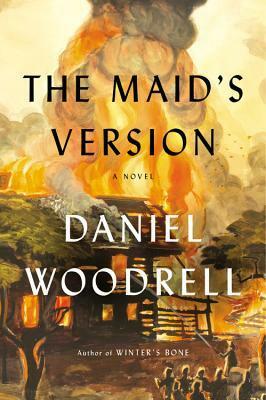
Review 2798: #NovNov26! The Maid’s Version

Another one for Novellas in November.

In my limited experience, Daniel Woodrell is the master of what might be called hillbilly noir—novels set in remote parts of the Ozark Mountains. I have only read two before this one, but my favorite is Winter’s Bone, which was made into an excellent movie starring Jennifer Lawrence.

The Maid’s Version is narrated by Alek Dunahew, who due to a split between his father and grandmother, first visits his grandmother Alma when he’s about twelve years old. He is bored until she begins to talk to him about her biggest obsession. Back in 1929, there was a big explosion at the Arbor Dance Hall. Forty-two people were killed, some of them blown to bits, and among them her sister Ruby. No one was ever prosecuted, but Alma is sure she knows what happened.

Sometimes returning to the book’s present in the 1980s, the story stays mostly with Alma’s childhood and the history of her family, which results in her becoming a maid at a young age with an alcoholic husband and fatally ill son. She also has her sister Ruby—an unrepentant woman of ill repute—not a prostitute, but a woman who thinks there is nothing wrong with having a good time and accepts gifts from lovers.

At times, the story jumps to give a short biography of one of the other victims of the explosion.

Was the bombing an act of revenge against Ruby by a discarded lover? Was it caused by two thugs trying to rob the bank and get revenge for the death of their brother? Was it the fundamentalist preacher, who has been demonstrating against the sin of dancing and saying the hall will go up in flames? Most of the town thinks it knows.

This novel is a sort of miniature mystery story except it dwells most on the impact of the tragedy on others. Woodrell writes with a slightly elaborate style that is powerful and blunt as a hammer.

Related Posts

Winter’s Bone

The Death of Sweet Mister

The Devil All the Time

Review 2797: #NovNov26! Exit Lane

I found this book on a list of recommended novellas for Novellas in November, not realizing it’s a romance novel. Romance isn’t really my thing, but I always try to start with an open mind (and in fact did, because I didn’t realize it was a romance until I was well into it). Alas, I took the exit lane at about page 75.

Like When Harry Met Sally, Teddy gives Marin a ride to New York after graduation in Iowa. Marin is determined never to let the dirt of Iowa touch her feet again, while Teddy’s dream is to move eventually back to Iowa and live next door to his best friend.

Nevertheless, they both find each other attractive and charming. Marin is bisexual, but that’s not the reason, after they exchange a kiss on a dare, that Marin makes it clear they’re not going to see each other. (But what is the reason? we wonder.) Teddy, however, has switched his crush on her best friend Sloane to Marin.

Three years later, both with highly paid, high-powered jobs (yeah, right), they run into each other at a bar. Marin’s occasional lover, Gabby, has to return to the office and Teddy and Marin have a great time at a karaoke bar, but then she again makes clear she doesn’t want to see him.

Two years later, Teddy gets a job as an attorney for the company where Marin is employed only to find she has transferred to Copenhagen. This time, they begin to exchange long phone calls.

I couldn’t take it. One of the key requirements of a romance novel is a convincing reason to keep its principals apart. It seemed ridiculous to me that Marin would refuse to see Teddy especially at first, when he was the only person she knew in New York.

The book blurb implies a When Harry Met Sally dislike, but both of them enjoy each other’s company. I understand that we have phone sex and unfaithfulness coming up. Even Publisher’s Weekly wasn’t impressed.

Apparently, there is more about the two on the publisher’s website. None for me, thanks.

Related Posts

Normal People

Romantic Comedy

Absolutely & Forever

Review 2796: #NovNov26! Water

Water is the first novella of Boyne’s The Elements. It’s another book I read for Novellas in November.

Vanessa Carvin arrives on a small, sparsely populated island off the coast of Ireland. The first thing she does is change her name to Willow Hale and cut off almost all her hair. Is she in hiding? we wonder.

She is in her 50s and has been married more than half her life. Yet, her thoughts of her husband are angry. Has she fled an abusive marriage?

Slowly, as she leads a quiet life, we learn what has happened. We learn fairly quickly that one of her daughters, Emma, has died but not the circumstances. Her other daughter isn’t taking her calls.

Delicately, mostly keeping herself to herself, she interacts with the islanders, and slowly, we find out why she’s there and what troubles her.

This is a masterful novella, looking into the heart of a deeply troubled woman. It pulls you along and ends with a measure of hope. It’s lovely.

Related Posts

The House of Special Purpose

This House Is Haunted

Island

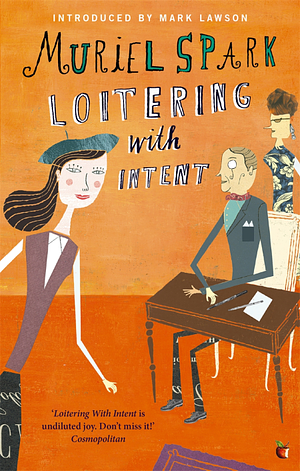
Review 2795: #NovNov! Loitering with Intent

Another one for Novellas in November.

Fleur Talbot is working on her first novel, Warrender Chase, when she takes a job at the Autobiographical Association working for Sir Quentin Oliver. Her job is to rework the biographies, which Sir Quentin has convinced the 10 members of the club must be absolutely frank. At first, Fleur is amused by Sir Quentin’s pompous biographical write-ups of the members. She finds the autobiographies deadly boring, so she begins making up details to make them funny. However, she also begins to notice that her work acquaintances are beginning to behave like her own book. She thinks Sir Quentin is up to something underhanded, perhaps blackmail. She dislikes his assistant, Beryl Tims, and her only pleasure in her work is her friendship with Sir Quentin’s eccentric mother, Edwina.

Fleur has been reading her manuscript to some of her friends, among them Dottie, the wife of Fleur’s lover. She makes the mistake of introducing Dottie to Sir Quentin, and Dottie falls under his influence. Eventually, Fleur is able to find a publisher for her work, but the intersection of her book and the Autobiographical Association causes trouble for her after the members get it into their heads that Fleur is writing about them, even though Fleur wrote most of the novel before she met them.

This is an odd and outrageous story that takes a turn for the even more offbeat when someone steals Fleur’s manuscript. Its dark humor is maybe a little dry for me to find it outright funny. Although Fleur finally figures out what Sir Quentin is up to, I have to confess that I didn’t quite get it. Trying to start his own cult, maybe? Certainly, he was trying to manipulate the members of his association. In any case, the book explores the instersection between life and fiction.

Related Posts

The Prime of Miss Jean Brodie

The Stone of Chastity

Rhododendron Pie

Review 2794: #NovNov! The Anthropologists

Another one for Novellas in November.

The narrator, Asya, of The Anthropologists is a young woman married to Manu, whom she has known since she was in school. They are both foreigners in their unnamed country, and a sense of tentativeness and lack of ritual preoccupies her, as does their lack of community. Asya, who works as a freelance documentarian and film editor, seems concerned to make more friends, while Manu, who works for a nonprofit, would usually prefer to stay home except for their evenings with their friend Ravi.

Asya, who is seldom named in the novel, is interested in people’s everyday lives, so she decides to do a film about the people in a nearby park. In addition, they both decide it’s time to own an apartment, so they begin looking for a new home. They live simply with few conveniences, which their parents don’t understand.

It’s hard to describe this novel, because it also is concerned with the details of everyday life. The couple look at apartments; visit their upstairs neighbor Tereza, an elderly woman who is losing her memory; hang out with various of their friends and unsuccessfully try to mix them; and so on. Yet, I found myself compelled to read on. The language is spare and simple, the sections short. Every once in a while, in sections called “In the Park,” we hear from the people Asya is interviewing, but this change of narrators is so subtle that it took me until about the fifth one to realize I was hearing from someone else.

Related Posts

Bitter Orange Tree

Study for Obedience

Monkey Boy

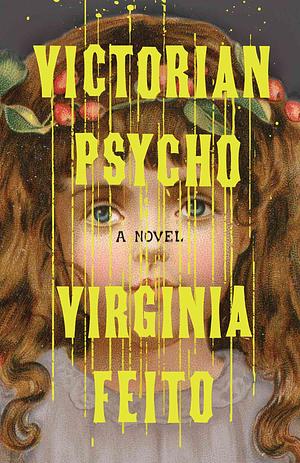
Review 2793: #NovNov! Victorian Psycho

Here’s another one for Novellas in November. Let me just say right off the bat that if you have a weak stomach, this is not the book for you. Not only is it gory, but even before it gets gory, it has disturbing details.

Winifred Notty has arrived at the home of the Pounds to work as governess for the children. Almost immediately, she has some thoughts that seem odd, and she says she’s repressing her dark self.

The Pounds are not nice people. Their son Andrew is stupid and spoiled. The older child, Drusilla, is pretty much ignored. Mrs. Pounds treats the servants with disdain and soon is jealous of Winifred because Mr. Pounds likes her. Winifred is certainly making up to him, but her intentions are different than we are led to think.

The narrative style is light and humorous, but despite her efforts to be good this time, Winifred’s behavior gets more and more bizarre. Sometimes she can’t remember what she’s been doing. We know from the beginning that everyone in the house will be dead within three months, so it’s just a matter of seeing how that happens.

Judging by her two books, Feito has a fascination with the dark side of humanity. I think this one was a bit too graphic for me, though.

Related Posts

Mrs. March

American Psycho

Such Small Hands

Review 2792: #NovNov! West

Here’s my second book for Novellas in November. Bess is 10 when her widowed father, Cy Bellman, decides to go west. He has read an article about the discoveries in Kentucky of the bones of massive animals. What if they are still alive in the vast West? Maybe Lewis and Clark didn’t see them, but what if he took “excursions” from their path? His brain is afire with excitement. He converts most of his money into trinkets for the natives and leaves Bess with her Aunt Julie.

While Bellman is bumbling around, Bess is waiting, sure he will return in two years, as he promised. Out West, Bellman has hired a 17-year-old Native American, a skinny boy named Old Woman From a Distance, as an assistant. They never learn each other’s language. Cy seems unable to drop his obsession.

As time passes and Bess nears her teens, two local pedophiles have their eyes on her.

This little novel leads you on in a subtle way so that you don’t feel you can stop. I found the ending a tad abrupt and unsatisfying, but overall, once you start it, you won’t be able to stop.

Related Posts

The Voyage of the Narwhal

Remarkable Creatures

West of Here

Review 2791: #NovNov! On the Calculation of Volume I

I didn’t intend to read this novella, because it didn’t sound like my kind of thing. However, so many people were raving about the series that I decided to read it for Novellas in November, hosted by Cathy of 746 Books and Bookish Beck.

Before I start my review, I thought I’d list all the novellas I have read so far this year:

Admittedly, some of these are a few pages longer than the limit of 200 pages.

And now, here’s my review:

I have to say right up front that I don’t understand what the fuss is about. I did want to know what happened, but one thing I knew from the beginning is that Tara isn’t going to get out of her predicament because the series has seven volumes! Of course, people reading the first volume right after it came out wouldn’t know that.

For the few people who don’t know what the book is about, Tara owns a book dealership with her husband, Thomas. She goes on a routine trip to Paris to look in at an auction and try to find some specific books as well as to purchase anything interesting. She arrives on the 17th of November, attends the auction, and buys some books. On the 18th, she buys more books, purchases a Roman coin for Thomas, and visits friends, Philip and Molly, where she burns her hand.

The next day, it is still November 18.

She isn’t stuck repeating the same day, like Bill Murray in Ground Hog Day. She eventually returns home. Some of the books she purchased go with her, but the coin is gone. Thomas is surprised to see her because she was supposed to return on the 19th, so she explains what happened and he believes her. But the next day only she remembers.

The novella is moody and contemplative, as Tara tries to make sense of what’s going on. What is the logic, if there is some, behind what she can keep and what she can’t? What happens to a couple if one person remains the same while the other is changing?

What never seems to occur to her is whether she is the only person experiencing this or if others are. After all, when Thomas is with her, he relives November 18 over and over, but he just doesn’t remember. Maybe everyone is reliving the same day, but she’s the only one who knows it.

The novel makes you think, if only to try to figure out what’s going on. Tara goes through a period of torpor, and then she decides not to put Thomas through the same thing daily, so she moves out, sort of, and he thinks she’s still in Paris and coming home tomorrow.

Of course, the novel is exploring many ideas, particularly the perception of time.

I’m not bothered by the lack of activity in the book, or by its contemplative nature. I just feel distanced from what is going on.

Related Posts

The Bone Clocks

1Q84

Exit West