
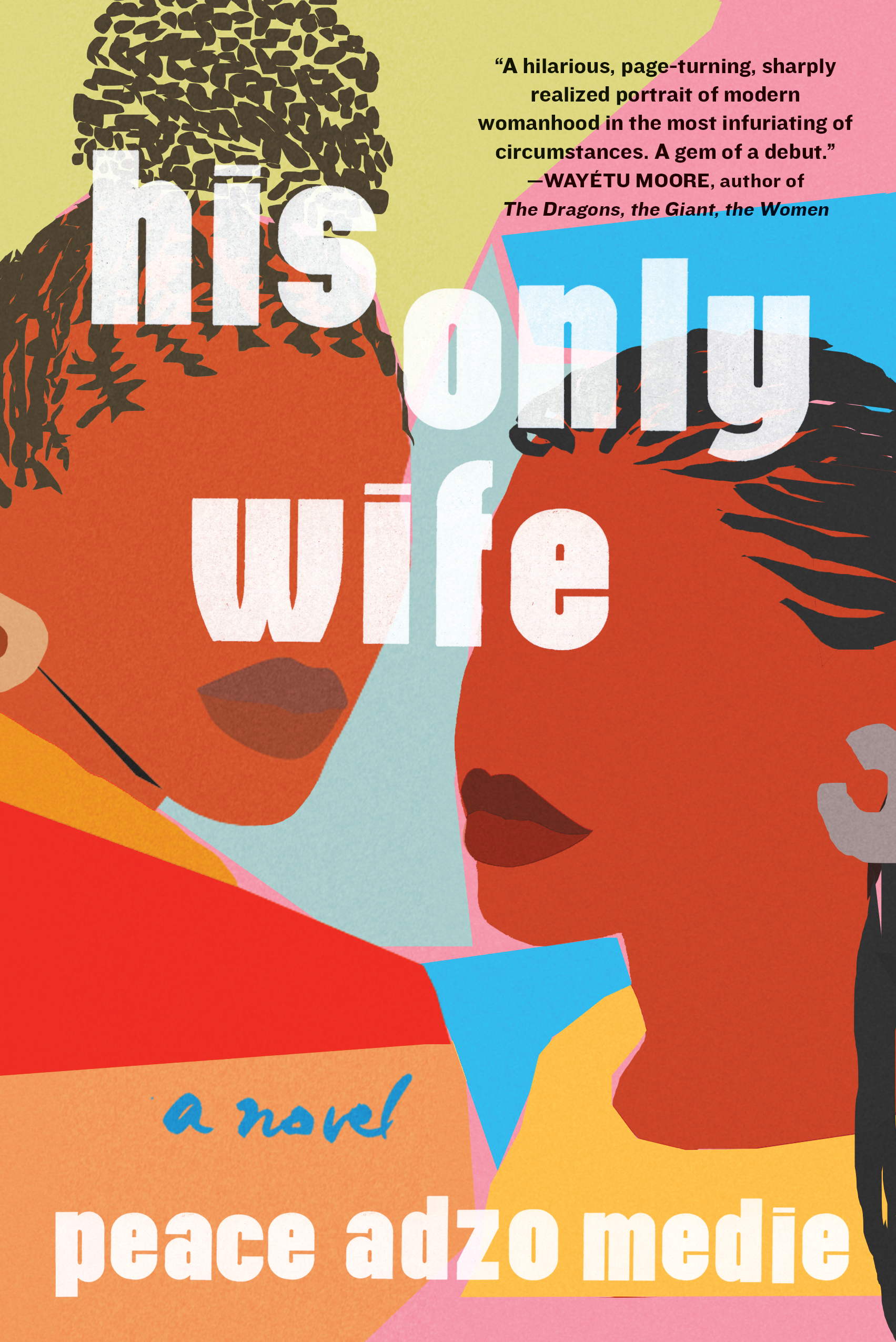
Today is another review for the Literary Wives blogging club, in which we discuss the depiction of wives in fiction. If you have read the book, please participate by leaving comments on any of our blogs.
Be sure to read the reviews and comments of the other wives!
- Lynn of Smoke and Mirrors
- Naomi of Consumed By Ink
- Rebecca of Bookish Beck
My Review
The death of Afi’s father years ago moved her and her mother from the middle class to poverty. Her uncle refused to give them a home even though Ghanaian custom decrees that a room in his house belongs to them. If Aunty, a wealthy local businesswoman, had not taken them in, they would have been homeless.
Now Afi has agreed to marry Aunty’s son Eli, a man she doesn’t know. His family hopes that a marriage to Afi will get him away from his Liberian girlfriend, with whom he has a child. They claim she must have bewitched him.
Afi marries Eli in a traditional wedding by proxy because he is away on a business trip in Japan. His brother Richard stands in and also takes her to her new home in a modern apartment in Accra. But Eli does not appear for some weeks. Afi has nothing to do except clean the apartment (even though there are people to do that) and shop. So she, who worked as a seamstress back in her village, decides to study fashion design.
Eventually, Eli comes to the apartment, but it is clear he is living elsewhere. However, Afi begins to fall in love with him and becomes determined that he will treat her as his wife.
This novel posed difficulties for me, and it was hard for me to tell if they came from cultural differences or not. The biggest was with the treatment of Muna, the girlfriend, referred throughout the book as “that woman” or “the Liberian woman.” After all, Muna came first and has Eli’s daughter, but Afi never once acknowledges that Muna has a prior claim, presumably because Eli hasn’t married her. Afi, after all, entered the marriage knowing she exists.
Second, most of the action of the novel revolves around a weak man who tells lies to avoid conflict.
I realize the novel is about Afi learning who she is and how much she owes to her family as opposed to herself, but after all, she ends up with a business that was essentially funded by her husband. She learns to stand up for herself but at the expense of Muna and her daughter.
There are other things in the novel that are interesting, such as the tension between tradition and modern marriage. Also, the writing is lively and engaging. But if Medie intended to write a feminist book, as I might assume from her Gender Studies background, she doesn’t really succeed.
What does this book say about wives or about the experience of being a wife?
Afi, coming from a small village and a traditional marriage ceremony, arrives in Accra seeming to expect a traditional marriage, as evidenced mostly by her concern to always have food prepared for Eli even though he never tells her when he’s coming and her attempts when he is there to wait on him. She also has constant tension between what is expected of her by her family and what she feels comfortable providing. Because of the unique situation she married into and also some culture shock, she has a hard time getting her bearings in the big city, especially as Eli doesn’t talk to her about things like money, what he’s doing about his girlfriend, and so on.
Although Eli doesn’t seem to want Afi to wait on him hand and foot, like she tries to do in the beginning, he isn’t honest or open with her and (major spoiler!) we infer from the ending of the book that he was planning a polygamous marriage as soon as his mother died. How he could think this solution would be acceptable to Afi is hard to grasp.
It’s hard to understand whether the aridity of Afi’s early married life is because she is wealthy or because of the differences between living in the modern big city and the traditional countryside, but it was a relief when Afi started with her studies.
Later on, when her marriage becomes more “normal” after the birth of her son, the novel isn’t very specific about the couple’s day-to-day life, but Afi seems to spend very little time with child-rearing or house management and most of her time running her business. Her relationship with Eli is better, but he still doesn’t tell her the truth or speak with her about important things. He also at one point tries to order her to behave a specific way. Theirs may be a modern marriage in terms of Ghanaian culture, but it certainly isn’t by our standards.


 What? Me Read?