Review 2584: Walk the Blue Fields

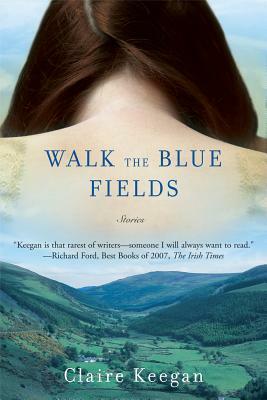
Walk the Blue Fields is a collection of short stories by Claire Keegan that I think was published earlier than another collection I read. It contains seven stories, one of which I already read.

In “The Parting Gift,” a girl is leaving home for the first time, headed to New York. She is leaving an unhappy life with dark secrets, but she wishes for some indication of affection.

In “Walk the Blue Fields,” a priest presides at a wedding and goes through his daily business. But the bride was a girl he loved.

Brady’s behavior has caused a split with his wife in “Dark Horses.” Still, he tries to believe she will come back.

In “The Forester’s Daughter,” Deegan cares more for the lands and his old house than he does for his family. Before he married, he talked about the house to Martha as if it were a castle, but it is dark, crumbling, and damp. She considers leaving but stays, even after he does an unforgivable thing to her daughter—gives away her dog for money.

“The Long and Painful Death” is the story I read before, about a writer whose stay in a revered writer’s home is interrupted by an unwelcome visitor.

“Surrender” is about an IRA man, a sergeant, a man who other men fear. He receives a letter from his girlfriend calling it off because of his delays in marrying her.

“Night of Quicken Trees” starts out realistically enough, about an older woman who has inherited a cottage on the west coast of Ireland from her cousin, a priest. She is entirely alone, and her story is a sad one, but then it slowly becomes a mythic one.

I liked most of these stories very much. Keegan is a fluid writer. Her stories are spare without being bone bare. You never quite know where they are going.

Related Posts

Antarctica

Small Things Like These

So Late in the Day

Review 2544: Island

Alastair MacLeod is considered a master of the short story. Island collects all 14 of his stories into one volume. Most of them are set on Cape Breton in Nova Scotia, where he was raised. Almost all of the stories are concerned with the lives of the working-class, often Gaelic-speaking descendants of Scots who immigrated to Canada during the 18th century clearances.

The stories are arranged by date from 1968 to 1999. Many of the early ones are about young men dreaming of or actually leaving the island. Later, they become more about older men who stayed.

The difficult and sometimes bleak lives of the islanders were interesting to read about. Since childhood memories would have been set in the 1940s, and some of the stories are about fathers or grandfathers, the life is often fairly primitive.

All of stories are well written and hold the attention, but I found several deeply touching. In “In the Fall,” a man’s wife makes arrangements to sell an old horse behind her husband’s back. The horse had been her husband’s faithful companion and co-worker but is no longer able to work. Of course, he’s being sold to the knackers.

In “The Road to Rankin’s Point,” a young man’s family gathers to try to convince his 90-some grandmother to move from her isolated farmhouse to assisted living. He himself has found out he only has a few months to live.

In “Winter Dog,” a man looks back to when he was a boy, to a dog who saved his life. And another one about a man and his dog, “As Birds Bring Forth the Sun.” And one about the results of a brief love affair, “Island.”

MacLeod only wrote one novel, which I’ll be looking for.

Related Posts

The Berry Pickers

Sweetland

The Islandman

Review 2527: The Whole Art of Detection: Lost Mysteries of Sherlock Holmes

I knew this book might not be a good fit for me, because I usually feel that mystery short stories are too short to do much but pose puzzles, but more importantly, because I usually think it is unsuccessful when an author continues another author’s work. However, I have generally enjoyed Lyndsay Faye’s books, so I tried this one.

Purporting to be lost stories, notes, and diary entries, most by Dr. Watson but some by Holmes, this book’s 15 stories span the time from before the two met until 1902.

I am not going to run through a description of each story. Instead, I’ll comment on how authentic Faye’s stories seemed as stories about Holmes, keeping in mind that I haven’t read a Holmes story in years.

First, how much like the originals are Faye’s Holmes and Watson? Faye clearly is very familiar with the books (this applies to pretty much all the things I’ll look at, not just this one) because she makes lots of references to other cases and certainly has down Holmes’s characteristics. However, it seemed to me that her Holmes is more of a Benedict Cumberbatch Holmes than an Arthur Conan Doyle one. For one thing, he is much more expressive of emotions, more so even than Cumberbatch, especially as the book goes on. Watson seems himself, only even more flowery of description, but smarter. Also, like in the B. C. version mentioned above, his war service is stressed a lot more.

What about the mysteries? Well, you’re reading the words of a person who never once guessed the solution of a Sherlock Holmes story—until now. On the one hand, Faye’s stories are not nearly as ridiculously overcomplicated and unlikely as Doyle’s (spoilers for ACD!)—teach a snake to crawl down a rope? while dying, say “the speckled band” instead of “a snake bit me”? On the other hand, it seemed ridiculously easy to guess at least portions of the solution for most of the stories (unlike in Faye’s other mysteries—this is what I mean by mystery short stories—they’re either totally opaque or too easy). For instance, in “The Case of Colonel Warburton’s Madness,” I guessed immediately that (spoilers) gaslighting was involved and who was doing it. I just didn’t know how. Later in a story about identical twins, I knew immediately that the twins had switched.

Faye writes well and keeps up the interest. I just wish she’d write more of her own stuff.

Related Posts

Seven for a Secret

Back to the Garden

The Edinburgh Mystery and Other Tales of Scottish Crime

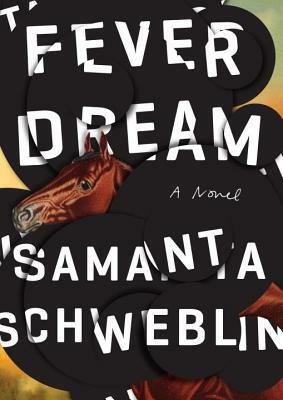
Review 2505: Novellas in November! Fever Dream

Fever Dream was another book I found on Literary Hub’s 50 Best Contemporary Novels under 200 Pages list. It is mysterious and unsettling and qualifies for Novellas in November.

Amanda, a young woman, is in bed talking to a boy named David. Together, they are trying to reconstruct the story of what happened to Amanda. Amanda is telling David the story, prodded by his questions, but it is clear that David remembers more than Amanda does. The story starts out with David’s mother, Carla. It soon becomes clear that Amanda is dying.

I don’t want to tell much about this story because almost anything I say would interfere with the plot unfolding itself. Let me just say that the story is eerie and a ghost story, in its own way. And to watch out where you pick to go on vacation.

The novella is sparingly written, so sparingly that the lines were given extra space just to make it to 185 pages. It’s quite a creepy little book, combining superstition and ghosts with an unstated environmentalism.

Related Posts

Such Small Hands

Picnic at Hanging Rock

We Have Always Lived in the Castle

Review 2504: Novellas in November! Margaret the First

Margaret the First is another of the short books listed on the Literary Hub’s 50 Best Contemporary Novels under 200 Pages post. I read it for Novellas in November.

This biographical novel is about Margaret Cavendish, Duchess of Newcastle, called Mad Madge in her time. She was the first woman to write for publication. And write she did—philosophy, poetry, plays, and even utopian speculative fiction. She was also very shy, tended toward agoraphobia, and wore extravagantly creative clothing.

Although some of the book is about her childhood, most of it concerns her life during her marriage. Her husband, William Cavendish, was about 30 years older than she, was a Marquess when they married, and was fighting on the King’s side of the English Civil Wars. The court was banished to France, where she had been a waiting lady to the English queen. Although she returned to England to try to reclaim some of her husband’s possessions, he was considered too big a traitor to the Parliamentary side to come back himself. It wasn’t until the Restoration that the couple was able to return and reclaim some of his fortune.

The novel is written in a telegraphic style that doesn’t seem telegraphic. That is, Dutton manages to convey a great deal of substance in a very short work (160 pages) through clever word choice and phrasing. The first half of the novel is in first person but it switches to third person, while still remaining from Margaret’s point of view.

I enjoyed this novel a lot. It is a feminist work written in a sharp, modern style, and it has inspired me to look for more to read about Cavendish. It ends with some recommendations for further reading and a few pages of bibliography.

I should note that the title of one of my favorite books, The Blazing World by Siri Hustvedt, came from the title of a utopian novel by Cavendish. I didn’t know that.

Related Posts

The Blazing World

Lark

Samuel Pepys: The Unequalled Self

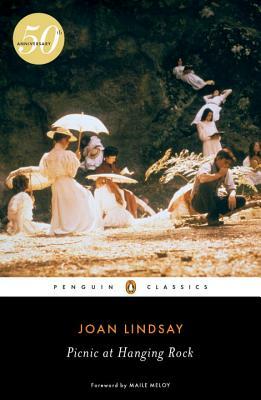
Review 2502: Novellas in November! Picnic at Hanging Rock

I have meant to read Picnic at Hanging Rock for years, so when I saw it on a list of short novels, I got a copy from the library for Novellas in November. It turns out I’m stretching a point with this one, though, at 204 pages, a little over the stated limit.

Let me warn you about this one. I suggest you don’t do too much poking around or read the Introduction before reading it. Even the Introduction suggests that you read it afterwards. Part of this suggestion has to do with a chapter that was removed at the suggestion of the original publishers. The Introduction to the Penguin edition summarizes this chapter, but I agree that the novel is much more powerful without it.

On a hot Valentines Day in 1900 Australia, most of the girls of Appleyard College for Young Ladies are bound for an outing—a picnic at Hanging Rock, an ancient local geographical and anthropological wonder. With them are three teachers and the coachman. The only student left behind is Sara, a 13-year-old orphan whom Mrs. Appleyard, the headmistress, uses as a scapegoat.

Although the girls are told to stay off the rock, after tea three senior girls ask to walk closer to it. They include Miranda, a girl loved by everyone at the school but especially by Sara. With her are her best friends, Irma, a beautiful heiress, and the brainy Marion. Edith, a younger girl who they think is a pest, tags along after them.

Although a couple of young men in a family party see them crossing a stream, no one sees them after that—or at least no one sees some of them. The girls fall asleep on a circular platform, and when they wake up very late, Miranda wanders away, seeming to hear no one’s calls. Later, Edith comes running screaming away from the rock but can’t remember anything except that she saw Miss McCraw, the mathematics teacher, running away without her skirt. By then, the party has been searching for the girls and has noticed that Miss McCraw is missing, too.

The whole countryside erupts into an uproar. On a subsequent search after the official police ones, the two young men who glimpsed the girls at the rock try searching again, and Mike Fitzhubert finds one of them barely alive. He is injured running for help, but his companion and groom, Albert Crundall, rescues them both.

Most of the novel is about the aftermath of the disappearances. This is an atmospheric and mysterious, even haunting novel that holds the attention. It’s an Australian classic.

Related Posts

The Sun Walks Down

The Secret River

A Room Made of Leaves

Review 2501: Novellas in November! Young Man with a Horn

I read Young Man with a Horn to fill a hole in my Century of Books project but, as has happened several times already, by the time I got to it, I had already read a book for that year. (I made a list of my to-read pile years to avoid this, but now I’ve lost the list!) However, at 171 pages, it qualifies for Novellas in November.

Young Man with a Horn is Baker’s debut novel and is still her best known. She seems to like to tackle complicated subjects and what were at the time fringe characters. (For example, she subtly indicates in Cassandra at the Wedding that Cassandra is gay.)

We know from the beginning that this novel is not going to have a happy ending. The anonymous narrator makes that clear in the Prologue. And about that narrator—the novel is related in a loose, conversational style, like someone might use to tell the story to a friend.

In the 1920s, Rick Martin is a 14-year-old orphan at the beginning of the novel. School isn’t working for him and he spends most of his time in the library until he finds a piano in an unlocked church and teaches himself to play, which doesn’t take long.

He decides he wants a trumpet, though, because it’s easier to carry around. His young aunt and uncle are very poor, so to buy one he needs a job. He gets one setting pins at a bowling alley. There he meets Smoke Jordan, an older Black boy who is a drummer. Eventually, they start hanging out to talk about music (after Rick gets over some racist notions). They like sitting behind a club where Smoke’s neighbor, Jeff Williams, has a band which is getting to be well known, a bunch of gifted Black men. Eventually, they are invited inside, and when Rick gets his trumpet, he convinces the trumpet player to give him lessons. It’s jazz Rick is interested in rather than the dance music the band plays in public. It becomes almost the only thing he is interested in.

The book traces his career as he becomes one of the best jazz trumpet players in the country. Baker draws a convincing portrait of an obsessed personality. It’s fairly fast-moving, and the only part I didn’t really appreciate was the blaming of his wife for the failure of their marriage.

Related Posts

Cassandra at the Wedding

Trust

Lucky Us

Review 2500: Novellas in November! Such Small Hands

I decided to make more of an effort to participate in Novellas in November this year, more than accidentally reviewing a novella in November, that is, so I started looking at lists. When I first went for classic novellas, I was finding the same kinds of things, many of which I considered novels, not novellas, so I just tried search for novellas in general. I finally found this intriguing list on Literary Hub, the 50 Best Contemporary Novels Less Than 200 Pages. I picked out a few books from it, most of which I was unfamiliar with.

The quotes on the back of this very short book (101 pages) use words like “chilling” and “terrifying.” I was nearly halfway through it feeling that it was a little strange but certainly not terrifying. So, I did a little looking around, as I sometimes do when I feel like I’m not quite with it. That led me to find out something I wish I didn’t know ahead of time. So, don’t do this! If you choose to read the novel, you’ll find it out in the Afterword.

Marina’s parents died after a car accident. She herself was badly injured and hospitalized for some time. At seven years old with no relatives, she is placed in an orphanage. The other girls, whose point of view is represented as a group, love and are repelled by her, so they make her an outcast. And there is something odd about her. When anyone asks her about her family, she uses the same words, with no affect.

Marina’s only possession besides an odd selection of clothes from her house is a doll the psychologist gave her. Marina, rejected, plays constantly with the doll. Eventually, the other girls steal, destroy, and bury it.

These descriptions sound a little odd, but what is very unusual is the way the unspoken thoughts of the children are expressed in the text. It’s lyrical, and as I mentioned before, the other girls are treated as one. References in reviews speak of a Greek chorus, but to me it seemed stranger than that.

I’m not going to say more about this except that the events and aura of the novel become stranger as it goes on. If you are interested, you most likely won’t be disappointed. And what the heck! It’s only 100 pages long. Read it!

Related Posts

We Have Always Lived in the Castle

The Bloody Chamber

The Wicked Boy

Review 2498: Novellas in November! Envy

It wasn’t until I was getting ready to post this review that I realized that at 152 pages it qualifies for Novellas in November!

I read Envy right after Dostoevsky’s The Gambler, and perhaps that was too much for me. The two short Russian novels have a lot in common even though they were written more than 60 years apart. They both feature young male narrators in a frenzy and easily offended. They both have long philosophical speeches that doesn’t seem to mean much. Olesha leans more into Absurdism, but Dostoevsky can be pretty absurdist himself.

Andrei Petrovich Babichev is a model Soviet citizen, a trust director in charge of food. He has literally picked our narrator, Nikolai Kavalerov, up from the gutter and given him a bed on his sofa. Andrei Petrovich is fat and self-satisfied, true, but Nikolai hates everything about him.

Then he meets Andrei’s brother, Ivan, a sort of buffoon who makes up ridiculous stories and also hates Andrei.

Andrei’s claim to fame is a huge communal dining hall he’s building, where food is supposed to be good and cheap. He has also produced a good, inexpensive sausage that he’s proud of. Olesha is clearly making fun of these accomplishments, and I don’t know how he got away with it in 1927 Soviet Union.

There is lots of talk about the New Man that Communism is going to produce but no sign of one. (Coincidentally, I am reading The Possessed by Dostoevsky right now, and there’s lots of talk about the New Man in it, too; only apparently he’s supposed to be produced by Nihilism.)

Thanks to the publisher for sending me this book in exchange for a free and fair review.

Related Posts

Life and Fate

The Gambler

Memories: From Moscow to the Black Sea

Review 2497: Novellas in November! School for Love

This year, I thought I’d try to pop some novellas into my October reading so that I could participate in Novellas in November, hosted by Bookish Beck and Cathy of 746 Books. I actually read School for Love for my Century of Books project, but was delighted to see that at 191 pages, it qualified for this one, too.

Felix Latimer arrives during a snowstorm in Jerusalem from Baghdad. He is newly orphaned, his father having been killed during the war (WW II) and his mother having recently died from typhoid. So, he is being taken in by a family connection, a woman named Miss Bohun who runs a boarding house, until he can get on a boat to England. The war is winding down, but at this point places are reserved for soldiers and government personnel.

Felix is in his mid-teens, but for a long time I took him for much younger. He has been taught by his mother to look for the good side of people, and he is disposed to be grateful to Miss Bohun, but readers see her another way right from the beginning. Although she runs a fringe religious organization and talks about good works, early on she sits down with Felix to figure his share of expenses and while adding up her household expenses, includes some things twice, then remarks that they should divide the costs in half even though she has another boarder (although admittedly, he is very poor and we don’t know how much he pays). Even so, his half of £36 mysteriously ends up at £21, leaving him pocket money of only a few pounds a month. (Later, she tries to raise the rent to take the full amount.) She also feeds the boarders poor and scant food.

At first, Miss Bohun confides in him and he is confusedly willing to take her part in her concerns. Although we learn that she has stolen Frau Leszno’s house and furnishings from her by putting the house into her own name to “protect” it, and actually uses Frau Leszno as a servant, Felix is ready to take Miss Bohun’s part because Frau Leszno seems so unpleasant. He likes Mr. Jewel, the other tenant who lives in the attic, but he still takes Miss Bohun’s part when she tells him he has to leave the next day, even though he has nowhere to go. (He ends up in the hospital.)

Miss Bohun is scheming, we find, to oust Mr. Jewel and move up into his attic herself so that she can rent her room to Mrs. Ellis, a young widow. Once Mrs. Ellis appears, Felix is smitten, and he begins to see the other side of Miss Bohun after taking in Mrs. Ellis’s sarcastic remarks. We eventually learn that Miss Bohun has promised Mrs. Ellis the whole house in the fall, a promise she has no intention of keeping. In fact, we realize all along that she has been trying to replace her tenants with more wealthy or prestigious ones, with the idea of getting more rent.

Although there is some action, most of the novel is concerned with the interactions among these characters and a few more. Felix begins to wake up to some realities.

The portrayal of Miss Bohun is a masterly one as we note her constant hypocrisies. As for love, although Felix begins with a crush on young Mrs. Ellis, it’s only really between Felix and a little cat, Faro.

Related Posts

The Great Fortune

The Spoilt City

Friends and Heroes