Review 2652: Alligator & Other Stories

Alligator & Other Stories is the last book I had to read to wrap up my James Tait Black project. It is a collection of nine stories by Syrian-American writer Dima Alzayat, all with a theme of dislocation.

I was nearly brought to tears by the first one, “Ghusl,” about a woman preparing the body of her younger brother for burial, against tradition. The woman’s name is Zaynab, and I believe she is the same woman we read about in later stories.

“Daughters of Manät” (does it mean “destiny”? all I could find was a definition of the word without the diacritical mark) also brings in Zaynab as the aunt of the narrator, but it begins with a woman stepping out of a window, presumably committing suicide. This act indicates a shift of point of view between telling the story of Zaynab and whatever else is going on, but that’s just it. The rest is beautifully written, but I found it a bit opaque.

“Disappearance” is the only story that doesn’t seem to contain characters of Middle East origin unless one is Etan, a boy who has disappeared. The story is written from the point of view of a young boy who is not allowed to leave his New York apartment building during the summer that Etan disappeared.

In “On Those Who Struggle Succeed,” a young college graduate makes compromises, including hiding her Lebanese ethnicity, to try to succeed at a company.

In “The Land of Kan’an” an Egyptian man living in Los Angeles tries to overcome his predilection for men as sexual partners.

“Alligator” is a long story that shows America’s history of racism through newspaper clippings, interviews, and testimony, reverting many times to the killing of a Syrian grocer and his wife in Florida by the police in 1929. Although it employs the technique, becoming more common, of using documents to tell its story, I think it is overly long and a bit redundant. I hadn’t realized until reading it, though, that there was a large emigration of Syrians in the early 20th century and that they were treated like my Irish ancestors were in the late 19th century.

“Summer of the Shark” is from the point of view of a young man of Jordanian descent working in a call center on 9/11.

In “Once We Were Syrians,” Zaynab makes another appearance as a grandmother tries to explain to her granddaughter what her Syrian heritage means.

In “A Girl in Three Acts,” a teenage girl in foster care reconnects with the Christian Syrian family that ostracized her branch of the family when her grandfather converted to marry a Muslim girl.

I found the first and last stories most affecting. The stories are beautifully written, but since short stories are not really my thing, I’d like to see a novel by Alzayat.

Related Posts

Travelers

Unaccustomed Earth

In the Eye of the Sun

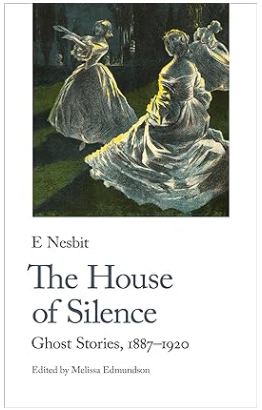
Review 2643: #RIPXX! The House of Silence

Marble knights walking in the night, a man coming back from the dead, a man who acquires a sweetheart in the graveyard, a haunted picture frame, killer vines, such are the fodder of E. Nesbit’s collection of 18 ghost stories. None of these stories are truly terrifying, but some of them are at least original.

There are a few that turn out not to really be ghost stories—for example, a salesman who uses a ghost story to get a better room—and I liked those better than most of the ones involving the supernatural, although I do like a nice, chilling story.

Several of the stories are about thwarted love affairs or unscrupulous rivals for a girl’s affections. Some have sad endings, but in others people get what they deserve.

This book is about on par with the volume of Victorian ghost stories I reviewed a few years ago, but uniformly better written and sometimes more subtle.

Related Posts

The Oxford Book of Victorian Ghost Stories

Tales of Mystery and the Macabre

The Casebook of Carnaki the Ghost Finder

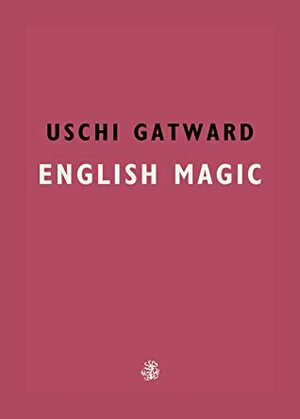
Review 2618: English Magic

I read English Magic for my James Tait Black prize project, which I have been trying to wrap up—or let’s say intending to wrap up but not doing much about it. The book is a slim volume of 12 short stories.

Repeat readers of my blog may know that I sometimes have problems with short stories. Generally, this is because if I am enjoying something, I want it to last. I had problems with some of these stories for other reasons.

“The Clinic” is a mysterious story. It seems to be set in a dystopian future. A couple has a baby who is very advanced, and they are trying to hide that from the clinic at which they apparently have mandatory visits. Their plan is to run away and hide somewhere in the woods. I think this story was intentionally written to leave readers with lots of unanswered questions, but I found it frustrating, and I can handle a lot of ambiguity.

“My Brother Is Back” continues the air of mystery. It’s about a Muslim being returned to England after years of imprisonment in the U. S. It’s written like a snapshot of time.

I stopped reading “Oh Whistle And” because of its style. It’s a fairly long story written in snippets of reports about surveillance of unions and socialists and about whistle blowing, mentioning Edward Snowden. All the characters, if you can call them that, are referred to by single letters of the alphabet. I lost track of who was who almost immediately, and the snippets were driving me crazy.

And skipping way ahead, Gatward uses almost the same approach for “Lammas,” except the snippets are pieces of conversations. This story is about a man’s long life in activism. It was difficult for me to track what I took to be real events, but I think it went back and forth in time. I finished this story.

“Beltane” is a slightly surreal story about a couple who join a Beltane ceremony, and related to that is the story “Samhain,” about a woman’s unique way to celebrate Halloween. Or is it a sinister way? I found both stories interesting.

“The Bird” is about a bird trapped in a couple’s chimney. Both it and “On Margate Sands” are vivid snapshots again, just capturing small events.

I won’t cover all the stories, but I will mention two that feature the same character. In “Lurve,” Ollie is an artist, not a successful one, who hangs out with Lottie and Jeanie, two party girls, and occasionally writes art reviews. He and his friends live in squalor. He is in love with Jeanie, but she doesn’t care.

We meet Ollie again in “Backgammon,” in which he is hanging out with his old girlfriend Ria. Ria used to be an addict, but she is getting her act together. Ollie is not an addict, but he realizes his act is not together.

Overall, I felt indifferent to many of the stories, although they are minutely observed and well written. I’m guessing the title is ironically intended.

Related Posts

The Candy House

In a Strange Room

Sudden Traveler

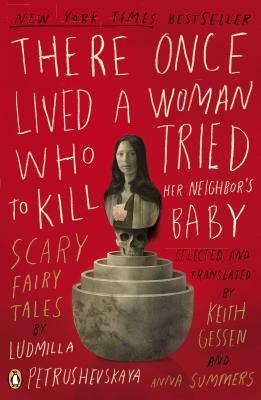
Review 2593: There Once Lived a Woman Who Tried to Kill Her Neighbor’s Baby: Scary Fairy Tales

I’ve always been interested in Russian literature but have read mostly 19th century books. Ludmilla Petrushevskaya was a writer whose books were banned in the Soviet Union, even though they were not political and her plays were allowed. The introduction to my Penguin edition says that in 1973 because Lithuania was more open, she took a difficult trip to Vilnius to try to get something published and indeed got two stories published, but she was out of favor in her own country for years.

The first thing you notice when you look at this volume of stories is that it is backwards. You start with the back cover. Then, I guess, read the introduction, which I didn’t, because the translators explain the concept of nekyia from Ancient Greek literature. The word means “night journey,” which often includes visits to the underworld or the dead. The introduction states that every story in the book is a form of nekyia.

Lots of the stories involve people being dead without knowing it or people visiting the dead. The stories seem to belong to magical realism. That genre isn’t my favorite, but I have to admit that most of the stories are fascinating even though I didn’t always get the point. If there was one.

There is no characterization, really, because these are fairy tales, but the characters often live grim or dangerous lives. People are beaten up or have everything stolen from them. In one story, a family keeps moving farther and farther from civilization in places more and more hidden to keep people from stealing their potatoes and goat.

People also change forms, become different physically. In one story two sisters are united by a spell into one very fat woman, but this is probably the most extreme example. Petrushevskaya’s characters are mostly not nice.

This is certainly an unusual book. It’s not for everyone, but even though it wasn’t my preference, I found it oddly fascinating.

Related Posts

The Bloody Chamber

Such Small Hands

St. Lucy’s Home for Girls Raised by Wolves

Review 2584: Walk the Blue Fields

Walk the Blue Fields is a collection of short stories by Claire Keegan that I think was published earlier than another collection I read. It contains seven stories, one of which I already read.

In “The Parting Gift,” a girl is leaving home for the first time, headed to New York. She is leaving an unhappy life with dark secrets, but she wishes for some indication of affection.

In “Walk the Blue Fields,” a priest presides at a wedding and goes through his daily business. But the bride was a girl he loved.

Brady’s behavior has caused a split with his wife in “Dark Horses.” Still, he tries to believe she will come back.

In “The Forester’s Daughter,” Deegan cares more for the lands and his old house than he does for his family. Before he married, he talked about the house to Martha as if it were a castle, but it is dark, crumbling, and damp. She considers leaving but stays, even after he does an unforgivable thing to her daughter—gives away her dog for money.

“The Long and Painful Death” is the story I read before, about a writer whose stay in a revered writer’s home is interrupted by an unwelcome visitor.

“Surrender” is about an IRA man, a sergeant, a man who other men fear. He receives a letter from his girlfriend calling it off because of his delays in marrying her.

“Night of Quicken Trees” starts out realistically enough, about an older woman who has inherited a cottage on the west coast of Ireland from her cousin, a priest. She is entirely alone, and her story is a sad one, but then it slowly becomes a mythic one.

I liked most of these stories very much. Keegan is a fluid writer. Her stories are spare without being bone bare. You never quite know where they are going.

Related Posts

Antarctica

Small Things Like These

So Late in the Day

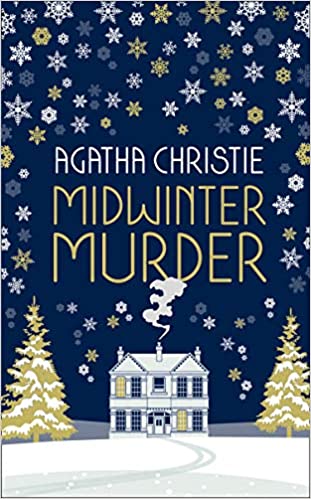
Review 2304: Midwinter Murder

Even though I don’t always get on with mystery short stories, I’ve observed Midwinter Murder going around and thought it sounded like good winter reading. And so it proved to be.

For one thing, with Christie’s stories I didn’t feel that lack of characterization that I often feel with other mystery short stories, since Christie is so deft at depicting characters with just a few strokes. Not all of these stories involved murders, and some are quite benign. Poirot appears in several, Miss Marple in one, Tommy and Tuppence in one, and in two, a Mr. Satterthwaite and his mysterious friend, Mr. Quin.

“The Clergyman’s Daughter,” about a woman who inherits a house only to find odd things happening in it, was unfortunately already included in Partners in Crime, which I read last year. Similarly, the Miss Marple story, “A Christmas Tragedy,” was included in The Tuesday Club Murders.

Just for a change, I believe I preferred some of the more benign stories. For example, in “The Problem at Pollensa Bay,” Mr. Parker Pine receives a plea from an overprotective mother to find a way to get her poor son Basil away from a girl she deems unsuitable. But Mr. Pine doesn’t see anything wrong with the girl.

I also liked “The World’s End,” in which the mysterious Mr. Quin appears in a desolate location in Corsica to right a wrong.

And in “The Manhood of Edward Robinson,” Edward is a clerk who yearns for romance but his too-practical fianceé Maud thinks he’s a spendthrift and chides him when he tries to make a romantic gesture. Edward wins £500 in a contest and decides to spend it all on a sportscar then take it away for a day before Maud ruins his fun. And he has an unexpected adventure.

There are lots of stories with clever puzzles, for example, “Christmas Adventure,” in which Poirot figures out why there is a jewel in the plum pudding. But I thought I’d point out some of the more unusual stories.

Related Posts

Partners in Crime

The Tuesday Club Murders

The Christmas Card Crime and Other Stories

Review 2300: So Late in the Day

So Late in the Day is a collection of three of Claire Keegan’s short stories. Unfortunately for me, I had already read one of them, “Antarctica,” in her collection Antarctica. All three stories focus on relationships between men and women.

In “So Late in the Day,” we get to know Cathal. We follow him in the course of what was to be an important day for him, as he considers his relationship with his fiancée, referred to only as “she.”

In “The Long and Painful Death,” an unnamed writer starts a residency in the home once owned by a revered Nobel-Prize-winning author. On her first day, however, she has to deal with a visit from a man who claims he has permission to view the house but turns out to have a different agenda.

The story “Antarctica” was a reread for me. It’s about what happens when a married woman decides one time to have a fling.

As always with Keegan, the stories are written in lucid, precise prose. They reflect a good deal of cynicism about relations between the sexes.

Related Posts

Antarctica

Foster

Small Things Like These

Review 2212: Crimes of Cymru: Classic Mystery Tales of Wales

This latest British Library Crime Classics collection features mystery and crime short stories written by Welsh authors or located in Wales. The stories were written from 1908 to the mid-1980s, and some of them are quite eerie in nature.

For example, in the 1936 story “Change” by Arthur Macken, holiday makers scoff when Vincent Rimmer tells them lights are on all night in the cottages of Tremant to keep the fairies away. Yet later a child is apparently exchanged by the fairies. Or is he?

In “The Way Up to Heaven,” Roald Dahl (born in Wales) tells the story of Mrs. Foster, whose husband purposefully torments her by being late even on the way to her flight to Paris to see her grandchildren for the first time. She figures out a way to take care of that problem.

In “No More A-Maying” by Christina Stead, the lies of two children with a guilty secret create an injustice in rural Wales.

Although most of the earlier stores are more traditional, “Water Running Out” by Ethel Lina White explains how Harvey deals with his aunt, who has been preventing his marriage to Annie for years by blackmail.

And another attempt to prevent marriage is perpetrated in “The Chosen One” by Rhys Davies. Rufus, whose family has occupied his cottage for hundreds of years, gets a note from his eccentric landlady, Audrey P. Vines, telling him his lease is up and she’s throwing him out.

This was one of the more entertaining and atmospheric of these collections that I have read. I usually like them, but prefer getting into a longer work.

I received this book from the publishers in exchange for a free and fair review.

Related Posts

The Edinburgh Murders and Other Tales of Scottish Crime

Final Acts: Theatrical Mysteries

Murder at the Manor

Review 2091: Final Acts: Theatrical Mysteries

British Library Crime Classics’ latest collection of mystery short stories has some connection to the theater. Some stories are only peripherally connected—feature an opera singer, perhaps—while others are set there and show a deep knowledge of that environment. As usual, the stories are ordered chronologically, beginning with a 1905 story by Baroness Orczy and ending with one from 1958 by Christianna Brand.

Baroness Orzcy’s “The Affair at the Novelty Theater” is a complicated story about the disappearance of some priceless pearls.

“The Affair at the Semiramis Hotel” by A. E. W. Mason is one of the super-complicated crime stories common in the earlier years involving people in costumes, a robbery, and a burglary.

“In View of the Audience” by Margarite Steen is a creepy one about a young man who gets on the wrong train and ends up accompanying a strange man to a derelict theater, where he hears about an old unsolved murder.

“Blood Sacrifice” by Dorothy Sayers leaves the reader to decide if there is a crime or not. Young playwright John Scales is furious with Mr. Drury, who has bastardized Scales’s play to make it a success. Then an accident places Drury in Scales’s power. This is the first story in the book in which characterization plays much of a role.

“The Blind Spot” by Barry Perowne is about a playwright who had a brilliant idea for a locked room mystery when he was drunk but can’t remember it sober.

“I Can Find My Way Out” by Ngaio Marsh probably shows the most knowledge of the theater, as a leading man is murdered in his dressing room.

“The Lady Who Laughed” by Roy Vickers is a strange story about a clown who murders his wife for finding him funny.

I enjoyed the satisfying surprise ending of “The Thirteenth Knife” by Bernard J. Farmer.

In “Credit to William Shakespeare” a poisoning onstage is solved through a man’s knowledge of Hamlet.

I think my favorite story was “After the Event” by Christianna Brand, where her detective, Inspector Cockrill, ruins the Great Detective’s favorite story by explaining how he got it wrong.

I received this book from the publishers in exchange for a free and fair review.

Related Posts

The Christmas Card Crime and Other Stories

The Edinburgh Mystery and Other Tales of Scottish Crime

Silent Nights

Review 1781: Good Evening, Mrs. Craven: The Wartime Stories of Mollie Panter-Downes

A woman feels as if some evacuees have taken over her home. The Red Cross sewing party is enlivened by arguments between the good-natured Mrs. Peters and the bloodthirsty Mrs. Twistle. A woman bravely faces her husband’s deployment and then is devastated to find he hasn’t left yet and she has to face it all over again. A couple finally gets rid of their evacuees only to have an acquaintance ask for room in their house. A man who has been working in a ministry feels guilty about not joining up.

These are a few of the stories about ordinary people during World War II that Mollie Panter-Downes published in the New Yorker. They are slice-of-life stories, although most of them have an upper-class perspective, of changing social conditions, of changes in everyday life, of people keeping a stiff upper lip.

I was surprised to learn from the Afterword that Panter-Downes, a prolific British journalist, short story writer, and novelist, was much better known in the United States than in Britain because she published almost everything in the New Yorker. So, even though she wrote hundreds of short stories, her legacy was almost lost in her native country.

Ordered by when they were written, this collection provides an insightful look, beautifully written, at the lives of ordinary people during the war.

One Fine Day

My Husband Simon

To Bed with Grand Music