Review 2663: The Hours Before Dawn

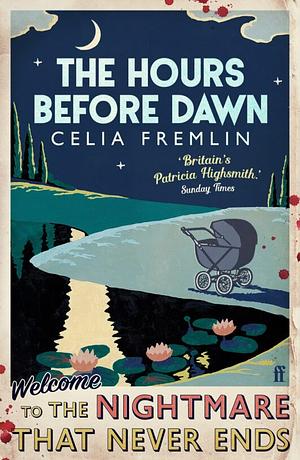
Boy, if you like a good thriller, this Celia Fremlin is terrific! I wonder why I never heard of her before. Since the summer before last, I had been trying to find a reasonably priced copy of her Uncle Paul. In May, another blogger told me she had found one, so I looked again and ended up with a set of three novels. One more to go!

Louise is exhausted. She has a young baby, Michael, who won’t sleep through the night and two girls, ages six and eight. In with the times, her husband, Mark, isn’t much help and even complains about the baby and the untidy house. Louise also has some objectionable neighbors. Mrs. Philips, who shares a wall, complains every day about the noise her children make. Mrs. Hooper has a talent for roping Louise into things she doesn’t want to do, like taking care of her baby, Christine. Mrs. Morgan is always condoling with her and criticizing the others, but Louise knows she does the same with the others.

Louise and Mark have decided to rent a room on their top floor, but Louise is surprised when Mis Brandon shows up to take it. She looks too prosperous and respectable to need to rent someone’s room, and there is something intense about her. But she teaches school at a local primary and is too respectable for Louise to turn away.

Louise begins to have strange dreams, but there are also some odd events that occur, and Louise is so tired, she thinks she may be imagining things. Tony Hooper, a young boy, tells her Miss Brandon is a spy, because he saw her going through Mark’s desk as well as his own mother’s. Then one night Louise takes Michael out for a walk so as not to disturb Mrs. Philips and falls asleep on a park bench. When she awakens, Michael and his pram are gone. She goes to the police and incoherently tells them her story only to find Michael and his pram at home, the baby asleep in his bed.

Now she feels she is branded not just a poor housewife but a lunatic. Mark is angry with her because he thinks she is jealous of Miss Brandon on his behalf. But Louise is determined to investigate her lodger.

This is a terrific little thriller that builds suspense throughout and ends with a bang. I’m really enjoying these books.

Related Posts

Uncle Paul

Lady Living Alone

The Circular Staircase

Review 2645: #RIP XX! Uncle Paul

Why have I never heard of Celia Fremlin before? This book is great! When I first read a review of it last year, I could only find an expensive used copy, but another blogger this year (sorry, I don’t remember who) set me looking again, and I found an inexpensive set of three novels, including this one.

Meg gets an urgent message from her older sister Isabel asking her to drop everything and come see her at a vacation caravan site on the seaside. The telegram simply tells her that Mildred, their much older half-sister, is in trouble.

After talking it over with her friend, Freddy, Meg travels to the run-down caravan park to learn that Mildred’s problems have to do with Uncle Paul. Fifteen years ago, when Meg was a child, Mildred married Uncle Paul, and they spent their honeymoon in a cottage just a few miles away. It turned out, however, that Uncle Paul was not only already married but he was wanted for attempted murder of his wife for her money, and Mildred was also wealthy.

Now it is the end of Uncle Paul’s 15-year sentence. Mildred seems to think he will be coming to get his revenge, but she has perversely rented their old holiday cottage.

Both of Meg’s sisters seem permanently distressed. Isabel worries constantly about her husband Philip’s reaction to everything, while Mildred is often alarmed enough to scream. Meg talks Mildred into returning to town and looking for different lodging, which she finds for her at a comfortable hotel. She also finds Freddy there.

Her sisters’ alarm seems to be contagious, though. When she arrived at the cottage, she found Mildred all aquiver because she had been hearing footsteps—Uncle Paul’s footsteps. Isabel is hardly less nervous. And Meg learns that she may also be in danger, because she was the one who recognized Uncle Paul in an old newspaper.

Fremlin manages to work a good deal of suspense from what seems like trivial incidents, and from fears that Uncle Paul could be any of several men around. But just when I was deciding that everything was in their heads, things got going.

This book reminded me of a lot of Mary Stewart’s combinations of suspense and a bit of romance that I’ve always loved. The writing style is sprightly, the dialogue is witty, and the characters are vivid. Finally, Meg is an engaging, intelligent heroine.

Related Posts

The Unforgotten

Touch Not the Cat

The Lace Reader

Review 2628: #RIPXX: Fallen

When Will Trent’s partner Faith Mitchell goes to her mother’s house to pick up her baby, Emma, she can see something is wrong. Loud music is playing inside and there is blood on the door handle. When she goes to the shed to get her mother’s gun, the gun is gone and the baby is locked inside.

Entering the house, she finds a dead man in the laundry room. She is forced to shoot a man in the bedroom and another one threatening the neighbor’s kids in the next yard. Her mother is gone.

Faith can’t be on the case, but Will and his boss Amanda Wagner have different ideas about what’s going on. Amanda is sure the incident has to do with gang activity, as Evelyn Mitchell used to be in charge of the narcotics squad. But Will can’t help thinking it may have to do with the case he investigated against her squad for skimming drug money. Evelyn was not prosecuted like the others but retired. Will has always thought she was guilty, and a large amount of money has never been found.

On the personal side, his relationship with Sara Linton is heating up just as his wife Angie has reappeared after months of absence.

This novel is the fifth in the Will Trent series and is full of action. I like Will, but I am thinking of stopping, and I have several reasons for that. One is his relationship with Sara Linton. She was apparently a main character from a previous series, and Slaughter has brought her into this one slowly, starting with the third book. My problem with her is that Slaughter hasn’t really bothered much with developing her character, having presumably developed it in the previous series, and I haven’t read the previous series. Plus, we haven’t seen much of Angie at all in the series, but in this book she is so horrible that you can’t imagine anyone staying with her. I think Slaughter is just using her as a device. Also, a little romance in this kind of novel is okay, but there’s an awful lot of emphasis on it in this book.

Finally, this took longer to occur to me than it should have, but this is Atlanta, Georgia, yet all of the principal characters in this novel are White, except for the bad guys. I had some difficulty in my brief bit of research finding data for 2011, the publication date of the book, but Atlanta is about 50% Black in population. The GBI doesn’t publicize its statistics, but the current demographics of the APD exactly meet the percentage of Black people in the community. Back in 2011, the APD was about 30% Black, and in 2010 there were about a third more Black people than White people in the city (statistics may be different for the greater Atlanta area). Yet, there’s not a single Black or Hispanic main character in this book. The TV series has taken care of this by making Will Hispanic and both his boss and partner Black. In fact, the only main White characters are a much nicer Angie and Angie’s partner Ormewood (no Sara).

So, is Slaughter a bigot or writing for what she thinks her audience wants? (2011 isn’t that long ago.) I was also irked by how Faith has spent two books not eating when she is having trouble with her diabetes. Come on! In any case, with Sara moving in and this belated realization, I’m moving out. Let me add, though, that Slaughter writes a truly suspenseful, exciting book.

Related Posts

Triptych

Fractured

Undone

Review 2609: The Keeper of Lost Causes

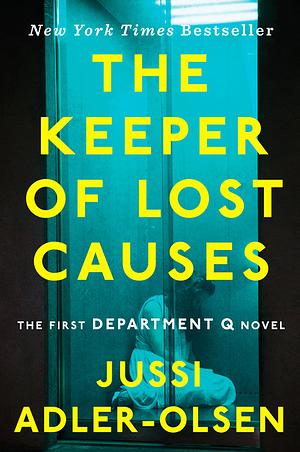
My husband and I were recently transfixed by the Department Q TV series, so I set out to find the books it was based on. They are by the Danish writer, Jussi Adler-Olsen.

The mystery in the first book was the same one as in the first series, but lucky for me, the TV series changed it enough so that it wasn’t totally predictable. They also changed the personality of Merete Lynggard and the motive for the crime, which was even more senseless than in the TV series.

Following a shooting incident which wounded Carl Mørck, paralyzed his partner Hardy, and killed Officer Anker, the department doesn’t quite know what to do with Carl. The media has been out to get him, claiming that he hid behind Hardy when in actuality Hardy fell on top of him, and he is difficult and not liked by most of his colleagues. Then his boss is told to set up a special department to investigate cold cases and given a large budget to fund it. So, the boss takes most of the money for the homicide department and sticks Carl in a basement with only one assistant, a Syrian refuge named Assad, charged with cold cases.

At first, Carl is totally apathetic. He spends his days playing games on his phone and visiting Hardy in the hospital. When they finally get some files, it is Assad who reads them and encourages him to pick the case of Merete Lynggard.

Merete was a rising political star when she disappeared without a trace from a ferry on vacation with her disabled brother Uffe. The investigators eventually decided she had fallen overboard. But we readers know she is alive and being held captive, because occasionally the novel flashes back to events five years before, when she was taken, and to her situation in the present.

Despite my knowledge of many of the plot points, I found this novel intriguing. The characters are interesting—Carl is actually a tad more sympathetic than in the TV series (although probably not as handsome)—and the mystery is a good one, with a suspenseful climax and a touching ending. Now I just need to read the second book before the next series comes out.

Related Posts

The Tenant

Borkmann’s Point

Roseanna

Review 2606: The Episode at Toledo

I have read two books before by Ann Bridge, and although the second was more action-oriented, they were both about women discovering themselves. When I looked for another book by Bridge, I wasn’t aware that she had a series of books around the character of Julia Probyn. This is one of them, about the sixth or seventh in the series, but Julia is a fairly minor character.

Although not necessary, it might have helped me to have read the series in order. I say this mostly because of the beginning and ending of this book, where Julia is ensconced in Scotland among a throng of characters who are briefly introduced but who I couldn’t keep straight.

Julia receives a guarded letter from her Hungarian friend, Hetty, who has married Richard Atherley, British Counsellor in Madrid. Hetta has asked that Julia send either her husband or another friend in Intelligence out to Madrid but doesn’t explain why. However, her friends speculate that it might have to do with a visiting admiral from the U. S. Understand that this is definitely a Cold War novel, and that in an earlier novel Hetta was kidnapped and drugged by Hungarian Communists.

Hetta is worried because she thinks she has recognized the American ambassador’s chauffeur as a Hungarian Communist who years ago closed down the Catholic school that Hetta attended and took delight in harassing the nuns. However, when Hetta’s friends check into it, they find he has been vetted by American security, so they dismiss her fears.

Of course, he is a bad guy, so Hetta does her best to keep the American admiral out of the ambassador’s car. On a tour to Toledo, Hetta suffers a broken arm after she delays the car, which has an accident trying to get to a rendezvous in time to be blown up.

After that, Hetta’s husband arranges for her to go to Portugal to stay with friends, as she is pregnant. But danger follows her.

For a suspense novel, there is a lot more inactivity than activity. Somehow the balance wasn’t right. There is also a lot of repetition as one group after another discusses the same incidents. Frankly, the last 20 pages or so, in which Hetta’s husband arranges for her to return to Scotland and she does, seem to have no relevance except to return to Julia and her confusing pack of relatives and friends. I would estimate that 50-75 pages of this novel are unnecessary.

Was Bridge tired of writing this series? She seems to have been trying to replicate the kind of books Mary Stewart wrote, combining suspense with lovely descriptions of the country. But Stewart did it better. This book also reminds me of the Cold War books of Helen MacInnes, only they have more romance.

To really evaluate this series, I think I would have to start with the first one, which I plan to do. In the meantime, I prefer her other books.

Related Posts

Illyrian Spring

A Place to Stand

Station Wagon in Spain

Review 2591: Lady Living Alone

For quite some time in reading this novel, there is no indication of what it will become. It seems to be a domestic novel about a modest woman in her 30s, Penelope Shadow, disorganized, scatterbrained, unconventional, undomesticated, and of little means until she has a hit with her fourth novel. Soon enough, she is doing well and is able to move out of her sister’s house and buy her own. She has trouble keeping servants, however, and that is mostly an issue because of her phobia of being in the house alone at night.

On her way home from visiting friends, Penelope is forced to stop in a hotel at night because of the weather, but more because there is no one at home, the servants having quit while she was gone. The hotel is pretty dreadful, but a very handsome young man who is working there brings her tea when she wants it. He later confides to her that he’s leaving in a few days because he was hired as a waiter but is made to do all kinds of other work—cooking breakfast, cleaning, and so on.

He is so efficient and seems so kind that Penelope decides to ask him to work for her. His reaction when she’s not looking is the first indication that the novel is going somewhere other than expected.

Everything goes so well at home with Terry working for her that she is in seventh heaven. This state lasts for months until Terry comes home angry because, he says, people are spreading nasty rumors about their relationship. Instead of hiring another woman to live in the house, Penelope says they should get married.

Maybe, like me, you don’t think this is a great decision. Slowly, the novel shifts from a domestic drama to suspense.

This novel is a little different from anything I’ve read. It takes its time getting to where it is going without being a long book, and even after the reader is fully aware that things are going badly, Penelope is basically the only person who doesn’t know that.

I liked this novel a lot. I liked Penelope and sympathized with her problems, even though she is so impractical and looks too hard for people’s better nature. My dread grew toward the end of the book, and the ending was quite suspenseful.

Lofts wrote this book under the name of Peter Curtis so as not to confuse her usual readers, who expected historical novels. I’m going to look for more by Peter and also for those under her own name, as she is a writer I haven’t read before.

Related Posts

Touch Not the Cat

The Circular Staircase

Before I Go to Sleep

Review 2543: The Feast

At the beginning of The Feast, we’re informed that a cliff came down near a resort town in Cornwall, obliterating a bay and a hotel beneath the cliff. Some of the people from the hotel survived.

With that information in hand, Kennedy begins the novel a week before the cataclysm. So, she cleverly sets out a source for some suspense while the readers form an opinion about which people they hope will survive.

The small hotel is owned by the Siddal family, run somewhat incompetently by Mrs. Siddal. Mr. Siddal is an educated man who has done nothing for years. They have three grown sons, the oldest of whom, Gerry, is the most helpful and least appreciated.

Other characters do almost nothing, too. Miss Ellis is supposed to be the housekeeper, but she does nothing but spread vicious gossip and order the maid around. A character who acts like an invalid is Lady Gifford. The Giffords have adopted three children, but Lord Gifford works all the time and Lady Gifford spends all her time in bed. She seems to dislike her mischievous daughter Hebe.

Mrs. Cove has three young daughters who yearn to give a feast like one they’ve read about in books. In reality, they have very little. Their mother is so stingy that she sells any candy they’re given, saying it is to buy children’s books. But they have no books. Blanche, the oldest, has problems with back pain but has never seen a doctor.

Two women are abused by their male relatives. Evangeline is at first so shy that she can barely utter a sentence. But her father, a Canon, accuses her of chasing after men and berates everyone else. At the beginning of the novel, they have been tossed out of another hotel because he is so obnoxious.

For his part, Mr. Paley seems to be holding something against his wife, but she doesn’t know what it is. Instead of talking to her about it, he bullies her.

These are a few of the characters, which also include a lady author who likes to take on younger male writers as protégés, her chauffeur being one. And there is Nancibel, the housemaid who does most of the work in the hotel . . . and others.

Despite pending fate, I enjoyed this novel very much. It shows a lot of insight into human nature. I have only read one other book by Kennedy, but I enjoyed it as well.

Related Posts

Troy Chimneys

A Wreath of Roses

Grand Hotel

Review 2449: The House Next Door

Colquitt and Walter Kennedy are dismayed when they hear that the lot next door in their wealthy Atlanta neighborhood is being built on. They have relished it as a green buffer and have been assured that no one can built on it. However, the new owners have apparently found someone who can, Kim Dougherty, a young architect. Colquitt is the first to admit that the house he builds is strikingly unusual and beautiful. In fact, she understands its beauty much better than do the owners, Pie and Buddy Harrelson. As the house goes up, Colquitt and Walter develop a friendship with Kim.

I read this novel because I heard it was a good ghost story, but it’s not a ghost story as such—rather a haunting. As the house goes up, the bodies of small animals, ripped apart, appear, including that of Pie’s puppy. Pie falls down some unprotected stairs and has a miscarriage. When Kim finishes the house and moves on to other projects, he reports being unable to work. The Kennedys think he’s just burnt out and needs a rest, but he says it’s the house, that it takes whatever you value most. Then, on the night of the Harrelsons’ house-warming party, a dreadful event occurs.

When the next family moves in. Buck and Anita Sheehan, Colquitt feels that Anita looks haunted. The neighborhood soon finds out that Anita spent time in a mental hospital after the couple’s son died in the Vietnam War. (The novel was written in the 1970s.) Soon enough, Colquitt and eventually Walter start to believe that Kim may be right about the house. The problem is what to do about it.

I am not familiar with Siddons, so I don’t know if she generally writes about the privileged. The Kennedys are not wealthy according to themselves, but they both have generous salaries and they live among the rich. There are times when the novel reflects a sort of exclusiveness and self-satisfaction that is not flagrant but is there. The Kennedys run into a class wall when they try to warn people about the house, but all this surfaces at the end in an unusual way.

The ending of this novel takes a startling turn that opens up the reader’s interpretations of the actions of the novel and makes you rethink. I think this put it higher in my regard than it would have if it had gone where I expected it to. It made me reconsider the whole story.

Related Posts

A Haunting on the Hill

This House Is Haunted

Wylding Hall

Review 2442: Killing Me Softly

Although I have lost track of it, I followed Nicci French’s series featuring psychoanalyst Frieda Klein for some time. So, when I was looking through my To Read list for books published in the missing years for my A Century of Books project, I picked out Killing Me Softly, which is a stand-alone.

Alice Loudon is bored with her job, but she is happily involved in a relationship when she locks eyes with a startlingly attractive man while crossing the street. When she comes out of her workplace later, he is waiting for her, and they begin a torrid affair. His name is Adam Tallis, and he is a well-known mountaineer. He is intent and possessive, but it’s as if Alice is possessed by him. At one point, she tries to break it off, but she ends up instead breaking up with her boyfriend.

Sex is an important part of their life, and Alice finds herself agreeing to practices that are farther and farther from the norm. She drops most of her friends and can’t concentrate at work. In addition, she and Adam are receiving threatening messages.

Alice finds that Adam is the hero of an incident he has refused to talk about, in which several people died on a mountaineering trip when a storm came up. But there’s a lot Adam won’t talk about, and Alice begins to believe that he has secrets.

Nicci French is a master at building suspense, and this novel is no exception. Although Alice is not an entirely likable character—she pulls several deceptions over people to get at the truth—we can’t help but be on her side.

Related Posts

Thursday’s Children

Friday on My Mind

Dark Saturday

Review 2437: The Guest Room

Tess’s grief over her sister Rosie’s murder four months ago is taking obsessive forms. First, she wanders all over London late at night hoping someone will try to attack her, as Rosie was found beaten to death on Hampstead Heath. She has moved into Rosie’s flat and is harassing Rosie’s ex-boyfriend. In addition, she constantly calls the police detective on the case offering obscure clues.

Unable to face Rosie’s bedroom, Tess offers it as a B&B, letting it out short-term to help make the mortgage. She has also taken a job at the Barbican, where Rosie used to work.

Tess leases the bedroom for a longer term than usual to a potter named Arran. As she does with all her tenants, when they are away, she looks through their stuff. In Arran’s things, she finds a diary about his infatuation with a woman. At times, it sounds like he is stalking her.

Tess doesn’t know it, but someone is stalking her. Is it her annoying downstairs neighbor, Luke? Her geeky across-street neighbor, Elliott? Or someone else?

This novel moved along pretty well and kept me interested, but Tess isn’t exactly a likable heroine. I was less bothered by that than my feeling that it was fairly easy to guess who Arran is writing about and although I wasn’t absolutely sure, the possibility of one character being the murderer occurred to me, and I was right.

Related Posts

Dark Side

The Girl on the Train

Accidents Happen