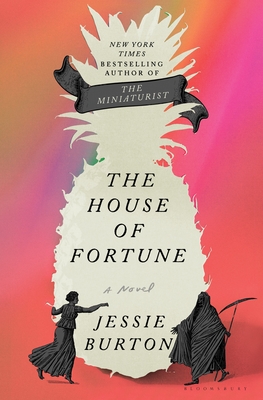
Review 2138: The House of Fortune

It’s 1705, 18 years after the end of The Miniaturist. Nella Brandt is worried about her niece Thea’s future. Although her husband Johannes’s death left them fairly well off, his black servant Otto has not been trusted by Amsterdam businessmen to keep the business running. Instead, Otto has been working for an import company in a low-paying job. They are broke, and the only future Nella can see for Thea is to marry. However, there is the issue of her illegitimate parentage as the daughter of Maris, Johannes’s sister, and Otto, the servant, which the family has kept secret.

Thea has other ideas. She is young and romantic and devoted to the theater, where she has befriended Rebecca, a principal actress. But she hasn’t been spending as much time with Rebecca lately, because she is in love with Walter Riebeeck, a set painter. She disdains Aunt Nella and her attempts at an appearance of respectability, in full teen rebellion.

Nella gets Thea an invitation to a society party in hopes that she’ll meet a young man, and she does meet Jacob van Loos, a young lawyer. At the party, though, Nella believes she senses the miniaturist, whom she has not heard of in 18 years. And Thea receives a miniature of Walter.

Although I didn’t find The House of Fortune quite as fascinating as The Miniaturist, it is still a worthy successor. However, there is so much arguing in the first part of the novel that it put me off, and Nella isn’t sympathetic until later in the novel. Plus, I found Thea to be a spoiled little brat at first and her romantic tragedy all too foreseeable. However, Burton still managed to make the book compelling.

Related Posts

The Miniaturist

The Muse

The Last Painting of Sara De Vos

Review 1385: The Miniaturist

Best of Ten!
I so enjoyed The Miniaturist that I was only disappointed at knowing all its secrets, since I had first seen it televised on Masterpiece. Jessie Burton’s novel is set in the 17th century, and what a difference from the previous novel I read (Widdershins) also set in the 17th century. Burton’s novel evokes the bustling city of Amsterdam, ruled by commerce but also by a harsh Calvinism, a city where people are constantly watched for misbehavior.

Nella arrives from the country to take up residence with her new husband, Johannes Brandt, a wealthy merchant. Although she brings a good family name to the marriage, she brings nothing else, for her father was a poor businessman.

Nella isn’t warmly received. Johannes’s sister Marin is cold, and Johannes hasn’t bothered to be home. When, after a few days, Johannes hasn’t consummated the marriage and Marin continues with the housekeeping, Nella fears that she has no role in her new life.

Johannes’s marriage gift to her is a miniature copy of their house that she can furnish. Although Nella thinks he is treating her like a child, she eventually sends a note to a miniaturist asking for three items: a lute, because Marin will not allow her to play the ones in the house; a block of marzipan, because Marin disapproves of sugar; and a marriage cup, which Nella should have received from Johannes but did not. When the items arrive, they are exquisite, but she also receives things she did not order. And more arrive. They so closely match what is going on in the house that Nella first thinks the family is being spied upon, later that the items foretell the future.

This novel is really good. The story and characters are compelling. Life both within the claustrophobic household and the city is evocatively evoked. It has a delicate touch that reminds me very much of Tracy Chevalier’s The Girl with a Pearl Earring. And there is that tantalizing touch of the supernatural.

Related Posts

The Last Painting of Sara de Vos

Corrag

The Weight of Ink