Review 2564: Animal, Vegetable, Miracle: A Year of Food Life

I usually enjoy Barbara Kingsolver, but even in her fiction, she can get preachy, so I have avoided her nonfiction. That is, I avoided it until I saw that this book filled a hole in my A Century of Books project. (At the book’s reading, I had seven or eight to go. Now, while I’m typing up this review, I have three. By the time it appears, I hope to have finished.)

Although Kingsolver is the primary author of the book, it also contains essays or informational sidebars written by her husband, Steve L. Hope, and her oldest daughter, Camille Kingsolver. It is about food—in particular, her family’s decision to act on its principles. To do so, they move from Arizona to her husband’s farm in Southern Appalachia (somewhere in Virginia). The idea is to try to live for a year only on food they grew or raised themselves or on local food.

Kingsolver has chapters on issues, for example, an early one is on the growth cycle—which vegetables and fruits are started when and when they are ready to be picked. (I didn’t find her concept of the vegetannual helpful at all. A timeline might have worked better.) But for the most part, she tells the story of the year, the things they plant or raise and when, the people they meet, the things they learn. These chapters were mostly interesting and sometimes entertaining. I was truly wrapped up in suspense about whether the turkey eggs would hatch.

Kingsolver talks also about issues around local food, such as how much gas is used transporting food that isn’t local to supermarkets; the takeover of Federal funds for farmers by large conglomerates (your local farmer isn’t getting the money); the negative effects genetically engineered seeds have on farmers, especially for organic farms; the growing local food movement and how to support it; and so on. The sidebars were some of the same topics, though, so I sometimes felt as if I was in church—tell them, tell them again, and tell them again. (Just as my own sidebar, I remember at about age ten asking my father after church why they did that and finishing my polite question with, “Do they think we’re idiots?”) You can see I have no patience with that kind of thing.

So, that’s a criticism, but on the other hand, lots of things in the book were interesting, and the descriptions of the meals had me licking my lips, recipes included in the book.

I personally have made steps at times to eat more locally. I belonged to a CSA for years, and I’m thinking of signing up for another one. I kept a vegetable garden here until growing trees cut off my sunlight, so now I just grow tomatoes on the back deck (in the tomato wagon). I try to stop often at a local farm store. (During the summer, I stop by every week, and I have stopped buying grocery store strawberries—I just wait for the fresh ones in late spring, because once I moved to this area and ate a real one, I realized that the ones in the store were not real.) In any case, this book has made me think of all this again.

Those of you who worry about the higher cost of local food may be very interested in the chapter about the food economics for a year. It turns out that when you forgo processed foods and do most of the cooking yourself, it’s a lot less expensive for a family to eat for a year even if paying more for some local foods. Of course, they were growing most of theirs, which everyone cannot do. However, like Michael Pollan also points out, Americans spend less money on food than people in most other countries. And even in the city, it’s possible to grow some of your food.

Related Posts

The Omnivore’s Dilemma

Cod: A Biography of a Fish That Changed the World

John Saturnall’s Feast

Review 2280: The Vaster Wilds

I don’t know very much about the Jamestown colony, but apparently it nearly failed because of illness and starvation. In Lauren Groff’s latest novel, a servant girl steals some supplies and flees the colony, knowing she is being pursued. She vaguely knows she can head north to French territory or south to Spanish territory without really understanding the distances involved. She heads north.

The novel follows the girl’s grueling journey through the wilderness while occasionally revisiting her past, leading up to the reason she is being pursued. This account is gripping at times as she encounters various hazards and tries to find food. Occasionally, the novel also describes her nightmares and less lucid moments.

Groff’s writing is superb, and I was right there with her until the later pages, which enter a more metaphysical realm. I don’t find that kind of thing interesting, and it occupies most of the last 20 pages.

Related Posts

Arcadia

Fates and Furies

The Lost Book of Eleanor Dare

Review 2215: Demon Copperhead

Everyone has been raving about Demon Copperhead, but I’ve had a more mixed reaction to it. This is because the novel is an update for Dickens’s David Copperfield, which is one of my favorite books.

In one way, this is a good match, because both Dickens and Kingsolver are political writers with social consciences. Dickens’s target was the effects of industrialization on poor children. Kingsolver’s in this novel is the effects on the people of Appalachia of what she sees as a war on agriculture.

Damon Fields, named Demon Copperhead because of his red hair, is a young Melungeon (I had to look it up) boy at the start of the novel. His father died before he was born, and his teenage mother has a very weak control of her sobriety. Residents of Lee County in Southwestern Virginia, they live in a single-wide mobile home owned by the Peggots next door. The kindly Peggots provide most of the stability in young Demon’s life.

Readers familiar with David Copperfield will be familiar with the plot, for it follows that book almost exactly. Although they are very poor, things are going fairly well and Demon’s mother has been sober for two years when she meets Stoner, soon to become Demon’s abusive stepfather. It goes mostly downhill from there, with Demon, after a brief career as a high school football hero, becoming addicted to oxy after an injury.

I couldn’t help noticing differences from Dickens, though. For one thing, the McCob family, Kingsolver’s equivalent of the Micawbers, are not the feckless, lovable, comic characters of Dickens, but a couple who, as Demon’s foster family, illegally send him to work instead of school, illegally charge him rent, and steal his money. (The Micawbers send David to work, too, but that assumed to be at the behest of his stepfather.) That leads to the biggest difference. Although Kingsolver can depict sympathetic characters, she doesn’t really do funny ones, Dickens’s gift. Further, the very young Demon at the beginning of the novel lacks the absolute innocence of young David that makes him so endearing. Demon’s narrative is too cynical.

Finally, Dickens is more willing than Kingsolver to let his story make his political points. Still, it’s a gripping novel with a serious message about the rural addiction problem, the lack of services for rural citizens, and the mistreatment of the poor. Although I read this novel before it made the list, Demon Copperhead is part of my James Tait Black project.

Related Posts

Unsheltered

David Copperfield

The Lacuna

Review 2161: The Lost Book of Eleanor Dare

After the death of her father toward the end of World War II, Alice Young finds out that Evertell, the farm that has been in her family for generations, was not sold as she thought but is waiting for her to decide what to do with it. She has not been there since her mother died under painful circumstances, and she doesn’t want to keep it. However, her thirteen-year-old daughter Penn has been depressed since her own father’s death three years before, and she hopes the trip to evaluate the farm will perk her up. She also hopes the money will help pay for Penn to attend the private school she expressed interest in several years ago.

When Alice and Penn arrive at the large but dilapidated farm, Penn is enchanted. She is also enchanted by the stories Alice tells her about the family’s descent from Eleanor Dare, an original settler of the doomed Roanoke colony. Unfortunately, it was the theft of a stone, said to be engraved by Eleanor Dare to explain where the survivors of the colony went, that finally drove Alice’s mother over the edge of sanity. Penn is also fascinated by the commonplace book, written in by the female descendants of Eleanor over the centuries.

As Alice tries to improve her relationship with Penn, she is forced to face memories of her mother’s death and find the truth of family secrets.

It’s interesting to learn that this book was inspired by Brock’s fascination with the stone alleged to be engraved by Eleanor Dare, because the story of Dare, as imagined by Alice’s mother, was the least interesting part of this novel. Possibly, this is because of the matter-of-fact way it is told, with few details. The more modern story is told in alternating chapters from Alice’s or Penn’s point of view, and I found it extremely interesting and engaging. Brock proves to be an effective storyteller. I only thought it took Alice a long time to make the decision that seemed obvious from the beginning.

Related Posts

Beheld

The Physick Book of Deliverance Dane

The Last Painting of Sarah de Vos

Review 2123: The Murder Rule

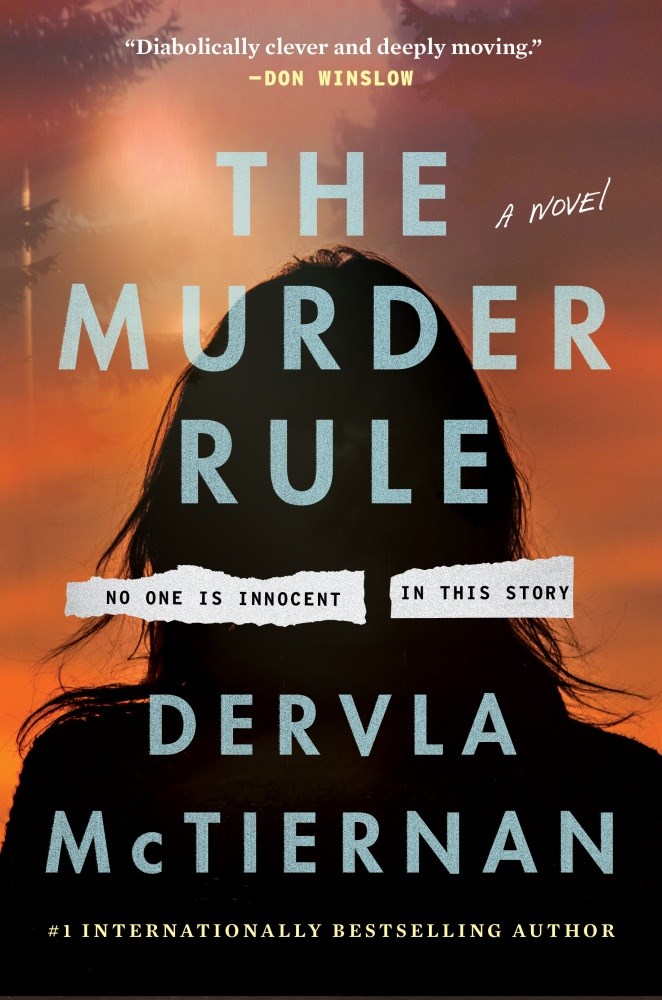
Hannah has left her alcoholic, dependent mother in Maine for the University of Virginia. There she uses deceit and some dirty tricks to get onto the Innocence Project. In particular, she gets herself onto the case of Michael Dandridge.

Dandridge has been in jail for 11 years, found guilty of rape and murder. However, his sentence has recently been vacated. The original prosecutor is determined to retry him.

Hannah’s goal is to interfere with the project’s defense of Dandridge. We learn why slowly as passages from her mother’s diary are revealed, dated 25 years before.

I wasn’t sure what I thought about McTiernan’s change of locale, her other novels being set in Ireland, but her storytelling took over, and I found myself reading another page-turner. Although I was not sure that things could turn out the way they did, I found the novel thrilling.

Related Posts

The Ruin

The Scholar

The Good Turn

Review 1489: The Water Dancer

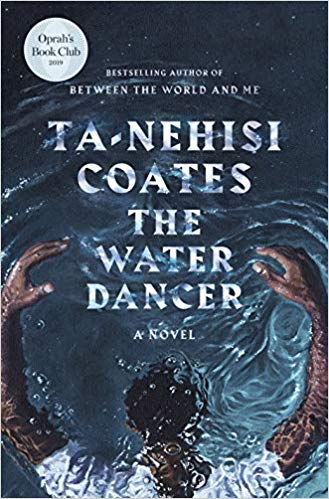
Hiram Walker is a slave on a Virginia plantation with a photographic memory and a talent for mimicry. As a boy, he attracts the attention of the master, who is also his father. His father has Hiram educated for a year, and the naïve boy imagines he might take an important place on the plantation, but the master’s intention is simply to have Hiram keep his heir, Maynard, out of trouble.

One day on the way back from town, the carriage, being driven recklessly by Maynard, goes into the river. Maynard is drowned, and Hiram wakes up in a field far away from the river. Hiram begins to fear he’ll be sold off to Maynard’s fiancée, Corinne. So, he plots an escape for himself and his master’s brother’s concubine, Sophia.

The Water Dancer has aspirations to literature, and that was one of my problems with it. Occasionally high-flown prose runs from the lyrical to the clichéd. Some of the conversations are absurdly unlikely. One of Coates’s affectations was for the slaves to call themselves the Tasked, which seems to be hardly authentic; in any case, I could find no other such use of the word.

Sometimes, the action slows almost to a halt. For example, Hiram falls into the water on page one and doesn’t come out until about page 100, during which Coates provides background. I’ve run into approaches like this before lately, and all I can say is that something like this that works in a movie doesn’t translate well to fiction, where you are reading for hours over a time that is supposed to be a few minutes.

Coates’s goal here isn’t to tell about the cruelties of slavery so much as to put his tale on a higher plane. He also introduces an element of speculative fiction.

I struggled with this book for about a week and decided to quit halfway through. At that point it was becoming clear that Sophia would have a bigger role, but her character was so little defined that I felt she was almost a MacGuffin. I just couldn’t get on the same wavelength with Coates.

Related Posts

A Most Extraordinary Pursuit

Homegoing

Washington Black

Day 1092: Commonwealth

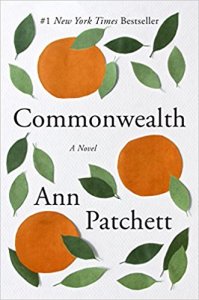
Cover for CommonwealthIt’s difficult to explain what Commonwealth is about without either telling too much or failing to make it sound interesting. Yet, it is a very interesting novel about how one afternoon changes the lives of everyone in two families, or at least that’s partially what it’s about.

The novel begins when Albert Cousins, an attorney from the district attorney’s office, crashes a christening for Fix and Beverly Keating’s youngest daughter. Fix only vaguely knows Bert Cousins from his work as a police officer. Bert has crashed the party in an effort to get away from his own household with his three children and pregnant wife, Teresa, as he does every weekend.

But once Bert sets eyes on Beverly Keating, he decides she is his future. One kiss in the upstairs bedroom with a sleeping child begins an affair that results in divorce for both families.

The novel concentrates on the effects of this divorce on both sets of children. Although Carolyn and Franny Keating beg year after year to stay in California with their dad, they are uprooted to Virginia to live with their mother when she and Bert move back to his home state. Bert demonstrates again and again that he doesn’t care to be around his own children, but he wins custody of them for the whole of each summer, while Teresa gets a job and keeps it together the rest of the year by the skin of her teeth. The result is that the kids grow up with virtually no supervision, especially in the summer, when Bert leaves everything to Beverly, who can’t cope.

This novel reminded me in some ways of Jane Smiley’s Last Hundred Years trilogy, although it spans only about 45 or 50 years. However, it felt that the characters in this novel are much more knowable. I always enjoy Patchett’s writing, and her novels are all different from each other. I enjoyed this one very much.

Related Posts

State of Wonder

The Children’s Crusade

Early Warning

Day 817: The Hornet’s Nest

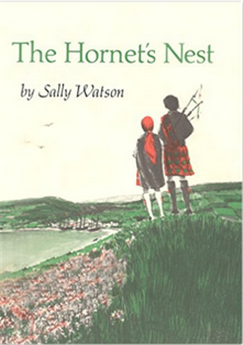
Cover for The Hornet's NestIt is 30 years after the Battle of Culloden, but Highland Scots are still forbidden by their English overlords to wear the plaid, play bagpipes, or honor their heritage in other ways. Rebellious Lauchlin MacLeod and her brother Ronald, teenage children of Laird Kildornie, are always finding themselves in trouble.

So it is on the day they meet their cousin Matthew Lennox, a gentleman from Virginia journeying to visit his English and Scottish relatives. Lauchlin is marveling that this Sassenach is related to her family and doesn’t realize he has been escorted there by a troop of redcoats. She just barely avoids being caught wearing a kilt while her brother hides in the bushes with his bagpipe.

In town showing Cousin Matthew the sights, Ronald and Lauchlin attack some boys who are torturing a kitten. Later Sergeant Tucker arrives at their home to tell them that the boys are the children of Captain Green, the new area commander. The boys have lied about the cause of the attack, and Captain Green isn’t as likely as the previous commander to overlook their behavior. The next incident could be serious.

Cousin Matthew has a solution. Lauchlin and Ronald can travel to Virginia and live with his sister Lavinia until things calm down. Secretly, he enlists them to send news and drawings, for Lauchlin is a gifted caricaturist, about doings in the colonies for a paper he is founding in London called The Gadfly.

So, Lauchlin and Ronald set out for the colonies accompanied by their kitten Haggis. They arrive in Williamsburg in 1773, just in time to witness the lead-up to the American Revolution. It’s not too difficult to imagine where their sympathies lie.

This novel effortlessly mixes the viewpoints from both sides of the revolution, for their Lennox relatives are Loyalists, and some are charming characters. Lauchlin is an ebullient scamp, Ronald a boy who must learn that all Sassenachs are not the same. Their many Virginian cousins dislike them at first but then most of them learn to love them. And Haggis has his own distinctive personality.

This novel is one of my favorites so far of the Watson books I’ve newly discovered, because it is less unlikely than some of them and has really enjoyable characters. Plus, it provides an unusual viewpoint of the American Revolution. Young teens and tweens should love this book.

Related Posts

Witch of the Glens

Lark

Mistress Malapert


Day 790: Jade

Cover for JadeOf the Sally Watson books I rediscovered, Jade is one I haven’t read before. I’ve mentioned that Watson wrote several of her novels around a person from her own ancestry, but it is not clear to me if the outlines of each story are based on family legend or are just invented around the events of the time. This question becomes of special interest in regard to Jade, which is the least likely of Watson’s books to date, even if part of it is based on history.

Jade’s real name is Melanie Lennox, but she much prefers her old nickname. She is a rebellious girl completely taken up by her own ideas of right and wrong. She is especially incensed by slavery and women’s lack of rights, which makes early 18th century Williamburg an uncomfortable place for her and for her family, who doesn’t know what to do with her.

The last straw for Jade’s father is when he finds she has been sneaking off to meet Monsieur Maupin, an elderly Frenchman, for fencing lessons. Tired of beating her, her father ships her off to Jamaica to live with her aunt and uncle. With her goes her slave Joshua, whom she’s been trying to free since she was 10.

In Jamaica, she is disgusted by the slave market and the treatment of field slaves, so her aunt and uncle are surprised when she wants to buy a proud untamed African woman, whom she names Domino. But Jade sees something in Domino that reminds her of herself. In fact, Jade isn’t really getting along any better in Jamaica, but doesn’t stay there long.

Jade’s aunt and uncle hear of yellow fever on the island, so they dispatch Jade and her two slaves back to Virginia. They return on the same ship they came on, but this time it is loaded with slaves. Jade decides to try to free the slaves, in which effort she doesn’t realize she’s assisted by the sardonic second mate, Rory McDonald (whose grandmother was Kelpie from Witch of the Glen).

I wasn’t quite prepared for what happens next, but maybe I should have been. Their ship is attacked by pirates and she and Rory and some other crew members and the slaves decide to join the pirates. Well, Jade and Rory are taken on board unconscious, but like Elizabeth Swann of Pirates of the Caribbean, Jade at first decides it’s “a pirate’s life for me.” Only later does her view of the life become more nuanced.

The novel’s plot is unlikely, even though it is based on the life of the famous pirate, Anne Bonny (spelled Bonney in the novel), whose ship our characters end up on. And Jade is not strictly likable, her character being so full of self-righteousness and so unbending that she can’t tell a polite lie. Also, the novel tends much more to the preachy than those I’ve read so far of Watson’s.

Still, this novel is probably a good one for insights into the abuses of the time, while still providing plenty of adventure. Little feminists in the making will be sympathetic to the restrictions Jade struggles with, such as her dislike of what she must wear, her lack of rights as a woman, and the limits to what she’s allowed to do. I personally think she’s too much of a 20th century girl, but young girls won’t even think of that.

Related Posts

Witch of the Glens

Lark

Captain in Calico

Day 225: The Devil All the Time

Cover for The Devil All the TimeTruly gritty noir seems to come out of rural settings these days instead of the city. Such is the case with The Devil All the Time by Donald Ray Pollock.

Arvin Russell is having a tough childhood in the backwoods town of Meade in southern Ohio. His mother is dying of cancer, and his grief-crazed father Willard has set up a “praying log” where he sacrifices animals and makes Arvin pray for hours on end. When his mother dies, his father commits suicide by hanging himself at the praying log.

Back in Willard Russell’s home town of Coal Creek, Virginia, Brother Roy Laferty is a preacher who eats bugs for the glory of God and travels around with his crippled friend Theodore, a gay pedophile. Roy marries Helen, the woman Willard’s mother wanted him to marry, but later, egged on by Theodore, he murders her. The two start off on a spree of serial killing.

As Arvin grows up in Coal Creek with his grandmother, another couple from Meade haunts the highways of the midwest. Carl and Sandy Henderson pick up hitchhiking men. Carl has Sandy seduce them so that he can murder them and take photographs of Sandy with their bodies.

Lee Bodecker, the policeman who accompanied Arvin back to his father’s body when he was a boy, is now the corrupt sheriff of Meade, Ohio. He knows his sister Sandy is a prostitute but is unaware of her more sinister activities with Carl.

Now grown, Arvin has spent his high school years protecting his unattractive, devout cousin Leonora from the taunts of his school fellows. The town is excited because of the arrival of the new preacher, Preston Teagardin, a nephew of the dedicated Reverend Sykes. But Teagardin is not quite as dedicated as his uncle, and he also has an eye for the young girls. He decides that a naive, religious girl might be a good place to start.

The fates of all these people are soon to converge in a way that won’t be pretty. The flavor of the grotesque and perverse echoes of Flannery O’Connor and other Southern Gothic writers. With hardly a redeeming character to be found, we have to wonder if Pollock is simply revelling in his ability to produce such depravity.