If I Gave the Award

With my review of Absolutely & Forever, I have finished the shortlisted books for the 2024 Walter Scott Prize for Historical Fiction. That means it’s time for my feature, where I decide whether the judges got it right.

This year was quite an international event, with books set in England, Trinidad, Italy, Malaysia, and Canada making the shortlist. As has become my usual approach, I’ll start with the books I liked least.

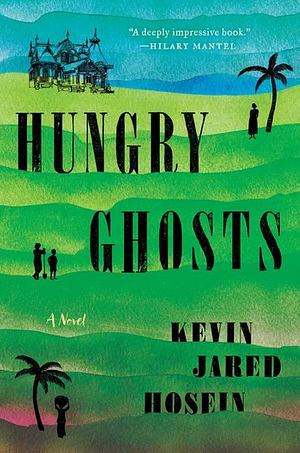
It’s almost a toss-up between two books as to which I should start with, but I think that will be Hungry Ghosts by Kevin Jared Hosein, which for this year was the winning novel. Although I was interested in the setting, the brutality in the book made me comment that if I wasn’t reading it for the prize, I wouldn’t read it at all. This was a novel about a young boy growing up in 1940s Trinidad, his feud with town boys and his father’s affair with a rich woman.

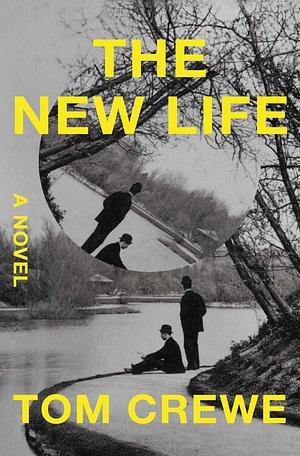
The other book I didn’t like as well was The New Life by Tom Crewe. I thought the subject matter was interesting, loosely based on the lives of two collaborators on a book about sexuality, but I don’t really like explicit sex scenes, and this book had lots of them.

In the Upper Country by Kai Thomas is about Canada’s history with slavery and treatment of indigenous peoples. I commented that Thomas’s approach of telling stories to fit in as much information as possible didn’t work very well for me. I thought there were too many characters, and he was trying to fit in so much in that it got confusing.

My Father’s House by Joseph O’Connor is about a real group of people in Rome during World War II who helped Allied soldiers escape from Nazi-occupied Italy. Although the subject matter was interesting and I enjoyed the book, I commented that as the first of a trilogy, I wondered where the material was going to come from for two more books.

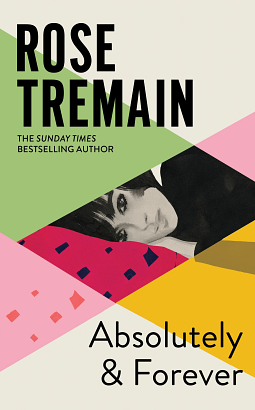
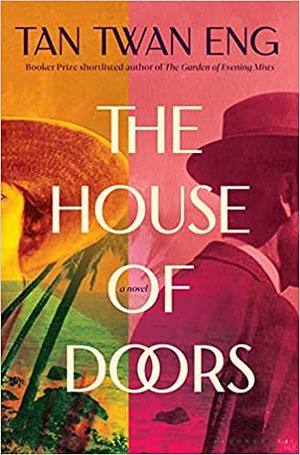
Now, I have got to my two favorites, and I am having a hard time deciding which one to pick. Absolutely & Forever by Rose Tremain is a coming-of-age story, sort of, set in 1960s England. I just loved the voice of its narrator and was captivated by it (although since the 15-year-old heroine was the same age as Tremain in the 1960s, it doesn’t really fit my definition of a historical novel). However, I think I’m going to pick The House of Doors by Tan Twan Eng about, among other things, Somerset Maugham’s visit to Malaysia in the 1920s.

Review 2605: Absolutely & Forever

I have been on the fence about or even disliked some of Rose Tremain’s books, so I wasn’t really looking forward to reading Absolutely & Forever for my Walter Scott Prize Project. I especially wasn’t because I’m not that fond of coming-of-age novels in general. However, I found this little novella to be truly touching and insightful about human emotions. And the coming-of-age part is only the beginning.

It’s the late 1950s and Marianne is 15 years old. She has been in love with beautiful 18-year-old Simon Hurst for some time, and he finally pays attention to her the night of a friend’s party. He has just been given a new Morris Minor car, so he takes her for a ride and they have sex. Marianne says she will love him absolutely and forever.

I thought I knew where this was going, but it wasn’t. Simon and Marianne go off to their respective schools and plan to get married when they are older.

However, Simon fails his Oxford exam. Everyone is shocked, and the next thing Marianne knows, he has moved to Paris to be a writer. Marianne tries to buckle down to her French so that she can move there as soon as possible, but she is clearly not good at studying. Her parents tell her they are certainly not going to allow her to visit Simon in Paris when she is only 15.

Simon’s letters eventually fall off, and in the last one she gets the bad news. Simon has gotten his landlady’s daughter pregnant and married her.

The novella follows Marianne as she grows into womanhood, works at some jobs but seems to have little purpose in life. She marries her good friend Hugo (who I felt was a much better person than Simon). But she continues to love Simon.

The heart wants what it wants is the theme of this touching novel. And it tells the story beautifully, narrated by the distinctive voice of Marianne.

The book blurb hints at some secret, and it’s not very hard to guess. But that’s not the point. I found this book to be wise and deeply touching.

Related Posts

The Gustav Sonata

Merivel: A Man of His Time

Lessons in Chemistry

Review 2604: The Safekeep

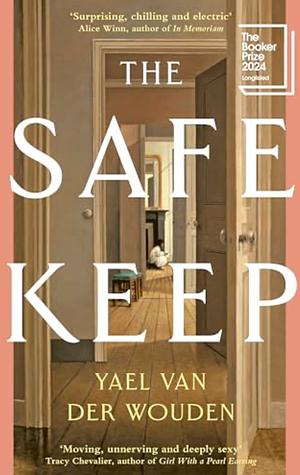
In 1961 Utrecht, Isabel lives in the house her uncle bought for her mother during the war. Her mother died, and Isabel is very protective of the house’s contents, although she doesn’t own them. Her uncle intends to leave the house to her oldest brother Louis.

Isabel is in her thirties—particular, with a dislike of things that are different, stiff, unfriendly, and solitary. She has no sexual experience. She doesn’t like people to touch the things in the house, and she frequently thinks the help is stealing.

Isabel, Louis, and her other brother Hendrik have periodic dinners in the house, although both men now live in The Hague. Louis often misses the dinner, though, or if he comes, he brings his latest in a long string of girls he’s been in love with. These relationships only last a short while, however, so Isabel and Hendrik resent the inclusion of the women. Isabel, though, refuses to invite Hendrik’s partner, Sebastian.

Louis comes to dinner with a new girlfriend, Eva, whom Isabel thinks is low-class and treats with hostility. To her dismay, Louis tells her he must travel for business and wants Isabel to have Eva for a guest while he is away. He points out that the house isn’t really Isabel’s but is intended for him.

So, Isabel reluctantly takes Eva in, but she is not nice about it even though Eva tries to be friendly. The atmosphere is charged.

I found a lot of this novel very interesting, especially in its revelation of how The Netherlands treated Jews returning from the concentration camps after the war. Yes, mild spoiler, this novel does have to do with the aftermath of the war. I am not a fan of explicit sex, however, no matter who it involves, and there was a lot of that going on for about 100 pages.

The novel takes an unexpected turn at the end, and I think, besides the character study of Isabel, I found that part the most interesting.

I read this book for my Walter Scott Prize Project.

Related Posts

Sarah’s Key

The Postcard

A Town Like Alice

Review 2596: The Chosen

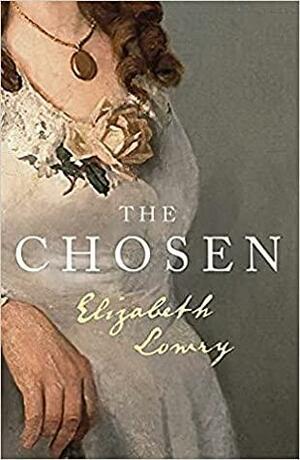
The Chosen, which I read for my Walter Scott project, is about the weeks after the death of Thomas Hardy’s wife, Emma, and also about the writing of Tess of the D’Urbervilles. Hardy is working in his study when the maid comes to ask him to go to Emma. Although she indicates there is some urgency, Hardy is oblivious and continues working for a while before going up to his wife’s rooms in the attic. When he arrives there, she is dead.

The aging Hardy plunges into guilt that is made worse when, a few days later, he finds her diaries, in which he reads that Emma was deeply unhappy in their marriage. As he reads the diaries, he relives his own memories of the same days, realizing he had no idea of how aloof he seemed to her and how oblivious.

This is not really a novel of plot but more of feelings and realizations. Lowry explains at the end of the novel that Hardy burned the diaries soon after he found them, but she did quote from Hardy’s work and from letters. Emma’s death apparently spurred a collection of poems.

Waiting in the wings is Hardy’s secretary, Florence Dugdale, who seems to expect to take Emma’s place (and eventually did). She cannot understand why, after telling her so many times how unhappy he was, Hardy can now only talk about Emma.

For Hardy fans, especially, this is an insightful and beautifully written novel. It makes me wish I had known more about Hardy’s life before I read Maugham’s Cakes and Ale and this book. Although I read Claire Tomalin’s biography, it was so long ago that I don’t remember what it said about his home life (although I said it was interesting in my review).

Related Posts

Cakes and Ale

Tess of the D’Urbervilles

Thomas Hardy

Review 2538: The New Life

The New Life was a slow read for me. It took me almost a week, which is unusual for me with fiction. I read it for my Walter Scott Prize project.

The novel is loosely based on two men, John Addington Symonds and Havelock Ellis, who in the early 1890s wrote a book together. When I looked them up, it didn’t seem as if it was very loosely based—Crewe gives his characters almost identical names. But then I realized it is set after Symonds’ death in order to bring in the trial of Oscar Wilde.

John Addington is a gay man who is married and has three grown daughters. He is known for writing about a vast array of subjects. Henry Ellis is an idealistic, naïve younger man, a doctor. He marries a good friend, Edith, and their intention is to lead the way to the New Life. I wasn’t exactly sure what that entailed, but at minimum it seems to be that spouses are equal partners. Unfortunately for Henry, they never discussed the sexual side of marriage. He thought there would be consummation; Edith, a lesbian, did not. So, Henry continues a virgin with a fascination for the subject of sex. They live separately, and soon Edith has a new friend, Angelica.

Henry wishes to make a scientific study of sex and publish the results, and since he knows some gay friends, referred to at that time as “inverts,” he decides to start with them, having a theory that rather than an illness or perversion, inversion is natural. He decides to invite John Addington to join him in his project, not because he thinks he is gay, but because of his reputation as a writer about various topics.

John has been getting more tired of keeping his secret as an invert. He has confessed to his wife and occasionally has brought a man home for sex, an action that I thought was breathtakingly cruel. Now he meets Frank, a much younger, lower-class man who wants to be his friend. When John sees Henry’s proposal, he thinks such a project will change people’s ideas about inversion so that he can be free to do what he wants.

The men write the book and begin looking for a publisher. However, just at that time, Oscar Wilde is found guilty of inversion and is sentenced to jail. The backlash is such that the two fear their work is unpublishable.

If you are not a fan of graphic sex scenes, this won’t be the book for you, especially the first few hundred pages. The novel opens, for example, with a very explicit and detailed wet dream. I am not really a fan of explicit sex scenes in novels, so I found the first half of the novel hard going, despite it being well written and having vivid descriptions of life in Victorian London. (It has a wonderful description of a day that is so smoggy no one can see where they’re going.)

The novel picked up for me after the book, entitled Sexual Inversion, is published and the police go after a bookseller for selling indecent material, their book. Then it becomes about the reactions of the various characters once there is a threat to their own lives.

Related Posts

After Sappho

Murmur

The Children’s Book

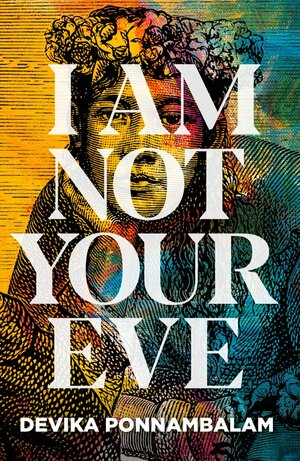
Review 2508: I Am Not Your Eve

This is an interesting yet difficult novel about one of Gauguin’s Polynesian “wives,” whom the blurb calls his muse. Although much of it is about her, Teha’amana, a very young girl, it is told with several voices—those of Gauguin’s daughter, his European wife (briefly), Teha’amana’s Foster Mother (called only that in the book), and very occasionally Gauguin himself.

The broad story is of Gauguin arranging a “marriage” on Tahiti with a very young girl. Their relationship is one-sided. She basically does what he tells her to do while he continues to talk about her as if she were free. Their relationship starts with rape and mostly consists of sex and posing for his paintings. She dislikes the food he eats. When she returns home after eight days to her mother as custom dictates, she tries to stay there.

From Denmark, Gauguin’s daughter writes about him in her diary. She seems to be the only family member who misses him. When his painting of Teha’amana arrives, her mother shoves it into the attic instead of taking it to Paris to sell, and she goes up to commune with it.

Interleaved with these stories are Polynesian creation tales and other myths.

This novel is poetically written, but it was sometimes difficult to know which narrator was speaking. There were a few times, for example, when I thought I was reading a myth but it was actually part of Teha’amana’s story. Also, I was occasionally startled by Gauguin’s point of view of Teha’amana’s behavior that seemed radically different from how she was feeling. Teha’amana’s expression of her point of view is very different from a Western way of telling things, so I didn’t always feel I understood what was going on.

The book only briefly mentions other girls, but apparently Gauguin had three very young Polynesian “wives,” hopefully one after another rather than at once. I couldn’t tell. Much of the content within the mythology sections and in Teha’amana’s story are very sexual in nature, although not graphic.

I read this book for my Walter Scott project.

Related Posts

Moloka’i

Under the Wide and Starry Sky

Euphoria

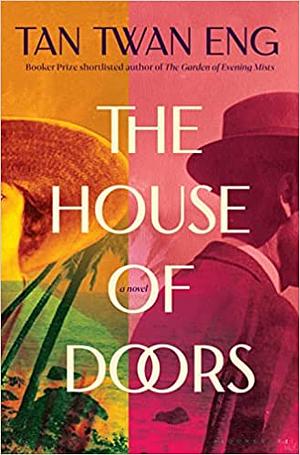
Review 2495: The House of Doors

In 1947 South Africa, shortly after her husband Robert’s death, Lesley Hamlyn receives a package that has come a long way, through circuitous routes, to find her. It has no note and does not say who sent it, but it is a book written by Somerset Maugham more than 20 years ago.

This gift returns her memories to 1921, when she and Robert lived on the island of Penang and were visited by Maugham. The point of view shifts to that of Maugham, who soon learns that his broker has gone under and lost all his money. Although he is dreading his wife’s reaction from England, he is more afraid that Gerald, his secretary and lover, will leave him if he is broke.

He and Lesley begin to get to know each other. Eventually, she tells him about her life 10 years before. On the same day that she heard her best friend, Ethel, had been arrested for murder, she also learned her husband was having an affair.

Tan skillfully weaves the story of Lesley’s relationship with Ethel and the trial with her experiences resulting from meeting Dr. Sun Yat Sen, who has been attempting the overthrow of the Manchu dynasty in China. Lesley begins helping his organization translate its brochure and eventually has an affair with a Chinese man. They meet in the House of Doors.

I was interested in all these stories and although I know very little about Maugham, I spotted the seeds of more than one of his stories in them. For example, Ethel’s story is very similar to that of The Letter, which I am familiar with because of the movie with Bette Davis.

As much as I enjoyed The Garden of Evening Mists, I think I liked this novel even more. Although I read it for my Walter Scott Prize project, I probably would have read it anyway.

Related Posts

The Garden of Evening Mists

The Ten Thousand Things

The Glass Palace

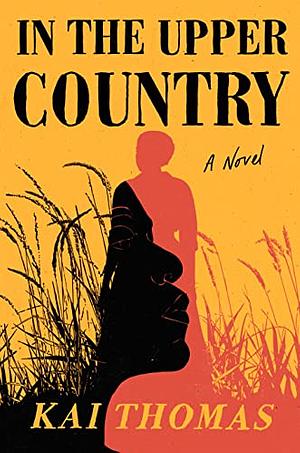
Review 2483: In the Upper Country

In 1850, Lensinda Marten lives in an all-Black town in Canada north of Lake Erie. She is a healer, but she is puzzled when she is summoned to the side of a slave catcher who has come after a group of escaped slaves that are hiding on Simion’s farm. Puzzled because the man is dead. When she hears that an old woman, one of the escapees, has been arrested, she realizes she is wanted to write a story about the woman for the Abolitionist paper.

She goes to visit the old woman in jail and finds that she isn’t ready to tell her story. Instead, she wants to swap stories with Lensinda. In doing so, a history of cruelty is reveealed, and the two women find connections between each other.

Thomas says in the Afterword that he heard and read many stories about Canada’s history of slavery, its treatment of First Nations people, and the War of 1812, but he could find no story that did everything he wanted. So, he chose this method of telling several stories that interface.

Although I found the information interesting and the settings and historical details to be convincing, I’m afraid his approach didn’t work that well for me. Just as I was getting interesting in Lensinda’s story, the novel appeared to move away from her. There were quite a few characters whose connections aren’t immediately clear, and I kept getting them confused as we jumped from story to story. Eventually, the stories connect, but that wasn’t clear for quite a while.

I read this novel for my Walter Scott prize project.

Related Posts

Washington Black

Beloved

This Godforsaken Place

Review 2476: Hungry Ghosts

I feel safe in saying that if I wasn’t reading Hungry Ghosts for my Walter Scott project, I wouldn’t have read it at all. It is absolutely brutal.

In 1940s Trinidad, Krishna lives with his family in the Barracks, run-down ex-military barracks that are leaky and filthy, where five families live in each building, one to a room. Krishna’s father Hans has aspirations for better and insists that Krishna attend school in the village, but there he is mercilessly teased and bullied by other students as well as teachers. Krishna and his cousin Tarak have begun to hang with two twin brothers, Rudra and Rustrum, who have a bad reputation because their father was a murderer.

Hans works for Dalton Changon, a prosperous man. Changon’s wife Marlee has recently noticed some disturbing changes in his behavior—a heightened paranoia and a tendency to hallucinate. Then he disappears during a night when there’s a terrible storm.

Marlee receives a threatening note, so she offers Hans a large amount of money to stay on the property overnight as a guard. He accepts, thinking to save a down payment on a house. However, soon he is involved in a torrid affair with Marlee, not even returning to his home when his wife, Shiveta, is hospitalized for an infected foot.

Meanwhile, Krishna, defending himself from some village boys who try to drown Tarak’s dog, injures Dylan Badree. Because Dylan’s father is a policeman, Krishna is put in jail and is only released after Marlee’s intervention. But the boys’ feud begins to go in evermore dangerous directions.

This book contains graphic descriptions of drowned dogs and murdered dogs and the killing of a rabbit. Everyone in it who seems like a good person either becomes bad or is victimized. The language of the book is impressive, but sometimes Hosein uses such obscure words that it seems pretentious. Hosein certainly describes a vivid world, but it’s not a place I wanted to be in.

Related Posts

Fortune

A Brief History of Seven Killings

The Cold Millions

Review 2473: My Father’s House

Helen of She Read Novels has posted a note about Readers Imbibing Peril (RIP XIX), which I always forget about but usually participate in. As somewhat of a suspense novel, My Father’s House qualifies, so let this be the start of my participation this year. Most of the action is on Instagram at @PerilReaders, but I am not a great user of that.

My Father’s House is a book I read for my Walter Scott project, and it is also the first in O’Connor’s Roman Escape Line trilogy. It is based on the true story of the Escape Line, a group of people who helped captured soldiers and others escape from the Nazi occupation of Rome. In particular, it focuses on Monsignor Hugh O’Flaherty, one of the group’s founders.

After Rome is overrun by the Nazis, the Vatican gives Monsignor O’Flaherty a duty of ministering to British soldiers in Nazi captivity. Being an Irishman, he isn’t eager to do this duty. However, when he sees the condition of the men and the ease with which the Nazis break the Geneva Conventions, his manner to the Germans is such that he is removed from the duty. In this way, he comes to the attention of Obersturmbannführer Paul Hauptmann.

O’Flaherty then decides to form a group to help soldiers escape from the Nazis. The group becomes successful enough that Hauptmann begins receiving threatening communications from Himmler.

Much of the novel centers around a Rendimento, as the Choir, the central group that runs the Escape Line, calls their missions. The group has planned its mission for Christmas Eve (1943), thinking that Hauptmann won’t expect it, but in the last few days, Sam Derry, an escaped British major who would normally run it, is incapacitated. They begin training Enzo Angelucci instead.

The main focus of the novel is whether the mission will be successful, but the narration travels around in time and person via transcripts of interviews of several of the participants. In some respects, this structure is interesting, helping you get to know the other characters, but they didn’t all have distinct voices, and you didn’t get to know them well. There is also the disadvantage that the approach tends to interrupt the building suspense.

I thought the novel was very interesting in its subject matter. I’d never heard of the Escape Line. However, as the first of a trilogy, I’m not sure how much more there is to say, even though no doubt there are many adventures to recount. I didn’t feel as if I got to know most of the characters in the novel, not even the Monsignor.

Related Posts

Ghost Light

Shadowplay

Munich