WWW Wednesday

You might be wondering why I’m not posting as often as I used to. Well, the answer is that I got caught up with myself in reading, and instead of being several months of books ahead of myself, I’m only about two weeks ahead, so I decided first not to post on Wednesdays except for special reasons, and then a little later, when the situation did not improve, not to post on Fridays. This situation will be fluid, like it has been since I started blogging. If I get way ahead of myself again, I’ll start posting on Fridays. I like being ahead on my reading, because it allows me to choose more carefully the order of books instead of having to review the next book I read.

Anyway, the Chocolate Lady is always doing bloggy type activities where she joins with other folks, and I don’t usually have time. Plus some of them take some planning. But she is occasionally doing WWW Wednesdays (I don’t know what WWW stands for, and she doesn’t explain), which seemed like an easy thing to take part in. If you want to take part, you just have to answer three questions: What are you reading now? What did you recently finish reading? What will you read next?

What am I reading now?

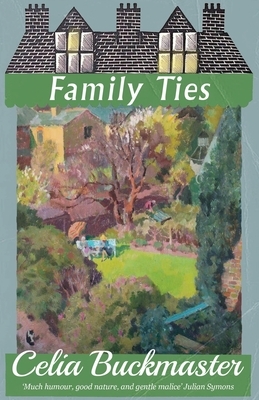
Right now, I am reading a Dean Street book from their Furrowed Middlebrow imprint, Family Ties by Celia Buckmaster. This gives me an opportunity to lobby for Dean Street publishing more Furrowed Middlebrow books. I know they are tied up in estate issues now, but I hope they will reconsider closing down this imprint. If you want them to continue with Furrowed Middlebrow maybe send them a message on their Facebook page, and please comment here! I am only a few pages into this book, and so far it seems to be about eccentric family life in a village. I always enjoy relaxing with a Furrowed Middlebrow book!

Technically speaking, I am also reading Ferdydurke by Witold Gombrowicz. I chose this book to read for the 1937 Club (coming up next week), but so far I just haven’t been able to hack it. It is supposed to be his masterpiece, and it is about a grown man who gets turned into an 11-year-old boy and put back in school. If that sounds juvenile, it is. I got into it about 70 pages and put it aside. Every time I finish another book, I look at it and say “Nah!”

What did I recently finish reading?

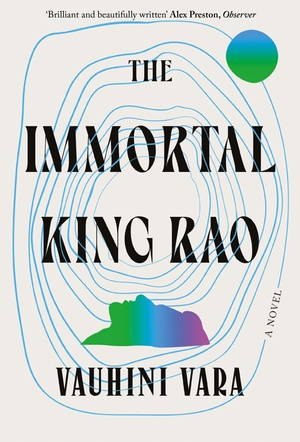
The last book I read was The Immortal King Rao by Vauhini Vara, which is part of my Pulitzer Prize project. One of my habits, maybe it’s a foible, is just to check the library periodically to see which books in my projects are available and get them without reading what they’re about. And in fact, I do the same thing with all the books in my stack. At some point I have usually read what they are about but I don’t do that right before I begin reading them. Well, for this book, the timing was unfortunate, because it is a dystopian novel, and not only do I not usually read dystopian novels, but it seems like recently everyone is writing them. And, in fact, I had read three just in the past few weeks. Now, don’t get me wrong, one of them was wonderful, as you’ll find out when I review it. I didn’t have as positive of an experience with The Immortal King Rao, although I didn’t dislike it. You’ll have to wait for my review, which should be coming up in a couple of weeks.

What will I read next?

When I troll the libraries for my project books (online, of course), I usually try to get one for each of my projects, although often I cannot find the Walter Scott Historical Fiction project books there and have to buy them. (That means they go into my pile and I get to them a lot later. I should do something about that. The Bee Sting has been there for quite a while.) Last time I trolled, I ended up with The Immortal King Rao for my Pulitzer project and Real Life by Brandon Taylor and Prophet Song by Paul Lynch for my Booker Prize project. (I am still waiting for After Sappho by Shelby Wynn Schwartz to arrive for my James Tait Black Project.) I have read Prophet Song, so after I finish my current book, I’ll read Real Life. As usual, I have no idea what it is about. I hope it’s not dystopian.

Have you read any of these books? What did you think?

Review 2307: The Geometer Lobachevsky

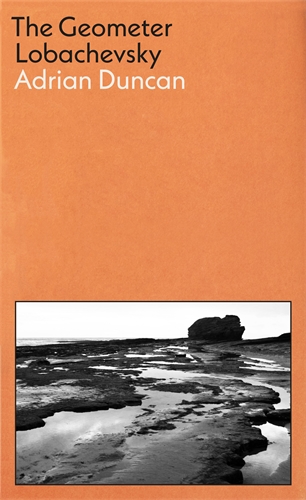
In 1950 Ireland, Soviet citizen Nikolai Lobachevsky has been working in the western bogs, trying to help a team survey the bog lands. He receives a letter from the Soviet government summoning him home to take up a “special assignment.” He knows that probably means execution, so he hides on a remote estuarial island.

Readers who look for a rousing plot aren’t going to find one here. Nothing much happens except for work and exact observations. First, Nikolai is helping with the surveying. Later, he helps farm seaweed. But he is homesick, and once he hears of Stalin’s death, he decides to return to Russia, taking a gamble that Malinkov, for whom he used to work, will pardon him for whatever sins he’s supposed to have committed.

I just felt meh about this novel, which I read for my Walter Scott project. It excels at descriptive passages, but it was hard to know Lobachevsky. Also, I am not that into strictly contemplative novels.

Related Posts

The Fawn

The Bogman

The Secret Guests

Review 2236: The Sun Walks Down

In 1883 Australia, the Wallace girls are at a wedding and Mathew Wallace is out working. Only six-year-old Denny and his mother are home when she sends him out to gather fuel. A huge dust storm comes up, and instead of staying where he is, he goes in the direction he thinks is home. And he is lost.

The family doesn’t realize he is lost right away, but when they do, Mathew takes off in the direction Denny went, along with Billy, his Aboriginal farmhand. Soon, almost everyone in the area is searching for Denny.

This novel doesn’t have a strong plot. Instead, it follows a mixture of characters during the search. There is Cissy, Denny’s headstrong sister, who joins the search; Constable Robert Manning, newly married, and his wife Minna; Foster, Manning’s superior officer, who ignores his trackers’ advice and follows the wrong trail; Karl and Bess Rapp, two painters who are traveling in the Australian bush looking for subjects to paint; and so on.

This is a beautifully written novel that shows insight into human nature and powerfully describes the Australian landscape. I read it for my Walter Scott prize project.

Related Posts

Homecoming

The Secret River

Salt Creek

If I Gave the Award

As I have just posted my review of News of the Dead, the last of the shortlisted books for the 2022 Walter Scott Prize for Historical Fiction, it is now time for my feature where I decide whether the judges got it right. The shortlisted books are set in 16th century Scotland; 8th, 19th, and 20th century Scotland; 20th century Trinidad, and 20th century Germany, California, and Switzerland. For this year, most of the entries were strong ones.

The book set in 20th century Trinidad, Fortune by Amanda Smythe, is the fictionalized story of a true one, a love triangle that resulted in a disaster. I felt that the characters in this novel were not very interesting and the setting not vividly described. Also, the writing was rather mundane. However, this book was the weakest entry on the shortlist.

The writing in The Magician by Colm Tóibín was not at all mundane. This novel is more difficult to evaluate in the context of my having to pick the best one, because I said only good things about it in my review, but it didn’t make as much of an impression on me as some of the others. A biographical novel about the writer Thomas Mann, the book was intuitive and meditative in tone and Tóibín’s writing is always excellent.

The winner this year was News of the Dead by James Robertson, and I’m guessing it was picked because of its scope. It tells the story of a remote Scottish glen through manuscripts written about a figure in the 8th century, a family in the 19th century, and an individual in the 20th, and how these people found refuge. It was well written, and I certainly found it involving and was unexpectedly touched by the second and third narratives. However, I wasn’t very interested in the first, about a supposed local saint.

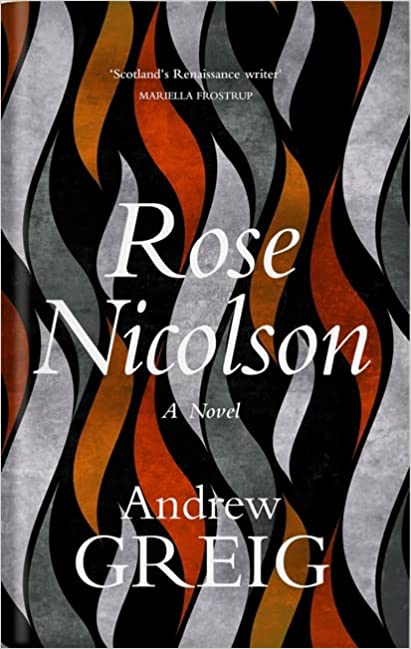
Despite the three really good books in this year’s shortlist, it wasn’t difficult for me to pick my favorite because of the lasting impression it gave me despite being the book I read first, in August 2022. That is Rose Nicolson by Andrew Greig. It is set in the difficult times of 16th century Scotland, when people are still fighting about religion, about a young man’s love for an extraordinary young woman who is in danger of being thought a witch just because of her intelligence. I am a big Greig fan, and this was one of his best (although I might put in a word for his Fair Helen).

Review 2235: News of the Dead

One of the things I like about my shortlist projects is that they bring me into contact with books and authors I probably wouldn’t encounter otherwise. Certainly, I would never have run into News of the Dead if not for my Walter Scott Historical Fiction Prize project.

News of the Dead tells the story of one remote, secluded place—fictional Glen Conach—over the ages, mostly through a set of documents. The oldest is a book written in the middle ages about a Christian hermit the locals call St. Conach even though he’s not recognized as such by any authority. The Book of Conach tells the stories of lessons and miracles performed by the man, who died around 770 AD.

Another narrative is set in 1809 from the diary of Charles Gibb. Gibb is an antiquarian who has wangled himself an invitation to Glen Conach House ostensibly to study and translate The Book of Conach. His real goal, however, is to sponge off the Milnes, the current owners of Glen Conach House, for the summer. He rather cynically observes Glen Conach and his lady and daughter as they do him, at first. But slowly the situation changes.

The third narrative begins slightly pre-Covid and mostly concerns an elderly woman named Maja and her eight-year-old neighbor, Lachie, who likes to visit her. When Covid sets in, she decides to write him a letter telling the story of a girl who came to the glen as a child after World War II.

I did not have much patience for the stories about St. Conach, although it was clever how Robertson used variations of the stories to show how they change. It also, frankly, doesn’t reveal much about daily life except for superstition and wildness.

The other two narratives were a lot more interesting. Gibbs’s began at a fairly cynical level yet what we learn after it stops is surprisingly touching. And Maja’s story had me on the edge of my seat.

There were times when I wondered where this novel was going, but ultimately I found it a lovely examination of refuge. I also want to point out that all three narratives sound like they were written by different people, which they should in good fiction, and which is too often not the case.

Related Posts

Rose Nicolson

Luckenbooth

Ulverton

Review 2192: Act of Oblivion

It’s hard to know where sympathies might lie in this historical novel set right after the Restoration, in 1665. On the one hand, there is Richard Nayler (a fictional character), tasked with finding and taking to trial (or later, just plain executing) those deemed responsible for killing Charles I. A mighty task, but he performs it so zealously, not minding a dirty trick or two.

On the other hand, there are Colonel Edward Whalley and his son-in-law Colonel Will Goffe (historical characters), on the list because they signed the King’s death warrant after an illegal trial. They have escaped to America, but Nayler blames them for the death of his wife (in premature labor after they broke in on a religious service on Christmas Day, deemed illegal under Cromwell, and arrested people) and is determined to catch them.

Robert Harris states that this hunt for the regicides was the greatest manhunt of the 17th century so we may assume that’s his motivation for the book. Although I’m not particularly interested in the Puritan period of New England history, certainly there are interesting things I didn’t know disclosed in this novel, like the history of New Haven. In addition, Harris depicts the wildness of New England at this time more vividly than anything else I’ve read.

Harris manages to raise the tension of the novel at the end, when Nayler, long after everyone else has lost interest, finally locates Goffe, but overall, I was too turned off by the deeds on both sides of the English Civil War (usually I favor the Royalists, but he shows just how brutal both sides were) to care much about these antagonists. I read this book for my Walter Scott Prize Project.

Related Posts

Beheld

The Witches: Salem, 1692

An Officer and a Spy

Review 2177: Fortune

Fortune, shortlisted for the Walter Scott Historical Fiction Prize, is set in late 1920’s Trinidad. People have been jumping out of windows in New York, but there is an oil boom in Texas, and Eddie Wade foresees another one in Trinidad.

Sonny Chatterjee has oil seeping into the soil of his cocoa plantation, and his plants are dying. Charles Macleod of Apex Industries has been trying to get an oil lease from him, but he has seen the destruction caused by the large oil companies and refuses to let that happen to the land his father worked so hard to buy. However, Eddie convinces him that his smaller company will take more care and give Sonny a better deal, so Sonny agrees that if Eddie can come up with the $10K to get started, he can. The trouble is, Eddie has no money.

Eddie’s truck breaks down on the way into town, so he walks. Local businessman Tito Fernandes picks him up and trusts him instantly. Even though Tito is in serious difficulties because of his stock market investments, he finds the money Eddie needs.

The back cover of the novel makes clear that the fly in the ointment will be provided by Tito’s much younger wife Ada, and the affair that begins between her and Eddie. This novel is based on a real event—a fire in 1928. Smyth has changed the name of one historical person from Bobbie to Eddie, but it’s not clear just how much else is fictional. Certainly, I found the love triangle aspect uninteresting and unimaginative, but I guess if it really happened . . . .

The fact is that I didn’t actually care about any of these characters. Further, the writing is close to being spare, but it lacks the specificity and vividness of most spare writing, so I can only call it trimmed. It’s more mundane in nature. The setting itself occasionally comes to life but more often does not. I didn’t feel like I knew what it was like to be in Trinidad at this supposedly exciting time.

Related Posts

Sugar Money

The Lacuna

Washington Black

Review 1895: The Magician

Although I’ve only read one work by Thomas Mann, I still found The Magician, based on Mann’s life and writings, interesting. Although Mann himself often seems inert in this novel, he lived in interesting times, during both world wars.

The novel covers Mann’s life from a young man who is dispossessed by his father to his relocation from California to Switzerland in his 70’s. It examines the thinking behind his greatest works and although fairly meditative in tone, has some excitement during the Mann’s flight from Nazi Germany.

In some ways The Magician is reminiscent of The Master, Tóibín’s novel about Henry James, with Mann fantasizing about young men but never acting on those fantasies after a couple of abortive encounters. The difference is that James seemed almost unaware of his own proclivities. Mann still managed to have a long, successful marriage with his wife Katia.

Tóibín’s biographical fiction always seems intuitive and thoughtful to me. I enjoyed this one despite my lack of knowledge about its subject. I read this novel for my Walter Scott Prize project.

Related Posts

The Master

Nora Webster

Lady Gregory’s Toothbrush

If I Gave the Award

I’ve now reviewed all the shortlisted books for the 2021 Walter Scott Prize for Historical Fiction, so it’s time for my feature where I decide whether the judges got it right. In this case, I can’t begin with the book I disliked most, because I liked all of them. In fact, that’s the difficulty, to choose between these worthy candidates.

I very recently reviewed The Tolstoy Estate by Steven Conte, about the German occupation of Tolstoy’s estate during World War II. I enjoyed this novel but didn’t like the letters that skipped ahead of the plot and felt the novel was somehow slight.

I also enjoyed The Dictionary of Lost Words by Pip Williams, which explored the ways that gender influenced the making of the Oxford English Dictionary and looked at the women who helped create the dictionary. I found the novel touching and interesting, although a few of the plot points were predictable.

The freshest book in my memory of is A Room Made of Leaves by Kate Grenville. I found this novel about how a woman learns how to work within a difficult marriage and helps found the sheep industry in Australia vivid and deeply interesting. Of course, the husband gets all the credit.

One of my favorite writers is Maggie O’Farrell. Her novel Hamnet is about the death of William Shakespeare’s and Anne Hathaway’s son and its influence on the writing of Hamlet. I found it to be deft and sensitive, although at first I wasn’t comfortable with how much O’Farrell was making up about Hathaway.

But speaking of favorite authors, along with many people, I was waiting for the last entry in Hilary Mantel’s trilogy about Thomas Cromwell. That book, The Mirror and the Light, follows Cromwell’s life as he serves Henry VIII and tries to keep him from his worst excesses. It begins with the beheading of Anne Boleyn and of course, ends with his own death. It had me in tears, which is my best gauge of how much I enjoy a book. This novel was the winner of the award for 2021, and I think the judges got it right.

Review 1852: A Room Made of Leaves

Even from the Editor’s Notes of what purports to be Elizabeth Macarthur’s memoirs, we get a hint of what’s coming—the husband getting the credit for establishing the wool industry in Australia while the wife did all the work. The husband revered as an important founder of the nation when he was actually disliked and hated during his life and was away for many years.

As Elizabeth grows, she loses her family—her beloved father to death, her mother to a second marriage, her grandfather to her own marriage. She learns to hide her real self behind a docile, submissive mask. When she meets Ensign James Macarthur, part of her sees him for who he is, but she is curious and has no prospects, and her curiosity ends in her pregnancy. Her first lesson in her husband’s character comes before marriage—James is more interested in the pursuit than the capture.

James is in fact ferociously ambitious, but his touchiness about his lack of breeding makes him angry enough to work against himself. Elizabeth learns he is vengeful and likes to weave vast conspiracies to advance himself and bring down others. But his judgment is poor.

Posted to Gibraltar, James sees the possibility of a posting at the newly established prison in New South Wales as an opportunity and believes the brochures extolling the new colony. Elizabeth is skeptical, but she handles James poorly and finds herself on her way, again pregnant and with a new baby. However, eventually she discovers opportunity when James finagles 100 acres of Australian land by his manipulations of the governor. She and her two convict servants begin establishing a herd of sheep.

I found this novel vivid and deeply interesting, as Elizabeth learns how to handle her horrible husband and make a satisfying life for herself and her children. The novel evokes the raw early days of the 18th century colony as well as, occasionally, its beauties. I read it for my Walter Scott project and liked it very much.

Related Posts

Salt Creek

Rush Oh!

A Town Like Alice