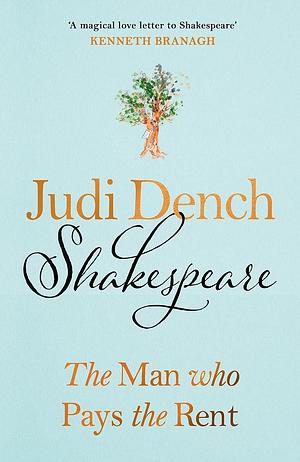
Review 2675: Shakespeare: The Man Who Pays the Rent

I bought this book a couple of years ago in Ashland while attending the Oregon Shakespeare Festival, and it has taken this long to come to the top of my pile.

This is an unusual book. It’s not exactly a memoir, although it certainly recounts some of Dench’s memories. It is rather a series of interviews with her friend, director Brendan O’Hea. O’Hea explains in the Introduction that it was intended as a series of interviews with Dench about Shakespeare roles for the archives of Shakespeare’s Globe. He had no idea they might be of general interest until friends made comments and expressed curiosity.

The book is divided by play, more or less in chronological order of her career except when she repeated a role or took on a different part in the same play. The interviews discuss the plays in depth but only from the point of view of the role, so that entire plot points are not covered if they didn’t involve that character.

Dench shows her love of Shakespeare clearly in this book. Anyone who loves Shakespeare or is interested in acting will get a lot from it. And Dench’s personality shows through strongly, particularly her sense of humor. She also mentions the names of many of the actors and directors she worked with and tells a lot of stories.

Related Posts

The Shakespeare Thefts: In Search of the First Folios

The Secret Life of William Shakespeare

Hamnet

Review 2277: Literary Wives! Hamnet

Today is another review for the Literary Wives blogging club, in which we discuss the depiction of wives in fiction. If you have read the book, please participate by leaving comments on any of our blogs.

Be sure to read the reviews and comments of the other wives!

My Review

Hamnet is a reread for me for Literary Wives, so if you would like to revisit my original review, including the synopsis of the plot, it’s at this link. Let me also comment that it was one of my Top Ten Books two years ago.

What does this book say about wives or about the experience of being a wife?

Literary Wives logo

There are several reasons why people assume that William Shakespeare’s marriage to Anne Hathaway (whom O’Farrell calls Agnes) was not a happy one. She was several years older than he and pregnant when they married; they lived apart most of the time; he left her his second-best bed (which is misunderstood). But Maggie O’Farrell chooses to take another point of view, that it was a love match.

The novel alternates chapters between the history of their relationship and their son Hamnet’s last days. Then it switches gears to show the aftermath of his death. By the way, Shakespeare is never mentioned by name.

In this novel, Agnes is a wise woman who knows all the healing herbs and can see into a person’s mind by grasping the muscle between their thumb and forefinger. She is thought to be strange and a witch. When she grasps Will’s hand for the first time, she sees vastness.

But Will has a hostile relationshp with his father and dreams of other things than being a glover. When he becomes depressed because he has no work, Agnes puts her head together with her brother Bartholomew, who suggests he be sent to London to sell gloves for his father. Will soon finds his element in London and plans to move the family there when he can afford it. But because of Judith’s poor health, the family can’t follow him there.

But the novel sticks at home, where he visits when he can, sometimes as long as a month—until Hamnet dies.

The novel depicts an Agnes otherworldly but confident in her relationship with Will until Hamlet’s death creates a break. Her grief is so excessive and he can’t bear to be reminded of his son, while she wants only to remember him.

This novel paints a moving depiction of grief and of how Shakespeare’s play eventually creates a mutual understanding. It’s a powerful novel, and there is probably a lot more to say about it, but I find myself unable to convey much more.

Related Posts

The Marriage Portrait

The Secret Life of William Shakespeare

The Marriage Game

Review 1682: Titus Andronicus

I knew nothing about Titus Andronicus except that it is a blood bath. And it is, too, with rape, murder, dismemberment, and a woman being served her sons’ corpses in a pie.

The introduction to the play in my Riverside edition points out that the play was long poorly regarded and even by some thought not to be the work of Shakespeare. But more lately its reputation has been rehabilitated.

Titus Andronicus is a Roman general who has been fighting the Goths for years—having lost 20 sons in battle—when he returns to Rome. The emperor has recently died, and the citizens of Rome want to elect Titus, but he gives his support to the emperor’s brother Saturninus, who is duly elected but resents Titus for this.

In rapid succession and a confusing first scene, Saturninus says he will marry Titus’s daughter Lavinia while openly ogling Tamora, the captured queen of the Goths that Titus has brought back with him. Titus has just sacrificed her son to thank the gods for his triumph. Then Bassianus, the brother of Saturninus, comes in and claims Lavinia as his own, supported by some of Titus’s sons. Titus kills his own son Mutius for acting against the emperor. Although Saturninus rebukes Titus for slaughtering his own son, he still banishes Titus’s other sons for supporting Bassianus’s claim to Lavinia.

Saturninus marries Tamora, and she begins to plot her revenge against Titus for killing her son, aided by her lover, the villainous Moor Aaron. Aaron convinces Tamora’s sons Demetrius and Chiron to murder Bassianus and rape Lavinia during a hunt. They improve upon this plan by cutting off her tongue and hands, and then they frame Titus’s sons for Bassianus’s murder. More villainy follows, but once Titus has had enough, he gets his own revenge.

There aren’t very many striking passages in this play, but it is very tightly plotted. I could see some similarities to Coriolanus, another Roman revenge tragedy. I think the play might be quite horrifying and effective when performed. This play is one of the last books on my second Classics Club list.

Related Posts

Coriolanus

Hamlet

King Lear

Review 1627: Hamnet

Hamnet explores the impulses that went into the writing of Hamlet as well as important moments in the marriage of Anne Hathaway and William Shakespeare. It focuses on grief from the death of a beloved son.

The similarity in the name of Shakespeare’s son to that of his most famous protagonist is obvious, but I wasn’t aware until this book came out that they were essentially the same name. O’Farrell’s newest book parallels scenes from the beginning of Shakespeare’s relationship with Anne (called Agnes in the book) with the hours leading up to Hamnet’s death from bubonic plague. Then she deals with the aftermath.

At first, I wasn’t sure how much I liked all the invention going on, as O’Farrell depicts Agnes as a sort of wild child/wise woman. Then I reflected that little is known of the couple and that I was reading fiction, after all. I don’t like it when a fiction writer knowingly distorts the truth, but O’Farrell stuck fairly closely to the few known facts. The result I found extremely touching. I admit that my initial reluctance to buy in changed to my being completely rapt. This is a deft, sensitive story that concentrates mostly on Agnes’s feelings and reactions.

Related Posts

The Vanishing Act of Esme Lennox

Instructions for a Heatwave

The Secret Life of William Shakespeare

Review 1404: All’s Well That Ends Well

Although All’s Well That Ends Well is grouped with Shakespeare’s comedies, the introduction to my edition says that, like Measure for Measure, it is a problem play. I wasn’t sure what that meant, but Wikipedia says it applies to ambiguity and a shift in tone between darkness and light.

The actions in this play by Count Bertram bear many resemblances to those of Shakespeare’s patron, the Earl of Southhampton, who was made to marry a girl he didn’t want. Helena, the ward of the Countess of Rousillon, is the daughter of a physician and so is inferior in position—or at least he thinks so—to Count Bertram, the Countess’s son. Yet, she is in love with him.

When the Count goes to the court of France, Helena follows. The King is deathly ill, and she offers him a cure of her father’s. He agrees, if it works, to marry her to the single lord of her choosing.

Of course, the cure works, and she chooses Count Bertram. Forced to marry her, the young man leaves for war in Italy vowing never to consummate the marriage.

Frankly, this later play is not one of Shakespeare’s best. Its main theme is the disagreement between young and old, as everyone in the play who is older thinks Bertram is an idiot to reject such a virtuous, lovely bride, and also the part that status plays in marriage as opposed to character. The play has no rolling speeches, however, and pretty much just gets down to doing its job.

From the modern viewpoint, it’s fairly easy to see why this play isn’t presented as often as others. I read it before I went to see it at the Oregon Shakespeare Festival. Mainly, Count Bertram is pretty despicable despite his change of heart at the end. First, he rejects Helena just because of her social status, even though she is beloved by his mother and the King. Later, he attempts to seduce a virtuous Italian girl of good family, Diana, even promising to marry her despite being already married. When she pursues him to France, he lies about her, saying she is a camp bawd. What a great guy. Obviously, all would be well if Helena didn’t end up with him at the end, at least for Helena. But that’s the 21st century view.

Related Posts

Antony and Cleopatra

Othello

Macbeth

Day 1151: Henry VI, Part III

Cover of Henry VI Part IIIHenry VI, Part III must have been a difficult play to write, because it telescopes the major events of years into five acts. Its action is a little tiresome, as one side of the conflict is in the ascendent, then another. However, the longer speeches in this early play are beginning to show Shakespeare’s stuff. And certainly, for audiences of the day, who didn’t know their history, it was probably exciting.

The play opens where Part II left off. Henry has just been defeated by the Yorkists at the first battle of St. Albans. Shortly thereafter, he makes a deal with York that allows him to rule during his lifetime but makes York his heir. But both York and Queen Margaret soon break the vow. York is preparing to resume conflict so that he can be king when Queen Margaret attacks in an effort to protect her son’s rights.

What was most interesting to me in this play is the depiction of several of the main characters. Queen Margaret is a real viper and is reviled by several characters, even though she is just trying to protect her son. In fact, I believe it was this play in part that was responsible for her reputation in history.

Although Henry is depicted as saintly and all for peace, he is not shown as mentally incapacitated, as he was for much of his life. Warwick, despite changing sides and being ultimately on the wrong one (as far as the Tudors are concerned), is rather heroic. And Gloucester, later Richard III, is set up beautifully for the subsequent play, Richard III.

All in all, I thought that the second play moved along better. I was glad to contrast this trilogy with the other reading I have done on the Wars of the Roses.

Related Posts

Henry VI, Part I

Henry VI, Part II

Margaret of Anjou

Day 1118: Henry VI, Part II

Cover for Henry VI, Part IIJust by coincidence, I began reading Conn Iggulden’s Wars of the Roses series right around the same time as I started reading these three plays about Henry VI. I found it interesting that Iggulden’s first book, Stormbird, begins almost exactly in the same place as does Henry VI, Part II. Suffolk has brokered Henry’s marriage to Margaret of Anjou, but Henry’s nobles are shocked to learn that the price is to return the provinces of Maine and Anjou to France. Further, the French are not even paying a dowry.

As with Part I, Henry isn’t much of a character in this play, the intent of which is to tell the events of his reign. But whereas he was a child in the first play, this absence in Part II helps to signify his ineffectuality as a ruler. When we see him, he is kindly, but he is unable even to keep his nobles from fighting in his presence.

Besides the struggle for power among the nobles, we are witness to some of the important events in the King’s reign. These include the disgrace of the Duchess of Gloucester and the murder of her husband, the disgrace and murders of Suffolk and Somerset, and Jack Cade’s rebellion.

This play is supposed to be the best of the three Henry VI plays, and apparently Shakespeare’s contemporaries found it exciting because they were unaware of their history. Especially at the beginning, it certainly provides a cogent explanation of the problems of Henry’s realm. Unfortunately, he was not the man to handle them.

Related Posts

Henry VI, Part I

Stormbird

The Wars of the Roses

Day 1051: The Bookman’s Tale

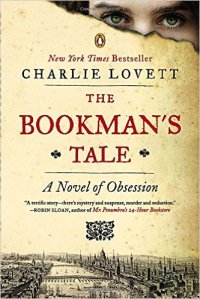
Cover for The Bookman's TaleIt was difficult for me to decide how much I liked The Bookman’s Tale. Parts of it were very interesting and just up my alley, while other parts of it struck me as unnecessary.

Peter Byerly is a young seller of antiquarian books. His beloved wife Amanda died unexpectedly, and since then, he has been taken over by grief. He has moved from the States to the cottage in the Cottswolds that they bought just before she died, because their previous home held too many memories.

Peter finally becomes interested in something when he finds a watercolor of a woman who looks like Amanda in a book in an antiquarian book shop. In trying to track down more information about the artist and his subject, he gets onto the track of a document that could be the holy grail for antiquarians—something that proves Shakespeare wrote his own plays. This document is in the form of the Pandosto, a play written by Robert Greene that formed the basis for Shakespeare’s The Winter’s Tale. This play seems to have Shakespeare’s annotations in it. Later, there is a murder.

Periodically, we go back in time to trace the course of this document. We know there was a real Pandosto, because we see that a man lends it to Shakespeare with some trick in mind.

We also periodically look back to Peter and Amanda’s romance. Peter trains as a book restorer, so we learn something about this field, which I found fascinating. However, although I was interested in Peter and Amanda’s relationship at first, after a while I started to wonder why we were getting so much detail about it, since it didn’t have that much to do with the rest of the book.

So, a mixed review on this one. It has a good mystery about two feuding families and a lot of interesting detail about books, but the romantic storyline slows it down after a while.

Related Books

The Secret Life of William Shakespeare

The School of Night

The Forgotten Garden


Day 981: Hag-Seed

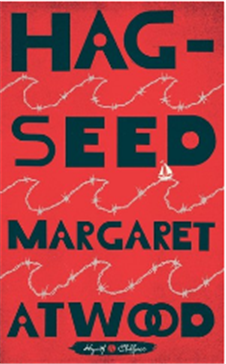
Cover for Hag-SeedHag-Seed is Margaret Atwood’s modern retelling of The Tempest, a part of the Hogarth Shakespeare series. It is inventively plotted and cleverly reimagines the events and characters of the play.

Felix wants revenge. Years ago, he was at the pinnacle of his career, director of the Makeshiweg Festival, presenting The Tempest. He was known for his avante garde approaches to theatre. But while he was occupied with the play, he let his assistant Tony deal with the other points of business. In his turn, Tony plotted with Sal O’Nally, the Heritage Minister, to remove him from his job. Making matters worse, Felix’s young daughter Miranda had died a few years before.

Felix has been leading a retired life in a rustic cottage in the country. Several years ago, he took a job with a program at a local prison. Each year, he stages a Shakespeare play staffed and acted by the prisoners. It has become very popular, and the prisoners’ literacy scores have increased.

But Felix is mostly alone with only his fantasy daughter for company.

One year, Felix hears that several ministers, including Sal and Tony, will attend the prison on the day of the broadcast of the play. Their real intent, he hears, is to shut down the program, despite its success. Felix decides this year’s play will be The Tempest, and through the play, he will get his revenge.

link to NetgalleyI thought Atwood’s approach to this retelling was much more inventive than the other reworkings I have recently read, and I found the novel entertaining. Its revenge plot didn’t really grab me, though. I didn’t like Felix very much, although he gets more likable as the novel progresses. It was clever to combine the Caliban and Prospero roles into one for this book. Certainly, readers familiar with Atwood will recognize her acerbic writing style. Not to get to the point where I thought he was a real person, but I also thought his teaching methods were really creative, and the production sounded as if it would be good.

Related Posts

Maddaddam

Alias Grace

Northanger Abbey


Day 704: Henry VI, Part I

Cover for Henry VI, Part 1Henry VI Part I is my book for the latest Classics Club Spin! Enjoy the review.

The only one of Shakespeare’s history plays I’ve ever read previously is Richard III, although I once saw Peter MacNicol perform Richard II in Central Park (with Martin and Charlie Sheen two rows down in the audience). Henry VI Part I is Shakespeare’s first play as well as one of his Wars of the Roses plays, of which Richard III is the last.

As a history play, Henry VI Part I is more about the events at the beginning of Henry’s reign than about Henry’s life. In fact, he is very young through much of the play and only appears occasionally. The play depicts the discord among the powerful men surrounding Henry, culminating in the Wars of the Roses (although the seeds of the discord can be traced back earlier, to when Henry of Bolingbroke (later Henry IV) deposed Richard II). Henry IV and Henry V, in their turns, have held the country together, but Henry V’s young son shows no such ability. Although Shakespeare himself (and many historians) seems to be disposed toward the Yorkists, it is clear by the end of the play that the Lancastrians will prevail during Henry’s reign.

Painting of scene
The choosing of red and white roses, a scene from the play

The other main event of the play is the war in France. I should not have been surprised to find Joan of Arc (referred to in the play as Jean La Pucelle) the villain of this plot, since the English burned her, but it was a shock nonetheless. The gallant Lord Talbot is the hero, while Jean fights with the aids of demons.

The play is not as dramatic as some others, but it has its moments. I thought it was most interesting as showing the Tudor view of this great series of conflicts.

Related Posts

The Wars of the Roses

Macbeth

Lords of Misrule