
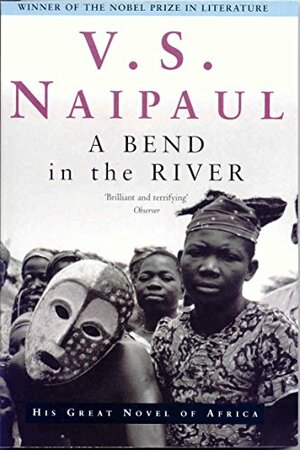
Salim is a young man of Indian descent who was born and raised on the east coast of Africa, at that time a cosmopolitan and wealthy area. Feeling the need for a life change, he buys a store in an unnamed Central African country (probably Congo) based on the stories his friend has told about the town. He makes the difficult journey there. It is the mid-20th century when African countries were throwing off their colonial rulers. He arrives to find the rebellion has destroyed the town.
Salim makes a life there, following a second rebellion, a boom and rebuilding, the reappearance of Europeans, and so on. However, he struggles with a sense of inertia and lack of identity.
This novel has been criticized for leaning toward colonialism. I’m not sure it does, but certainly it spends a lot of time looking at the characteristics of what Salim might call “bush Africans.” The new leader of the country is such a man, and at first, he seems to be a symbol of hope and prosperity, but eventually things change.
I was enthralled by the beginning of the book but not as interested as political issues emerged. There is a long section about an area called The Domain, sort of like the unoccupied cities the Russians and Chinese have built, that bored me. Also, there is a shocking scene when Salim attacks his lover.

 What? Me Read?
I read this a few months ago and still haven’t written my review. I enjoyed some of it, but did feel he was very pro-colonialist without being convincing about what made them so superior (in his eyes). But the scene where he beats the woman sickened me, especially when I read that in real life he had been accused of beating his mistress in a very similar way. I don’t really believe in cancelling people, but for him I’ll make an exception!
I heard about that, although I think the person who said it called her his wife. I looked up biographies and didn’t see anything about it, but I guess I feel no compulsion to read anything else by him. He did seem to consider the “bush” natives uncivilized. If that’s pro-colonialist, maybe you’re right.
I think I read it on wikipedia, about the mistress.
That person was not necessarily well-informed.