
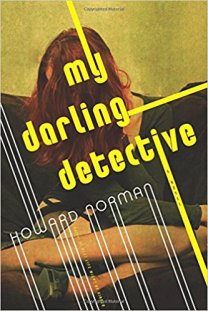
 The Best Book for this period is My Darling Detective by Howard Norman!
Tag: book lists
If I Gave the Award
I recently posted my last review of the books on the shortlist for the 2010 Walter Scott Prize for Historical Fiction. So, as usual, it’s time for my feature, If I Gave the Award, when I tell you if I think the jury got it right.
 2010 was a strong year for historical fiction, and the shortlist reflects that. Of the seven books on that year’s list, I really enjoyed four of them, liked one other, and didn’t enjoy two others as much. Of the weakest entries, I felt that The Glass Room by Simon Mawer was cold and withdrawn, and I did not enjoy the subject matter of Hodd by Adam Thorpe, although it was effective at evoking the historical period. The Quickening Maze by Adam Foulds was interesting, but I still felt removed from the subject.
 The strongest entries, in my opinion, were Sacred Hearts by Sarah Dunant, Lustrum by Robert Harris (published as Conspirata in the U.S.), Stone’s Fall by Iain Pears, and the winner, Wolf Hall by Hillary Mantel. Sacred Hearts, Lustrum, and Wolf Hall were best at evoking a sense of period and place, while Stone’s Fall had a great mystery.
If you follow my blog closely, however, you can probably guess which one I will pick. Wolf Hall was on my Best Books list for the year 2012. It is, in fact, one of my favorite books ever. So, I agree with the jury this time.
Best of Five!
 The Best Book of the last five is A Little Life by Hanya Yanagihara!
Best of Five!
 The Best Book for this period is Mrs. Engels by Gavin McCrea!
Best of Five!
 This period’s Best Book is Bleak House by Charles Dickens!
Best of Five!
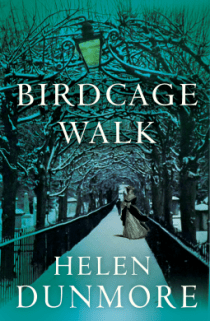 The Best Book of the latest five is Birdcage Walk by Helen Dunmore!
P.S. Before I posted on Friday, I forgot to check Classics Club to see what spin number came up. It was #4, so I will be reading Letters from Egypt by Lucie Duff Gordon by December 31.
If I Gave the Award
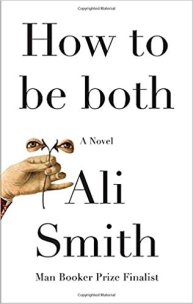 Since I’ve just posted my last review of books on the shortlist for the 2014 Booker Prize, it’s time for my feature, If I Gave the Award. In my opinion, many of the books on the 2014 shortlist are overrated. The winner, The Narrow Road to the Deep North by Richard Flanagan, is sidetracked by a deeply uninteresting illicit love affair, while J by Howard Jacobson is overwhelmed by its obfuscation and sly jokiness and a deeply uninteresting licit love affair. Neel Mukherjee’s The Lives of Others is more powerful than either one of those novels.
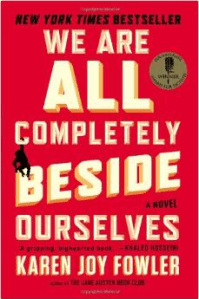 However, my preference goes to one of the other two novels. How to Be Both by Ali Smith is more inventive than the other novels in its structure and more subtle in its message. But for its ability to keep me glued to the page, I have to say that over all the others, I preferred We Are All Completely Beside Ourselves by Karen Joy Fowler.
Classics Club Spin #16
 I have finished my first Classics Club list, although I have not yet reviewed all of the books. I’ll be reviewing the last one sometime this month, at which time I’ll post my second Classics Club list.
For a Classics Club spin, we post 20 books from our list and then a number is chosen, which determines the book we will read for the spin. Since I’ve finished my list, I will have to make up my spin list from my second, unposted list. So, here are my selections for the next spin, for which I will post a review by December 31.
- August Folly by Angela Thirkell
- The Duchess of Malfi by John Webster
- The Tenant of Wildfell Hall by Anne Brontë
- Letters from Egypt by Lucie Duff-Gordon
- The Sea Hawk by Rafael Sabatini
- Mary Lavelle by Kate O’Brien
- The Lark by E. Nesbit (This is sort of cheating, because I have already read and reviewed this book, just not before I made up my second Classics Club list in June.)
- West with the Night by Beryl Markham
- Owls Do Cry by Janet Frame
- Edward II by Christopher Marlowe
- Mansfield Park by Jane Austen
- The Viscount de Bragelonne by Alexandre Dumas
- The Mystery of Mrs. Blencarrow by Mrs. Oliphant
- Kenilworth by Sir Walter Scott
- Oroonoko by Aphra Behn
- Madame de Treymes by Edith Wharton
- The Priory by Dorothy Whipple
- Consequences by E. M. Delafield
- Aurora Floyd by Mary Elizabeth Braddon
- Vanishing Cornwall by Daphne du Maurier
Best of Five
 I suddenly realized there was no reason to worry about periodicity in my Best awards. They have always been the best of five, so why not name it that? This week, the Best Book of five is The Moonstone by Wilkie Collins!
Best Biweekly Book!
 This period’s Best Book is The Wonder by Emma Donaghue!
 What? Me Read?