Day 591: Goodbye to All That

Cover for Goodbye to All ThatThis is my book for the most recent Classics Club Spin! I originally announced that I would post my review a day late, on October 7, but I decided to post it early instead, so as to meet the spin deadline, since Monday, the deadline, is Literary Wives.

Goodbye to All That is the only memoir by Robert Graves, written in his 30’s about a dozen years after World War I. Nowadays, Graves may be best known as the author of I, Claudius, but the publication of Goodbye to All That was extremely controversial. It was one of the first memoirs about the war, and it was one of the most critical.

But before Graves turned a satiric eye on the war, he pointed it at the public school system. I did not always understand what was going on in his boy’s school, but the layers of hierarchy and the customs seem ridiculous. Not surprisingly, this same complexity extends to the different regiments in the military and their customs—where to wear their decorations, what to wear (for one regiment in France, the answer is shorts), and who may speak or drink in the officer’s mess.

Graves, who enlisted early in the war at the age of 21, was soon viewing it all skeptically. One scene of high satire takes place in a meeting of battalion officers, who are all called in to listen to the complaints of their colonel that the men aren’t buttoning their pocket flaps and so on—the worst offence being that he heard a soldier actually call a noncommissioned officer “Jack”! This meeting takes place at the same time that the division is issuing commands for the men to perform impossible missions that would have gotten them all killed had they not been cancelled at the last minute.

Graves also deals somewhat facetiously with the premature reports of his own death, sent by the military to his family after he was wounded, by putting a polite announcement in the Times.

This memoir is interesting enough, although at times I could not follow the nuances of the events, having no knowledge of British school or military terms. There is a short glossary of military terms at the beginning of the book, but it is insufficient. These days, news of incompetency and jingoism during the war is no surprise, but when this book was published, it was the cause of a storm of letters containing all kinds of accusations against Graves.

Day 580: The Broken Road: From the Iron Gates to Mount Athos

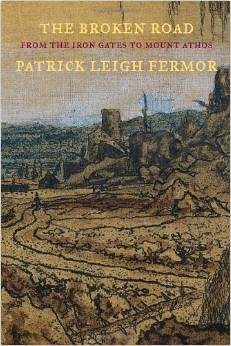
Cover for The Broken RoadIn December 1933, eighteen-year-old Patrick Leigh Fermor began a journey on foot from Holland to Istanbul. Last year I reviewed the two books that cover the first two legs of the journey, A Time of Gifts and Between the Woods and the Water, but had to wait until this third volume was published to finish the journey.

Unfortunately, Leigh Fermor never completed this book. He actually began writing it first, about ten years after his journey, but stalled. Many years later he wrote the other two books and finally returned to this one. The editors explain in the introduction that they had to piece bits of it together from the manuscript, one of his surviving diaries (others were lost), and other documents. They did a great job, for it only seems fragmentary for a few pages in the middle.

This travelogue picks up at the Iron Gates by the Danube in Rumania but almost immediately moves to Bulgaria. Leigh Fermor spends a great deal of the book traipsing around the Bulgarian countryside meeting colorful characters before abruptly deciding to go to Bucharest. As most of this section of the book is written from his memories of what happened because of his lost diaries, I can only say that his memory must have been remarkable. He writes in a vividly descriptive style, allowing you to imagine yourself along on his trip through a world that is long gone.

It is remarkable also that almost everywhere on this journey he meets with kindness and hospitality. Only one night as he miserably hobbled along in Bulgaria after his foot was rubbed all day by a boot nail were his requests for a ride on two different passing wagons met with demands for money. Since he was living on a pound a week, wired periodically by his parents, he chose to walk. That same night his appeal for shelter at one house met no response from inhabitants who were clearly home. But farther down the road some charcoal burners cheerfully took him in.

Only at all disappointing is his description, which is almost nonexistent, of Istanbul. (He persists in calling it Constantinople.) I can only suppose his visit was in some way spoiled, as it is clear from his comments on the way there that he had romantic notions of the East. A footnote repeats his remark that he never left Constantinople without a lightening of the heart.

Leigh Fermor’s book ends where his green diary picks up, with his travels all over Mount Athos, Greece’s Holy Mountain. There he visited one Eastern Orthodox monastery after another. This section is fascinating for its glimpses into this unusual mode of life. Fermor came to love Greece so much that he lived there much of his life, and this was his first experience of it.

I actually found this book easier to read than the other two more polished efforts, as enjoyable as they are. I think it is because it was written by his younger self. For although he was kicked out of prep school before this journey and never returned to a formal education, he plainly was frightfully well read and knowledgeable and constantly lost me in the earlier books with classical or poetic allusions that I was too lazy to look up.

Apparently Leigh Fermor, who was clearly adventurous, went on to live an exciting life. I have a biography of him waiting for me in my pile.

If you have read my reviews of Leigh Fermor’s other books, you may have noticed a discrepancy. In those I say he was nineteen at the beginning of his adventures. Well, that’s what he said, but since he celebrated his 20th birthday at a monastery in February 1935 and started his journey in December more than a year before, even I can do the math. I did notice him referring to himself as twenty before he actually turned it, so that’s probably what happened in the earlier books.

Day 573: The Selected Poetry of Edna St. Vincent Millay

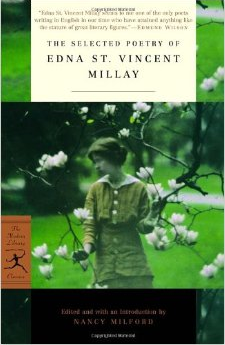
Cover for The Selected Poetry of Edna St. Vincent MillayPoetry is not really my expertise, so I feel awkward trying to write this. Of course, I came to this book familiar with a few of Millay’s most well-known poems, particularly “First Fig.” The poem that made Millay’s reputation was “Renascence,” about a person who is buried in the earth alive and springs back out.

I think this is an interesting book for someone not familiar with Millay. It contains most of her best-known poems from several different collections.

Although Millay was known as a master writer of sonnets and this book contains many sonnets, I think I prefer some of her less formal, cheekier poems, for example, “Thursday.” I also liked the poems that reflect her familiarity with old Celtic and British folk ballads—whose rhythms sound like someone singing a ghostly Border ballad.

After reading in Milford’s biography about Millay’s wonderful voice, I looked for a recording on YouTube. I was delighted to find an atmospheric performance of “The Ballad of the Harpweaver,” recorded for radio.

You might be interested in reading my review of the biography of her life.

Classics Spin #7!

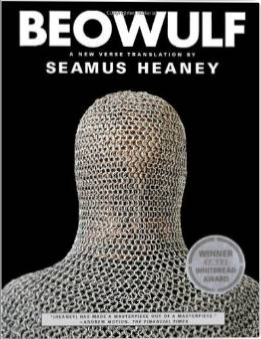
Cover for BeowulfI have enjoyed the Classics Club spins so much that I’ve decided to participate again in Classics Spin #7! In these spins, members of the Classics Club post a selection of 20 books from their Classics Club List, then the Classics Club picks a number on the slated day, and you read that book within the next couple of months. Unfortunately, this time, the Classics Club post will be battling with my next post for Literary Wives, both due October 6. I will post my Literary Wives review on the 6th and post my review for whatever the spin book is on the 7th. I usually don’t do what the spin advises and post my books by category of how much I look forward to them, but this time, what the heck. The spin number is announced next Monday.

Books I’m Dreading

1.   The Vicar of Wakefiel

2.   Giants in the Earth

3.   Beowulf

4.   Henry VI Pt. I

5.   Don Quixote

Books I’m Looking Forward To

6.   Mrs. Marjoribanks

7.   Sisters by a River

8.   The Age of Innocence (an old favorite)

9.  The Remains of the Day

10.  Vanity Fair (another old favorite)

Books I Am Neutral About

11.  Night

12.  Ada

13.  Beloved

14.  That Lady

15.  The Call of the Wild

Other Choices

16. Red Pottage

17. Goodbye to All That

18. Brave New World

19. Greenbanks

20.  The Beggar Maid

Day 563: The Scottish Chiefs

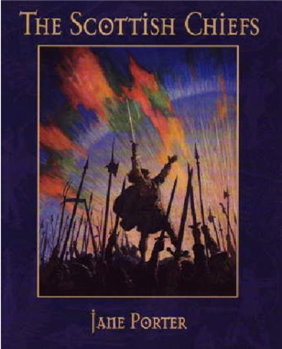
Cover for The Scottish ChiefsWritten in 1810, The Scottish Chiefs tells the romanticized story of William Wallace, the Scots hero we know today as Braveheart. Jane Porter was a contemporary and acquaintance of Sir Walter Scott, who deemed her the first author of historical fiction, then went on to write some himself.

The novel begins in 1296 and covers roughly eight years. After the untimely death of Alexander III, Scotland could not decide between two claimants to the throne—Robert Bruce or John Baliol—and called upon its neighbor, Edward of England, to adjudicate. He chose the weakest candidate, Baliol, and shortly afterwards seized the country for England. At the start of the novel, his governors have been mistreating Scotland for two years by imprisoning its leaders and taking their property for themselves.

William Wallace has been minding his own business and trying to stay out of trouble when he is summoned to meet with Sir John Monteith. Monteith passes him a metal box given to him by Lord Douglas before Douglas was kidnapped by the English. Monteith’s home is overrun by English soldiers, and he is afraid someone will discover the box, so he asks Wallace to remove it. However, the soldiers glimpse it under his plaid, and assuming it is treasure, they soon arrive at his home to take it. Wallace escapes, but his wife Marion is murdered by the dastardly Heselrigge, English governor of Lanark.

After his wife’s murder, Wallace vows to devote his life to freeing Scotland from the English. The novel follows his adventures and his defeats of the English in battle. Wallace’s victories are muddied by the jealousy and treachery of many of the Scottish chiefs, who refuse to believe the purity of his motives and fear his growing power over the populace.

The novel is written in the overblown style of Romanticism. It features a godlike Wallace, heroic figures like beautiful and saintly Helen Mar and faithful Edwin Ruthven and villains such as the perfidious Lady Mar and vicious Heselrigge. The dialogue is florid. However, the deeds described are truly exciting, and Porter manages at times to build quite a lot of suspense. The introduction by Kate Douglas Wiggan, educator and author of Rebecca of Sunnybrook Farm, relates how her copy of the novel was in tatters from re-reading when she was a child and how she would beg for ten more minutes of reading time when called to supper.

While reading this novel, I was trying to decide whether a modern youngster would love it or be bogged down by its style and length. I am not sure, but children read for plot, and there is much in this tale to make it a page-turner. That it is about a man who was truly a hero should make it even more exciting to them. In any case, if the writing style of early 19th century Romanticism doesn’t bother you, I think anyone might enjoy reading this novel.

Day 559: Snow Country

Cover for Snow CountryPerhaps I did not spend enough time considering Snow Country, because I kept feeling as if I was missing something. I couldn’t figure out if this problem was cultural or more an issue with the misogyny of the 1950’s, when it was written.

The novel follows the affair of Shimamura, an effete and sophisticated intellectual, with Komako, a simple country girl who during the novel becomes a geisha. Part of my initial problem had to do with understanding the implications of being a geisha. After all my prior reading lead me to believe that a geisha is different and in fact higher in status than a prostitute, I had to read the introduction to understand that in these hot springs villages, at least in the time the novel is set, a geisha was essentially a prostitute.

Nevertheless, when Shimamura meets Komako, she is a geisha in training, so clearly not a prostitute. Shimamura has come down from traveling in the mountains and immediately asks the hotel clerk for a geisha. None are available, so she sends him Komako. Shimamura spends the night talking to Komako but then asks her to send him a geisha. It is clear what he wants, but he seems to think he deserves some kind of credit for “behaving well” with her, whereas I, and Komako as well, understood his request as insulting. I do not think we’re supposed to like Shimamura, and I didn’t.

We know far more about Shimamura than we do about Komako. We first encounter him on a train on the way back to Komako’s village after the affair is already started. He is struck by Yoko, a girl who is tending to a sick man. Throughout, though, he is far more interested in his fantasies around Yoko than in actually getting to know her. The essence of Shimamura’s personality comes clear when we learn that he is an expert on occidental ballet even though he has never seen a ballet performed—and prefers not to.

For her part, Komako throws herself into the affair with Shimamura even though it is clearly doomed. Although Shimamura’s behavior remains consistent and it is clear that he is incapable of love, Komako is erratic. Toward the end of the relationship she says one thing and does another, she arrives roaring drunk, and she seems to have an inexplicable love/hate relationship with Yoko, as Yoko does with her.

Of course, the future for Komako is not bright, and she becomes more dissipated as the novel progresses. Although I feel we are supposed to sympathize with her, I found her exasperating. The love affair seems sterile, and I don’t see the point of it.

But this novel is set in the cold and gray snow country. Although part of the affair takes place in other seasons, the most important scenes are in the beginning of winter, and the affair ends in the fall. A sense of isolation permeates the novel.

The writing is beautifully spare, as Kawabata is a poet. I feel it is dense in meaning, but if so, I probably missed a lot of it.

Day 558: La Reine Margot

Cover for La Reine MargotIf you’ve been following my reviews of Maurice Druon’s Accursed Kings series about medieval France, you’ve probably seen me use the phrase “nest of vipers.” La Reine Margot, set a couple of centuries later, is just as full of intrigues, infidelities, betrayals, and even poisonings.

It is 1572, and the French court is celebrating the inexplicable marriage of Marguerite of Valois (Margot) to Henry of Navarre. France is at the height of the wars between Catholic and Huguenot, and Charles IX has proposed the union between his sister and the leader of the Huguenots purportedly to further peace.

Soon, though, we find out that the wedding is a trap for the leading Huguenots planned by Charles and his evil mother Catherine de Medicis. (Note that throughout I spell names as they were in the book.) For that evening of St. Bartholomew’s Day, troops are sent out all over Paris to massacre the Huguenots, who are in town for the wedding.

Thinking to rid himself of an enemy in Henry of Navarre, Charles has not considered his sister. Even though she and Henry are not romantically attached, the two have sworn to support each other. When Henry is trapped in the Louvre with the royal family, a combination of Margot’s support and his recanting saves his life. Margot has also rescued a young wounded Huguenot, La Mole, from the slaughter, providing a romantic subplot for the novel.

So begins the novel about how Henry of Navarre, aided by Margot, survives the machinations of the Valois family. The rumor is that Catherine recently murdered Henry’s mother by poisoning her, and Catherine also works in charms and horoscopes. Charles IX is unstable, first mistrusting Henry and then treating him like a brother. Henry d’Anjou, Charles’ brother, detests Henry of Navarre and thinks he is a threat to d’Anjou’s own right to the throne after his brother. François d’Alençon, the other brother, wavers in his decision to ally with Navarre.

Dumas was a writer of the Romantic movement, which de-emphasized rationality and emphasized emotion. The romantic plot involves the love affair between Margot and the naive and gallant La Mole, who is drawn into danger because of his love and religion.

My Oxford World Classics edition was fortified with copious notes, including information about which events were true and which were invented. Dumas is prone to using real people in his historical romances, and it was just a little off-putting to discover, for example, that the real La Mole was not a gallant Huguenot but a fundamentalist Catholic who was responsible for many murders during the massacre. Still, I found the real stories as fascinating as the novel.

If you like a fast-moving adventure that also involves political maneuvering, this is a good book for you. I was more interested in the nerve and political agility of Navarre than I was in the romance, but I still enjoyed the novel.

One caution—an abbreviated version of this novel is available as Marguerite of Valois. I have not read it, but if you want the more complete novel, look for La Reine Margot. (Yes, it is in English but also in French, so be careful if you order it online.)

Just a side note. I have written much about Dorothy Dunnett’s excellent historical novels. One of her Crawford of Lymond novels, Queen’s Play, is also partially concerned with the massacre.

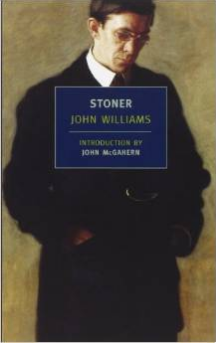
Day 556: Stoner

Cover for StonerBest Book of the Week!
When I first began reading Stoner, I was afraid it was going to be a bleak modernist novel. But it is the opposite of bleak. It is a novel about a shy, awkward man who loves. Williams called it “an escape into reality.”

Williams begins the novel by describing William Stoner’s career at the University of Missouri:

“He did not rise above the rank of assistant professor, and few students remembered him with any sharpness after they had taken his courses.”

It seems that Williams will be writing about a nonentity, but this is not the case.

On the surface, Stoner does not have a happy life. He is the son of a dirt-poor farmer who decides that William should attend college to learn new agricultural techniques. So, Stoner arrives at the University of Missouri a gawky, unsophisticated boy who has only a mild interest in his courses and begins an undistinguished career.

Then in his sophomore year, he takes a required English literature survey course. Although he is speechless in class, he realizes he has found the thing he loves and so changes his major. He eventually earns a doctorate and begins a teaching career at the university.

He makes an unfortunate choice for a wife, marrying a girl whose training makes her more suitable for a society wife than that of an impoverished instructor. It is not clear why Edith marries him except possibly to get away from home. She makes very clear how distasteful she finds sex, and he is too inexperienced to know what to do about it.

Edith’s sexuality changes briefly when she decides she wants a child. After their daughter Grace is born, though, Edith takes little interest in her or in him. Stoner, on the other hand, falls madly for Grace. He takes on almost all the care for her in her first five or six years of life. Then Edith does everything she can to separate them and mold Grace into the type of girl Edith thinks she should be.

Stoner’s solace is in his work, for which he eventually finds a talent for teaching Medieval literature. His progress in his career is hindered, though, by university politics. He finds himself in a dispute over the fitness of a student to enter the doctoral program. Although Stoner’s position is completely justified and his actions misrepresented, he earns himself the enmity of the student’s mentor, Hollis Lomax, who eventually becomes department chair.

Stoner falls in love and finds for awhile some tenderness, but he knows his relationship will be short-lived. It is also ended by university politics.

What Williams accomplishes in this novel is to turn that first assessment of Stoner on its head. Stoner is a flawed man who owes many of the difficulties of his life to inaction, but he is doing work he loves, he is completely conscientious in his efforts, and he even manages a minor victory over his enemy after years of patience. The introduction to the novel states that although readers think Williams is depicting a sad life, he sees it as a novel about love, all the forms it takes, and the forces against it.

You may think this novel sounds dreary. It is not, and it is not often that you feel as if you know and love a character so thoroughly.

Day 552: Dracula

Cover for DraculaHaving experienced other gothic classics of the 18th and 19th century, I was delighted to find Dracula unexpectedly readable. I was also surprised to find how little it resembles its many theatrical and movie productions, even those that attempt to stay closer to the original work.

All versions begin the same, however, with poor Jonathan Harker sent out by his office to Transylvania to complete a property deal with his client, Count Dracula. While staying at Dracula’s castle, he begins to suspect something is badly amiss and eventually fears for his life.

Back in England, his fiancée Mina Murray corresponds with and later stays with her good friend Lucy Westerna at a seaside town. In one day, Lucy has received proposals from three different young men, who all feature strongly in the novel. Dr. Jack Seward is in charge of a local insane asylum. Quincy Morris is a manly, amiable Texan, whom I feared all along was designed for a ghastly death. Lucy’s chosen is Arthur Holmwood, another manly young man who is soon promoted to a lordship by the convenient death of a benefactor. (I don’t think these things work this way, since Arthur is not his benefactor’s relative, but never mind.)

After a freakish storm, a Russian ship arrives unmanned at the port where Mina and Lucy are staying with Mrs. Westerna, who is gravely ill. As it arrives, a large dog jumps off it and runs ashore. Aboard is not a single live human. We horror aficianados know that Dracula has arrived.

While Mina waits for news of Jonathan, Lucy begins sleepwalking and behaving oddly. Dr. Seward makes notes about a patient who eats bugs and babbles about his master. Soon Van Helsing will be needed.

Unlike in most of the spin-offs, except for Jonathan Harker’s experiences at the beginning, Dracula is mostly an unseen menace for much of the novel. I’m guessing that the original readers did not necessarily realize the identity of that bat fluttering outside Lucy’s window.

In any case, the novel covers a lot more ground than does the standard remake. It is epistolary, written entirely as letters and journal entries. It is well written and moves along nicely except for the occasionally long-winded expulsion of pseudo-scientific mumbo-jumbo by Van Helsing or Seward. In the true gothic fashion, it is a classic battle of good versus evil, with the prize the soul of our heroine Mina.

Modern readers may be bothered by the depiction of the two women. Lucy is supposed to be a modern woman—who else would have three suitors at a time? She is both innocent and pure in herself and quite the seductive vamp when under the spell of Count Dracula. The men do a lot of harm to both her and Mina by trying to protect the “little women” from knowledge of what is going on. Again, try to judge the novel’s attitudes by the standards of its own time, when it was simply considered a whomping good tale.

Day 551: Mrs. Dalloway

Cover for Mrs. DallowayMrs. Dalloway is preparing for a party at her home. She goes out herself in the morning to pick up the flowers.

Clarissa Dalloway enjoys her walk. She loves the air, the invigorating city of London, the people. As she walks, she thinks about events from her past, particularly a summer when she was being courted by Peter Walsh at her home of Bourton.

On her walk, Mrs. Dalloway briefly encounters an old friend and we follow him and his thoughts for awhile. So through the day, the novel moves from the consciousness of one character to another, culminating in Mrs. Dalloway’s party. Thoughts and memories are triggered by random images, as Woolf tries to replicate human consciousness.

Woolf’s express purpose in writing this novel was to depict one day in a woman’s life. She also does a turn on the marriage plot—for we see thirty-some years later how that plot worked out.

Mrs. Dalloway harks back to her youth, when it seemed possible she would marry Peter. They argued a lot, though, and it seemed to her that he criticized her. We learn from Peter’s memories that he suddenly had the flash of a thought that she would marry Richard Dalloway. Convinced of this, he left for India. Now, he has returned to tell her he is in love again—with a much younger married woman who has children and is not of his class. Still, by the end of the novel it is as if he has forgotten his new love.

Clarissa married comfort and stability in Richard Dalloway. Instead of a challenging and more bohemian existence with Peter, she has a very structured life. But she is recovering from illness and sleeps in a narrow, prim bed in the attic. It is unclear whether she is happy, except in the delight of living she feels by her nature.

Septimus and Rezia Smith are a couple unknown to Clarissa who are also important to the novel. Septimus is suffering from a delayed shell shock and hallucinations from his experiences in World War I. Rezia, the wife he brought back from Italy, is taking him to see Sir William Bradshaw. Bradshaw is a Harley Street specialist who appears later at Mrs. Dalloway’s party.

As with other modernist novels, I sometimes felt I was missing something. At other times, though, I felt that my reaction was supposed to be something like “This is what life is.”

Having recently read The Hours (wrong way around, I know), Michael Cunningham’s tribute to the novel, I was fascinated by how, with slight adjustments of character and by breaking the novel into three time periods, he invokes even stronger feelings and gives us a fresh look at the material.