Review 2292: Pomegranate

I have to admit that Pomegranate was a slog for me, even though I liked that central image. A review called it a fresh look at the problems faced by newly released prisoners, but that does not reflect my problem. It all seemed very predictable and trite to me.

Ranita is a Black woman who has recently been released from four years in prison on a drug charge. Although her Aunt Jessie has offered her a temporary place to stay, she faces the challenges of staying clean, getting a job, getting her own place, and regaining custody of her children. Her social worker expects her to fail, and although her therapist seems more open, she is not ready to open up. She also is having difficulty with her sexual identity, having had her first meaningful relationship in prison with a woman.

The novel flashes back to incidents in her life that explain how she ended up in jail, starting with a cold and disapproving mother.

As compelling as I feel this story could have been, it was not. I didn’t really feel pulled into it. Even the revelatory moments seemed contrived.

Related Posts

The Sentence

The Panopticon

The Mars Room

Review 2283: Foster

Foster is so good it made me cry. It is beautifully and sparely written, about a little girl who is sent away to stay with strangers, the Kinsellas, while her mother has yet another baby. Her father, we learn very quickly, has gambled away their heifer and tells lies for no reason. He tells the Kinsellas, “You can have her as long as you want her.” He forgets to leave her clothes.

The girl is scared and mistrustful. When she wets the bed, she expects to be punished and sent home, but Edna Kinsella says the old mattress has been weeping and merely cleans and airs it. The Kinsellas are kind. They give her clothes to wear and feed her well, and she helps Edna with chores. She begins to love living on the farm.

I will say no more except this is a lovely book.

Related Posts

Small Things Like These

Antarctica

Our Endless Numbered Days

Review 2266: Old God’s Time

I started reading Old God’s Time without any idea of what it is about, and at first it seemed to be just meandering inside a retired policeman’s head. But eventually, a story begins to crystalize.

In the 1990’s, Tom Kettle is a retired Irish cop who has spent the last nine months alone in his seaside apartment. He has found the time peaceful, but he’s been retreating into memories of his life with his beloved wife June and his children Winnie and Joseph. He’s not always sure whether has has dreamt of scenes with them or not.

Then two police detectives come to his home to ask him questions about an old case concerning a priest’s abuse of children that was shut down by higher-ups. Oddly, though, they don’t ask him anything but spend the night during a storm and leave.

Next his old chief Fleming stops by to ask him to come in and help them with the case, Slowly, with the discussion of this case, the secrets and sorrows of Tom’s life are revealed. At the same time, Tom gets more involved with his immediate neighbors.

This is an eloquent novel but also a very sad one, with a strong message about the effects of child sexual abuse.

Related Posts

On Canaan’s Side

Days Without End

Edinburgh

Review 2264: Tom Lake

On the farm in Northern Michigan that has been in her husband’s family for generations, Lara has been coaxed by her three grown daughters to tell them about her relationship with Peter Duke, a now famous movie star. There has been a triggering event for these stories, but we don’t learn about it for a long time. In any case, these stories take place between sessions of cherry picking and other hard work.

Lara becomes an actress without planning to. When she is in high school helping with auditions for Our Town, the girls trying out for Emily are so bad that she tries out herself and gets the part. Later in college, she takes the part again, and it happens that Ripley, a movie producer, has been persuaded to attend to see his niece. Instead, he decides that Lara is perfect for an upcoming role.

Lara makes a movie, but there is a long delay before it comes out, so she ends up taking the part of Emily again at a summer stock theater in Michigan called Tom Lake. At Tom Lake, she is swept into an affair with Peter Duke, a young, charismatic actor, on her first day. The summer starts out magical, but Lara has a lot to learn about acting, herself, and Duke.

The present-time novel is set during the pandemic, but even though the story has some heart-wrenching parts, its overall atmosphere is so cozy, so happy in its setting, that it feels like the family has its own little nest. You want to go and live with this fictional family. I was born and grew up in Michigan, and although I never lived on a cherry farm, this book made me nostalgic.

Patchett is also a terrific storyteller. This novel is paced brilliantly. The sections where she tells her story seem just about right in length while the rest portrays a warm family life and hard work on the farm. I loved this book.

Related Posts

Commonwealth

State of Wonder

Once upon a River

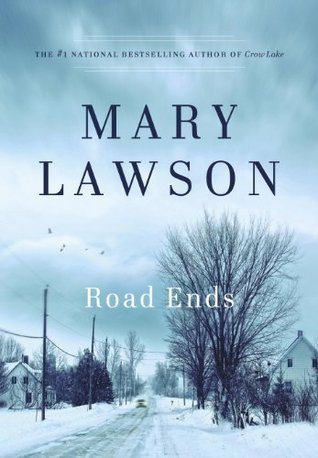
Review 2248: Road Ends

Mary Lawson’s subject is always dysfunctional families in distress living in the far north of Ontario. That sounds deadly, but her novels are absorbing and touching, and Road Ends is no exception.

The novel is told from three different perspectives at slightly different times. Megan Cartwright begins it in 1966, although there is a prologue set in 1967. In the prologue, the best friend of her brother Tom commits suicide where Tom will find him. This doesn’t at first seem to have much to do with Megan’s earlier section but informs Tom’s behavior throughout.

The Cartwrights is a large household of boys with only Megan and her mother the females. Megan’s mother Emily keeps having babies, and Megan is the only one keeping the household organized. Emily retreats to the bedroom with the baby, and Edward, her father, to his study after work. In 1967, baby Adam is a toddler, and Mary has overheard the doctor telling her parents he must be the last child, so she feels free to leave, having realized she will never have a life if she stays. She makes plans to go to Toronto in order to save money to go to London and stay with a friend, but when her father learns her plans, he pays for her to go to London.

Edward has withdrawn himself from the family. One reason is that he is terrified of becoming like his father, a drunkard who used to beat him. He has felt an overpowering anger at times, especially against his sons Peter and Corey, who are always fighting and breaking things. His section of the novel is set in 1969 in roughly the same timeframe as Tom’s, but because of his withdrawal, he hasn’t noticed the household descending into chaos.

For Tom, his friend’s suicide has sent him into a tailspin. He thinks he could have saved him if he had paid more attention. Tom was graduated from college and had job offers in engineering from two aircraft companies, but six months later, he is driving the snow plow at night and spending the day reading the newspaper. He can’t stand to be around people. But he starts noticing that Adam, now four, isn’t being cared for. His mother has had another baby and seems to only care for it. The house is filthy, the child is filthy, and there is no food in the house.

Mary, after a very rough start, has found her dream job in London running a small hotel. She was furious to hear her mother was pregnant again, and she is still homesick but determined not to go back.

I was extremely touched by the ending of this novel. Another really good book from Lawson. I can’t seem to go wrong with her.

Related Posts

Crow Lake

A Town Called Solace

The Other Side of the Bridge

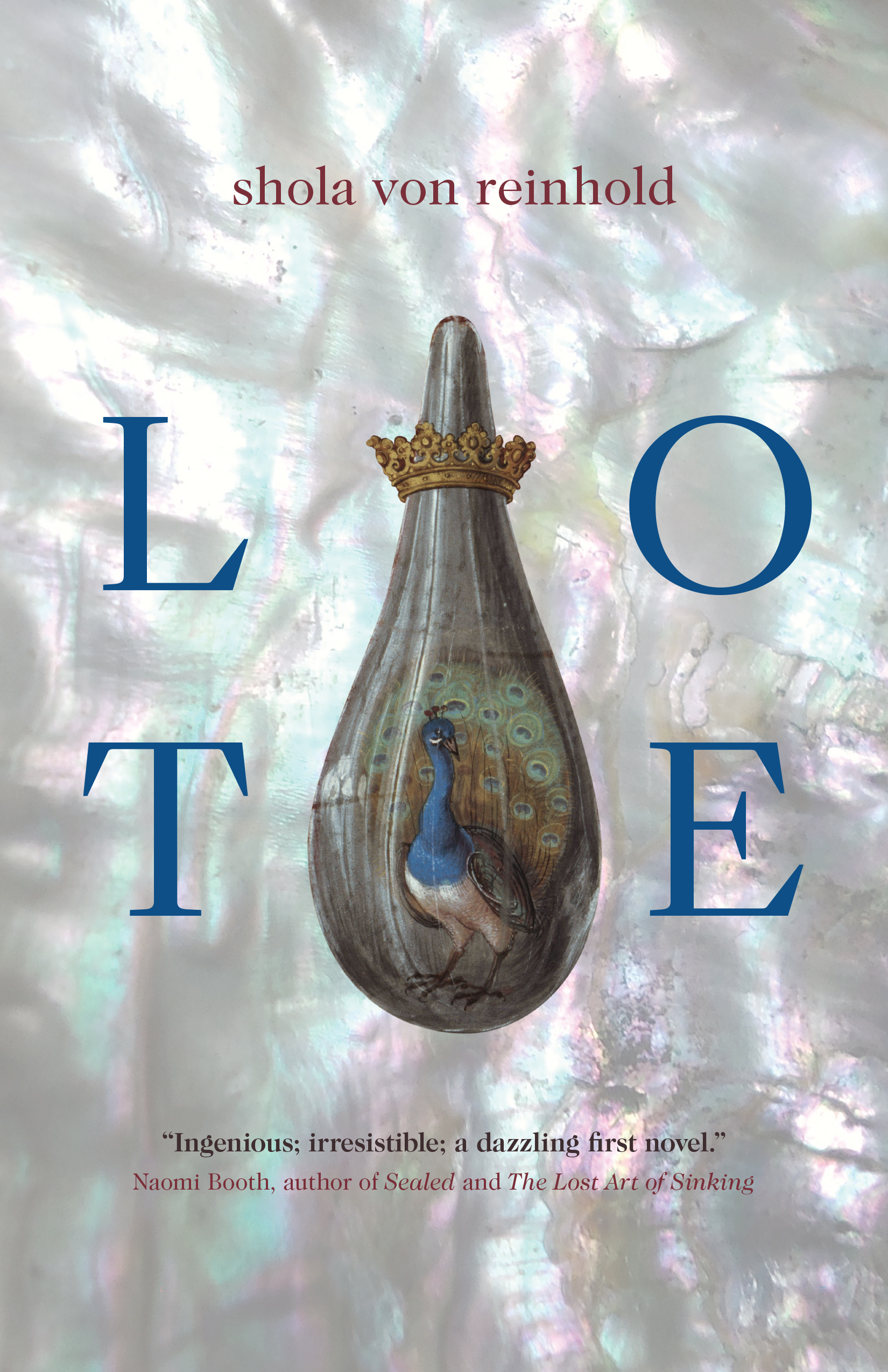
Review 2245: LOTE

This is a very unusual book, and von Reinhold has created an unusual protagonist in Mathilda.

Mathilda worships beauty, a particular baroque, florid kind of beauty. Black, gay, and from a poor background, she is trying to work her way into higher echelons of society to live an opulent life. She periodically becomes obsessed with different figures from the 20s and 30s, Black artists in the periphery of the Bloomsbury Circle, and doesn’t so much research them as immerse herself in them. She calls them her Transfixions. The latest is a Black poet named Hermia Druitt.

Because Mathilda does not always earn her money honestly, she has to sometimes change her identity. She’s been staying in a vacant flat of a friend who is away when her host returns and meets neighbors who know her as Sadie. She has just lost a job at an archive because it wasn’t an official position. She needs somewhere to live and some money, so she thoughtlessly applies for an artists residency that she sees is located in Dun, a town in Europe where Hermia lived. To her surprise, she gets it.

When she arrives in Dun, she finds the town enchanting but the residency dire. The other residents seem to be uniformly drab, so much so that at first she fears she has unwittingly applied for a business residency. They always carry around textbooks written in incomprehensible jargon and speak in that jargon. Mathilda continues her search for evidence of Hermia while pretending to do her work on the residency.

Behind the bemusing and sometimes funny portrait, von Reinhold has a serious theme—the erasure of Black European culture from the public consciousness. A good deal of Hermia’s story is told by excerpts from Mathilda’s Bible, a book called Black Modernisms. Sometimes this novel was a bit esoteric for me, but it was always interesting. I read it for my James Tait Black project.

Related Posts

Heads of the Colored People

The Hours

How to Be Both

Review 2243: Antarctica

Looking for more to read by Claire Keegan, I came across this collection of short stories written in the late 1990s.

In the title story, a happily married woman decides to try a one-night stand, with disastrous results.

In “Men and Women” a girl still young enough to believe in Santa gains some insight into her parents’ relationship.

“Where the Water’s Deepest” contrasts the care an au pair has for a boy with her employer’s disdain of her.

“Love in the Tall Grass” tells what happens after Cordelia’s married lover asks her to wait for him for ten years.

“Storms” is about a young girl’s memories of her mother, who has been put away in an asylum.

These are summaries of the first few stories, but there are several others. Many of them are about the mistreatment of women by their partners. Keegan’s writing is always beautifully lucid and her stories contemplative.

Related Posts

Small Things Like These

Not the End of the World

Flights

Review 2231: Literary Wives! Sea Wife

Today is another review for the Literary Wives blogging club, in which we discuss the depiction of wives in fiction. If you have read the book, please participate by leaving comments on any of our blogs.

Be sure to read the reviews and comments of the other wives!

My Review

At the beginning of Sea Wife, I thought, oh no, it’s in he said/she said format, which I’m already sick of. That’s not really what’s going on, though. Eventually we realize that Michael’s ship log entries are interspersed with Juliet’s thoughts as she reads them.

Juliet is home after a voyage in the Caribbean. Before the trip, she had been suffering from post-partum depression since the birth of her 2 1/2-year-old boy George (or Doodle). Then her husband Michael convinced her they should buy a sailboat and go to sea. She was terrified of this idea, having no sailing experience herself. However, eventually she agreed. Michael wanted to sail around the world, but she convinced him to sail in the Caribbean off Panama, where they ended up buying the boat, so they could stay near land. Along with them went Doodle and seven-year-old Sybil.

Michael is right about one thing—the adventure forces Juliet out of herself. It also focuses attention on their marriage. They have some lovely moments, but dread arises as we slowly realize that Michael has not returned home.

After my initial bad reaction, which only lasted a few pages, I found this novel absolutely compelling. The descriptions of their stops and of the seas are vivid and beautiful. Both Michael and Juliet have the opportunity to unearth some of their own demons.

What does this book say about wives or about the experience of being a wife?

Literary Wives logo

First I have to rant a little about how unprepared this couple were to take on this kind of trip. Michael’s teenage years spent doing a few trips on Lake Erie were definitely not enough experience to set sail on the ocean with his family, especially when Juliet has never sailed. They’re not sailing on a cabin-cruiser-type yacht but on a sailing vessel, which is much more complicated. He tries to teach her during the trip, but she gets confused about the names of things and is afraid of doing something wrong. This mid-life crisis experiment seemed so stupid to me that it took me a while to get past it. They lived in Connecticut, for heaven’s sake. As this was supposed to be his life-long dream, he could have rented a boat and taught her to sail before they went.

In any case, a sailboat, however large, is a good place to focus the mind on the family problems. Michael seems to have been breathtakingly self-absorbed during Juliet’s depression, leaving her alone with the kids almost all the time and not helping with the housework.

Michael loves Juliet, but he harbors a lot of resentment against her for being depressed and for focusing on her memories of being abused by a family friend. He seems angry that she turned out to be a different person than she seemed to be when they met, a woman he thought was brave and self-assured..

Juliet is afraid she no longer loves Michael. Her political beliefs are opposite to his and he hasn’t handled her depression well.

I like how their relationship ebbed and flowed during the trip, with good times and not so good, like a real marriage, instead of (more common with our Literary Wives books) being unrelentingly bad. Living the dream, Michael is nicer and more involved with the kids even though he is occasionally impatient and Juliet has gotten out of herself. The couple end up really having adventures, as well as working out some of their problems. But how does it end? I’m not telling.

Related Posts

Ahab’s Wife, or The Star-Gazer

Dept. of Speculation

Happenstance

Review 2228: The Island of Missing Trees

I’ve now read three books by Elif Shafak, but I always have the same problem. Some choice she makes in the narrative style separates me from getting fully involved. In this case, it’s the blasted fig tree.

In the 2010s, Ada is the sixteen-year-old daughter of Cypriot parents living in London. Her mother died the year before, and she is grieving. Her father, an introverted plant scientist who is also grieving, is not much help. Her parents went through traumatic events when they were in their teens during the invasion of Cyprus. Further, their marriage meant a break from their families, as Kostos is Greek and Defne was Turkish. Ada would like to understand more, but Kostos promised Dephne not to talk to Ada about their past.

Just before the holidays, Ada has a sort of breakdown in school, and her behavior is recorded and put on social media. She is depressed and hostile until her Aunt Meryem, whom she has never met, arrives for a visit. She is angry with her aunt because she didn’t come to Dephne’s funeral, but from her she begins to learn about Cyprus and her parents.

The chapters involving humans are separated by chapters narrated by a fig tree that Kostos brought from Cyprus. This fig tree knows all about the history of Cyprus as well as about various creatures. Plus, it is visited by numerous birds and insects, all of which have stories to tell or the tree has facts about them to impart. Every time I came close to getting involved in the flow of the story, there was a chapter by the fig tree to interrupt it. I finished the book, but I almost put it down numerous times, and I started skipping through the tree’s sections.

Related Posts

The Bastard of Istanbul

10 Minutes 38 Seconds in This Strange World

The 40 Days of Musa Dagh

Review 2222: Bitter Orange Tree

As Omani university student Zuhour pursues studies and friendships in England, she is haunted by thoughts about the woman she considered her grandmother, whom she neglected and avoided before her death. She revisits her family history, from the time when Bint Aamir, an impoverished relative taken in by her grandfather, was ejected, along with her young brother, from their father’s house at the urging of his new wife.

Back in England, Zuhour befriends Suvoor, a wealthy girl of Pakistani heritage brought up in England. Suvoor is devastated because her sister, Kuhl, has chosen a young man who she deems socially unworthy of their family. But Zuhour grows closer to Kuhl instead of Suvoor.

This novel is a poetic examination of the past and future of this character, where her contemplation of Bint Aamir’s life—in which her father did not permit the only marriage she was asked for—seems to predetermine her own—in which she is in love with her friend’s husband. The most interesting parts for me were the historical ones. The novel refers often to Zuhour’s dreams and sometimes seems dreamlike itself, but I didn’t feel touched by it. I read this book for my James Tait Black project.

Related Posts

A Thousand Splendid Suns

And the Mountains Echoed

In the Shadow of the Crescent Moon