Review 2631: Instead of the Thorn

I’m on my second of three recently discovered (by me, anyway) Georgette Heyer books, and I’m beginning to think there’s a reason they’re not well known. Although the print-on-demand book I purchased has astonishingly few errors, it also contains absolutely no publication information, not even the name of the POD company. But I see that Instead of the Thorn was published in 1924. It is one of Heyer’s few contemporary novels that aren’t mysteries.

Elizabeth Arden is brought up by her Aunt Anne, a Victorian spinster who disapproves of everything modern and has taught Elizabeth to bury her own feelings and always be agreeable. Her father doesn’t pay attention to her, and when his old friend Mr. Hengist warns him that Anne may not be the best person to raise his daughter, he thinks that’s ridiculous.

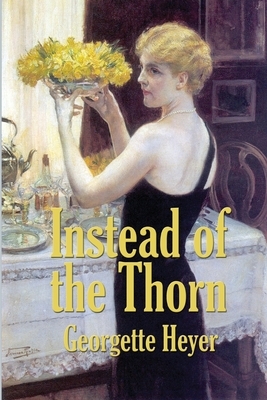
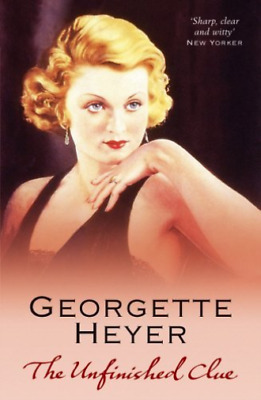
When Elizabeth reaches her older teens, she is old-fashioned but beautiful (and probably doesn’t dress like the girl on the cover above). Her father begins to take an interest, and soon she is attending parties and dances.

She meets Stephen Ramsey, a famous author who is about 10 years older, and he falls in love with her. She likes him and finally agrees to marry him, hoping for a long engagement. But it is not to be, and three months later, knowing absolutely nothing about what to expect, she marries him.

Elizabeth is young for her age, and she has been raised to be a prig. She is shocked by what marriage entails, and so she begins finding fault with Stephen’s habits and so on. Eventually, they split.

Interestingly, but perhaps not surprisingly, their problems are all Elizabeth’s fault (except for how their marriage got its start, which is blamed on Aunt Anne). Aside from being messy, unpunctual, and intellectual, Stephen is perfect. Elizabeth has a long, perhaps unlikely way to go.

There are some hints of a sense of humor here, but not many. One scene between Elizabeth’s father and his sister is quite funny, and Stephen’s mother is a fun but lovable character. I guess I should give this book points for showing the harm that can occur by not telling girls the facts of life—but that problem was probably much more prevalent at that time.

Stephen’s family and friends are so much more interesting than her own that you’d think Elizabeth would go over to them immediately, but she is too much of a prig. She becomes quite unlikable for a while.

It’s clear that Heyer was still finding her feet as a novelist as well as her genre. This is not it. I will give Heyer some credit, because she does seem to be trying to capture the clash between the Victorian and Edwardian generations in both this book and Helen.
Related Posts

Helen

Arabella

Behold, Here’s Poison

Review 2600: Helen

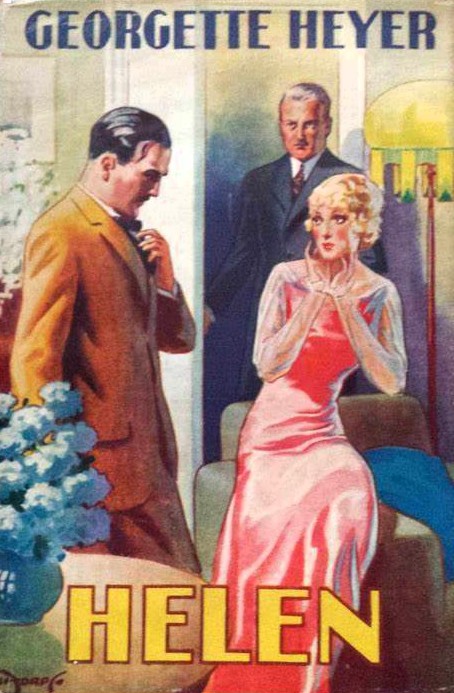
I thought I had read all of Georgette Heyer’s books, but when I looked up something recently, Amazon showed me that there were several I’d never heard of. So, I got a Conservatory Press print-on-demand copy of this one. It is one of her very few contemporary novels that are not mysteries, published in 1928.

Helen’s mother dies in childbirth, and although her aunt offers to take her, her father insists on keeping her. She is brought up in wealth on a country estate enjoying riding, hunting, and sports. She has old-fashioned values when she becomes an attractive young woman. Then everything is upended with World War I.

This novel spends a lot of time with the bright young things that emerged after the war. Helen is drawn into the set by some friendships, but her older friends are dismayed. She also attracts a young artist who may be a dangerous type.

There are long conversations in this novel meant to show how the younger generation is changing its attitudes from their Edwardian parents. It seemed to me that both sides had intolerant viewpoints, but the younger people, meant to be witty, seemed silly. In any case, I hate to say it, but I found this focus as well as Helen’s relationships to be a little tedious after a while. I didn’t think that this more serious romantic novel was Heyer’s forte. And both generations expressed attitudes about women that we find objectionable now.

As with most machine-read books, I found lots of wrong words. Not typos, but the wrong word replacing a correct one. I thought perhaps no human had read the book between machine-reading and publishing, but maybe someone read the beginning. I say this because the errors increased so much in the last third of the novel that sometimes it was difficult to guess what was meant. Helen is fairly consistently called “he” instead of “she,” and at one point, she is called “Heaven” instead of “Helen.” So, you can imagine how several errors could mount up to make the text unintelligible at times.

Related Posts

The Unfinished Clue

They Found Him Dead

Death in the Stocks

Review 2577: The Unfinished Clue

Georgette Heyer can write such likable characters, and I remember that for the first Heyer mystery I read, it was obvious who the murderer was because the person was the only character in the book, besides the victim, that I didn’t like. It didn’t matter, because it was fun to read anyway.

She isn’t so obvious about it in The Unfinished Clue, because there are several characters to dislike or feel neutral about. In fact, the title is more of a giveaway than the characters’ behavior, because it tells you what to focus on. If you can guess what it means, though, you get a gold star.

Dinah Fawcett arrives at her sister’s house to be met with an enraged brother-in-law. General Arthur Billington-Smith is often enraged, and he takes it out on his fragile second wife, Fay. This time, his son, Geoffrey, has become engaged and is bringing home his fiancée Lola de Silva, a cabaret dancer.

The house party consists of these people plus Arthur’s nephew, Captain Francis Billington-Smith, who wants a loan; Camilla Halliday, an attractive young woman who is letting Arthur take liberties in the hope of a generous gift; her jealous husband Basil; and Stephen Guest, a friend who is in love with Fay. Geoffrey turns out to be kind of a wimp and an idiot, and Lola completely self-absorbed.

Arthur rages throughout the weekend, which culminates in a stormy Monday morning. He tells Geoffrey he will cut him off if he marries Lola. Geoffrey goes to Lola vowing eternal love, and she tells him of course she can’t marry him if he doesn’t have any money. He storms off. Fay is lying down from a headache. There is a short visit by Mrs. Chudleigh, the vicar’s wife. Then Mrs. Twinings arrives, an old friend, to try to get Arthur to treat Geoffrey better, and she finds Arthur dead in his office, stabbed in the neck with a dagger from his desk. The crime boils down to where everyone was between 12:30 and 1. Only Dinah, who was on the terrace the whole time, has an alibi.

In most of Heyer’s mysteries, her detective team is Hannasyde and Hemingway, but in this novel the detective is Inspector Hardy. She hasn’t thought up Hannasyde and Heminway yet, I don’t think, but there’s another good reason why this book is different.

I was completely fooled by this mystery. I had some idea of the motive but was mistaken about the identity of the killer.

Georgette Heyer is just as gifted as Christie in creating vivid characters, and her mysteries tend to be a bit funny. In this case, Lola is a hoot. I had lots of fun reading this to take a break from A Century of Books.

Related Posts

Behold, Here’s Poison

A Christmas Party (Envious Casca)

They Found Him Dead

Review 2532: Beauvallet

I am fairly sure I read Beauvallet to fill a hole in my A Century of Books project, but as has happened too many times already, once I had read it, I saw that I had already filled that hole. This book is one of Heyer’s earlier novels, and it is more of a swashbuckler than her other ones, showing a possible influence of writers like Dumas, Rafael Sabatini, or Baroness Orczy.

In 1586, Beauvallet is a privateer like his colleague Drake, a daring, laugh-in-the-face-of-death type guy. His ship is fired on by Don Juan de Narvaez, who wants to show off for his lovely passenger, Doña Dominica de Rada y Sylvan, who is traveling with her father, the ailing late governor of Santiago. They are returning to Spain because of his health.

Beauvallet takes their ship and puts the crew into a boat for shore. However, he promises to take Doña Dominica and her father to Spain, because of her father’s illness. Beauvallet immediately begins to court her. Dominica is at first hostile but eventually falls in love. When he drops them at a smuggling port in Spain, he vows to come get her within a year and make her his wife. Obviously, this poses difficulties because England and Spain are at war. Once Dominica’s father dies, things become worse because her relatives, into whose custody she falls, want her to marry her cousin for her fortune.

I don’t think this is one of Heyer’s best. Her main characters aren’t as appealing as usual, and I think her social comedies are more effective than her adventure novels. However, it’s always worth it to read Heyer. If you haven’t read her, I suggest you start with one of her Regency romances.

Related Posts

An Infamous Army

The Talisman Ring

The Toll-Gate

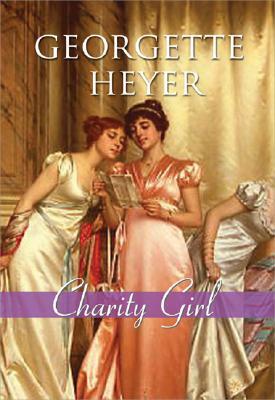
Review 2488: #1970Club! Charity Girl

Georgette Heyer is always a pleasure, and I was delighted to reread this one for the 1970 Club. As usual, on my first post for the club, here is a list of some other books from 1970 that I have reviewed:

Now for my review.

While visiting friends in the country, Viscount Desford goes to a party to see the latest beauty. He notices someone watching the party from upstairs. Thinking that she’s a child, he speaks to her, only to find she is older, a naïve relative who has been taken in out of charity.

The next day on his way to London, he finds the girl, Cherry Steane, on the road, running away from her aunt. Desford tries to talk her into returning, but she has been treated as a drudge and accused of trying to attract Desford to herself away from her beautiful cousin. He finally agrees to take her to her grandfather’s house in London, but upon arriving there, finds the house shut up.

Desford tries to think where he can take Cherry without ruining her reputation. His parents’ house is out of the question, not only because his father is suffering from a gout attack but also because Lord Desford despises both Wilfred Steane, Cherry’s father, who disappeared without paying her school fees, and Steane’s father.

Desford decides to take her to his best friend, Henrietta Silverdale. At one point, Lord Desford tried to arrange a marriage between Desford and Henrietta, but both refused. However, when Desford brings Cherry in, Henrietta feels pangs, fearing he may be attracted to her.

This novel features one of Heyer’s romping plots, with Desford encountering a slew of memorable characters while he tries to find a place for Cherry.

Related Posts

Arabella

Sprig Muslin

Cotillion

Review 2482: These Old Shades

In trying to fill some of the holes in my Century of Books project, I noticed that These Old Shades, which I haven’t read for many years, would help. This novel is Heyer’s first, and it is also the first of four about the Alastair/Audley family. (The others are The Devil’s Cub, Regency Buck, and An Infamous Army.)

Late on a mid-18th century night, His Grace of Avon Justin Alastair is walking through a Paris slum when a boy collides with him. The boy is fleeing his brutish brother. On impulse, the Duke buys the boy, but it is clear he is up to something. He takes the boy home and makes him his page.

The boy, Léon, has fiery red hair and dark eyebrows. The Duke has noticed this resemblance to his enemy, the Comte Saint-Vire, and takes Léon around to embarrass him. However, he begins to have other thoughts about the resemblance because of Saint-Vire’s reaction.

Soon, though, it is revealed that Léon is really Léonie, disguised as a boy since she was 12. The Duke takes her to England and leaves her with his sister while he arranges a chaperone, announcing that he intends to adopt her as his ward. Léonie is starting to enjoy being a girl when she is kidnapped by Saint-Vire.

This is an adventurous, amusing romantic novel. The Duke is enigmatic and Léonie is charming and feisty. Although the Duke has a bad reputation and is known as Satanas, as his relationship with Léonie develops, he becomes more human. Some of the interviews between Saint-Vire and Avon struck me this time as a little unsubtle, but overall, it is a great start to Heyer’s career and I enjoyed it very much.

Related Posts

Regency Buck

An Infamous Army

The Nonesuch

Review 2423: #1937 Club! An Infamous Army

I was planning to read Witold Gombrowicz’s Ferdydurke for the 1937 Club, but I got about 70 pages in and just wasn’t in the mood for it. I may never be.

Georgette Heyer is usually a good bet for me, and I conveniently had An Infamous Army on my shelf. I remembered, though, that it was not one of my favorites despite featuring characters from or related to those from some of my favorites. I decided to try to read the novel by pretending I had never read a book by Heyer, just judging it as a historical novel.

The novel is set in Belgium in the summer of 1815, so if you know your history, you know what’s coming up. The military of all the countries allied against Bonaparte are gathered in Brussels, as are the fashionable. Colonel Charles Audley, brother of Lord Worth of Regency Buck, is on Lord Wellington’s staff, so he is busy but occasionally has time to spend with Lord and Lady Worth. And everyone attends the frequent balls and parties.

Judith, Lady Worth, has found a girl she considers perfect for Charles, Lucy Devenish, a pretty, demure, heiress whose only detraction is a vulgar uncle. Society is being scandalized by the behavior of such young women as Lady Caroline Lamb and Lady Barbara Childe, a shocking young widow whose Alastair heritage (see These Old Shades and The Devil’s Cub) has given her quite a temper. Nevertheless, as soon as Charles sets his eye on her, he is in love. Unfortunately, thinks Judith, so is Barbara, and they are engaged in no time.

It’s no surprise that this is a rocky love affair. However, Heyer’s purpose is to depict the Battle of Waterloo and the frivolous months that led up to it.

Heyer was a serious historian, but her books aren’t often serious, and when they are, I miss the brilliant conversations and her humor. Sticking to my decision to try to forget about that, here are my observations. At the parties, there is too much enumeration as Heyer tries to list all the brilliant people attending. I felt like I was reading the beginning of The Iliad when Homer lists all the Greek commanders plus how many ships, men, and horses they brought.

Then, the social season seems to drag on a little too long. Things get going when the war starts, but when Heyer begins explaining troop dispositions and geography, I got lost. I could have used a map. Finally, although parts of the battle are brilliantly described, I felt as if Heyer was trying to include every anecdote she ever read about. There was just too much.

I have read battle scenes in other novels that were so clearly explained that I understood exactly what was going on. Here, there were so many different types of soldiers, so many leaders’ names, most of them only briefly described. There was too much going on for me.

As for the love story, while I didn’t much like Barbara, I was disappointed in how judgmental Judith, who had her own mishaps in her youth, was. It was nice, though, to have a brief appearance of Barbara’s grandparents, the Duke and Duchess of Avon, once Vidal and Mary of The Devil’s Cub.

Related Posts

Regency Buck

The Romantic

The Charterhouse of Parma

Review 2295: Frederica

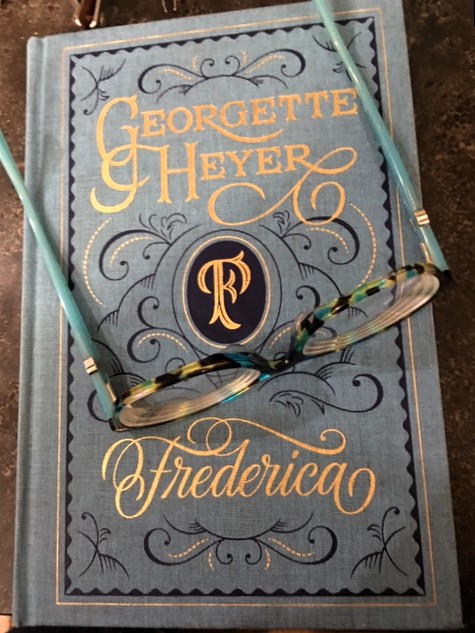
I didn’t set out to reread Frederica, but the Folio Society just brought out a couple of beautiful editions of some of Heyer’s books, so I had to buy them. My original review is here, but I thought I’d talk about some things that struck me this time around.

Heyer has a great sense of humor, and I was tickled by the situation that brings about the climax of the book. Frederica has spent a good deal of ill-afforded money and enlisted Lord Alverstoke’s help with the aim of making a good match for her beautiful but dim-witted sister, Charis. Unfortunately, Charis has fallen in love with Endymion Dauntry, Alverstoke’s handsome but stupid heir. Frederica is skeptical of Charis’s affections because she has fallen in love many times before. Endymion has convinced himself that Alverstoke would prevent the match by having him sent on a mission. Not only does Alverstoke have no power to do so, but he doesn’t really care who Endymion marries. He thinks Endymion isn’t serious because he hasn’t consulted him about getting married.

The incident with the dog in the park

Endymion is friends with Harry, Charis’s and Frederica’s brother, and the two have been confiding their star-crossed misfortunes to him. Frederica makes him angry for some trivial reason, and he suddenly realizes he is Charis’s guardian. So, the three of them stage a totally unnecessary runaway marriage.

Felix and Jessamy, Frederica’s young brothers, are especially delightful characters. Heyer is an amusing writer and a master of silly situations such as the one that Charis and Endymion create for themselves.

Related Posts

The Corinthian

The Grand Sophy

Arabella

Review 2288: Arabella

Merry Christmas, everyone! Here’s a romp for Christmas Day.

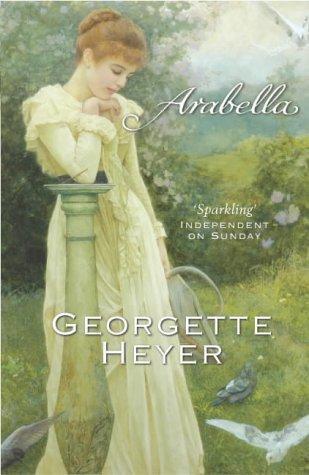
The vicarage children are excited to learn whether their mother’s best friend will invite their sister Arabella for a season in London, in the hopes she can make an eligible match. The invitation arrives from Lady Bridlington, and then the worry is that the upright Reverend Tallant will not allow her to go.

Soon Arabella is on her way to London from Yorkshire. But the perch of her uncle’s old carriage breaks, and she sees nothing wrong with going to the nearest house for shelter. Unfortunately, it is the hunting box of Robert Beaumarais, a leading figure in society and a very wealthy man, who assumes she is one of many girls trying to make his acquaintance. When she hears him saying this to his friend Lord Fleetwood, she says she is the rich Arabella Tallant, who hoped to be unrecognized in London.

Beaumarais sees through this lie but maliciously lets the indiscreet Lord Fleetwood think he knows about her. He also decides to make her debut a sensation. Soon, Arabella is a success but doesn’t dare accept anyone’s proposal because she realizes that they all think she is rich, whereas she has no money at all.

Although she is in an awkward position, she is enjoying herself. But then her brother Bertram, who is supposed to be at Oxford, arrives and begins to get himself into financial difficulties. To make things worse, Arabella has begun to realize she cares for Beaumarais and is afraid to admit her deceit.

Arabella is an adorable heroine, and Beaumarais a likable hero, as he fondly watches her dig herself deeper into trouble, hoping she will confide in him. Heyer is at her best and funniest with these absurd plots.

Related Posts

Cotillion

Frederica

Friday’s Child

Review 2152: #1940 Club! The Corinthian

Since this is my first post for the 1940 Club, I’ll include my list of other books published in 1940 that I have already reviewed:

I was happy to reread The Corinthian for the club because I hadn’t read it in some time. It is one of Heyer’s sillier, unlikelier plots, and I found it delightful.

Richard Wyndham is handsome, wealthy, impeccable in appearance, and bored. When a family deputation informs him it’s time he got married and tells him Melissa Brandon considers herself all but engaged to him, he calls on her. He finds an icy, self-possessed young lady ready to make a marriage of convenience to help her family financially. With the prospect of calling on her father the next morning, Richard goes out and gets drunk.

During his subsequent rambles, he spots a boy climbing out of an upper-story window on a rope of knotted sheets that is unfortunately too short. When he catches the boy, he finds he is a girl. Pen Creed is escaping her family, as her aunt is trying to force her to marry her cousin for her money. When Richard finds Pen will not go home, he decides to accompany her to make sure nothing happens to her. She is on the way to the home of her old friend, Piers Luttrell, who vowed to marry her five years ago.

Richard finds himself experiencing many new things, starting with a stagecoach ride during which the coach is overturned. They meet a thief on the stage and soon learn that someone has stolen the famed Brandon diamonds. As if that wasn’t enough, they find a murdered man, assist a damsel in distress, and end up telling many fibs. Richard soon enough realizes he’s in love with Pen, but he can’t say so while she’s under his protection—and perhaps she’s still in love with Piers.

Heyer is always amusing and I had a lot of fun with this one.

Related Posts

The Nonesuch

Cotillion

The Convenient Marriage